

Home Blog Page 818

STEAM Education: Enhancing Creativity and Innovation through Arts Integration in STEM

STEM education (Science, Technology, Engineering, and Mathematics) has been a significant focus in schools for many years. STEM education is an interdisciplinary approach to learning that integrates these four areas. Many educators and researchers believe that integrating the arts into STEM education can enhance students’ creativity, innovation, and problem-solving skills. The purpose of this article is to discuss the benefits of teaching STEAM (Science, Technology, Engineering, Arts, and Mathematics). And how it can positively impact students, teachers, schools, and society.

Overview of STEAM

STEAM is an interdisciplinary approach that integrates science, technology, engineering, mathematics, and the arts. The inclusion of the arts in STEM education recognizes the importance of creativity and innovation. In the context of scientific discovery and technological advancement. The idea of STEAM education is not new, with the concept gaining popularity in the late 1990s. However, it has gained more attention in recent years. Along with STEAM education as educators recognize the value of creativity and innovation in the workforce.

Benefits of STEAM for Students

The inclusion of arts in STEM education can provide many benefits to students. Firstly, it can develop creativity. The arts encourage students to think outside the box, explore new ideas, and challenge themselves. This creativity can then be applied to STEM fields, helping students develop innovative solutions to complex problems. Secondly, STEAM education can enhance problem-solving skills. The arts provide opportunities for students to work collaboratively and think critically, skills that are valuable in STEM fields. Thirdly, STEAM education can improve communication skills. The arts provide students with opportunities to express themselves and communicate their ideas effectively. Finally, STEAM education can prepare students for future careers. Many of the most in-demand careers require a combination of STEM and creativity, such as graphic design, architecture, and animation.

Benefits of STEAM for Teachers

STEAM education can also provide many benefits to teachers. Firstly, it can offer engaging teaching methodologies. The arts provide opportunities for hands-on, project-based learning, which can be more engaging for students. Secondly, STEAM education can offer opportunities for professional development. Teachers can learn new skills and techniques from experts in various fields, helping them to improve their teaching practice. Finally, STEAM education can improve classroom dynamics, promoting collaboration and teamwork among students.

Benefits of STEAM for Schools and Society

The inclusion of the arts in STEM education can also provide benefits to schools and society. Firstly, STEAM education can enhance innovation. By promoting creativity and problem-solving skills, students can develop innovative solutions to complex problems, which can then benefit society. Secondly, STEAM education can improve community relations. By promoting collaboration and teamwork, STEAM education can encourage students to work together on community projects, improving relationships between schools and the wider community. Finally, STEAM education can increase economic growth. The development of STEM skills and creativity can lead to the creation of new technologies, industries, and jobs, which can positively impact the economy.

Challenges and Solutions

Although STEAM education provides many benefits, there are also challenges to implementing it. Firstly, resource constraints can be a significant barrier to implementing STEAM education. Teachers may not have access to the necessary resources, such as technology or art supplies, to deliver STEAM education effectively. Secondly, resistance to change can also be a challenge. Some educators may be hesitant to incorporate the arts into STEM education due to a lack of understanding or familiarity with the arts. Finally, strategies for overcoming challenges include securing funding for resources, offering professional development opportunities, and providing ongoing support to teachers.

Conclusion

In conclusion, integrating the arts into STEM education can provide numerous benefits to students, teachers, schools, and society. STEAM education can help students develop creativity, problem-solving skills, and communication skills, and prepare for future careers. It can also offer engaging teaching methodologies, opportunities for professional development, and improved classroom dynamics for teachers. Schools and society can benefit from enhanced innovation, improved community relations, and increased economic growth. While challenges to implementing STEAM education exist, it is crucial for educators and policymakers to recognize its value and take action to implement it effectively. STEAM education is critical for our workforce and society’s future, and we must invest in it to promote a brighter future.

And as always folks if you would like to read some of the latest articles that are both interesting and informative be sure to check out the Global Growth Forum. Also, check out the Mojo Patrakar if you would like to read some of the latest articles in Hindi.


The Persistence of Memory” by Salvador Dalí: An Enduring Symbol of Surrealism

Salvador Dalí’s “The Persistence of Memory” is one of the most recognizable paintings in the world. It is known for its melting watches and surreal imagery. Created in 1931, the painting has captivated viewers for over 90 years. And is certainly going to continue to be an important symbol of the surrealist movement. In this article, we will be exploring different aspects of the famous painting “ The Persistence of Memory” by Salvador Dali.

History of the Painting Persistence of Memory

Dalí created “The Persistence of Memory” in 1931, during a period of intense artistic activity in his career. He was inspired by the landscape of the Catalan coast, which he depicted in the background of the painting. The melting watches dominate the foreground of the painting. They are said to be inspired by Dalí’s fascination with the concept of time and its fluidity.

The initial reception of the painting was mixed, with some critics hailing it as a masterpiece of the surrealist movement.  Meanwhile, there were others dismissing it as nonsensical and lacking in artistic merit. However, over time, the painting has become one of the most iconic images of the 20th century.

Analysis of the Painting

“The Persistence of Memory” is a complex work of art that features numerous surreal elements. The melting watches are the most striking aspect of the painting, and they have been interpreted in many different ways. Some critics have seen the watches as a representation of the relativity of time. While others have viewed them as a symbol of decay and mortality.

The other surreal elements in the painting, include the ants and flies crawling over the watches. And the distorted landscape in the background also contributes to the dreamlike quality of the painting. The ants and flies have been interpreted as symbols of decay and death. While the distorted landscape is seen as a representation of the subconscious mind.

Dalí’s Artistic Style

Dalí was a leading figure in the surrealist movement, which emphasized the exploration of the subconscious mind. And the use of irrational and dreamlike imagery in art. His artistic style was characterized by precise, realistic depictions of objects combined with surreal and fantastical elements.

Dalí was heavily influenced by the ideas of Sigmund Freud, particularly his theories of the unconscious mind and dream interpretation. He believed that by tapping into the subconscious, artists could create works of art that were more powerful and meaningful. Especially when compared to those created through traditional means.

Legacy and Impact of “The Persistence of Memory”

“The Persistence of Memory” has had a significant impact on the art world and popular culture. Its iconic image has been referenced in countless films, television shows, and other forms of media. The painting has also influenced numerous other artists, including pop art pioneer Andy Warhol.

Dalí’s legacy extends far beyond “The Persistence of Memory,” however. He was a prolific artist who created numerous other works of art that continue to inspire and captivate viewers to this day. His influence on the surrealist movement and modern art as a whole is immeasurable.

Conclusion

In conclusion, “The Persistence of Memory” by Salvador Dalí remains one of the most iconic and enduring works of art in the world. Paintings striking imagery and surreal symbolism have captivated viewers for over 90 years, making them a powerful symbol of the surrealist movement and a testament to the creative vision of Salvador Dalí. From its initial reception to its enduring legacy, the painting has had a significant impact on the art world and popular culture, inspiring countless other artists and leaving an indelible mark on the history of modern art. Whether viewed as a symbol of the relativity of time, the fragility of life, or the power of the subconscious mind, “The Persistence of Memory” continues to fascinate and intrigue viewers of all ages, cementing its place as one of the most important works of art of the 20th century.

And as always folks if you are interested in reading similar articles on a wide range of topics that are both interesting and informative be sure to check out the Global Growth Forum. Also, if you are interested in reading some of the latest articles in Hindi be sure to check out the Mojo Patrakar.

Blockchain and Open Science: Revolutionizing Research Collaboration with Decentralized Systems

In recent years, there has been a growing interest in the potential of blockchain technology in various industries. One area that has seen significant attention is research collaboration in science, which has traditionally relied on centralized systems that are prone to security and privacy breaches. The rise of open science, an approach to scientific research that emphasizes openness and transparency, has also created opportunities for decentralized systems like blockchain. This article explores the potential benefits and challenges of using blockchain technology in research collaboration and how it aligns with the principles of open science.

Blockchain and Open Science: A Perfect Match

Blockchain technology is a decentralized, distributed ledger that records transactions in a secure and transparent way. It has several features that make it attractive for research collaboration, including immutability, transparency, and security. Open science, on the other hand, is an approach to scientific research that emphasizes transparency, collaboration, and the sharing of research data and findings. The principles of open science align with the characteristics of blockchain, making it a perfect match for research collaboration.

Opportunities for Blockchain in Research Collaboration

One of the main benefits of blockchain in research collaboration is the decentralization of research data. With blockchain, research data can be stored in a distributed ledger that is accessible to all authorized parties, eliminating the need for a centralized authority. This makes it easier for researchers to collaborate on projects and share data without the need for intermediaries.

Blockchain also offers increased security and privacy for research data. The immutability of blockchain technology ensures that data cannot be altered or deleted, providing an added layer of security. This makes it difficult for hackers to manipulate research data, ensuring that the integrity of the research is maintained.

Another benefit of blockchain in research collaboration is improved trust and transparency. With blockchain, all transactions are transparent and can be traced back to their source. This makes it easier for researchers to verify the authenticity of data and ensures that research findings are trustworthy.

Blockchain can also streamline the peer-review process, which is an essential part of scientific research. With blockchain, reviewers can access research data securely, ensuring that the peer-review process is fair and transparent.

Challenges for Blockchain in Research Collaboration

Despite the potential benefits of blockchain in research collaboration, there are several challenges that must be addressed. One of the biggest challenges is the integration of blockchain with existing research infrastructure. Many research institutions have established systems and processes that may not be compatible with blockchain technology, making it difficult to adopt.

Legal and ethical issues surrounding data ownership and intellectual property rights are also a concern. Blockchain technology makes it difficult to determine who owns the data and who has the right to use it. This can lead to disputes over data ownership and intellectual property rights, which can hinder research collaboration.

Scalability and energy consumption concerns are also a challenge for blockchain in research collaboration. The energy required to power blockchain networks is significant, which could limit its scalability in research collaboration.

Finally, user adoption and education are essential for the successful adoption of blockchain technology in research collaboration. Researchers and institutions must be willing to embrace new technologies and invest in the necessary infrastructure to support blockchain.

Case Studies of Blockchain in research collaboration

Despite the challenges, there have been several successful blockchain-based projects in science and research. One example is the Open Science Chain, a blockchain-based platform that enables researchers to share and access scientific data securely. Another example is the BitMED platform, which uses blockchain technology to connect patients and medical professionals, allowing for more personalized care and improved outcomes.

Lessons learned from these projects have demonstrated the potential of blockchain in research collaboration but also highlighted the need for collaboration and communication in developing effective blockchain solutions for research.

Conclusion

In conclusion, the potential benefits of using blockchain technology in research collaboration are significant, including increased security and privacy, improved trust and transparency, and streamlined peer review processes. However, the challenges of integrating blockchain with existing research infrastructure, legal and ethical issues, scalability concerns, and user adoption and education must be addressed before widespread adoption can occur. Nevertheless, successful blockchain-based projects in science and research have shown the potential of this technology and highlighted the importance of collaboration and communication in developing effective solutions. With further innovation and collaboration, blockchain technology has the potential to revolutionize research collaboration and accelerate scientific progress.

And as always folks be sure to check out the Global Growth Forum and read some of the latest articles that are both interesting and informative. Also, be sure to check out the Mojo Patrakar if you would like to read some of the latest articles in Hindi.
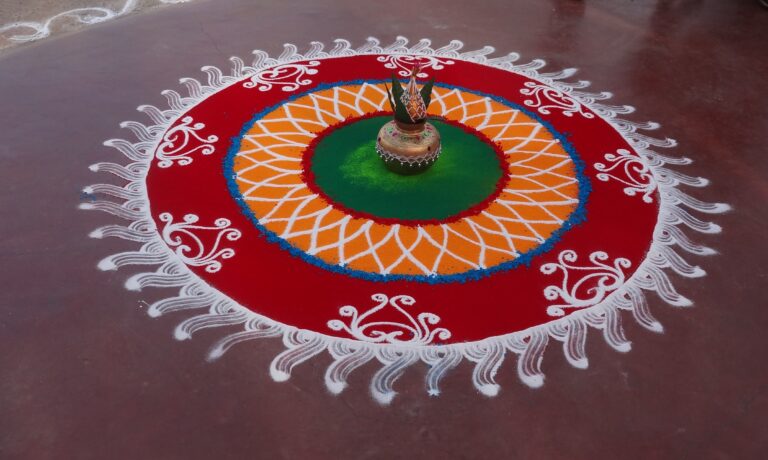
The Vibrant Tradition of Rangoli: History, Significance, and Techniques

Rangoli is a popular form of traditional Indian art that involves the creation of intricate designs. The designs are created using colored powders, rice flour, and other materials. This vibrant art form has been a part of Indian culture for centuries. And is a popular way of decorating homes, public spaces, and temples during festivals and special occasions. Rangoli is not only visually stunning but also holds significant cultural and spiritual significance. In this article, we will explore different aspects of Rangoli from history and origin, its significance, the materials used, etc.

History and Origin

The word “rangoli” is derived from the Sanskrit word “rangavalli,” which means “row of colors.” The art form is believed to have originated in India several centuries ago, with references to it being found in ancient Hindu texts. It was traditionally created by women as a way of decorating their homes and courtyards during festivals and auspicious occasions.

Traditional Rangoli Designs

Traditional rangoli designs are typically symmetrical and include floral, geometric, and peacock designs. These designs are created using a grid pattern and are often filled with vibrant colors that are made from natural materials such as turmeric, vermillion, and indigo. Peacock designs are particularly popular and are believed to bring good luck and prosperity.

Modern Rangoli Designs

Over the years, rangoli has evolved, and modern designs are now created using a range of influences. Some of the most common influences include contemporary art and technology. Some artists are even experimenting with fusion designs, blending traditional and modern elements to create unique and eye-catching patterns.

Materials Used in Rangoli

The materials used in creating those designs vary depending on the region and the occasion. However, some common materials include powdered colors, rice flour, flowers, and petals, and natural materials such as leaves, twigs, and even fruits and vegetables. The use of natural materials not only adds an element of sustainability but also reflects the deep connection between humans and nature in Indian culture.

Techniques and Tips for Making Rangoli

Creating a rangoli design requires a steady hand, patience, and attention to detail. The process involves preparing the surface, sketching the design, and filling it with colors. Different techniques are used to create various effects, such as dots, lines, and curves. Applying finishing touches, such as outlining the design and adding decorative elements, completes the process.

Rangoli During Festivals

Rangoli plays an important role in Indian festivals and celebrations, particularly during Diwali, Pongal, and Onam. During Diwali, rangoli is created to welcome the Hindu goddess Lakshmi, who is believed to bring wealth and prosperity. During Pongal, it is created using rice flour to celebrate the harvest festival. Onam, a festival celebrated in the southern Indian state of Kerala, is marked by the creation of elaborate rangoli designs using flowers and petals.

Significance of Rangoli

Rangoli is not just a decorative art form; it holds significant cultural, social, and spiritual significance. In Hinduism, it is believed to be a way of inviting deities into the home and promoting harmony and well-being. It is also a way of expressing creativity and artistic expression, particularly for women. It is also seen as a way of promoting community spirit, as it is often created collaboratively during festivals and other social occasions.

Conclusion

In conclusion, the art of rangoli is a fascinating and vibrant tradition that has been a part of Indian culture for centuries. The intricate designs and vivid colors used in rangoli reflect the country’s rich cultural heritage. As well as its deep connection to nature and spirituality. From traditional symmetrical designs to modern fusion creations, it continues to evolve as an art form. This showcases the ingenuity and creativity of its practitioners. As we continue to celebrate festivals and special occasions, the art of rangoli remains an important aspect of Indian culture, promoting community spirit and artistic expression. It is a true testament to the beauty and diversity of human creativity, and an inspiration for art lovers around the world.

And as always folks if you would like to read some of the similar latest articles that are both interesting and informative be sure to check out the Global Growth Forum. Also, if you are interested in reading some of the latest articles in Hindi be sure to check out the Mojo Patrakar.

The Last Supper by Leonardo da Vinci: A Masterpiece of Renaissance Art and Christian Symbolism

Leonardo da Vinci’s The Last Supper is one of the most iconic and recognizable paintings in the history of art. This masterpiece has become a symbol of Renaissance culture, Christian iconography, and timeless artistic genius. In this article, we will explore the historical and cultural context of the painting.  And its artistic features and symbolism, various interpretations and meanings, restoration and preservation efforts, and its enduring legacy.

The historical context of the painting

Leonardo da Vinci (1452-1519) was a renowned artist, inventor, and polymath of the Italian Renaissance. He worked in the court of Ludovico Sforza, the Duke of Milan. The Last Supper was commissioned by Ludovico as a fresco decoration for the refectory of the Dominican monastery. Which was situated in Santa Maria delle Grazie in Milan. It was intended to be a visual aid for the religious devotion of the friars and visitors. The painting was created between 1495 and 1498, during a period of great artistic experimentation and innovation in Milan. Which attracted many prominent artists and thinkers, including Michelangelo and Bramante.

Analysis of the painting

The Last Supper depicts the moment when Jesus Christ reveals to his disciples that one of them will betray him. As recorded in the New Testament accounts of Matthew, Mark, and Luke. Leonardo’s interpretation of the scene is characterized by its dynamic composition, dramatic lighting, and psychological realism. The figures of Jesus and his disciples are arranged in a triangular composition. With Jesus at the apex and the disciples in groups of three on either side. Jesus is depicted as a calm and composed figure. With his right hand pointing upward and his left hand holding a piece of bread, symbolizing his body. The disciples, on the other hand, are shown in various emotional states. Those are ranging from shock and anger to confusion and resignation. The painting’s chiaroscuro technique creates a sense of depth and volume through the use of light and shadow. This is used to enhance the dramatic effect of the scene.

Interpretations of the painting

The Last Supper has been the subject of numerous interpretations and debates, both religious and secular. Some scholars have focused on the religious symbolism of the painting. Such as the Eucharistic themes of the bread and wine, the symbolism of the hands, and the gestures of the figures. And the use of perspective to create a vanishing point emphasizes the centrality of Christ. Others have explored the psychological dimensions of the painting. Such as the facial expressions, body language, and interpersonal dynamics of the disciples. And how they reflect human nature and behavior. Some have also interpreted the painting in political and cultural terms. Such as its connection to the political and social context of Renaissance Milan. Or its influence on later art movements and popular culture.

Restoration and preservation of the painting

Over the centuries, The Last Supper has suffered various damages and neglect. Due to factors such as humidity, war, pollution, and human intervention. In the 20th century, several restoration efforts were undertaken to preserve the painting’s original features and prevent further deterioration. However, these efforts were not without controversy, as some critics argued that the restoration methods were too invasive or misguided. And also that they altered the painting’s authenticity and historical value. Currently, the painting is protected and displayed under strict conditions. Such as limited viewing time, controlled temperature and humidity, and restricted photography.

Legacy of the Last Supper

The Last Supper’s impact on art and culture has been enormous, both during its time and after. The painting’s fusion of religious and humanistic themes, as well as its technical mastery and aesthetic appeal, have inspired generations of artists and viewers, from the Renaissance to the present day. The painting has also become a powerful symbol of Christian faith and spirituality and has been used in various religious and cultural contexts, such as liturgical celebrations, art exhibitions, movies, and literature. The Last Supper has also contributed to the development of art history and criticism, as it exemplifies the Renaissance ideal of “art as imitation of nature”, as well as the integration of art, science, and philosophy in Leonardo’s approach.

Conclusion

In conclusion, The Last Supper is not just a painting, but a cultural and historical icon that reflects the values, beliefs, and creativity of its time and beyond. Its artistic merits and interpretive richness have made it a timeless masterpiece that continues to inspire and challenge us, both aesthetically and spiritually. Whether we approach it from a religious, artistic, or intellectual perspective, The Last Supper invites us to contemplate the mysteries of human existence and divine transcendence and to appreciate the beauty and complexity of our world.

And as always folks be sure to check out the Global Growth Forum and read some of the latest articles that are both informative and interesting. Also, if you would like to read some of the latest articles in Hindi be sure to check out the Mojo Patrakar.

The Art of Taxidermy: Creating Surreal and Imaginative Displays with Unusual Animals and Objects

Taxidermy is an art form that has been around for centuries. It involves the process of preserving an animal’s body and mounting it for display purposes. Taxidermy has come a long way since its inception. And today it is an essential part of modern art and design. In this article, we will explore the art of taxidermy. Specifically creating surreal and imaginative displays with unusual animals and objects.

The Basics of Taxidermy

Before diving into the more creative aspects of taxidermy, it is essential to understand the basics of the process. It involves skinning the animal and removing its bones, internal organs, and muscles. The skin is then treated with a preservative and stretched over a mannequin made to resemble the animal’s body. The final step is to attach the eyes and teeth to the mount to bring it to life.

The process of taxidermy requires a variety of tools and materials, including scalpels, tweezers, and tanning agents. It is essential to take safety measures during the whole process, such as wearing gloves and a face mask. That would help you avoid exposure to harmful chemicals and bacteria.

Creating Surreal and Imaginative Displays with Unusual Animals

Surreal and imaginative taxidermy displays involve creating a unique and unexpected representation of an animal. This type of taxidermy allows artists to experiment with different techniques and materials, resulting in a one-of-a-kind piece. These pieces are often used to showcase very complex emotions, feelings, and Ideas.

For example, an artist may combine the bodies of two different animals to create a hybrid creature. Or, they may incorporate unusual materials such as feathers or metal into the mount to create a surreal effect. These displays are often used in modern art exhibits or as conversation pieces in private collections.

Using Unusual Objects in Taxidermy Displays

Another way to create imaginative taxidermy displays is by incorporating unusual objects into the mount. This technique involves placing the preserved animal in a setting that includes unique and unexpected items.

For example, an artist may mount a deer head on a bicycle handlebar, creating a whimsical and surreal display. Or, they may place a preserved bird in a vintage birdcage to create a nostalgic and romantic piece. The possibilities are endless, and the result is always a unique and imaginative display.

Tips for Successful Taxidermy Displays

To create successful taxidermy displays, it is important to follow best practices and avoid common mistakes. Some tips to keep in mind include using high-quality materials and tools and taking your time during the process. Paying close attention to detail is arguably the best thing you can do when for your displays.

It is also important to preserve and display taxidermy pieces correctly to ensure their longevity. This includes keeping them away from direct sunlight and moisture, and periodically cleaning and conditioning the skin. Whenever you decide to do taxidermy put some intention behind it instead of going about it thoughtlessly.

The Future of Taxidermy in Art and Design

As the art world continues to evolve, so does the role of taxidermy in modern art and design. While traditional taxidermy is still prevalent, artists are finding new and innovative ways to incorporate the technique into their work.

Some modern artists are using taxidermy to create social commentary, while others are using it to make a statement about environmental issues. As the world becomes more environmentally conscious, it may be used more frequently to bring attention to animal conservation efforts.

Conclusion

Taxidermy is an art form that has been around for centuries and continues to play an important role in modern art and design. From the traditional displays to the more imaginative and surreal ones, taxidermy provides endless possibilities for artists and collectors alike. By following best practices, avoiding common mistakes, and paying attention to detail, artists can create unique and one-of-a-kind pieces that are sure to make a statement. As the art world evolves, taxidermy is sure to continue to play an important role in bringing attention to social and environmental issues, making it a valuable and relevant art form for generations to come.

And as always folks be sure to check out the Global Growth Forum and read some of the similar articles that are both interesting and informative. Also, if you are interested in reading some of the latest articles in Hindi be sure to check out the Mojo Patrakar.

The Role of Blockchain in Corporate Social Responsibility: Can Decentralized Systems Foster Sustainable Business Practices

Corporate Social Responsibility (CSR) has become an increasingly important aspect of business in recent years. Consumers and investors are demanding more transparency and accountability from companies. The demand is not just in terms of profits but also in their impact on the environment and society. At the same time, blockchain technology has emerged as a promising tool for achieving these goals. In this article, we explore the potential of blockchain in CSR. And examine whether decentralized systems can foster sustainable business practices.

Background

To understand the potential of blockchain in CSR, it’s important to first understand the concept of CSR and its evolution. CSR is the idea that companies have a responsibility to not only maximize profits but also to take into account their impact on society and the environment. This concept has evolved over time. Starting from a focus on philanthropy and charitable giving to a more comprehensive approach that includes sustainability and stakeholder engagement.

Blockchain technology, on the other hand, is a decentralized, distributed ledger system that records transactions. The appeal of blockchain comes from the fact that it records data in a secure, transparent, and immutable way. It was originally developed to support cryptocurrency transactions but has since been applied to various industries and use cases.

The Potential of Blockchain in CSR

Blockchain is without a doubt one of the most revolutionary pieces of technology. And it holds the potential to help us hold the corporation responsible through a few different things such as:

Transparency and Accountability

One of the key benefits of blockchain in CSR is its ability to provide transparency and accountability. By recording transactions on a secure and immutable ledger, blockchain can help companies ensure that their supply chains are ethical and sustainable. For example, companies can use blockchain to trace the origins of their products, from raw materials to finished goods. And at the same time ensure that they meet certain environmental and social standards.

Increased Efficiency and Reduced Costs

Another advantage of blockchain in CSR is its potential to increase efficiency and reduce costs. By eliminating intermediaries and automating processes, companies can streamline their operations and reduce waste. For example, blockchain can help companies manage their waste and recycling programs more efficiently.  By tracking the disposal and reuse of materials blockchain technology can help make those processes much more efficient.

Increased Engagement with Stakeholders

Blockchain can also increase engagement with stakeholders, including consumers and investors. By empowering consumers with information about a company’s social and environmental impact, blockchain can incentivize socially responsible behavior. Likewise, blockchain can enable investors to make more informed decisions about which companies to invest in based on their sustainability performance.

Case Studies

Several companies and organizations have already begun to explore the potential of blockchain in CSR. IBM’s Food Trust, for example, uses blockchain to track the origins and journey of food products from farm to table. Provenance, a UK-based company, uses blockchain to track the sustainability of products such as fish and diamonds. BitGive, a nonprofit organization, uses blockchain to track donations to charitable causes and ensure that they are used as intended.

Criticisms and Limitations

While blockchain has the potential to revolutionize CSR, it is not without its criticisms and limitations. One of the biggest challenges is technological barriers, including scalability and interoperability issues. Legal and regulatory challenges, such as data privacy and ownership, also need to be addressed. Finally, adoption and integration issues, including resistance to change and lack of expertise. Those may hinder the implementation of blockchain in CSR.

Conclusion

Blockchain has the potential to transform CSR by providing transparency, accountability, efficiency, and engagement with stakeholders. However, challenges and limitations must be addressed for this potential to be realized. Future research should focus on overcoming these barriers and exploring the full potential of blockchain in CSR. Ultimately, decentralized systems may play a critical role in fostering sustainable business practices and addressing the pressing social and environmental challenges of our time.

And as always folks if you would like to read some of the latest articles on similar topics that are both interesting and informative at the same time be sure to check out the Global Growth Forum. Also, if you would like to read some of the latest articles in Hindi be sure to check out the Mojo Patrakar.

Blockchain and Financial Inclusion: Can Decentralized Systems Provide Access to the Unbanked and Underbanked?

Access to financial services is a critical aspect of economic growth and development. However, the unbanked and underbanked populations across the world continue to face challenges in accessing traditional financial services. With the rise of blockchain technology, there has been growing interest in the potential of decentralized systems to promote financial inclusion. This article explores whether blockchain technology can provide access to the unbanked and underbanked populations. And the advantages and limitations of blockchain-based financial inclusion.

The Current State of Financial Inclusion

The unbanked and underbanked populations refer to individuals without access to traditional financial services or have limited access to them. According to the World Bank’s Global Findex Database, an estimated 1.7 billion adults around the world are unbanked. While 1.1 billion have a bank account but lack access to formal financial services. These individuals are primarily located in low and middle-income countries. In these countries, traditional financial institutions face challenges in reaching them. Primarily due to factors such as low levels of financial literacy, high costs, and regulatory hurdles.

Blockchain Technology

Blockchain technology is a decentralized digital ledger that records transactions in a secure and transparent manner. It eliminates the need for intermediaries such as banks, making it a potentially cost-effective solution for financial services. Blockchain technology has the potential to improve financial inclusion by providing an alternative to traditional financial services and reducing costs. It is also much more resilient to tempering as it is a public ledger technology.

Advantages of Blockchain Technology for Financial Inclusion

Blockchain technology can help increase access to financial services by providing an alternative to traditional banking. It allows individuals to conduct transactions without the need for a bank account, making it easier for the unbanked and underbanked populations to participate in financial services. Additionally, blockchain technology reduces transaction costs, which is essential for individuals with limited resources. With blockchain technology, transactions can be conducted in real-time, increasing the speed of financial transactions. The transparency of blockchain technology also enhances security and trust, which is critical for individuals who may not trust traditional financial institutions.

Case Studies of Blockchain-Based Financial Inclusion Projects

Several blockchain-based financial inclusion projects have emerged in recent years. One example is BitPesa, a blockchain-based payment platform that enables users in Africa to send and receive payments globally. BitPesa allows individuals without bank accounts to conduct transactions in a secure and transparent manner. Another example is Abra, a mobile wallet that uses blockchain technology to enable users to send and receive money from any location in the world. Abra’s mobile app provides individuals with access to a variety of financial services, including investment opportunities, making it easier for them to participate in the global economy. BanQu is another blockchain-based platform that focuses on providing financial services to the unbanked populations in Latin America. BanQu’s platform allows individuals to store their financial and personal data on the blockchain, providing them with control over their information and increasing their financial empowerment.

Challenges and Limitations of Blockchain-Based Financial Inclusion

Despite the potential benefits of blockchain technology for financial inclusion, several challenges and limitations need to be addressed. Adoption barriers such as low levels of financial literacy and limited access to technology can hinder the adoption of blockchain-based financial services. Technical limitations, including slow transaction processing times and scalability issues, also need to be addressed. Regulatory challenges, including the lack of clear regulations for blockchain-based financial services, pose another challenge to the growth of blockchain-based financial services.

Conclusion

In conclusion, blockchain technology offers a promising solution to promote financial inclusion worldwide. Blockchain-based financial services have the potential to provide an alternative to traditional financial institutions, reduce transaction costs, and empower individuals. However, there is a need for concerted efforts to address the challenges facing the adoption of blockchain-based financial services to achieve inclusive and sustainable economic growth. The future of financial services is closely linked to the adoption of new technologies, and blockchain technology offers a unique opportunity to promote financial inclusion and empower individuals across the world.

And as always folks if you would like to read some of the similar latest articles that are both interesting and informative be sure to check out the Global Growth Forum. Also, if you would like to read some of the latest articles in Hindi be sure to check out the Mojo Patrakar.

The Psychology of Decision Making: Why We Make the Choices We Do

Making decisions is a fundamental part of everyday life. From what to wear in the morning to major life-changing decisions, the choices we make shape our lives. Understanding why we make the choices we do can help us make better our decision-making. And ultimately lead to a happier and more fulfilling life. In this article, we will explore the psychology of decision-making and what factors influence our choices.

Theories of Decision Making

There are several theories of decision-making, but three prominent ones are Rational Choice Theory, Prospect Theory, and Dual Process Theory. Rational Choice Theory proposes that individuals make decisions that are rational and logical based on their preferences and available information. Prospect Theory, on the other hand, suggests that individuals are influenced by emotions and framing effects when making decisions. The dual Process Theory of Decision Making proposes that humans have two distinct cognitive systems that operate in parallel when making decisions: a fast and automatic System 1, and a slower and analytical System 2. Both systems are necessary for effective decision-making.

Factors Affecting Decision Making

Emotions, cognitive biases, social influences, and environmental factors all play a role in decision-making. Emotions can lead us to make irrational decisions or to avoid making a decision altogether. Negative emotions have an especially huge impact on our decision-making capabilities often these emotions can cloud our judgment. Cognitive biases, such as confirmation bias or the sunk cost fallacy, can cause us to make decisions that are not in our best interest. Social influences like peer pressure or conformity can sway our minds. Environmental factors, such as the physical setting or the time pressure, can also impact our decision-making.  Our psychological state also impacts our decision-making it could be due to the presence of foreign substances.

Types of Decision Making

There are four main types of decision-making: routine decisions, complex decisions, strategic decisions, and risky decisions. Routine decisions are those that we make frequently and with little effort, such as what to eat for breakfast. Complex decisions require more effort and involve evaluating multiple options, such as choosing a college major. Strategic decisions are long-term ones that impact our future, such as whether to start a business. Risky decisions involve uncertainty and potential loss, such as investing in the stock market. While some of them seem more complex than others decision almost every decision consists of smaller decisions. The number of these decisions can even go up to thousands depending on the nature of the decision.

The Role of Intuition in Making Decisions

Intuition is a powerful tool in decision-making. It is a gut feeling or instinctual response that can be difficult to explain but often leads to successful outcomes. However, intuition should not be relied upon solely and should be balanced with analysis and rational thinking. Intuition can be influenced by personal biases and emotions, which can lead to poor decision-making. Chess GM Hikaru Nakamura is arguably the best speed chess player alive and he says a big part of his success is due to his excellent intuition.

Making Effective Decisions

To make effective decisions, there are several steps in the decision-making process, such as identifying the problem, gathering information, evaluating options, making a decision, and evaluating the outcome. Strategies for improving decision-making include practicing self-awareness, seeking out diverse perspectives, and considering both short-term and long-term consequences. Common obstacles to effective decision-making include analysis paralysis, decision fatigue, and overconfidence bias.

Conclusion

In conclusion, decision-making is a complex process that is influenced by various factors, including emotions, cognitive biases, social influences, and environmental factors. By understanding the theories of decision-making, different types of decision-making, and the role of intuition in decision-making, individuals can improve their decision-making skills and make more effective choices. Strategies for improving decision-making include being self-aware, seeking out diverse perspectives, and considering both short-term and long-term consequences. Further research on decision-making can lead to a better understanding of how we make choices and how we can make better ones. Ultimately, improving our decision-making skills can lead to a more fulfilling and successful life.

And as always folks be sure to check out some of the latest articles on a range of topics that are both interesting and informative on the Global Growth Forum. Also, if you want to read some of the latest articles in Hindi be sure to check out the Mojo Patrakar.

Blockchain and the Future of E-commerce: Opportunities and Challenges for Decentralized Marketplaces

Blockchain technology has been a buzzword in the world of technology for a few years now. Blockchain is a decentralized digital ledger that stores data in a secure and transparent way. E-commerce, on the other hand, refers to the buying and selling of goods and services over the Internet. The integration of blockchain technology into e-commerce has opened up new opportunities for businesses to streamline their operations. And provide more secure and transparent transactions. Decentralized marketplaces are a natural extension of blockchain technology in e-commerce. This article will explore the opportunities and challenges of decentralized marketplaces.

Benefits of Blockchain in E-commerce

One of the most significant benefits of blockchain technology in e-commerce is transparency and security. Blockchain technology ensures that all transactions are transparent, immutable, and secure. This means that businesses can be sure that all their transactions are legitimate and secure. Another advantage of blockchain technology is efficiency and cost-effectiveness. Transactions on blockchain networks are faster and cheaper than traditional payment methods, which can save businesses time and money. Improved customer experience is another benefit of blockchain technology. Customers can be sure that their transactions are secure and that their data is protected.

Challenges of Decentralized Marketplaces

Despite the benefits of decentralized marketplaces, there are also challenges. One of the most significant challenges is the lack of regulation. Decentralized marketplaces are not regulated in the same way that traditional marketplaces are, which can create uncertainty for businesses and customers. Scalability issues are another challenge. Decentralized marketplaces can struggle to handle high volumes of transactions, which can lead to delays and other issues. User adoption is another challenge for decentralized marketplaces. Many customers are not yet familiar with blockchain technology and may be hesitant to use decentralized marketplaces. Integration with existing infrastructure can also be a challenge, as businesses need to integrate blockchain technology into their existing systems.

Opportunities for Decentralized Marketplaces

Despite the challenges, there are significant opportunities for decentralized marketplaces. One of the most significant opportunities is disintermediation and lower transaction costs. Decentralized marketplaces eliminate the need for intermediaries, which can reduce transaction costs significantly. Global accessibility is another opportunity. Decentralized marketplaces can be accessed from anywhere in the world, which can increase business opportunities. Democratization of e-commerce is another opportunity for decentralized marketplaces. Decentralized marketplaces allow small businesses to compete with larger businesses on a more level playing field. Data ownership and privacy are also opportunities for decentralized marketplaces. Customers can be sure that their data is protected and that they have control over their data.

Case Studies: Successful Implementation of Blockchain in E-commerce

OpenBazaar, Origin Protocol, and VeChain are three examples of successful implementation of blockchain technology in e-commerce. OpenBazaar is a decentralized marketplace that allows users to buy and sell goods and services using cryptocurrency. Origin Protocol is a platform that allows businesses to create their own decentralized marketplaces. VeChain is a supply chain management platform that uses blockchain technology to provide secure and transparent transactions.

Future Implications of Blockchain in E-commerce

The future implications of blockchain in e-commerce are significant. Blockchain technology has the potential to transform e-commerce by providing secure, transparent, and efficient transactions. The shift in business models is also likely, as more businesses adopt blockchain technology to streamline their operations. Governments and regulators will also have a role to play in regulating decentralized marketplaces and ensuring that they are safe and secure for customers.

Conclusion

In conclusion, blockchain technology has the potential to transform the world of e-commerce by providing secure, transparent, and efficient transactions. Decentralized marketplaces are a promising development in this area, as they offer the potential for disintermediation, global accessibility, the democratization of e-commerce, and data ownership and privacy. However, there are also challenges that need to be addressed, such as lack of regulation, scalability issues, and user adoption. The successful implementation of blockchain in e-commerce through platforms like OpenBazaar, Origin Protocol, and VeChain demonstrates the potential of this technology. The future implications of blockchain in e-commerce are significant, and businesses need to adapt to stay competitive in this evolving landscape. Overall, blockchain technology has the potential to revolutionize the way we conduct business online, and businesses that embrace this technology are likely to see significant benefits.

And as always folks be sure to check out the Global Growth Forum and read some of the latest articles that are both informative and interesting. Also, if you wanna read some of the latest articles in Hindi check out the Mojo Patrakar.