
Home Blog Page 817

The Great Wave off Kanagawa by Hokusai: A Masterpiece of Japanese Art

The Great Wave off Kanagawa is a well-known artwork by Katsushika Hokusai, a Japanese artist of the Edo period. This artwork, which depicts a towering wave about to crash on fishing boats, has become an iconic symbol of Japanese culture and art. In this article, we will explore the history, cultural significance, and legacy of this masterpiece.

Description of the Artwork

The Great Wave off Kanagawa is a woodblock print, one of the many produced by Hokusai during his lifetime. The artwork is part of a series of prints called Thirty-six Views of Mount Fuji, which showcases different perspectives of Mount Fuji in Japan. The Great Wave off Kanagawa is arguably the most famous artwork from the series, featuring a powerful wave towering over small fishing boats while Mount Fuji stands in the background.

The artwork is characterized by bold lines, intricate details, and contrasting colors of blue and white. The wave, depicted in a stylized form, appears to be a monstrous creature about to swallow the boats. Hokusai uses the technique of ukiyo-e, a style of woodblock printing that was popular in Japan during the Edo period, to create the artwork. Through this technique, Hokusai was able to create multiple copies of the artwork, making it more accessible to the masses.

Interpretation of The Great Wave Of Kanagawa

The Great Wave of Kanagawa is interpreted in different ways by art historians and enthusiasts. Some interpret the artwork as a representation of the power of nature and its ability to dwarf human existence. Others see it as a metaphor for the transient nature of life, where the wave symbolizes the impermanence of life and the boats represent human beings struggling to survive.

The artwork also reflects Japan’s history and culture, particularly its relationship with the sea. Fishing and maritime activities were an integral part of Japan’s economy and culture during the Edo period. The artwork captures the Japanese view of the sea as both a source of prosperity and a force to be reckoned with.

Cultural Significance of The Great Wave Of Kanagawa

The Great Wave of Kanagawa is a significant artwork in Japanese art history. It marked a transition in the way Japanese art was perceived by the world. Hokusai’s style of ukiyo-e woodblock printing, which was previously considered lowbrow, became recognized as a legitimate art form. The artwork also influenced Western art, particularly the Impressionist and Post-Impressionist movements. It inspired artists such as Vincent van Gogh and Claude Monet to experiment with new techniques, such as bold brushstrokes and vivid colors.

The artwork also reflects the Japanese aesthetic of wabi-sabi, which values simplicity, imperfection, and transience. The artwork’s stylized depiction of the wave and the boats reflects the Japanese approach to art, which emphasizes minimalism and suggests rather than explains.

Hokusai’s Legacy and Influence

Hokusai’s legacy extends beyond The Great Wave off Kanagawa. He produced thousands of artworks during his lifetime, including manga (comics), illustrations, and paintings. Some of his other famous works include Red Fuji, A Tour of the Waterfalls of the Provinces, and The Dream of the Fisherman’s Wife.

Hokusai’s influence on Japanese art can still be seen today. He was a major influence on the ukiyo-e art form and the manga and anime industries. His artworks continue to inspire new generations of artists, both in Japan and abroad.

Conclusion

In conclusion, The Great Wave off Kanagawa by Hokusai is an iconic artwork that has left a lasting impact on Japanese art and culture. Its bold lines, intricate details, and contrasting colors make it a unique masterpiece that has inspired countless artists and art enthusiasts over the centuries. The artwork’s cultural significance and influence on Japanese art history, as well as its impact on Western art and culture, demonstrate the power and beauty of cross-cultural exchange. As we continue to appreciate and preserve our cultural heritage, works of art like The Great Wave off Kanagawa remind us of the importance of artistic expression in our lives.

And as always folks be sure to check out the Global Growth Forum if you are interested in reading all sorts of latest articles that are both interesting and informative. And also, if you would like to read some of the latest articles in Hindi be sure to check out the Mojo Patrakar.


The Art of Upcycling: Creating Beautiful and Sustainable Art with Recycled Materials

As we become more aware of the impact of waste on the environment we must find ways to reduce them. One of those ways is understanding the importance of sustainability in art and it is gaining prominence. One way to create beautiful art while reducing waste is through upcycling. In this article, we will explore the art of upcycling. Including its benefits, materials, techniques used, and examples of upcycling projects.

Understanding Upcycling

Upcycling is the process of transforming old, unused, or discarded materials into something new, useful, and beautiful. The goal of upcycling is to give new life to materials that would otherwise end up in landfills. It is different from recycling because recycling requires the use of additional resources to transform materials into new products. It is as much about expressing creativity as it is about reducing the impact of waste on the environment.

Benefits to Consider

Upcycling has several benefits. Firstly, it reduces the amount of waste sent to landfills. This means that upcycling contributes to reducing the negative impact of waste on the environment. Secondly, it conserves natural resources since it reduces the need for new materials. Lastly, it can be an affordable way to create unique and one-of-a-kind art pieces. Which can act as a powerful medium for expressing creativity.

Upcycling Materials

Upcycling materials can be found everywhere, from old clothes and furniture to broken ceramics and glass. The possibilities are endless, and creativity is the only limit. When sourcing materials for upcycling, it is essential to keep in mind their durability, texture, and color. Some common upcycling materials include:

  • Wood pallets
  • Glass bottles and jars
  • Fabric scraps
  • Old furniture
  • Bicycle parts
  • Broken ceramics

Upcycling Techniques

There are different techniques for upcycling materials, depending on the material and the desired outcome. Some common techniques include:

  • Painting: Adding a new layer of paint can transform an old item into a beautiful and unique piece.
  • Decoupage: Adding paper cutouts to a surface and coating it with a clear finish can give a fresh new look.
  • Sewing: Old clothes or fabric scraps can be transformed into a new piece of clothing or a decorative item.
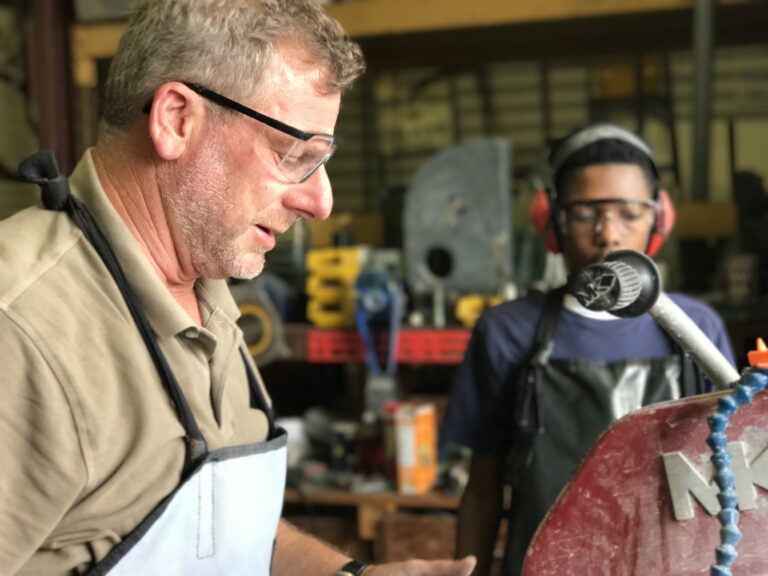
  • Welding: Metal objects can be welded together to create a new sculpture or functional item.

Examples of Upcycling Projects

Upcycling projects come in various shapes and sizes, from simple and easy to complex and challenging. The only limit is one’s creativity and imagination. Here are a few examples of these projects to inspire you:

  • Garden bench made from old wooden pallets: Turn unused wooden pallets into a beautiful and functional piece of outdoor furniture. With a bit of sanding and painting, you can create a rustic garden bench perfect for enjoying the outdoors.
  • Mosaic made from broken glass bottles: Transform broken glass bottles into a stunning mosaic by cutting the glass into small pieces and arranging them into a pattern or design. With a bit of glue and grout, you can create a beautiful and unique piece of art.
  • Refurbished furniture with new paint and hardware: Give an old piece of furniture a new lease of life by sanding it down, painting it with a fresh coat of paint, and replacing the hardware. A few simple updates can turn a drab and outdated piece into a stylish and modern one.
  • Quilt made from old clothes: Create a cozy and meaningful quilt by sewing together old clothes or fabric scraps. With a bit of creativity, you can make a quilt that tells a story or reflects your personal style.

Conclusion

In conclusion, the art of upcycling provides an opportunity for artists and creatives to make a positive impact on the environment while creating beautiful and unique pieces. Upcycling is a sustainable practice that is gaining popularity due to its benefits for the environment, society, and personal well-being. By repurposing and transforming discarded materials, upcycling reduces waste, conserves natural resources, and supports local economies.

Moreover, upcycling offers a creative outlet that allows individuals to express themselves while contributing to a more sustainable lifestyle. It encourages people to think outside the box and find new ways to use existing materials, leading to innovative designs and new solutions to environmental problems. By embracing upcycling, individuals can reduce their carbon footprint, support a circular economy, and make a positive impact on the planet.

And as always folks be sure to check out the Global Growth Forum and read some of the latest articles that are both interesting and informative. Also, read some of the latest articles in Hindi be sure to check out the Mojo Patrakar.

Exploring the Vital Role of Healthcare Providers in Promoting and Supporting Healthy Aging

Healthy aging is a concept that has become increasingly important as the world’s population continues to age. It involves promoting physical, mental, and social well-being throughout the aging process to improve quality of life and prevent disease. Healthcare providers play a critical role in promoting and supporting healthy aging. They provide patients with the tools and resources they need to stay healthy and age gracefully. This article will explore the role of healthcare providers in promoting and supporting healthy aging.

The role of healthcare providers in promoting healthy aging

Primary care providers are the frontline healthcare professionals who play a crucial role in promoting healthy aging. They provide preventive care services, such as screenings for chronic diseases like diabetes and hypertension. They also encourage healthy lifestyle choices such as a healthy diet, regular exercise, and smoking cessation. Geriatric specialists, on the other hand, focus on comprehensive assessments that identify potential health issues. If those health issues go unnoticed could affect the quality of life of older adults. This includes assessing medication regimens, identifying fall risks, and evaluating cognitive health.

Allied health professionals, including physical therapists, occupational therapists, and speech therapists, also have their own unique roles. They can help older adults maintain their independence by providing rehabilitation services. They help older adults recover from injuries or illnesses and improve their ability to perform daily activities. Mental health professionals also play an essential role in promoting healthy aging. They can help older adults maintain their cognitive health by identifying and treating issues such as depression and anxiety. 

Mental health professionals have an especially important role to play in the whole scheme of things. Since there are very horrific mental disorders that can take hold as we grow old such as dementia and Alzheimers.

Supporting healthy aging through patient education

Healthcare providers can also support healthy aging through patient education. They can encourage healthy lifestyle choices such as regular exercise, a healthy diet, and adequate sleep. They can also provide information about disease prevention and management. Healthcare providers can encourage patients to adhere to medication regimens and provide information about the importance of regular screenings and vaccinations.

Supporting healthy aging through community-based initiatives

Community-based initiatives can also play an essential role in promoting and supporting healthy aging. Healthcare providers can collaborate with community organizations to provide outreach programs for vulnerable populations. These populations include people such as those who are socially isolated or have limited access to healthcare services. They can also engage in health promotion campaigns that educate the public about the importance of healthy aging. And also provide resources to support healthy aging. Humans are social animals and it has been proven several times that isolation has a severely negative impact on us. These effects only amplify as we age, thus a community-based initiative has the potential to have an amazingly positive impact on Aging.

Challenges and solutions

Despite the importance of promoting and supporting healthy aging, there are still significant challenges that need to be addressed. Ageism and negative stereotypes about aging can lead to a lack of access to healthcare services. Similar things also lead to discrimination against older adults. Health disparities also exist in aging populations, particularly in underserved communities. But these challenges can be overcome with community efforts, and by promoting the positive sides of having elders around. But in order to have a lasting impact we need to promote things such as respecting elders on the family unit level.

Conclusion

In conclusion, healthcare providers play a critical role in promoting and supporting healthy aging. They provide patients with the tools and resources they need to stay healthy and age gracefully. Healthcare providers can support it through patient education and community-based initiatives. However, there are still significant challenges that need to be addressed to promote healthy aging, including ageism, negative stereotypes, and health disparities. It is crucial for healthcare providers to prioritize healthy aging in their practice and work together to address these challenges. By doing so, we can ensure that older adults can enjoy a healthy and fulfilling life.

And as always folks be sure to check out the Global Growth Forum and read some of the latest articles on a wide range of topics that are both interesting and informative. Also, if you are interested in reading some of the latest and most interesting articles in Hindi be sure to check out the Mojo Patrakar.

The Benefits of Global Education: Preparing Students for a Connected World

In today’s interconnected world, global education has become increasingly important. It offers students the opportunity to learn about different cultures and customs, gain skills for effective communication, and understand global issues and their impact. In this article, we will discuss the benefits of global education and how it can be implemented in schools and universities.

Global Education: What is it?

Global education refers to education that emphasizes the interconnectedness of the world’s nations, cultures, and economies. Its goals are to promote cultural awareness, empathy, and understanding, to develop global competencies and skills, and to encourage active participation in shaping the world’s future. The components of global education include the study of diverse cultures and languages, exposure to global issues, and the development of cross-cultural communication skills.

Benefits of Global Education

The benefits of Global Education can not be overstated as we move towards a more connected world. More people than ever are coming online with each passing year. Here are some of the most notable benefits.

Cultural Awareness and Understanding

Global education provides students with the opportunity to learn about different cultures, customs, and traditions. It enables them to develop empathy and tolerance towards people of different backgrounds. Understanding different cultures also allows students to appreciate diversity and avoid cultural stereotypes, leading to better communication and relationships.

Global Competency

Global education helps students to develop the skills necessary for effective communication across cultures. These skills include intercultural communication, global problem-solving, and critical thinking. By learning about global issues such as climate change, poverty, and inequality, students can become more aware of the interconnectedness of the world’s challenges and develop innovative solutions.

Career Opportunities

Global education increases employability and offers opportunities for international careers. In today’s global economy, many companies require employees with cross-cultural communication skills and the ability to work in diverse teams. It also opens up opportunities for international careers in areas such as diplomacy, development, and international business.

Personal Growth and Development

Global education is not only beneficial for career prospects but also for personal growth and development. It enables students to develop self-awareness and confidence by understanding their own culture and values, and how they compare to others. Additionally, it fosters adaptability and resilience, important qualities for success in an increasingly globalized world.

How Global Education can be Implemented

Global education can be implemented in various ways, such as through curriculum development and integration, study abroad programs, and cultural exchanges. Schools and universities can incorporate it into their curriculum by providing courses and modules that focus on diverse cultures and global issues. Study abroad programs and cultural exchanges provide students with hands-on experience in different countries, allowing them to gain a deeper understanding of different cultures and customs.

Online resources such as webinars, virtual conferences, and e-learning courses also offer students the opportunity to engage with global issues and cultures. These resources can be accessed from anywhere, making global education more accessible to students from different parts of the world.

Challenges to Adress

Despite the benefits of global education, there are challenges that need to be addressed. Funding and accessibility can be a barrier for many students who cannot afford to participate in study abroad programs or access online resources. Additionally, there is a lack of trained educators who can provide global education, especially in schools and universities that do not prioritize it. Finally, resistance to change in traditional education systems can also make it difficult to implement it.

Conclusion

Global education is essential for preparing students for success in a connected world. It provides students with the skills and competencies necessary to communicate effectively with people of different cultures and backgrounds, to understand global issues and their impact, and to develop innovative solutions. Educators, policymakers, and parents must work together to support global education and make it accessible to all students, regardless of their socioeconomic background. By doing so, we can prepare future generations to be responsible global citizens who can make a positive impact on the world.

And as always folks if you are interested in reading some of the latest articles that are both interesting and informative and cover similar topics be sure to check out the Global Growth Forum. And also, if you are interested in reading some of the latest articles in Hindi be sure to check out the Mojo Patrakar.

The Raft of the Medusa by Théodore Géricault: A Masterpiece of Romanticism

The Raft of the Medusa by Théodore Géricault is an iconic painting that has captivated audiences for over two centuries. This dramatic masterpiece depicts the aftermath of a tragic event that occurred in 1816, when a French frigate, the Méduse, ran aground off the coast of West Africa. In this article, we will explore the background, analysis, and reception of this renowned work of art.

The Historical and Artistic Context of The Raft of the Medusa

To fully appreciate the significance of The Raft of the Medusa, it is important to understand the historical and artistic context in which it was created. Théodore Géricault was a French artist who lived in the early 19th century, a time of great change and upheaval in Europe. The Romanticism movement was on the rise, and artists were seeking to express their emotions and experiences more objectively and personally.

Géricault was drawn to the story of the Méduse shipwreck, which had caused a scandal in France due to the mishandling of the survivors by the ship’s captain. The painting depicts the moment when the survivors were finally rescued, after being stranded on a raft for 13 days. Géricault spent months researching the event and interviewing survivors to create a realistic and dramatic representation of the scene.

Analysis of The Raft of the Medusa

The Raft of the Medusa is a large-scale painting that measures 16 feet by 23 feet, and it is known for its vivid and intense portrayal of human suffering. The painting is divided into two distinct sections: the chaotic and desperate scene on the raft, and the more hopeful scene in the distance, where a ship can be seen on the horizon.

The composition of the painting is carefully orchestrated to create a sense of movement and drama. The figures on the raft are arranged in a pyramidal shape, with the strongest and most determined survivors at the top, and the weakest and most desperate at the bottom. Light and shadow are also masterful, with the contrast between the dark and stormy sky and the bright, hopeful horizon creating a sense of tension and anticipation.

The symbolism of the painting is rich and complex. The raft can be seen as a metaphor for human society, with the survivors representing the various classes and social groups. The figures on the raft are depicted in various stages of despair, hopelessness, and determination, highlighting the resilience and strength of the human spirit in the face of adversity.

Reception and Impact of The Raft of the Medusa

The Raft of the Medusa caused a sensation when it was first exhibited in Paris in 1819. The painting was hailed as a masterpiece of Romanticism and a powerful commentary on the failings of the French government and society. It was also controversial, due to its graphic depiction of human suffering and the social and political critique it contained.

The painting has had a lasting impact on art and culture, inspiring numerous artists and writers throughout the years. It is considered one of the most important works of art in the Romanticism movement and a powerful symbol of human resilience and survival in the face of tragedy.

Conclusion

In conclusion, The Raft of the Medusa by Théodore Géricault is a remarkable work of art that continues to captivate audiences with its emotional intensity, vivid symbolism, and technical mastery. Through its depiction of human suffering and resilience, the painting offers a powerful commentary on the human condition, and a timeless reminder of the importance of empathy, solidarity, and hope in times of crisis. As a symbol of the Romanticism movement and a testament to the enduring power of art to move and inspire us, The Raft of the Medusa remains an iconic masterpiece of the art world and a source of inspiration and reflection for generations to come.

As we continue to study and appreciate The Raft of the Medusa, we can gain a deeper understanding of its significance and impact on art and culture. This powerful painting serves as a reminder of the resilience and determination of the human spirit, and a testament to the enduring power of art to inspire, challenge, and move us.

And as always folks be sure to check out the Global Growth Forum and read some of the latest articles covering similar topics that are both interesting and informative. Also, if you would like to read some of the latest articles in Hindi be sure to check out the Mojo Patrakar.

The Unconventional Wisdom of Diogenes: Exploring the Life and Philosophy of the Cynic Philosopher

Diogenes was a Greek philosopher who lived in the 4th century BCE. He was known for his unconventional lifestyle and philosophy that emphasized self-sufficiency and living in accordance with nature. Despite living over 2,000 years ago, Diogenes’ exploits continue to be discussed and admired to this day. In this article, we will explore the life and philosophy of Diogenes, as well as examine some of his most famous exploits.

Early Life and Philosophy

Diogenes was born in Sinope, a Greek city on the coast of the Black Sea. He was exiled from his hometown for defacing currency, which he believed was a corrupt practice. And He then traveled to Athens, where he began studying philosophy under Antisthenes, a philosopher who believed in living a simple and austere lifestyle. He adopted Antisthenes’ philosophy and began to develop his own ideas, which emphasized self-sufficiency and rejection of societal norms.

The Cynic Lifestyle

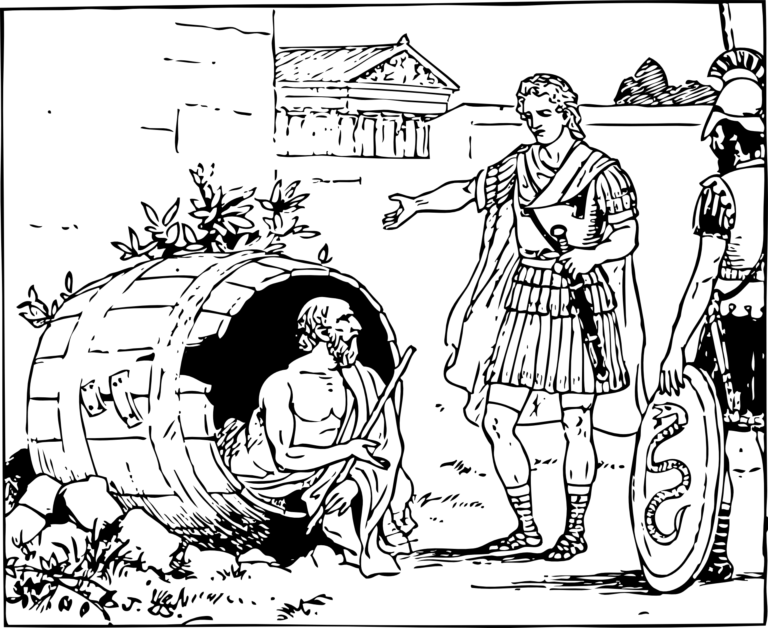
Diogenes’ philosophy led him to embrace the Cynic lifestyle, which rejected material possessions and emphasized living in accordance with nature. He believed that people should live like dogs, who were free from the constraints of civilization. To this end, he lived in a barrel, rejected clothing, and begged for his food. He believed that by living a simple and austere life, he could free himself from the constraints of society and achieve true happiness.

Diogenes’ Exploits

Diogenes’ unconventional behavior often attracted attention and ridicule from those around him. He famously lived in a barrel and rejected clothing, even in the middle of winter. Despite these actions, He used humor and satire to make philosophical points.

Featherless Biped

Diogenes had a funny way of showing his disdain for human exceptionalism. When Plato defined humans as “featherless bipeds with broad nails,” Diogenes plucked a chicken and presented it to him, saying, “Here is Plato’s human being.” He then went on to call humans “featherless bipeds,” which proved that we are no different from other animals. Way to ruffle some feathers, Diogenes!

Interaction with Alexander

When Alexander the Great visited Diogenes, he asked if there was anything he could do for him. Diogenes, being the comedian that he was, replied, “Yes, stand out of my light.” Alexander was so impressed by Diogenes’ wit that he said if he were not Alexander, he would like to be Diogenes. Talk about a power trip!

Iconic Quotes by Diogenes

Diogenes was known for his pithy and witty sayings that often challenged societal norms and conventions. Here are some of his most iconic quotes:

  • “I am not an Athenian or a Greek, but a citizen of the world.” This quote emphasizes Diogenes’ belief that all people are equal and that nationality is a superficial distinction.
  • “I am looking for a human being.” This quote highlights Diogenes’ belief that most people were not living up to their full potential as human beings.
  • “The foundation of every state is the education of its youth.” This quote emphasizes the importance of education in creating a just and stable society.
  • “I am called a dog because I fawn at those who give me anything, I yelp at those who refuse, and I set my teeth in rascals.” This quote illustrates Diogenes’ belief that people should not be afraid to stand up for what they believe in, even if it means being seen as an outsider or troublemaker.
  • “It is not that I am mad, it is only that my head is different from yours.” This quote highlights Diogenes’ belief that his unconventional behavior was not a sign of madness, but rather a deliberate rejection of societal norms.

These quotes continue to inspire people today, and His’ philosophy of living in accordance with nature and rejecting societal norms remains relevant and thought-provoking.

Conclusion

Diogenes’ exploits continue to be discussed and admired over 2,000 years after his death. His rejection of societal norms and emphasis on self-sufficiency and living in accordance with nature continue to inspire people to this day. Despite his unconventional behavior, He used humor and satire to make philosophical points. And had a significant impact on the development of Cynicism and later philosophical movements. His legacy continues to be celebrated and studied by philosophers and enthusiasts alike.

And as always folks be sure to check out the Global Growth Forum and read some of the latest articles that are both interesting and informative. Also, if you would like to read some of the latest articles in Hind be sure to check out the Mojo Patrakar.

The Future of Work: How Education and Skill Development Must Adapt to Technological Advancements

In recent years, technological advancements have transformed the way we work, communicate, and live our daily lives. The rise of automation, artificial intelligence (AI), the Internet of Things (IoT), and blockchain technology, are notable technological advancements. All of them have drastically changed the landscape of the workplace. In light of these changes, it is essential to examine how education and skill development must adapt. To keep up with technological advancements in the workforce.

In this article, we will take a look at how recent technological advancements have transformed the workplace. And also we will discuss how education and skill development must adapt to keep up with the changes.

Technological Advancements in the Workplace

Automation and AI are quickly becoming essential tools in the modern workplace. The use of robotics and machine learning has revolutionized production, and AI-powered chatbots are now handling customer service requests. Additionally, augmented and virtual reality is enabling remote work, and the Internet of Things (IoT) is automating routine tasks. Which is powerful for saving time and increasing efficiency. Blockchain technology is transforming the finance and supply chain industries. And big data and analytics are providing valuable insights into consumer behavior, enabling businesses to make data-driven decisions.

These advancements have not only transformed the existing workplaces but have given rise to completely new workspaces. Mainly virtual reality and virtual meeting technologies have given rise to virtual workplaces that can be joined from Home.

Impact on Education and Skill Development

The impact of these technological advancements on the workforce cannot be underestimated. Workers must adapt to new technologies and acquire new skills to remain relevant in a rapidly changing environment. There is now a shift towards skills such as data analysis, programming, and digital marketing. Workers must also develop soft skills, such as problem-solving, communication, and critical thinking, which are essential in a technology-driven workplace.

The increased demand for technological literacy and adaptability requires a shift in the way we educate and develop skills. Traditional education methods are no longer sufficient, and the rise of non-traditional learning opportunities, such as online courses, boot camps, and certifications, are becoming more popular. The emphasis is now on continuous learning and upskilling, as workers must keep up with the latest technological advancements to remain relevant.

Educational Adaptations for Future Workforce

The rapidly changing technological landscape in the workplace demands that education and skill development adapt accordingly. Traditional education methods are no longer sufficient to prepare workers for the future of work. There is a need for significant changes in education systems to keep pace with technological advancements and prepare the future workforce.

Early education on technology is essential to equip children with basic programming and digital literacy skills. Collaboration with industries can help develop curriculums that meet the changing demands of the workforce. There should also be a shift towards non-traditional learning opportunities like online courses, boot camps, and certifications, enabling workers to keep up with the latest technological advancements.

Hybrid learning environments that combine traditional and online learning methods can benefit workers in preparing for the future. Additionally, a greater focus on real-world problem-solving can be given, where workers apply skills in real-world scenarios.

Finally, technology should be integrated into education to enhance the learning experience and enable students to develop skills applicable in a technology-driven workplace. Online simulations and virtual reality tools can provide an immersive learning experience.

Conclusion

In conclusion, the future of work is rapidly evolving, and education and skill development must adapt to keep pace with technological advancements. Automation, AI, augmented and virtual reality, IoT, blockchain technology, and big data are transforming the way we work, and workers must be prepared to adapt to these changes. The traditional education system must shift towards non-traditional learning opportunities, upskilling, and the development of soft skills. Additionally, collaboration between educational institutions and industries can help create curriculums that meet the changing demands of the workforce. By taking action now and preparing for the future of work, we can ensure that the workforce is equipped with the skills necessary to thrive in a technology-driven world.

And as always folks if you are interested in reading some of the latest articles that are both interesting and informative and cover some similar topics be sure to check out the Global Growth Forum. And also, if you are interested in reading some of the latest articles in Hindi as always be sure to check out the Mojo Patrakar.

The Power of Mentorship in Education and Skill Building: How Mentors Can Guide Individuals to Achieve Their Goals and Reach Their Potential

Mentorship is a crucial component of personal and professional growth. It involves a relationship between an experienced individual (the mentor) and a less-experienced person (the mentee). The purpose of the relationship is to provide guidance, support, and feedback to help the mentee. And to develop their skills, knowledge, and confidence. In the realm of education and skill building, mentorship can play a particularly powerful role in helping individuals achieve their goals and reach their potential.

This article will explore the benefits of mentorship in education and skill building. Including the characteristics of effective mentors and mentees, and the different types of mentorship programs that exist.

Benefits of Mentorship in Education

Mentorship can have a significant impact on academic success, psychological well-being, self-confidence, and skill development. In terms of academic success, research has shown that mentorship can help students stay motivated, set goals, and perform better. Both inside their coursework and outside of it. Additionally, having a mentor can provide a sense of belonging and social support. Which is particularly important for students from marginalized or underrepresented groups.

Mentorship can also lead to positive psychological outcomes, such as greater resilience, decreased anxiety, and improved mental health. Having a supportive mentor who provides encouragement, feedback, and guidance can help students feel more confident in their abilities. Which would lead to them being better equipped to handle challenges.

Finally, it can help develop valuable skills, such as critical thinking, communication, and leadership. By working closely with a mentor, students can learn from their experience and expertise. They can receive feedback on their work, and develop a deeper understanding of their field of study.

Benefits of Mentorship in Skill Building

In the realm of skill building, mentorship can be particularly valuable in helping individuals acquire industry-specific knowledge, build a professional network, and gain exposure to diverse perspectives. By working with an experienced mentor, individuals can learn about the nuances of their field. Ultimately help them develop a deeper understanding of industry and best practices, and gain insights into career paths and opportunities.

It can also provide networking opportunities, as mentors can introduce mentees to other professionals in their field. Or even offer recommendations or referrals, and help them navigate the job market. Additionally, working with a mentor who has a different background or perspective can broaden an individual’s horizons. And help them develop a more nuanced understanding of their field and its challenges.

Characteristics of Effective Mentors and Mentees

For mentorship to be effective, both the mentor and the mentee must possess certain qualities. Effective mentors should have experience and expertise in their field, as well as strong active listening and communication skills. They should also be empathetic and supportive, willing to share their knowledge and provide constructive feedback.

Effective mentees, on the other hand, should be eager to learn, actively engaged in the mentorship relationship, open-minded, and receptive to feedback. They should also be proactive in seeking out opportunities to learn and develop their skills.

Types of Mentorship Programs

There are different types of mentorship programs that individuals can participate in, depending on their goals and preferences. Formal mentorship programs, for example, are structured programs that match mentors and mentees based on specific criteria, such as industry or career interests. Informal mentorship relationships, on the other hand, develop organically between individuals who have a mutual interest in learning from each other. Group mentoring programs can also be effective, particularly for individuals who benefit from a community-based approach to learning and skill building.

Conclusion

Mentorship is a powerful tool for personal and professional growth, particularly in the realm of education and skill building. Whether individuals are seeking to improve their academic performance, build their professional network, or develop new skills, mentorship can provide the guidance, support, and feedback they need to succeed. By seeking out or becoming a mentor, individuals can contribute to their own growth as well as the growth of others. Effective mentorship requires both the mentor and the mentee to possess certain qualities, such as experience, communication skills, eagerness to learn, and openness to feedback. Additionally, there are different types of mentorship programs available, including formal and informal mentorship relationships and group mentoring programs.

And as always folks be sure to check out the Global Growth Forum if you would like to read some of the latest articles that are both interesting and informative. Also, if you would like to read some of the latest articles in Hindi be sure to check out the Mojo Patrakar.

Soft Skills: Strategies for Developing and Improving Your Career Success

Soft skills are essential in today’s workplace, and they are becoming increasingly important for career success. With technological advancements and automation, the demand for technical skills is on the rise. However, the human element of work cannot be replaced, making soft skills a vital aspect of any job. In this article, we will explore the importance of soft skills in the 21st-century workforce and how individuals can develop and improve them to achieve success.

Defining Soft Skills: More than Just Technical Competence

Soft skills are the personal attributes and qualities that enable individuals to interact effectively with others in the workplace. They encompass a range of personality traits, social graces, communication abilities, and emotional intelligence. Unlike technical or hard skills, which are specific to a job or task, soft skills are transferable. Soft skills are virtually needed across a whole bunch of different roles and industries. Examples of soft skills include communication, teamwork, adaptability, problem-solving, emotional intelligence, and leadership. Although soft skills are difficult to measure or quantify, they are highly valued by employers. And they play a critical role in building successful careers.

Why Soft Skills Matter: The Importance of Human Interaction

In the workplace, soft skills are crucial for effective communication, collaboration, and building relationships. Employers are increasingly recognizing the importance of soft skills in their workforce. As they are realizing it contributes to higher productivity, job satisfaction, and employee retention rates. Soft skills help individuals develop better relationships with colleagues, managers, and clients. This is enabling them to work effectively in teams and lead successful projects. Additionally, soft skills help individuals adapt to changing situations, communicate effectively, and solve problems creatively. Given all the above things it is safe to assume that soft skills are super important in 21st-century workplaces. And they are important on both the individual level to form relationships and on the organizational level to increase productivity and efficiency.

Soft Skills and Career Success: Advantages and Benefits

Individuals with strong soft skills have a competitive edge in the job market. Soft skills can help job seekers stand out from the competition and impress potential employers during the hiring process. Employers are looking for individuals who can demonstrate strong communication skills, adaptability, and emotional intelligence. Soft skills also play a significant role in career advancement. As they enable individuals to build relationships with colleagues and managers, navigate workplace politics, and lead teams effectively. These days most of the interview processes also include a section primarily to test the soft skills of the applicants.

Developing and Improving Soft Skills: Strategies for Success

Developing soft skills is vital for success in the modern workforce. Strategies such as active listening, seeking feedback, and taking on leadership roles can help individuals improve their communication, teamwork, and problem-solving abilities. Attending workshops, and courses, or working with coaches and mentors can also enhance soft skills. In addition, reading books, watching videos, and engaging in online learning platforms provide flexible and accessible resources for personal and professional growth. By investing in their soft skills, individuals can gain a competitive edge and achieve career success.

Conclusion: Investing in Soft Skills for a Successful Future

In conclusion, the importance of soft skills in the 21st-century workforce cannot be overstated. The demand for technical skills may be on the rise, but the human element of work cannot be replaced. Soft skills are essential for effective communication, collaboration, and building relationships, which are all critical components of success in any workplace. Therefore, individuals and organizations should prioritize the development and improvement of soft skills to achieve career success and create a thriving, productive work environment. By investing in soft skills, individuals can enhance their professional and personal growth, while organizations can reap the benefits of higher productivity, employee satisfaction, and retention rates. So, let’s recognize the importance of soft skills and make an effort to cultivate and improve them for a successful future.

And as always folks be sure to check out the Global Growth Forum if you are interested in reading some of the latest articles that are both interesting and informative on a wide range of topics. Also, if you would like to read some of the latest articles in Hindi be sure to check out the Mojo Patrakar.
The Ethics of Gene Editing: Balancing Scientific Progress with Social Responsibility

Gene editing technology has emerged as a revolutionary tool that enables scientists to modify the DNA of living organisms. By doing so, they can edit out genetic defects, create new traits, and enhance the capabilities of living organisms. However, as with any technology, there are ethical concerns that arise with gene editing. It is important to strike a balance between the scientific progress that gene editing offers and the social responsibility to use it ethically.

Benefits of Editing Genes

Gene editing offers several benefits that make it a promising technology. It has the potential to improve human health by curing genetic diseases and preventing the spread of infectious diseases. It can also increase crop yields and help develop new therapies for a variety of ailments.

In the medical field, gene editing has the potential to cure genetic diseases, such as cystic fibrosis, sickle cell anemia, and Huntington’s disease, by correcting the underlying genetic defect. Additionally, gene editing can help prevent the spread of infectious diseases by altering the genetic makeup of mosquitoes, making them unable to transmit diseases like malaria or dengue fever.

In agriculture, gene editing can be used to create crops that are more resistant to pests, diseases, and environmental stressors, leading to increased yields and reduced food waste. Gene editing can also help develop new therapies for various ailments, including cancer, Alzheimer’s disease, and Parkinson’s disease.

Ethical Concerns with Editing Genes

Despite the many benefits that gene editing offers, there are ethical concerns surrounding the technology. Some of the main concerns include safety, unequal access to gene editing, and eugenics and social inequality.

One of the primary concerns with gene editing is the potential for unintended consequences. Gene editing can lead to off-target mutations, which could cause unintended harm to an organism. Additionally, there is the risk that gene editing could create new diseases or make existing ones worse.

Unequal access to editing genes is another ethical concern. Gene editing is expensive and requires highly specialized equipment and expertise, which means that only certain individuals or groups may have access to it. This could exacerbate existing social inequalities, leading to a situation where only the wealthy or privileged can benefit from gene editing.

Finally, there is the concern that gene editing could be used for eugenic purposes, leading to a society that is stratified by genetic superiority. This could lead to social inequality, discrimination, and even genocide.

Balancing Scientific Progress with Social Responsibility

To ensure that gene editing is used ethically, it is important to balance scientific progress with social responsibility. This can be done through regulation and oversight of gene editing research, informed consent, addressing unequal access to gene editing, and promoting diversity and inclusivity in gene editing research.

Regulation and oversight of gene editing research can help ensure that the technology is being used safely and ethically. This can be achieved through governmental oversight, independent review boards, and ethical guidelines.

Informed consent is also important to ensure that individuals are fully aware of the potential risks and benefits of gene editing and that their rights and autonomy are respected.

Addressing unequal access to editing genes is crucial to ensure that the technology is not used to exacerbate social inequalities. This can be achieved through government funding for gene editing research, subsidies for gene editing therapies, and public-private partnerships to increase access to gene editing technology.

Promoting diversity and inclusivity in gene editing research can also help ensure that the technology is being used for the benefit of all individuals, regardless of their background. This can be achieved through promoting diversity in research teams and engaging with diverse communities to ensure that their concerns and perspectives are being heard.

Conclusion

Gene editing technology has the potential to revolutionize fields such as medicine and agriculture, offering numerous benefits to society. However, it is important to carefully consider the ethical implications of gene editing to ensure that it is used responsibly and for the greater good. The ethical concerns surrounding gene editings, such as safety, unequal access, and eugenics, must be addressed through regulation, informed consent, and promoting diversity and inclusivity in research. By balancing scientific progress with social responsibility, we can maximize the benefits of gene editing while minimizing any potential harm. With responsible use, gene editing can create a healthier, more sustainable, and more equitable future for us all.

And as always folks be sure to check out the Global Growth Forum if you would like to read some of the latest articles that are both interesting and informative. Also, if you are interested in reading some of the latest articles in Hindi be sure to go to the Mojo Patrakar.