
Home Blog Page 583

National Pension System: Govt Mulls Ways To Make NPS More Attractive

The National Pension System Trust (NPS Trust) is a specialised section of the Pension Fund Regulatory and Development Authority, which is overseen by India’s Ministry of Finance. In India, the National Pension Scheme (NPS) is a defined contribution pension system with a voluntary component. In India, the National Pension System, like the PPF and the EPF, is an EEE (Exempt-Exempt-Exempt) vehicle, meaning that the entire corpus is tax-free at maturity and the entire pension withdrawal amount is tax-free.

The NPS began with the Government of India’s decision to end defined benefit pensions for all employees hired after April 1, 2004. While the scheme was originally intended solely for government employees, it was expanded in 2009 to include all Indian citizens aged 18 to 65, as well as OCI card holders and PIOs. PFRDA raised the National Pension System (NPS) entry age from 65 to 70 years old on August 26, 2021. Any Indian citizen, resident or non-resident, and Overseas Citizen of India (OCI) between the ages of 65 and 70 can join NPS and continue or postpone their NPS account up to the age of 75, according to the new rules. The Pension Fund Regulatory and Development Authority (PFRDA) is in charge of its administration and regulation.

With some Opposition-controlled states announcing plans to reintroduce the old defined-benefit pension scheme (OPS) for their employees and abandon the reform-oriented contributory national pension system (NPS), the Union government may suggest annuitizing the entire government contribution to NPS as an alternative. To improve their pension payouts, the government is considering enabling employees to invest more than 40% of the NPS corpus in systematic withdrawal plans and inflation-indexed products. Under the NPS, a person can withdraw 60% of the accumulated corpus from contributions made during their working years when they retire. It is also tax-free to make such a withdrawal. The remaining 40% is invested in annuities, which might offer a pension equivalent to around 35% of last salary drawn, according to estimates. Government employees used to receive 50% of their last wage as a pension under the OPS.

If 60% of the contribution is annuitized, which generally matches to the contribution by the federal and state governments, the NPS pension can be close to 45 percent of the last drawn wage. The 5% deficit can be closed by the concerned government donating a bit more to the NPS. According to an authoritative source, this is considered as a far better option than reintroducing the unsustainable OPS model. Employees will also be able to withdraw the corpus altogether from their personal contributions at the time of their departure. In response to a question in Parliament, the finance ministry recently stated that a government employee could contribute her full salary to the NPS for annuitization, potentially increasing the pension income to more than 50% of the salary.

Since FY20, Central government employees have been eligible for a deduction of 24 percent of their income for NPS contributions (employees’ contribution of 10% and employers’ share of 14 percent), and as many as 15 state governments have increased employers’ portion to 14 percent. Rajasthan revealed a plan in its FY23 budget to restore the previous pension scheme for all state government employees beginning in the next fiscal year, and Chhattisgarh followed suit. This, if enacted, might add to their financial burden.

Following the Centre’s implementation of the NPS for all new workers on January 1, 2004, several major states made it mandatory for their employees in 2004 or 2005, with Rajasthan joining on January 1, 2004 and Chhattisgarh joining on November 1, 2004. During this time, both of these states were ruled by either the BJP or the Congress. The ruling DMK in Tamil Nadu stated that OPS would be restored ahead of state legislature elections in early 2021. However, the DMK government has yet to reveal the initiative, ostensibly due to fiscal restrictions. Other states’ pension funds are managed by fund managers nominated by the pension regulator, however Tamil Nadu manages its NPS corpus autonomously. About 5.5 million state government employees were enrolled in NPS as of February 28, 2022, with Rs 3.61 trillion in assets under management (AUM). The scheme covers around 2.27 million central government employees and has an AUM of Rs 2.15 trillion. NPS results are substantially superior to those of other superannuation funds. For example, in FY22, government-sector subscribers received a return of over 10% under NPS, compared to 8.1 percent under EPFO and over 8% from a few of superannuation funds sponsored by insurance companies, the schemes that compete with NPS.

“OPS forces future generations to foot the bill for pensions.” Because of its unsustainable nature, governments may default on payment responsibilities, whereas NPS has a genuine corpus that would provide for a certain pension,” said Gautam Bhardwaj, co-founder of pinBox, a global pension-tech company dedicated to digital micro-pension inclusion in Asia and Africa. The country’s implicit pension debt (IPD) — central (civil) employees, state government employees, and the financing gap of the Employees’ Pension Scheme, 1995 — was 64.51 percent of GDP in nominal terms in 2004, according to a report by the Old Age Social and Income Security Project. Of fact, the actual IPD, or net present value of these future commitments, would have been far larger if the defence pension liability had been taken into account.

“Pension obligations on account of the Centre’s and states’ OPS are still off-balance sheet liabilities, and they’ve been growing since 2004,” Bhardwaj added. The pension bill will continue to climb until all employees who joined the federal government before January 1, 2004, and most large state governments before April 1, 2005, retire. Following that, the pension burden will be significantly reduced because employees who joined after the deadline are financed through a contributory NPS and will not require budget support. “As life expectancy rises, so does the pension load, which will persist for another two decades until the OPS-eligible employees retire.” Returning to the OPS will put more strain on state finances in the long run, according to India Ratings’ chief economist, DK Pant said.

State governments have been able to consolidate their finances in the previous decade thanks to institutional initiatives such as Fiscal Responsibility and Budget Management Acts, Value Added Tax, and NPS. With the exception of a few rare years, such as FY21, when Covid-19 resulted in a sharp increase in revenue spending, states have managed to keep their fiscal deficits around 3% of GSDP throughout the last decade. Fixed overheads in the form of establishment expenditure (mostly in the form of salaries, wages, bonuses, and pensions) account for more than half of all state revenue expenditure. Despite labour union demands, the Centre recently notified Parliament that it will not restore OPS. “If a subscriber desires a bigger pension, he or she may choose a higher percentage of the corpus (up to 100 percent) to be used for annuity purchase, which would result in a higher pension amount,” the Union finance ministry stated.


Delhi Business Blasters: Education And Teaching Entrepreneurship To Next Generation

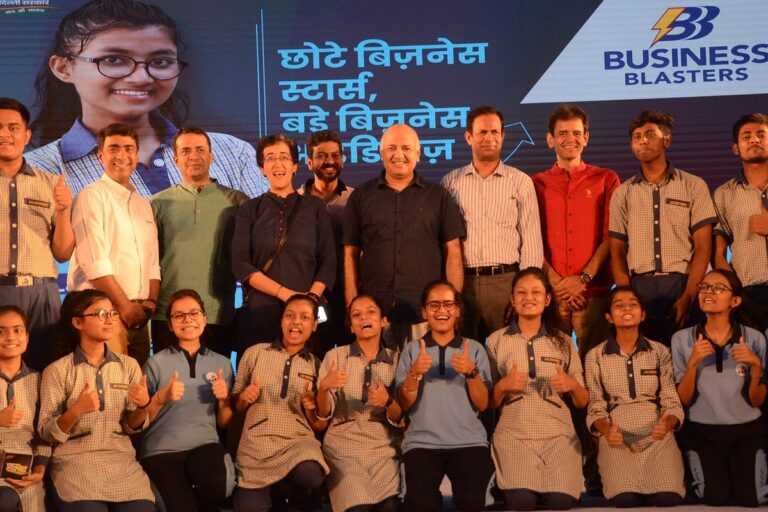
Business Blasters is a student entrepreneurship programme supported by the Delhi government’s seed money of 60 crores. 3 lakh Delhi Government school students in grades 11 and 12 were each given 2,000 rupees. They organised 51,000 teams and pooled their funds so that each team could receive up to $20,000 in seed money. Using the seed money, each team came up with and implemented a company plan. Zone judges chose 1,000 feasible business concepts from the 51,000 submitted. Business coaches from the entrepreneur community were assigned to these 1,000 teams in order to help them take their firms to the next level. Panels of investors and entrepreneurs selected the top 100+ investment-worthy enterprises, which are well on their path to being lucrative, scalable, and sustainable.

The Delhi Government’s Entrepreneurship Mindset Curriculum (EMC) includes a practical component called Business Blasters. It gives pupils the ability to direct their own professional pathways. Field projects, interviews, classroom activities, and live engagement with entrepreneurs are all part of this multi-component solution focused on experiential learning. Students learn to think big, take risks, spot possibilities, overcome obstacles, bounce back from setbacks, evaluate and learn, and strive relentlessly. Foundational skills such as confident communication, critical thinking, decision-making, cooperation, and more are also included. The EMC is India’s largest-ever grassroots entrepreneurship initiative.

Colleges should also adopt the Business Blasters programme: Kejriwal

On Wednesday, Delhi Chief Minister Arvind Kejriwal said the Business Blasters programme should be adopted in universities and colleges so that students’ entrepreneurial ideas don’t get stifled once they graduate. Students in Class 11 and 12 are given Rs 2000 each to generate business concepts as part of the Business Blasters programme. “So far, 52,000 business concepts have been produced by government school students.” The Business Blasters programme, in my opinion, should be adopted in schools and colleges as well.

“By doing so, they will ensure that their ideas do not reach a snag when they start college or university.” This would ensure that students are prepared when they leave college,” he remarked at the Guru Gobind Singh Indraprastha University (GGSIPU14th )’s convocation. “The educational system only assures that pupils pass tests and receive diplomas.” Before students leave college, there is a need to work with them and map out their professional paths. It’s great if they wish to continue their schooling. They need, however, be worked on if they desire to work. “I believe a goal-oriented approach is required,” he stated.

Kejriwal also mentioned his government’s doorstep delivery of services. “Our governance systems have existed since the time of the British, and they were set up to cause us problems.” However, we altered the system. “Just like you may get pizza over the phone, government services will arrive at your home,” he explained. On this occasion, 53,692 degrees were conferred, including 205 PhDs.

The university is implementing the National Education Policy, 2020, according to vice-chancellor Dr Mahesh Verma. He complimented Deputy Chief Minister Manish Sisodia for granting Rs 20 crore to the institution in the Delhi Budget, which he was also present for. Next year, the university will mark its silver anniversary, he said.

Delhi Govt’s Business Blasters Programme In Private Schools Also From Next Year: Manish Sisodia

“In the coming months, the Delhi government will start the initiative in private Delhi schools as well,” Sisodia said, citing the program’s success. On March 7, he stated, a conference with private schools will be arranged to determine how to proceed. Manish Sisodia, Delhi’s Deputy Chief Minister, announced on Saturday that the city government’s Business Blasters programme, which encourages pupils to think like entrepreneurs, will be implemented at private schools beginning next year. He was addressing at the Thyagraj Stadium’s Business Blasters Investment Summit and Expo, where over 100 government school kids’ business ideas were presented to investors. He claimed that the program’s success was due to the children’s hard work in government schools.

On March 7, he stated, a conference with private schools will be arranged to determine how to proceed. With the mindset of job searchers, India will not be able to grow to a USD 5 trillion economy, according to the minister. “Only by cultivating an entrepreneurial mindset among students across the country can we push the country’s economy to new heights. The Business Blasters programme has boosted the confidence of thousands of pupils in Delhi’s public schools, making it the Kejriwal administration’s most significant achievement “he stated.

Sisodia spoke with each team at the event and discussed how they could improve their business concepts. The minister stated that the Delhi government is committed to providing better education to every child in the city, and that programmes like as Business Blasters are helping to realise B R Ambedkar’s ambitions. He said that the Business Blasters Investment Summit and Expo is the country’s and the world’s first-of-its-kind programme for children. He urged investors to support children’s start-ups by investing in them and providing assistance. “Any government can only conduct such trials to a certain extent. Entrepreneurs are in charge of moving things forward from here “he stated.

He predicted that the Tatas and Birlas of tomorrow will emerge from among today’s rising business stars, forming the world’s largest corporations in 20 years. “As a result, the industry should work together to help these business stars advance,” he added. Investors put crores of rupees into their start-ups, according to a government statement. Investors noted that schoolchildren’s business ideas are highly unusual, and that they are certain that, based on their hard work and self-confidence, these children will contribute significantly to the country’s economy.

“Amazing concepts were given by government school kids at this expo. Some of the proposals are so realistic that they might be put into production right away. They have a lot of earning potential. We’ve narrowed down a few business concepts and will contact the team as soon as possible. Sujata and Taniya Biswas, founders of Suta, said, “We would love to provide guidance to the team on packaging and marketing front” (Mumbai). “What these kids have accomplished with little Rs 1000-2000 in starter money is remarkable. The finest thing is that their concepts were born out of community needs. I’ve already invested in three business ideas after being inspired by them,” stated Rajeev Saraf, CEO of Lepton Software (Gurugram).

“What these kids have accomplished with little Rs 1000-2000 in starter money is remarkable. The finest thing is that their concepts were born out of community needs. I’ve already invested in three business ideas after being inspired by them,” stated Rajeev Saraf, CEO of Lepton Software (Gurugram). ‘Let’s 3D,’ the creation of a team from Kalkaji’s School of Excellence, was one of the ideas showcased during the exhibition. “Customized printed 3D keychains, lights, and miniatures are available to consumers.” The team used their seed money to buy a 3D printer and has made a lot of money so far. According to the government statement, “the team has received over 100 orders through B-2-B.” Aditya Maurya, the team’s leader, stated that they are attempting to contact architectural firms in order to obtain 3D models of buildings. Team ‘Growth’ from Sarvodaya Bal Vidyalaya (SBV) in Netaji Nagar has created a bespoke e-cycle for children with impairments for just Rs 5,000. As it moves, a dynamo linked to the bike charges its battery.

Tushar, the team leader, stated that the goal of this cycle is to instil confidence in disadvantaged children that they, too, can ride a bicycle like other kids. He said, “We have secured a Rs 3 lakh investment from an investor to construct 50 such cycles.” SBV’s ‘Public Service’ team in Dwarka Sector-1 has created an alcohol detector that links to the steering wheel of autos and other vehicles. According to the statement, this gadget disables the vehicle’s engine if the driver is inebriated. Varun, the team’s leader, revealed that this device was created using computer programming and readily available hardware. He believes that this will aid in the prevention of drunk driving and, as a result, major traffic accidents.

After 54 years, Sri Lanka’s oldest airport reopens

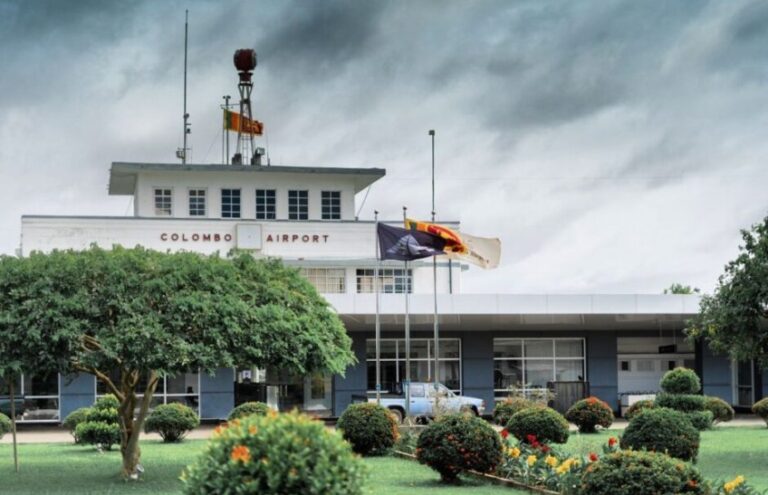
Ratmalana International Airport, Sri Lanka’s first and oldest international airport, reopened on Sunday after over five decades! A flight from the Maldives landed in Sri Lanka’s airport for the first time in 54 years, according to aviation officials. According to sources, the 50-seater Maldivian flight will fly three times a week to Colombo, with plans to increase to five times a week in the future.

Ratmalana International Airport is largely a domestic airport that serves Colombo, Sri Lanka’s capital. It was Sri Lanka’s first international airport and the country’s only international airport until Bandaranaike International Airport, Katunayake, opened in 1967. Several domestic routes are currently available, and the airport is home to a number of aviation training organisations. Following a recent loosening of laws, the airport is now open to international business jet operations and charter flights. The airport lies 15 kilometres south of the city of Colombo. The expanding Colombo Financial City, High End Tourism, and business travel needs of High Net Worth Individuals have all been acknowledged as strategic importance of Colombo airport, Ratmalana (HNWIs). RMA’s long-term strategy goal is to maximise the use of existing resources to bring the airport to full operational capacity. Corporate Jet Operations, Domestic Aviation Hub, Aviation Training Hub in the Region, FBO & MRO investments, and Regional Airports Operations are the five strategic sectors with particular plans established to attain this goal.

The State Council of Ceylon decided in 1934 to build an airport within easy reach of the capital city of Colombo, and Ratmalana was chosen as the ideal location. The first plane to land at the new airport was a De Havilland Puss Moth flown by Captain Tyndale-Biscoe, the Madras Flying Club’s main flying teacher, on November 27, 1935. It was utilised as a Royal Air Force airstrip during WWII, with No 30 Squadron flying Hawker Hurricanes against Japanese Navy planes from there. QEA flew civilianized Consolidated B-24 Liberator and Avro Lancastrian planes from Perth, Western Australia, on the world’s longest non-stop flying route at the time. After the conflict, the flight continued with an intermediate refuelling stop in the Cocos Islands.

Air Ceylon’s Douglas DC-3 Dakota and Lockheed Constellation planes used to fly out of Ratmalana airport, which was once the country’s primary air terminal. Douglas DC-4 Skymasters flew via the airfield on their way from the Netherlands to the Dutch East Indies in 1947. (Indonesia). BOAC operated Canadair Argonauts (DC4s with Rolls Royce Merlin engines) from Ratmalana to London in the 1950s. BOAC launched its Comet service between Colombo and London on August 11, 1952, three months after the first passenger jet flight. Air Ceylon later operated a Comet service on this route to London from March 1962 to March 1971. For a brief while in the 1950s, the airport was also a Trans World Airlines (TWA) destination. To replace Ratmalana, the government chose to establish the current Bandaranaike International Airport north of the city in 1964. Ratmalana handed over all international services to the new airport after it was built in 1967. Ratmalana was left with the country’s relatively modest domestic air travel market. After 55 years, the airport reopened for international traffic on March 27, 2022.

The airport’s background
The Ratmalana airport in Colombo, Sri Lanka, opened in 1938. There was a time when it was Sri Lanka’s primary international airport. However, the Bandaranaike International Airport in Katunayake was opened in the late 1960s, and Ratmalana was repurposed as a domestic airport. Bandaranaike International Airport soon became Sri Lanka’s primary airport, serving international aircraft. However, Ratmalana is still Sri Lanka’s oldest airport. Now, Sri Lanka’s Civil Aviation has announced that the night landing restrictions on domestic planes, which have been in effect since the civil war, will be lifted!

Ratmalana International Airport, Sri Lanka’s first and oldest international airport, reopened on Sunday after over five decades! A flight from the Maldives landed in Sri Lanka’s airport for the first time in 54 years, according to aviation officials. According to sources, the 50-seater Maldivian flight will fly three times a week to Colombo, with plans to increase to five times a week in the future. During a ceremony held at the airport on Sunday, Ratmalana welcomed its first group of overseas visitors. Previously, the Maldivian airline only flew to Colombo’s Bandaranaike airport, which is located on the fringes of the country.

According to the Civil Aviation Authority of Sri Lanka (CAASL), three weekly flights will operate between the Velana International Airport in the Maldives and the Ratmalana Airport in Sri Lanka (on Sundays, Tuesdays, and Thursdays). According to Maldivian Airlines officials, almost 9000 Maldivians live near the Ratmalana airport, which will now make travel more convenient for them.

Bharatmala Phase-1: Highway project cost overrun by 100%

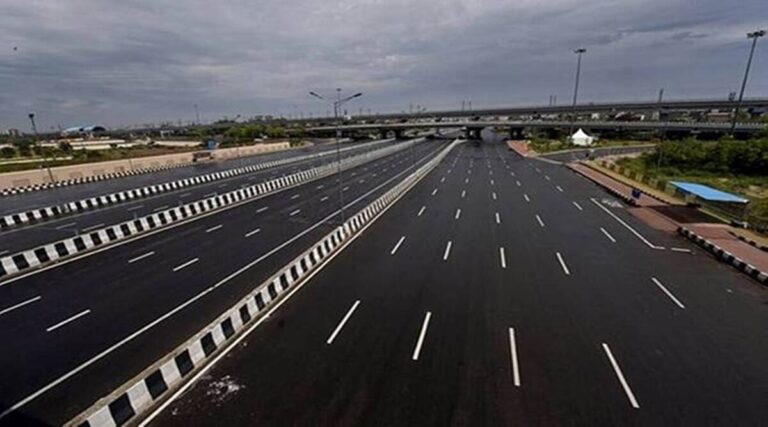
India’s 54,82,000 km (3,406,000 mi) road network is the world’s second largest, with only 2% (110,000 km) of national highways (NHs) handling 40% of all traffic. [4] Bharatmala phase-I will increase NH connectivity to 80 percent, or 550 districts, out of a total of 718 districts[5], up from 42 percent, or 300 districts, now connected (dec 2017). Shortest Route Mapping for 12,000 routes carrying 90% of India’s freight, commodity-wise freight flow study across 600 districts, automated traffic surveys across 1,500+ sites across the country, and satellite mapping of corridors to identify Bharatmala upgradation requirements.

The Bharatmala Pariyojana (lit. ‘India garland project’) is a Government of India-sponsored and-funded Road and Highways project. The overall budget for the 83,677 km (51,994 mi) of pledged new roadways is anticipated to be 5.35 lakh crore (US$70 billion), making it the single largest government road construction scheme (as of December 2017). The project will build highways from Maharashtra, Gujarat, Rajasthan, Punjab, and Haryana to the Indo-Myanmar border in Manipur and Mizoram, and then cover the entire string of Himalayan territories – Jammu and Kashmir, Himachal Pradesh, Uttarakhand – and then portions of the Uttar Pradesh and Bihar borders alongside Terai, and then move to West Bengal, Sikkim, Assam, and Arunachal Pradesh.

Connectivity to far-flung border and rural communities, especially tribal and backward areas, would receive special attention. By interconnecting 24 logistics parks, 66 inter-corridors (IC) totaling 8,000 km (5,000 mi), 116 feeder routes (FR) totaling 7,500 km (4,700 mi), and 7 north east Multi-Modal waterway ports, the Bharatmala Project will connect 550 District Headquarters (from current 300) through a minimum 4-lane highway, increasing the number of corridors to 50 (from current 6) and moving 80 percent freight traffic (currently 40 percent) to National Highways. The enormous umbrella initiative would encompass all existing highway projects, including the flagship National Highways Development Project (NHDP), which was initiated in 1998 by the Atal Bihari Vajpayee government. Other important Government of India projects, such as Sagarmala, Dedicated Freight Corridors, Industrial Corridors, UDAN-RCS, BharatNet, Digital India, Parvatmala, and Make in India, are both enablers and beneficiaries.

Bharatmala’s roadway infrastructure will be greatly improved:
1. Increase the number of NC corridors from six to fifty (6 NC and 44 EC)
2. Increase the freight rate on national highways from 40% to 80%.
3. Increase the number of districts from 300 to 550, with at least four-lane highways connecting them.

According to a parliamentary committee, the first phase of the mammoth highway project – Bharatmala pariyojna (BMP) – is projected to be near 100 percent over budget. The phase can now be completed by FY27, rather than the original goal of FY22, because just a fifth of the construction target has been met thus far. According to the parliamenary committee on highways’ report delivered to the Rajya Sabha on March 14, the cost of BMP Phase-I might be Rs 10.63 trillion, up from the previous estimate of Rs 5.35 trillion.

In October 2017, the government approved the first phase of the highway construction programme, which will cover 34,800 km (including 10,000 km of residual lengths under the National Highways Development Project) and cost Rs 5.35 trillion. It was projected that the whole length of the route be completed by 2021-22. The project’s completion date has been pushed back to 2026-2027 because only 20,632 kilometres (59.28 percent) have been granted and only 7,375 kilometres (21.19 percent) have been built as of December 2021.

The committee, led by TG Venkatesh, also stated that meeting the revised objective would be a “huge task for the ministry.” “Cost escalations have stemmed from the exponential growth in land acquisition costs combined with the rapid rise in commodity prices,” said Icra’s Rajeshwar Burla. The Bharatmala programme aims to close critical infrastructure gaps by implementing effective interventions such as economic corridor development, inter-corridor and feeder route development, national corridor efficiency improvement, border roads and international connectivity roads, coastal and port connectivity roads, and greenfield expressways. This programme also includes multi-modal integration.

Backward and tribal communities, sites of economic activity, places of religious and tourist attraction, border areas, coastal areas, and trading routes with neighbouring countries have all received special attention. While there has been significant progress on highway contracts and construction in recent years, including a record 37 km per day in the past fiscal year, analysts say the covid-19 epidemic, land acquisition issues, and the sheer scale of the programme have pushed the project completion deadline.

Bharatmala Phase-II DPRs have begun

The Road Transport and Highway Ministry has unveiled Bharatmala-II, the successor to its 2017 cousin. The government of India has announced the commencement of the second phase of its Bharatmala scheme. Under the auspices of this initiative, 5,000 km of projects will be built, with Detailed Project Reports (DPRs) being generated prior to project approval to speed up the implementation process. The Bharatmala initiative’s first phase, which has yet to be finished, seeks to build 34,800 km of roadways, including National Highways and other projects. “We will go for approvals for the second phase before Phase – I is completed,” a source familiar with the project told the media. We’ve learned from the first phase’s execution, when we encountered delays due to land acquisition and approvals that took a long time to arrive.” Union Minister Nitin Gadkari announced in December 2019 that Phase-I of the project, with a total cost of US$ 36 billion, will be finished by 2021-22. 2,000 kilometres of Border and International Connectivity Roads, 10,699 kilometres of road projects, 2,000 kilometres of Coastal and Port Connectivity Roads, and 6,000 kilometres of Inter-corridor and feeder roads are among the projects.

India’s infrastructure sector has a lot of potential, with the country having the world’s second-largest roadway network. While the industry is experiencing delays due to difficulties in the land acquisition process, there are other issues that need to be addressed in order to ensure that projects are implemented smoothly. Weather-related, traffic-related, or geography-related concerns frequently result in increased expenditures as a result of irregularities in the preparation of DPR reports. There is also more opportunity to address the disparity in state funding for infrastructure projects in order to pique private sector interest. In addition, procedures for expediting the required series of approvals and resolving any conflicts between the parties involved will need to be established. Ambitious projects to upgrade the nation’s roads infrastructure should hope to see greater fruition with the smoothing of imperfections that limit the sector’s growth.

FE Pharma Summit: How To Jumpstart An Innovation Revolution

According to a GlobalData poll, 35% of pharmaceutical industry specialists feel the COVID-19 epidemic has accelerated digital transformation by more than five years in the pharmaceutical business. Apart from virtual connections, industry insiders feel that technology has aided Indian Pharma in training and linking doctors with worldwide specialists for information transfer, and that this trend would continue in the future. However, the pharmaceutical business is currently under new pressures. Apart from a clogged supply chain, the rise in raw material and API (active pharmaceutical ingredients or medicinal ingredients) prices are substantially to blame. According to IDMA, industry has been experiencing significant cost increases as a result of imported raw materials and excipients, with some of these increases being quite substantial. While this is a challenge that Indian pharma is now facing, the industry’s main goal is to transition from being the world’s pharmacy to becoming an innovation hub. The FE Pharma Summit will bring together key stakeholders to explore what the sector needs to do to go forward on this path, as well as what role the government may play as an enabler. The role that technology can play in this is also being considered. How can they look at developments in drug discovery, nanotechnology, and other areas and encourage think leaders to debate how to build the industry in a way that is both successful and sustainable? Some say that one approach to deal with Chinese competition is to use sustainable or green manufacturing. Finally, there’s the issue of the constantly shifting regulatory landscape. What some of the more recent provisions may imply for the sector and the future.

On Thursday, March 24th, the first session of the two-day FE Pharma Summit 2022 began with the topic of transforming India from being the world’s pharmacy to emerging as an innovation hub. Leading figures from the Indian pharmaceutical industry, including Dilip Shanghvi, founder and managing director of Sun Pharmaceutical Industries; Pankaj R. Patel, chairman of Zydus Cadila; Glenn Saldanha, chairman and managing director of Glenmark Pharmaceuticals; and Kiran Mazumdar-Shaw, executive chairperson of Biocon Ltd and Biocon Biologics Ltd, took part in the panel discussion. Making India a centre for clinical trials, as well as taking efforts to develop a market in India for novel pharmaceuticals, as is the case in China, were some of the topics discussed in depth by industry professionals, who presented clear and practical plans to create an Indian market for unique drugs and enabling environment.

Pankaj Patel, for example, advised that a Rs 50,000 crore fund of funds for medicines be established to stimulate research, support research institutes, industry, and generate markets. “That’s how I’d like to go with the voyage.” If that happens, India might have at least five new chemical entities in the globe,” he said. “As a short-term measure,” Kiran Mazumdar-Shaw said, “it would help to ensure academic and corporate partnerships in research if we could delve into the 50, 000 crore National Research Foundation (NRF) that has been created and at least allocate half of that to industrial research, of which the pharma industry deserves a big chunk.”

Kiran Mazumdar-Shaw, executive chairperson of Biocon Ltd and Biocon Biologics Ltd, also thought there was a case for tweaking the Indian accounting system to make R&D a capital investment rather than an expense, so investors could be convinced of the importance of high-risk, high-return investments in innovation to reap the benefits of non-linear growth. “We need regulatory reforms,” she continued, “which the Central Drugs Standard Control Organisation (CDSCO) is proposing on the basis of the need to develop in terms of giving strategic boost to research and innovation in the country.” There is a need to build regulatory science and faster regulatory pathways that are not only constrained by strictures, but also ensure that deemed approval processes are completed in a timely manner. She pointed out that the upcoming new regulations will get us closer to awarding considered approvals, which, if implemented, might speed up the innovation process even more.

She went on to say that the government should provide risk capital grants and incentives for drug innovation, such as the reinstatement of the weighted tax deduction. She also proposed a patent box system. Kiran Mazumdar-Shaw believes that using India’s assets and making India a significant worldwide destination for clinical trials is necessary to accelerate innovation. She claimed that India had good medical centres, CROs, physicians, and other factors that might be used to make the country a popular destination for clinical trials.

Glenn Saldanha, chairman and managing director of Glenmark Pharmaceuticals, agreed that creating an ecosystem would be difficult without government support. Dilip Shanghvi, who agreed with everything his co-panelists and industry friends said, was optimistic that Indian pharma businesses will be able to duplicate their success in the innovation sector, as well as the kind of influence they had in generic medication manufacture. Glenn Saldanha went on to say that the government should promote industry through funding, tax incentives, and regulatory reforms. He cited China as an example of how the country was able to exploit its vast domestic market to attract foreign investors while simultaneously investing in innovation and growing indigenous competence. He also believes that alternate funding mechanisms, such as partnerships, are the only way for many Indian pharmaceutical businesses to fund innovation in the country because they cannot afford to do it all on their own.

“In order to enhance innovation in India, there is a need to streamline regulatory environment, incentivize research and development in such a way that India companies are encouraged to participate in high risk research,” Dilip Shanghvi stated in his closing remarks, agreeing with the other panellists. He also believed that India needs to entice international corporations to do research in the country by developing an environment that would allow them to exploit their research through tax benefits, easy access, and the ability to price their products differently in India.

As India approaches an inflection moment in its global growth journey in the pharmaceutical sector, it is hoped that some of the constructive and realistic ideas and policy measures offered by industry leaders will be mirrored in government policy measures. It is now commonly referred to as the ‘global pharmacy.’ This is due to the fact that it is the country with the most drug manufacturing facilities for tablets and pills outside of the United States, and as a result, global consumption of Indian-made medicines is high. In the case of the United States, which is a lucrative worldwide market for pharmaceuticals, one out of every three tablets used in the country is manufactured in India. India is also a big vaccine producer. However, the epidemic has resulted in numerous unanticipated reversals, with the only good impact being a swift ascent of healthcare into policymakers’ minds, as well as an awareness of the necessity of innovation. Taking use of India’s existing capabilities and embracing some of the industry titans’ recommendations could go a long way toward creating the much-needed enabling environment for innovation.

Cryptocurrency is Virtual, Risks are Real – The Indian Dilemma

A cryptocurrency is a digital currency represented by an encrypted data string. A peer-to-peer network known as a blockchain oversees and organises it, as well as serving as a secure database of transactions such as buying, selling, and transferring. Cryptocurrencies, unlike actual money, are decentralised, meaning they are not issued by governments or financial organisations. Cryptocurrencies are created (and secured) by cryptographic methods that are maintained and confirmed in a process known as mining, in which transactions are processed and validated by a network of computers or specialised hardware such as application-specific integrated circuits (ASICs). The miners that run the network are rewarded with cryptocurrency as a result of this operation.

The Present Situation

Is it unlawful in India to use cryptocurrencies and virtual digital assets (VDAs)? While every investor wishes to see what lies beneath the fine lines, the short and sweet answer is that VDAs – of which cryptocurrencies are a subset – are not prohibited in India as of March 2022. VDAs, as well as cryptocurrencies, can be traded online through cryptocurrency exchanges. However, in terms of governmental regulations, the sword of Damocles hangs over the future of cryptocurrencies in India. It’s worth noting that the Cryptocurrency and Regulation of Official Digital Currency Bill, 2021, is still pending in Indian parliament in a terrifying form (hopefully by May 2022).  The bill intends to outlaw all private cryptocurrencies in India, but with several exclusions to promote blockchain technology. It also establishes a framework for the Reserve Bank of India to issue central bank digital currency (CBDC).

The silver lining in the cloud is India’s recent union budget, in which the finance minister defined Virtual Digital Assets (VDAs) and proposed a 30% flat income tax on capital gains from VDAs (including cryptocurrency), which many analysts have interpreted as a positive step toward a shift in Indian lawmakers’ stance. However, just a few people may be aware of what is available in the store.

The Pie’s Size

On the business front, according to coinmarketcap, the global market capitalization of cryptocurrencies as of March 09, 2022 is close to USD 2 trillion, with over 10,000 cryptocurrencies in circulation. According to a survey provided by chainanalysis, India is ranked second in the world for Crypto Adoption Index (2021). In one of their interviews, co-chairs of the Internet and Mobile Association of India (IAMAIBlockchain )’s and Crypto Assets Council (BACC) stated that approximately 15-20 million cryptocurrency users in India hold around USD 0.9 billion (INR 6.6 billion) in crypto assets, making India a potential market for cryptocurrencies and other VDAs. According to a monograph released in India, there are roughly 350 crypto start-ups and two crypto unicorns by the Observer Research Foundation.

Government Policy

The Reserve Bank of India (RBI) has taken a strong stance against private cryptocurrencies, but it is a strong supporter of Central Bank Digital Currency (CBDC). Cryptocurrencies, according to RBI Deputy Governor TR Sankar, are a danger to the country’s financial and macroeconomic stability. He also issued a warning to investors. The RBI’s circular dated April 06, 2018 expressly prohibited all regulated banks, including cooperative banks, from dealing in virtual currencies (VCs) or providing services to assist any person or entity in dealing with or settling VCs. It also prohibited banks from maintaining accounts, registering, trading, settling, clearing, lending against virtual tokens, accepting them as collateral, opening accounts with exchanges dealing with them, and transferring / receiving money in VCs.

It further said that any current relationships with such clients should be terminated within three months of the circular’s date. IAMAI challenged the circular in the Supreme Court of India, and on March 4, 2020, the court ordered the RBI circular to be set aside. The RBI issued a circular on May 31, 2021, asking banks not to use its 2018 order as a grounds to refuse banking services to customers who trade cryptocurrencies. Although numerous important developments have occurred since then, including a high-level discussion on VDAs convened by Prime Minister Modi on November 21, there has never been a genuine ban on any part of crypto currency.

The volatile nature of cryptocurrencies’ fluctuating values, the lack of a centralised authority, no explicit grievance redress mechanism, lack of transparency, and a sense of overpromise – the dangling chimaera of big profit, especially to young customers – all worry financial regulators and legislators. Financial authorities, particularly the RBI and SEBI, prioritise end-client safety. The use of renowned influencers to portray over-promise and beautiful ads hides the true extent of the hazards involved with digital assets and cryptocurrencies. With this in mind, India’s Advertising Standards Council of India (ASCI) – the industry self-regulatory organisation (SRO) – has issued advertisement guidelines for the promotion of VDAs, which will take effect on April 1, 2022, and require all VDA products and services to include the following disclaimer: “Crypto products and Non Fungible Tokens (NFTs) are unregulated and can be highly risky. There may be no regulatory recourse for any loss from such transactions.” This is yet another step toward raising public understanding about the risks involved with cryptocurrency.

The Road Ahead 

Finally, the main question is what will happen to cryptocurrencies in India once the law is filed in parliament, taking into account business, technology, and regulatory considerations. Will the government follow RBI’s advice, despite lobbying efforts, and choose a different path? The deputy governor of the Reserve Bank of India has previously hinted at that. In a recent speech on February 14,2022, he stated unequivocally that four out of five cryptocurrency investors have ticket sizes of less than INR 10,000, with an average ticket size per account of around INR 1566, which is not a large investment at the moment, but could be large in the future if allowed. If cryptocurrencies are outlawed in India, these young investors will still be able to use them outside of the country. Raguram Rajan, the former Governor of the Reserve Bank of India and a brilliant economist, shares similar views on cryptocurrencies.

The dilemma that India’s public policy faces is whether the country’s goal, timing, and degree of maturity of end consumers are ripe for cryptocurrencies. They will go deep into the veins and arteries of this country if they are allowed openly, and given that 65 percent of our population is under the age of 35, and practically every young woman and man is connected to a digital highway through her smartphone, the repercussions could be unforeseen. Policymakers and multilateral agencies such as the IMF and the World Bank are still seeking for evidence and lessons learned from nations such as El Salvador, where Bitcoin became legal cash in September.

In India, IAMAI and BAAC may be able to persuade policymakers to enable a self-regulatory system and take an incrementalist policy approach to VDAs through persistent policy engagement. Rather than flashy ads, crypto currency service providers should engage on awareness and stakeholder education infrastructure. They must participate in, advocate for, and benefit from techniques such as the RBI’s regulatory sandbox framework. Advocacy activities must take a hybrid strategy, which necessitates co-habiting with legislators and regulatory bodies to assuage their concerns about end users’ interests, not just in big cities, but also in rural villages.

On a philosophical level, the birth of cryptocurrency is similar to an antithesis to the current financial system. The reality, on the other hand, is rather different. To live and thrive, the concept and technique may need to adapt to current realities, allowing for breakthroughs such as Decentralized Finance (DeFI), Decentralized Internet, Decentralized Autonomous Organizations (DAOs), Smart Contracts, and Enterprise use cases. In the Indian ecosystem, cryptocurrency as a medium of exchange may still have a long way to go. Crypto exchanges, experts, and lobbying organisations must remember an old adage: Slow and steady wins the race; they must not kill the golden goose in the zeal of dynamic technology.

Godrej Properties aim Rs 2,000 crore revenue from 33-acre housing project in Bengaluru

The Godrej Corporation

Real estate development, fast-moving consumer products, sophisticated engineering, home appliances, furniture, security, and agri-care are all part of the Godrej Group’s diverse business portfolio. Despite the fact that many of our companies are privately held, our publicly traded organisations have a combined market capitalization of more than USD 15 billion. The Godrej Group is one of India’s most varied and trusted conglomerates, with annual turnover of USD 5 billion and an estimated 1.1 billion people using one or more Godrej products everyday.

In the pre-independence decades, the Godrej Group was founded in 1897 with the goal of demonstrating economic self-sufficiency and superiority inside India. The organisation has a historic history of creating important products and constructing businesses that serve the country’s interests, from fire-resistant safes to one of the world’s first soaps made from vegetable oil and the voting boxes for independent India’s first general election. We’ve always prioritised people and the environment over profits. Philanthropic trusts that work on environmental, educational, and health-care issues in India possess around 23% of the promoter stock in the Godrej Group. Through our Good & Green strategy of shared values, we are also bringing together our passion and purpose to make a difference by creating a more employable Indian workforce, building a greener India, and innovating for ‘Good’ and ‘Green’ products.

PROPERTIES OF GODREJ

Godrej Properties is a real estate company that follows the Godrej Group’s concept of innovation, sustainability, and quality. Every Godrej Properties project blends a 123-year tradition of excellence and trust with a dedication to cutting-edge design and technology. Godrej Properties has won over 250 awards and recognitions in recent years, including ‘The Most Trusted Real Estate Brand’ in 2019 from the Brand Trust Report, ‘Real Estate Company of the Year’ at the 9th Construction Week Awards 2019, ‘Equality and Diversity Champion’ 2019 at the APREA Property Leaders Awards, ‘The Economic Times Best Real Estate Brand 2018’, and ‘Builder of the Year’ at the CNBC-Awaaz Real Estate Awards 2018.

Over the years, our projects have achieved numerous firsts in the Indian real estate industry. When finished in 2008, the Planet Godrej skyscraper in Mumbai was India’s tallest occupied structure. It was also the first project in the country to provide inhabitants with a fire escape chute, demonstrating our commitment to customer safety and well-being. Godrej BKC, our commercial office project, is the only LEED Platinum-rated skyscraper in India’s most prestigious commercial sector, Bandra Kurla Complex, proving Godrej Properties’ dedication to environmental sustainability. In 2015, a huge international pharmaceutical business purchased space in this project for INR 1,479 crore, breaking the record for India’s costliest ever commercial end-user sales transaction. The Trees, our flagship project, is one of India’s most sustainably designed mixed-use developments, and we hope it will contribute to the country’s progression of urban design thought. Within six months of launching this project in 2015, we sold over INR 1,200 crore worth of space, making it one of the country’s most successful residential project launches.

The country’s metropolitan landscape is set to change substantially in the future decades, with an estimated 10 million Indians relocating into urban areas each year. We are convinced that India should take advantage of the chance to urbanize in a sustainable way. Our organization has always been in the forefront of the struggle for environmental sustainability. When it was finished in 2004, the CII-Godrej Green Building Center in Hyderabad became the first LEED Platinum building outside of the United States and the world’s highest-rated LEED building. Godrej Properties pledged in 2010 that every project it develops will be a certified green building. Many of our projects have since been awarded LEED Platinum certifications, which are widely regarded as the most prestigious sustainability awards. The Clinton Foundation chose Godrej Garden City, a huge township project in Ahmedabad, as one of just two projects in India and 16 worldwide to work with them in the goal of achieving climate positive development. The GRESB (Global Real Estate Sustainability Benchmarking) research, which is an industry-led sustainability and governance benchmarking platform, ranked us second in Asia and fifth in the world in 2016.

Godrej Properties became a publicly traded firm in 2010 after a successful initial public offering (IPO) that raised USD 100 million. In 2016, Godrej Properties established a fund management company, Godrej Fund Management, which raised USD 275 million in the country’s largest residential real estate focused fund raising. We are one of India’s few national developers with significant presence in the country’s most important real estate markets. Godrej Properties became India’s largest publicly traded real estate developer by sales value in the financial year 2016, having sold over INR 5,000 crore of real estate. We also supplied 0.56 million square metres (6 million square feet) of real estate in seven Indian cities during the same year. We think that it is the people who work at Godrej Properties that enable us to create an exceptional company brimming with talent, dynamism, and inspiration. Godrej Properties has been named as the number one real estate developer and among the top fifty companies overall for four consecutive years by the Great Places to Work Institute in association with the Economic Times, in appreciation of our employees and practices.

Godrej Properties expects a turnover of Rs 2,000 crore from a 33-acre home project in Bengaluru 

Godrej Properties Ltd announced on Monday that it has signed an agreement to develop a 33-acre land parcel in Bengaluru, with income expected to be over Rs 2,000 crore from the future residential project. Godrej Properties said in a regulatory filing that the land is in the residential micro-market of Bannerghatta Road in South Bengaluru. “The new project along Bannerghatta Road will have a developable potential of around 3.4 million square feet of saleable space, with an expected revenue of over Rs 2,000 crore,” it continued. The arrangement calls for an outright purchase with the landowners receiving a 5% area share. “Bannerghatta Road is an important micro-market inside Bengaluru, and we are thrilled to add this land piece to our portfolio,” said Mohit Malhotra, MD & CEO of Godrej Properties. He stated that this will help the company increase its presence in South Bengaluru and is in line with the company’s aim of “deepening its presence in key micro markets throughout India’s main cities.”

Bannerghatta Road, according to Godrej Properties, is one of the most established residential areas in South Bengaluru, with great access to the Bannerghatta Main Road and Electronic City’s IT/ITES belt. Godrej Properties purchased a 50-acre land piece in Sonipat, Haryana, for plotted development earlier this month. Godrej Executive Chairman Pirojsha Godrej said in an interview with PTI last month that the business expects to invest roughly Rs 7,500 crore in the next 12-18 months on the purchase and development of new real estate projects. He was optimistic about the housing and commercial real estate segments’ future prospects, particularly in four main markets: the Mumbai Metropolitan Region (MMR), Delhi-NCR, Bengaluru, and Pune, where the company has a significant presence.

“Over the next 12-18 months, we will invest USD 1 billion (about Rs 7,500 crore) in the development of new projects,” Pirojsha said. Godrej Properties, the largest listed real estate firm in terms of sales bookings in the previous fiscal year, acquires new projects through outright land purchases and collaborative ventures with landowners. The Mumbai-based company is expected to break the previous year’s record of Rs 6,725 crore in sale bookings in the 2021-22 financial year. Housing sales rebounded in 2021 following a severe drop the year before due to the pandemic. In the first nine months of current fiscal year, practically all major publicly traded real estate developers saw an increase in sales.Housing sales in eight major cities grew 13% in 2021, to 2,05,936 units, from 1,82,639 units the previous year, according to real estate expert PropTiger.com. Anarock, a real estate brokerage firm, said that in 2021, sales in the top seven cities increased by 71% year over year to 2,36,530 units.

Behind the world’s face, Ghaziabad and the secret real estate industries

In the National Capital Region, Ghaziabad is one of the most popular real estate destinations (NCR). The city has experienced tremendous expansion as a result of its closeness to Delhi, critical infrastructure, and strong connections. Ghaziabad, a city in Uttar Pradesh, is located in the eastern region of the Delhi-National Capital Region. Ghaziabad is 28 kilometres from Delhi, 24 kilometres from Noida, 46 kilometres from Faridabad, and 62 kilometres from Gurgaon.

National highways such as NH-24, NH-58, and NH-91 pass through the city, making it well connected to all nearby cities. The 22-kilometer connection road between Greater Noida and Ghaziabad, which connects Greater Noida’s bustling Zeta sector with the NH-24’s Vijay Nagar Bypass, will improve connectivity. People travelling between Noida and Ghaziabad are expected to save time and money by using the link route. The Eastern Peripheral Expressway (Kundli-Ghaziabad-Palwal) project would further strengthen Ghaziabad’s thriving real estate industry. The introduction of the Metro, the plan for a Rapid Metro link from Delhi to Meerut through Ghaziabad, and the construction of multiple flyways and flyovers have improved the city’s connectivity with the rest of the NCR. The Delhi Metro line is already operational until Vaishali, and it is planned to gradually extend the network to other parts of the city.

Construction of infrastructure

The Ghaziabad Master Plan has made a substantial contribution to the development of world-class infrastructure in this region, which has accelerated the city’s real estate expansion. Authorities like as the Ghaziabad Growth Authority (GDA), the Uttar Pradesh Awas Vikas Parishad, local municipal corporations, and others have also contributed to the city’s planned development. The state government intends to enlarge roads and build many underpasses, foot over bridges, service lanes with green belts, and other infrastructure improvements that would have a significant impact on the city’s total infrastructure. The Faridabad-Noida-Ghaziabad FNG corridor and the Ghaziabad-Meerut highway are also in the works.

The GDA intends to build the 18-kilometer-long four-lane Hindon Elevated Road, which will serve to relieve traffic congestion and improve the city’s connectivity. The road will begin at the NH-24 bypass and end at a Hindon road connecting NH-58 and Loni. Ghaziabad is one of the most revenue-generating cities in Uttar Pradesh, including small, medium, and large-scale enterprises. Bulandshahr Road Industrial Area, G. T. Road Industrial Area, B S Road Industrial Area, Loni Road, Sahibabad Industrial Area, and others are just a few of the industrial sectors in Ghaziabad.

Development of real estate

In recent years, Ghaziabad has seen new heights in terms of real estate development. Despite not growing as quickly as Gurgaon or Noida, the city has enormous growth potential. The demand for real estate developments is solid, and the supply has been enough thus far. Ghaziabad’s real estate market provides excellent investment opportunities for investors, as well as the promise of substantial returns and capital gain in the next 3-4 years.  Ghaziabad’s social infrastructure is well-established, which is a big draw for property buyers. In this area, there are numerous reputable schools, colleges, hospitals, banks, malls built by reputable builders, and commercial complexes. Those who cannot afford to buy property in Noida or Gurgaon might choose Ghaziabad as an alternative, as the city’s property prices are lower.

Indirapuram, Vaishali, Vasundhara, Raj Nagar Extension, and Crossings Republik are some of the areas in Ghaziabad where real estate is booming. Property prices differ from one part of the city to the next. While a 2bhk (about 1300 sq ft) in Raj Nagar Extension costs around Rs 30-40 lakh, it might cost around Rs 40-50 lakh in Indirapuram. The average price per square foot in Ghaziabad is between Rs 3,000 and 4,000. Ghaziabad has residences in the luxury, ultra-luxury, and budget classes, attracting purchasers from all walks of life. Buyers are drawn to this region by the growth of the industrial sector. In the last year, Ghaziabad has seen a 25 to 35 percent increase in its value.

Ghaziabad is seeing a flood of new projects in the residential, commercial, corporate, industrial, and hotel sectors. In this location, real estate developments are being developed by companies like as Amrapali, Gaursons Ltd, Supertech, Ashiana Housing, Wave City, SVP, Antriksh, Ajnara, Landcraft, and others. ATS Advantage, Sanskriti, Cascade, Wave City, Landcraft’s Golf Links, Colista Towers, Angel Mercury, Bankey Bihari Sharan, Javin Raj Empire, and others are some of the residential projects in Ghaziabad.

With enhanced connectivity, the long-awaited link road between Greater Noida (Zeta Sector) and Ghaziabad (Vijay Nagar Bypass) is expected to stimulate the real estate market in this corridor. Builders are optimistic about the real estate boom in this area, and numerous commercial and residential projects have already begun construction. According to market experts, a minimum of a 20% increase can be projected in this period.

Ghaziabad: A builder’s son and nephew have been detained in connection with a Rs 100 crore real estate fraud

On Sunday, two more people were arrested in connection with the alleged Rs 100-crore fraud perpetrated by a Ghaziabad developer and his family in collusion with State Bank of India employees (SBI). According to authorities, this is the case’s eighth arrest.

The Ghaziabad police detained developer Rajkumar Jain and his four family members on March 1. They had been residing in Delhi under false identities. So far, 72 FIRs have been filed against Rajkumar and his family for allegedly selling the same flats in their Raj Nagar Extension-based housing project — originally known as Red Apple Residency — to multiple buyers, as well as against unnamed SBI officials for allegedly sanctioning home loans to those who had invested in the project. The housing project, which was first proposed in 2012, has yet to be completed. The deception was discovered after a group of home buyers filed a complaint with Rera in 2019 after the builder failed to deliver the promised property over the project on time.

The Ghaziabad police nabbed Rajkumar’s eldest son Akshay and nephew Prateek from the Link Road area of Ghaziabad on Sunday. Akshay had changed his name to Deven Garg, according to Nandgram SHO Amit Kumar. “He had also created identity cards in the name of Deven Garg, including Aadhaar and PAN cards.” The defendant had also filed for permanent resident visas by posing as an employee of a Dubai-based IT firm. “A passport and visa were also recovered from Akshay’s possession,” the SHO added.

Before they were detained earlier this month, Rajkumar, his wife Indu, their son Naman, daughter Anusha, and nephew Rishabh—all partners in numerous real estate enterprises established by the developer—were intending to relocate to Dubai on permanent resident visas secured on false paperwork.

All of the defendants were charged with cheating, forgery, forgery for cheating, 471 (using a forged document as real), and criminal conspiracy under IPC Sections 420 (cheating), 467 (forgery), 468 (forgery for cheating), and 120B (criminal conspiracy). The Ghaziabad Development Authority (GDA) had given the builder permission to develop 11 floors in each tower of the building, according to the SHO, but the accused allegedly sold homes on levels 12 to 16 as well. By changing the project’s name, the accused also sold the same units to multiple customers. According to investigators, the builder has yet to deliver a single apartment.


Maharashtra: Real Estate Fluctuate Good or Harmful For The Economy?

In 2021, MahaRERA deems 407 projects ‘lapsed’ in the state

MahaRERA, the state’s real estate authority, deemed 407 projects “lapsed” in 2021 after their registration validity expired. In the Aurangabad division alone, there are roughly 23 projects on the ‘lapsed’ list. A promoter is prohibited from advertising, marketing, booking, selling or offering for sale, or inviting people to purchase any plot, apartment, or building in any of these projects, according to the rules.

Buyers should examine the MahaRERA database before acquiring property, said to consumer rights campaigner Vivek Velankar. Also, there has to be clear clarification on how customers who reserved flasks or houses before the launch or pre-launch stage of a project may simply back out. According to him, MahaRERA should compel promoters to restore customers’ money with interest.

When approached, the office-bearers of the Confederation of Real Estate Developers Association of India (Credai) stated they were thoroughly scrutinising the 407 projects in question and finding flaws. The Credai is working with the authorities to implement Sections 15 and 7 of the MahaRERA Act, which allows another developer to take over a project and finish it so that the purchasers may move in. “We are dedicated to finding a solution to these projects and delivering houses to those who have invested in them,” stated Manish Jain, vice-president of Credai (Pune Metro).

The MahaRERA took effect on May 1, 2017. According to Credai authorities, Maharastra was one of the few states to bring ongoing projects under the Act, with the majority of these 407 projects dating back to before MahaRERA and being classed as “ongoing” projects.

MahaRERA projects may receive property cards in the near future

A top revenue official said on Wednesday that the initiative to distribute property cards to flat owners might begin soon with MahaRERA-registered developments. In 2019, the state cabinet approved a plan to issue separate property cards to flats (vertical properties). Property cards containing specifics of carpet areas, amenity space, bank loan information, and a 7/12 extract of the land were scheduled to be sent to all apartment owners.

The proposal, however, garnered several ideas and concerns, prompting the formation of a committee to provide recommendations to the state prior to the scheme’s implementation. The goal was to chart vertical expansion in cities and rural areas while also keeping a separate record of rights and registration for individual flats and units. The government has received the recommendations of the committee for vertical property cards, which suggests that the plan be implemented in stages. Maharashtra Real Estate Regulatory Authority (MahaRERA) authorities are being consulted. The ultimate decision will be made by the government, according to the official. Property cards for urban areas and 7/11 extracts for rural regions are issued by the state and define an individual’s or several people’s ownership rights. However. There is no record that demonstrates a person’s ownership of a flat in a building established on a specific plot.

“Keeping the Maharashtra Land Revenue Code, Record of Rights and Registers for Apartments and Buildings Rules in mind, the revenue department decided to include these into the Maharashtra Land Revenue Code, 1966.” This enables the state to issue a property card to anybody who owns a flat. Maharashtra has around 56 lakh plot property cards and 2.5 crore 7/12 extracts. However, there is no record of vertical properties being built on these areas, such as apartments or commercial complexes,” an official stated.

Maharashtra repealed ULCA

The Maharashtra government and builders may battle over notifications issued under the ULCA, which was repealed earlier this year. Some state governments have started sending ‘demand letters’ to developers, requesting that they pay exorbitant premiums under the abolished Urban Land Ceiling Act (ULCA) for real estate projects granted between 2007 and 2019.

In Mumbai, Pune, and other Maharashtra cities, which make up the country’s most costly real estate markets, a fight is building between the state government and huge developers. Some state governments have started sending ‘demand letters’ to developers, requesting that they pay exorbitant charges under the abolished Urban Land Ceiling (ULCA) for real estate projects granted between 2007 and 2019. The rule, which set a limit on the amount of unoccupied land that may be held in metropolitan areas, went into force in the mid-’70s with the goal of reducing land concentration, protecting farmers, and addressing inequality. The ULC Repeal Act was created by the national government in 1999 in response to complaints that the legislation had achieved nothing, and the Maharashtra government approved it in 2007.

However, owing to a court judgement, a provision in the ULCA that permitted a state government to exclude unoccupied property from ceiling limitations provided certain circumstances were met lingered as a’saving clause’ long after the Act was repealed. Multiple lawsuits followed the invocation of this provision.

The Devendra Fadnavis administration abandoned the criteria, which landowners argued were much too strict, in favour of a premium price to be paid to the state every time there is a transfer of property, acquisition of a development right, or change in land use as part of a one-time settlement programme. The settlement offer was in keeping with the Justice Sri Krishna committee’s recommendations, which was formed at the Supreme Court’s request. According to a new series of notifications, the developer must pay a premium at 2019 premium rates for projects approved after 2007, but before Maharashtra abolished the rule in 2019.

“The stakes are really high, reaching into hundreds of crores, and there is a lot of property involved. Builders will undoubtedly contest the state’s decision to apply the legislation retroactively. The 2019 settlement circular does not apply to projects approved before to that year. Many of these projects have been finished, with OC granted and the building handed over to the organisation… So, who will foot the bill? “a top executive from a major developer remarked “The Pune municipality has issued notifications, and we understand that demand letters will be served shortly by Mumbai and others,” he added.

According to Niranjan Hiranandani, national vice chairman of NAREDCO, a trade association for real estate developers, ” “In my opinion, they should not charge at all, since there is no reason to do so and become needlessly costly in terms of land costs and other difficulties. As a result, I would highly advise the state administration to reconsider this.” ” He argues that, because the federal and state governments are taking proactive measures in the housing sector, the industry should communicate its concerns to the state rather than pursuing legal action.


Ruchi Soya FPO: 4300 Crore Issue To Open on 24 March

Ruchi Soya Industries Limited (Ruchi Soya) has grown into a fully integrated company in the edible oil industry, with a presence from farm to fork and safe access to Indian palm oil plantations. Ruchi Soya is now one of India’s top FMCG companies, as a prominent maker and marketer of a healthy range of edible oils and a pioneer of soya foods. It’s also one of India’s biggest palm planting firms. Ruchi Soya now owns 22 production units, with a combined refining capacity of over 11000 tonnes per day, seed crushing capacity of 11000 tonnes per day, and packaging capacity of ten thousand tonnes per day. With a pan-India presence and strategically located manufacturing facilities that strike the right balance between proximity to raw materials and markets, as well as an extensive distribution network and a large sales force in India, the company has been able to run smoothly, increase production to meet ever-increasing domestic demand, and export by-products such as soya meal, lecithin, and other food ingredients to other countries. Ruchi soya has access to exclusive procurement rights to over two lakh hectares of land in India with a potential of palm oil cultivation.

Ruchi Soya, one of India’s oldest and most established edible oil companies, has been able to maintain its market leadership because to its great brand awareness. The company’s constant efforts have made Nutrela, Mahakosh, Sunrich, Ruchi Gold, and Ruchi No.1 renowned brands across the country. In order to consolidate and maintain its industry leadership, the Company has focused on continual expansion across all sectors. Ruchi Soya is devoted to renewable energy and is looking into possible business prospects in the field.

Ruchi Soya announced on Friday that its follow-on public offering, valued at Rs 4,300 crore, will begin on March 24 and end on March 28. According to an exchange filing, the company, which is supported by yoga guru Ramdev, will utilise the proceeds from the offering to develop its operations, repay some existing debts, meet incremental working capital requirements, and engage in general corporate activities.

The issuance also includes a resevation of 10,000 equity shares for eligible employees to subscribe to. In 2019, Patanjali, Ramdev’s consumer packaged goods company, paid Rs 4,350 crore for Ruchi Soya’s Nutrela brand. According to sources, the acquisition was completed through an insolvency and bankruptcy law process. Ruchi Soya is one of India’s largest companies in the soya food industry, having introduced the Nutrela brand in the 1980s. Patanjali purchased it after that. Ruchi Soya benefited from the ayurvedic company’s nationwide distribution network as well as its strong position in the fast-moving consumer goods market.

On January 27, 2020, Ruchi Soya shares were relisted at Rs 16.10 per share. On Friday, the stock finished at Rs 803.70, down from a 52-week high of Rs 1,378 on June 9, 2021. Ruchi Soya’s net profit increased by 3% to Rs 234.07 crore in the quarter that ended in December 2021. In the previous fiscal year, the company’s net profit was Rs 227.44 crore. In the third quarter of current fiscal year, total income increased by 41% to Rs 6,301.19 crore, compared to Rs 4,475.59 crore the previous year. Popular brands in Ruchi Soya’s portfolio include Ruchi Gold, Mahakosh, Sunrich, Nutrela, Ruchi Star, and Ruchi Sunlight.

For the uninitiated, an FPO is an offer in which a firm that is already listed on a stock market issues more shares on the stock exchange. This is done largely to raise additional funds and dilute current shares. Initial Public Offering is the full form of IPO. A firm is listed for the first time in an IPO. In FPO, on the other hand, a firm registers a greater number of its shares on the BSE, NSE, or both.

According to two persons with firsthand knowledge of the situation who requested anonymity, the Securities and Exchange Board of India (Sebi) has ordered Ruchi Soya to explain why the yoga instructor broke regulatory requirements. “The Sebi letter demanding an explanation, which was received on September 28,” one of the two sources claimed, “is for suspected violations of insider trading rules, fraud prevention, unfair trade practises, and investment adviser laws.” Ruchi Soya will use the full issue proceeds to enhance the company’s business by repaying some existing loans, fulfilling additional working capital requirements, and other general corporate reasons, according to the DRHP. Ruchi Soya principally engages in the processing of oilseeds, the refinement of crude edible oil for use as cooking oil, the production of soya products, and the development of value-added goods.