Home Blog Page 563

In four months Niti Aayog would implement an EV battery swapping strategy

Additional charging stations, tax breaks, and financial incentives have been provided by the government to encourage the use of electric vehicles. The government stated its intention to implement a national battery swapping scheme for electric vehicles in the budget for 2022.

The world’s largest producer of motorcycles and scooters, Hero MotoCorp, has partnered with Bharat Pertroleum Corp (BPCL) to establish charging infrastructure for two-wheeled electric vehicles across the country. The firms stated in a statement that they will first install charging infrastructure at existing petrol stations and then “may widen the relationship to achieve more synergies within the EV ecosystem and related business verticals.”

Charging stations will be installed in nine cities in the first phase, beginning with Delhi and Bengaluru. A Hero MotoCorp mobile app will manage the charging experience for users. BPCL intends to install electric vehicle charging stations at 7,000 of its gas stations. In the next 3-4 months, public policy think tank Niti Aayog aims to implement a ‘EV battery swapping policy,’ which will allow electric vehicle customers to opt out of owning the car’s battery, lowering the upfront cost and speeding up EV adoption.

“In the near future, I am convinced that electric vehicles would be cheaper than ICE engine vehicles,” Niti Aayog CEO Amitabh Kant stated. According to Kant, the proposed policy will introduce disruptive business models such as battery as a service (BaaS), leasing, and others so that electric two-wheeler and three-wheeler customers do not have to own the battery, which accounts for about half of the total vehicle cost, lowering the upfront vehicle cost significantly below that of ICE counterparts.

According to those familiar with the situation, the regulation will allow EV owners to replace batteries at swap stations in minutes and charge them at home. “Initially targeting shared mobility and delivery vehicles, this policy will take care of the upfront cost and the ‘range anxiety’ (fear that the battery charge will run out before reaching the destination or a charging point),” said Chetan Maini, co-founder and chairman of Sun Mobility, a company that develops and operates energy infrastructure for electric mobility. The battery swapping legislation must be adopted within the next 2-3 months in order to expand the EV ecosystem and encourage the adoption of electric vehicles in the country, according to Maini.

“The client should have options, and both fixed and swappable solutions should coexist,” he stated. The initial focus, according to Aayog’s Kant, will be on light electric vehicles, with easy plug-and-play batteries from the vehicles to the battery swapping stations.
“We have a proven test bed, thanks to firms like Sun Mobility (and) Battery Smart, among others, who have demonstrated the practicality of battery switching for electric two and three-wheelers,” Kant said. “For practically all segments, this growing technology of battery swapping will operate as an alternative to decoupling the cost of the battery from the vehicle.”

Vehicle OEMs, battery OEMs, financiers, think tanks, multimodal agencies, and independent experts and consultants attended the first pre-draft stakeholder meeting on the proposed policy earlier this month.

After the Fame-2 and state incentives to bring down EV prices, as well as the performance-linked incentive (PLI) schemes for original equipment manufacturers (OEMs) and component makers, the focus is now shifting to the ecosystem for faster EV deployment, according to Sulajja Firodia Motwani, CEO of electric two- and three-wheeler maker Kinetic Green Energy & Power Solutions. Even once the Fame-2 incentives expire, the upfront cost of an electric vehicle to the user should be minimal, according to Motwani.

While battery swapping is still in its infancy around the world, it is gaining traction, particularly in commercial and fleet operations, and India is poised to lead the way with its new regulation. The regulation aims to level the playing field for all battery service providers by opening up new investment opportunities in novel business models like BaaS.

Experts say that battery standardisation is critical, and that EV makers will have to build vehicles in such a way that swappable batteries may be used. With a clear regulatory path, battery makers, OEMs, charge-point operators, and, most crucially, consumers would have more trust, they stated. According to experts, battery swapping will reduce recharging time to roughly two minutes, which is less than the time it takes to fill up an ICE (internal combustion engine) vehicle’s gasoline tank. The battery’s life will be extended if it is charged under the supervision of the manufacturer or service provider, according to Kant.

Latest land holding news in Mumbai know what’s going in the real estate world.

All new buildings in Mumbai over 2,000 square metres may soon be required to have rooftop gardens. It also urges builders to use vertical gardens instead of tin sheets to enclose their projects on construction sites. This is part of the BMC’s soon-to-be-implemented new rooftop/terrace and vertical garden policy.

As part of an effort to compensate for the city’s lack of open green spaces. The BMC has suggested that all new buildings with a plot size of more than 2,000 square metres be required to plan rooftop or terrace gardens. It encourages builders to use vertical gardens instead of tin sheets to protect their projects on construction sites. This is part of the BMC’s new rooftop/terrace and vertical garden policy, which will be implemented in the near future.

The BMC’s Gardens Department produced the draught policy, and municipal commissioner Iqbal Chahal has asked the BMC’s Development Plan (DP) department, which controls buildings in the city, to review it and provide feedback. The BMC will hold meetings with builders groups such as the Maharashtra Chamber of Housing Industry (MHCI) and the National Real Estate Development Council (NARRDCO) in the near future to see how the policy can be implemented.

“The traditional method of tree planting necessitates a large amount of space, which is not available in Mumbai. As a result, other options for providing Mumbai with the requisite green cover must be devised. Some of the strategies for biodiversity protection in Mumbai include vertical gardening, terrace/rooftop gardening, and vertical gardens “The superintendent of Gardens, Jitendra Pardeshi, noted in the policy document.

According to the policy document, when establishing a terrace/rooftop garden, the builders must ensure structural safety and leave enough working area for building/structure maintenance. The structure’s stability must not be jeopardised, and no watering system should be installed.

The policy also suggests making it mandatory for every builder/developer to establish vertical gardens during the construction phase of a project, at least on the side facing the major road, in order to reduce air and noise pollution. “The policy document measures have received in-principle approval,” Pardeshi said, adding that they will be finalised after consultation with stakeholders and the DP department.

The strategy would make podium gardens necessary for large projects, allowing native tree species with shallow root systems or medium canopy sizes to be accommodated while maintaining structural integrity.

In Mumbai’s BKC, the Boston Consulting Group has leased a space of one lakh square feet. The company has leased eight floors of Maker Maxity’s North Avenue 2 for a total of ten years, with a six-year lock-in term.

According to persons with firsthand knowledge of the situation, Boston Consulting Group (BCG) has signed a long-term contract for roughly 100,000 square feet of office space at the Maker Maxity commercial complex in Mumbai’s financial area Bandra-Kurla Complex (BKC). The firm has leased eight floors of Maker Maxity’s North Avenue 2 for a total of ten years, with a six-year lock-in term.

BCG would pay approximately Rs 560 crore in rent and deposits over the course of the leasing term, based on an average starting rent of Rs 450 per sq ft per month, which will increase every year. With this space acquisition, the consulting firm is consolidating and expanding its office. Its current office in Nariman Bhavan in South Mumbai’s Nariman Point is 29,000 square feet. Maker Maxity is also home to the firm, which has approximately 18,000 square feet of office space.

“In Mumbai, they’re more than doubling the amount of office space they have.” ‘Since Nariman Bhawan is also their registered office, that would eventually relocate to Maker Maxity once the office is active here,’ said one of the individuals mentioned above. “In Mumbai, they’re more than doubling the amount of office space they have.” ‘Since Nariman Bhawan is also their registered office, that would eventually relocate to Maker Maxity once the office is active here,’ said one of the individuals mentioned above.

“BCG has rented a new facility in BKC at North Avenue 2 in accordance with our organization’s historic expansion and significant growth aspirations going forward,” stated Rahool Pai Panandiker, managing director and partner at BCG Indian. “We will be developing a one-of-a-kind place that combines the new paradigm of working methods with our commitment to climate action, all while remaining deeply imbued with the essence of Mumbai, India, and our legacy.” Until the time of publication, ET’s email to Maker Group had gone unanswered. JLL India, the transaction advisor, declined to comment for this storey. This is the largest single space ever taken up in any Maker Maxity multi-tenanted building, as well as the largest rental and deposit commitment in the complex’s history. Maker Group, the project’s developer, and a few other property investors have leased the space to BCG.

While Maker Group created the project, which is advantageously placed only at the beginning of the BKC business zone, it was ultimately sold, and the offices are now owned by a number of investors and property firms. In the fourth quarter of 2021, another renowned global management consulting business, McKinsey and Company, leased almost 45,000 square feet in Maker Maxity.

Across markets, office spaces are being extended, and businesses are preparing for a cautious return to work for their workers. Several prominent corporations are increasing their office premises in order to make adaptations to social distancing. Facebook also recently renewed and signed new lease agreements with Blackstone Group for 90,000 square feet of office space at One BKC, a commercial tower in the Bandra-Kurla Complex.

Across India’s major markets, office demand in suburban areas or secondary business districts is outpacing that in central business districts. According to analysts, the trend that started in Mumbai with the shift in preference from Nariman Point to Bandra-Kurla Complex over the last few years has spread to other cities and is beginning to manifest in the rental prices demanded by these areas.


With the dwindling pandemic-induced internet shopping surge eBay’s holiday prediction appears to be less than sunny.

In the third quarter of 2021, eBay Inc.’s total gross merchandise volume (GMV), which includes sales on its overseas marketplaces, decreased 10% to $19.45 billion. As the contagion fades, buyers are returning to in-store purchases, according to the marketplace. “The macro benefits of mobility to our business were significantly diminished in Q3 as restrictions faded across the globe, where we continue to see modestly positive underlying growth in our business,” said Steve Priest, senior vice president and chief financial officer of eBay, in an earnings call on Oct. 27. On an FX-neutral basis, GMV increased by 9% in the third quarter of 2019.

Revenue in the third quarter of 2021, which ended on September 30, was $2.50 billion, up 11% from the previous quarter. The fees paid by eBay’s sellers on the marketplace, which range from 12 percent to 13 percent, are reflected in eBay’s revenue figures. In the 2021 Digital Commerce 360 Top 100 Online Marketplaces study, eBay is placed No. 5. The number of active users on the online marketplace fell 5.5 percent to 154 million from 163 million a year ago, considerably below Wall Street analysts’ expectations of 166 million. The number of active users on the platform has decreased for the third quarter in a row. The company previously stated that it wanted to reduce the number of low-value purchasers on the marketplace. In the third quarter, the average spend per buyer fell to $126 from $142 in the previous quarter.

Managed Payments are gaining popularity:

  •  eBay also said that its managed payments project, which aims to reduce friction for sellers while simultaneously giving the corporation more control over payments on the marketplace, completed more than 90% of its global sales in Q3. Sellers who use managed payments use a consolidated platform that allows them to cash out their payment balances in one spot. Buyers will also have more payment options, including Apple Pay, Google Pay, PayPal, and PayPal Credit, thanks to the initiative.
  • By the conclusion of the quarter, more than 18 million vendors had switched to managed payments all across the world. As part of the programme, the marketplace said it has accelerated reimbursements to trustworthy sellers in the United Kingdom, who will now be paid the next business day once the buyer’s payment has been confirmed.
  • eBay claims that the move to managed payments will be completed this year. “Our team delivered another strong quarter, meeting or exceeding our expectations for all key business metrics, making further progress on our multi-year strategy,” eBay CEO Jamie Iannone said in a written statement. “Our Q3 results, driven by the near completion of our managed payments migration, expansion of our advertising portfolio, and volume growth in our focus categories, demonstrate that our strategic playbook continues to work.”
  • Sales of $2.57 billion to $2.62 billion are expected in the fourth quarter, which includes the holiday season. According to Bloomberg, this is less than the $2.65 billion projected by analysts. The market’s gloomy outlook suggests that the corporation, which benefited from a boom in internet shopping during the COVID-19 outbreak, is afraid that customers are returning to in-store shopping.
  • “Management’s Q4 projection implies lower-than-normal holiday season sequential growth (low single-digit) despite eBay presumably being somewhat shielded from larger supply chain difficulties,” Colin Sebastian, senior research analyst at Baird Equity Research, said in a written statement.

Annual active sellers were steady in Q3 at 19 million global active sellers, according to eBay’s third quarter report, which concluded 30th September:

  • Non-GAAP net income from continuing operations increased 1.19 percent to $591 million from $584 million a year ago.
  • Promoted Listings, the marketplace’s paid ad programmes for top performers, generated more than $207 million in income in Q3, up 12 percent from $184 million in Q3 2020.
  • In Q3, eBay also introduced Promoted Listings Advanced, a cost-per-click approach that allows sellers to choose their own daily budget. During the third quarter, the online marketplace expanded its Authenticity Guarantee and debuted sneaker authentication in Germany. In addition, eBay has added 30 new sneaker brands to its collection.
  • Price Guide and Collection for trading cards were released by eBay, new services that allow collectors to browse, manage, and track the worth of their trading card portfolios in one spot. To far, eBay customers have contributed approximately 4 million cards to their collections, both on and off the site.

eBay reported the following in the first nine months:

  • Net revenue of $7.80 billion, increasing 21.6 percent year over year from $6.41 billion.
  • $11.64 billion in net income, up 58.9% from $4.82 billion in the first nine months of 2020.

Due to rounding, percentage changes may not match dollar values exactly.

The science is incredible, but there is no global coordination WHO’s top scientist on the Covid-19 pandemic

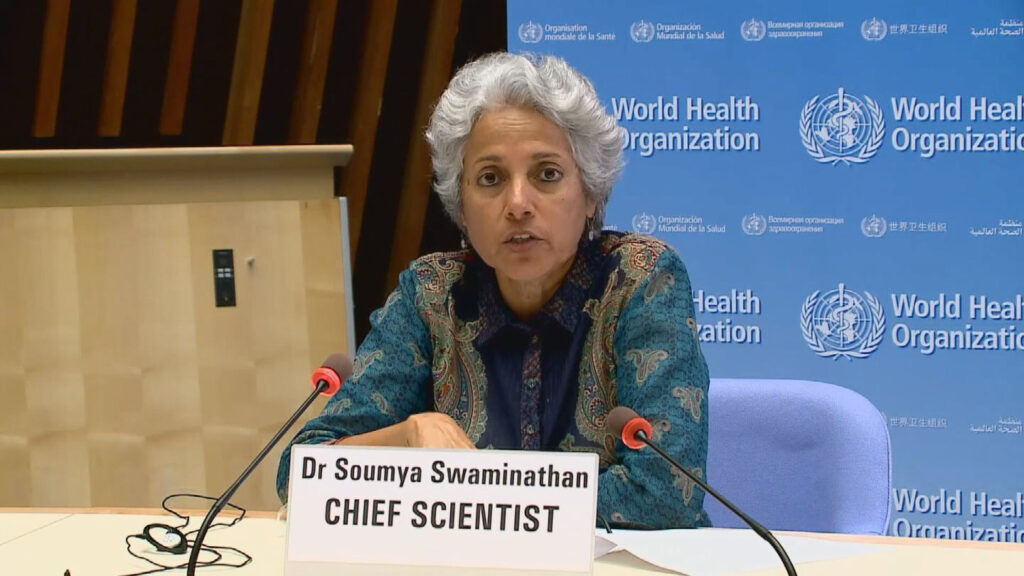
During a panel of WHO discussion as part of Bio Asia 2022, she said that while several high-end countries have completed vaccination to the extent of 90%, some African countries have only completed 10% inoculation, despite global vaccine supply ease. Though the scientific achievement in combating the COVID-19 pandemic is commendable, there was no global coordination on some issues, and several countries did not follow the World Health Organization’s framework. On Thursday, the WHO’s Chief Scientist, Soumya Swaminathan, stated.

During a panel discussion as part of BioAsia 2022, she said that while several high-end countries have completed vaccination to the extent of 90%, some African countries have only completed 10% inoculation, despite global vaccine supply ease. “While the scientific achievements have been outstanding, the fact that we have a vaccine in less than a year; where we fell short was on truly global coordination and harmonized ways of approaching pandemics, whether it is travel rules; That doesn’t help actually in the pandemic,” she said, referring to the reaction to travel restrictions imposed on South Africa after a new variant of COVID-19 was discovered.

WHO

Even though the world has moved on from the acute supply shortage that plagued the world in 2021, the challenge will be massive because many countries are unable to implement large-scale vaccination programs, according to the WHO chief scientist. She also stated that the WHO is working on scenarios in which variant-proof vaccines are developed, as well as the need for a globally distributed manufacturing network.

Amitabh Kant, CEO of NITI Aayog, who also spoke on the panel, believes that the government should heavily incentivize research and development, as well as sectors like Biopharma, to help India transition from a low-value, high-volume player in the global pharma market to a high-value, high-volume player. “We’re looking into ways to improve the system and encourage more industry-academy academic collaborations.” “Our scientific community needs to promote innovation, global partnerships, and knowledge sharing,” he said.

Some regulatory processes should be simplified, according to Krishna Ella, chairman and managing director of Bharat Biotech International Limited, to act quickly on product development.

Despite flattening, don’t lower your guard after WHO. Vice President M Venkaiah Naidu’s covid curve

On Wednesday, Vice President M Venkaiah Naidu emphasized the importance of basic amenities like safe drinking water and sanitation in preventing diseases and contributing to people’s overall well-being. He also warned that, despite the flattening of the COVID-19 pandemic curve, people should not relax their guard and should continue to wash their hands frequently.

WHO

The vice president, speaking at the National WASH Conclave-2022 after virtually inaugurating it from Chennai, said that children should grow up in a healthy physical and emotional environment. According to an official statement from the Vice President Secretariat, he wanted preventive healthcare measures such as safe water, sanitation, and hygienic practices to begin in anganwadis and primary schools.

The National Institute of Rural Development and Panchayati Raj (NIRDPR), Hyderabad, is hosting a three-day virtual conclave on water, sanitation, and hygiene (WASH) in collaboration with the Ministry of Jal Shakti, Ministry of Panchayati Raj, UNICEF, and other development partners. The theme of the conclave is ‘improving water, sanitation, and hygiene in panchayats.’
Observing that bringing the WASH agenda to gram panchayats is critical because they are at the heart of rural water supply, Naidu emphasized the importance of institutionalizing panchayats to ensure effective service delivery to the last mile.

“Effective last-mile delivery of services in every field — this is a key aspect of governance that I always emphasize — holds the key to fast-tracking all-around development,” he asserted. The vice president stated that as a country, we must ensure that every household has access to all basic services, the most important of which is WASH.
Recognizing that providing safe drinking water and sanitation to every rural household is a monumental task, Naidu stated that it can only be accomplished if a diverse group of players bands together with “singular focus and determination.” There is bound to be a positive spinoff as rural water supply networks are expanded across the country, according to Naidu.

“There will be a huge demand for plumbers, electricians, and people trained in water chlorination,” he predicted, calling for lessons to be learned from Scandinavian countries, where local governments use hub-and-spokes models to meet the demand for skilled manpower to handle any breakdowns or maintenance work.

“Lovers of Modena” holding hands study says both were men.

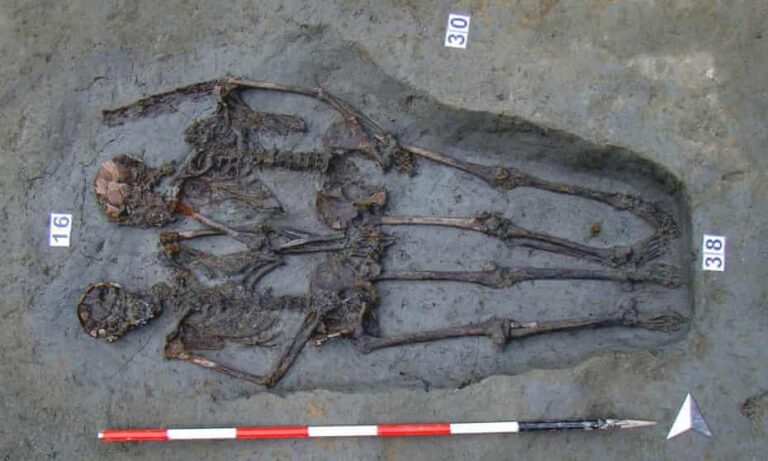
Long-held, biassed notions about gender and love are being overturned as new technologies to pin down the sex of old bones undermine long-held, biassed beliefs about gender and love. A team of archaeologists arrived at a building site in a residential neighbourhood of Modena, Italy, in the early summer of 2009. Digging for a new building had begun, and workers discovered a 1,500-year-old cemetery in the process. There were 11 burials, but it was evident right away that one of them was different from the rest. Tomb 16 had two skeletons instead of one, and they were holding hands.

“Here is a testament of how love between a man and a woman may truly be eternal,” said Gazzetta di Modena of the couple, dubbed “the Lovers” almost immediately. The sex of the Lovers, however, was not evident from the bones alone, according to the initial anthropological report. Someone attempted to analyse their DNA at some point, but “the data were so terrible,” according to Federico Lugli of the University of Bologna, that it appeared to be “simply random noise.” The idea regarding the Lovers’ sex remained unquestioned for a decade. Lugli and his colleagues then chose to test a newly accessible approach for detecting the sex of human remains using proteins in tooth enamel in 2019. The Lovers, to their amazement, were both men. The two became potential evidence of a same-sex relationship in the fifth century all of a sudden.  The Lovers’ narrative is part of archaeology’s continuous sexual revolution. For decades, archaeologists had to rely on grave goods and the shape of bones to determine whether a skeleton belonged to a man or a woman, but new, advanced procedures have resulted in a spate of corpses having their presumed sex overturned in the last five years. The subsequent challenges to our conceptions about sex, gender, and love in previous societies have sparked debate.

With the now-famous 2017 publication about a Viking warrior discovered in a grave full of weapons in Birka, Sweden, the broader debate on sex in archaeology took off in earnest. The cemetery had been known since the late 1800s and was thought to contain a male, but no one knew for sure until Charlotte Hedenstierna-Jonson of Uppsala University in Sweden and her team examined a DNA sample. When it comes to DNA analysis, the AMELX gene on the X chromosome and its counterpart AMELY on the Y chromosome are examples of genes associated to sex chromosomes. Because females have XX chromosomes and males have XY, the rationale runs that if the sample contains considerable AMELY, it belongs to a man. Nowadays, the study considers a considerably larger portion of the genome, but the basic premise remains the same. And the Birka Viking’s DNA was unmistakably female.

However, the idea of a female warrior clashed with popular perceptions of the Vikings. Weaponry, particularly swords, was traditionally associated with men, whereas jewellery was associated with women. Some suggested that if this skeleton was a woman, the weaponry and warrior rank should be reconsidered. This perplexed Hedenstierna-Jonson, who claims that everyone was comfortable with the warrior interpretation when the skeleton was considered to be a male. “That isn’t going to alter simply because it’s a woman.” Leszek Gardea, an archaeologist at the National Museum of Denmark and author of Women and Weapons in the Viking World, refuses to take a side in either direction. “I believe she could have been a warrior,” he says, but adds that biologically male individuals make up 90% of graves containing weapons. Weapons found in women’s graves are no evidence that they were warriors; an axe, for example, might have been used for a variety of purposes, including certain Norse magic rituals traditionally connected with women. “Women soldiers had a place in the Vikings’ conceptual cosmos,” he says, “but I don’t think that was the norm.”

In any event, most people believe that traditional notions of “male” and “female” grave goods lead to interpretations that are at best conventional and at worst biassed. This is especially noticeable when both are found in the same grave, as in the Viking grave discovered in Santon Downham, Norfolk, in 1867. “The majority of the literature claims it’s a twin grave,” says Gareth Williams, a curator at the British Museum. “However, there is no evidence to back it up.” Originally, only one skeleton was recorded, which has since been lost. Rather than a twin cemetery, a single grave of a person who did not rigidly adhere to gender conventions could be the more obvious answer. Because “there were stringent taboos against wearing anything that could be considered as effeminate” for Viking men, Williams believes the grave probably contained a sword-wielding woman.

The truth will remain unclear without the missing skeleton, but other cases are being investigated using the new approaches. Ulla Moilanen of the University of Turku, Finland, supervised a reexamination of a supposed “double” burial from early mediaeval Finland, which included a single skeleton dressed in female clothing and wielding swords, last August. The tomb belonged to a person with XXY chromosomes, or Klinefelter syndrome, who looked no different than an XY male, according to DNA research. “Because a male-looking individual was dressed in garments and outfitted with jewellery traditionally associated with ladies,” Moilanen says, “this tomb is extremely interesting.” The obvious issue is: which long-standing analysis will be the next to be shattered? Following the Lovers of Modena article, the researchers considered testing other “lovers” buried throughout Italy, according to Lugli. The Lovers of Valdaro, displayed at the National Archaeological Museum of Mantua, roughly an hour’s drive from Modena, were among the contenders. The 6,000-year-old pair was buried with their arms squeezed between their chests, nose to nose. The Lovers were sexed by osteology, a visual examination of the bones that is still the most frequent approach to sex remains, when they were initially discovered. The technique, however, is far from ideal. According to Rebecca Gowland, a bioarchaeologist at Durham University, some bones differ between males and females, but these differences are hormone-driven. Teenagers can be unclear since skeletons “had to have gone through puberty,” she explains. Furthermore, skeletons are rarely complete, and osteology becomes much less trustworthy, even for adults, when critical bones, such as the pelvis, are missing.

Because the Lovers of Valdaro were teenagers when they died, one as young as 16, the osteological investigation that labelled them “female” and “probably male” might use some modern support — and it’s on the way. A DNA research based at Tor Vergata University in Rome is due to release its findings on the Lovers’ sex and possible familial links in the new year. Aside from Lover couples, of which there are just a few in the globe, two other groups are likely to witness more “sex disclosures” in the future. The first is hominids, a group of living and extinct apes that includes humans. “You have badly preserved skeletons of a species where you don’t know what the spectrum of sexual dimorphism is because you might only have fragments of one or two of them,” Gowland argues. Lucy, a well-known hominid, was sexed by half a pelvis, for example. “What if Lucy was Larry?” says the narrator. While it is feasible to analyse the DNA of hominids, it can be difficult because the DNA might degrade to the point where there is little left to analyse. This is where tooth enamel really shines. “Compared to DNA, [enamel] endures incredibly well,” adds Gowland, who worked on the technique’s development. Tooth enamel analysis exploits the same genetic difference as the traditional DNA approach. Amelogenin, a component of tooth enamel, is produced by the AMELX and AMELY genes. Peptides, which are parts of the protein, may be lifted off the teeth with a moderate acid and their chemical make-up determined, which is also sex-dependent. “It’s revolutionising bioanthropology,” Lugli says, “since we now have a device for determining the sex of humans quickly and affordably.”

Children, who are notoriously difficult to sex, are another category expected to see an increase in sex determinations. Last December, a team led by University of Colorado Denver researchers used dental enamel to determine the sex of a 10,000-year-old infant girl. She was discovered in a sumptuous tomb filled of shell beads and stone pendants, demonstrating that not only babies, but especially girls, were prized in the Mesolithic era.

So, are the Lovers of Modena proof of a 1,500-year-old same-sex relationship? The love of the Lovers is being questioned in the same way that the Birka Viking’s warrior credentials were questioned after her sex was made public. They could be brothers, which cannot be ruled out due to the failed DNA study. They could have been comrades-in-arms, according to the authors of the 2019 study. Previous research by Lugli’s colleagues, on the other hand, refuted the claim that they were buried in a military cemetery. There were men and women among the dead, as well as a six-year-old toddler, who showed no evidence of repeated combat. So, why bring up the soldier theory again?

Certain things changed, according to Lugli: an in-depth investigation of the injuries was performed, and a skeleton that they assumed was a young woman turned out to be a guy. “Our interpretation was largely from a historical perspective,” he says. He believes it is implausible that their parents would put them hand in hand at that time to demonstrate their affection. “However, everything is conceivable.” To put it another way, the deceased do not bury themselves. They don’t, however, appear to excavate themselves. “Because we are so married to the categories that we have in place now,” Pamela L Geller, a bioarchaeologist specialising in queer and feminist studies at the University of Miami, says, “there is a tremendous lack of inventiveness about how other people lived their lives.”

Despite the fact that scientific approaches can eliminate some of the guesswork, Geller asserts that “there’s just some stuff we’re not going to know about the past.” One of those factors is who loved whom, as well as people’s sense of self-identity. Archaeologists can only do the best they can with the information provided to reconstruct the lives of previous people. It is a matter of respect for the people of the past, according to Gardea. “Because they were all actual persons,” he argues, “every burial tells a distinct narrative.” “Each of them had a life of their own.”

Engineered bacterial strains could be used to nourish crops and minimize pollution in streams.

Researchers at Washington State University modified strains of the widespread nitrogen-fixing soil bacterium Azotobacter Vinelandii to produce ammonia and excrete it at high concentrations, allowing it to be transferred into agricultural plants instead of artificial fertilizers.  “We gave conclusive proof that the released ammonia gets transported to the rice plants,” said Florence Mus, Ph.D., assistant research professor at Washington State University’s Institute of Biological Chemistry. “We want to bring innovative answers to the problem of replacing industrial fertilizers with custom-made microorganisms,” says the researcher.

To put it another way, this strategy has the potential to reduce a major source of pollution. The study was published in the American Society for Microbiology’s journal Applied and Environmental Microbiology. The researchers employed gene editing techniques to create Azotobacter Vinelandii to manufacture ammonia at a constant level regardless of the bacteria’s surroundings, and to excrete it at levels high enough to fertilize crops successfully.

Instead of adding transgenes into the Azotobacter Vinelandii genome, gene editing techniques were used to sidestep regulatory restrictions that would have made the development process longer, more complicated, and expensive. The research was motivated by a desire to learn more about nitrogen fixation, which refers to the chemical processes through which atmospheric nitrogen is incorporated into organic molecules as part of the nitrogen cycle. “Our research contributes to a better understanding of the mechanisms that influence gene expression in a model nitrogen-fixing bacterium and specifies the biochemistry that leads to ammonia excretion in Azotobacter Vinelandii Mus added.

The research was conducted with the goal of reducing the severe water pollution issues that occur when excess nitrogen fertilizer is washed into streams. This results in algal blooms, which deplete oxygen and kill fish and other aquatic life, resulting in “dead zones” in lakes, rivers, and oceans. The northern Gulf of Mexico’s dead zone covers roughly 6,400 square miles. To that purpose, the researchers are creating microorganisms that create ammonia at a constant rate. However, scientists hope to be able to engineer distinct Azotobacter Vinelandii groups to create ammonia at varied rates to meet the needs of different agricultural plants. Instead of being washed into rivers, all of the ammonia created might be utilized by the plants. “Widespread adoption of these bio fertilizers for farming would reduce pollution, provide sustainable ways of controlling the nitrogen cycle in soil, lower production costs and raise profit margins for farmers, and enhance sustainable food production by improving soil fertility,” Mus stated.

Crop output boosts soil nitrous oxide emissions, according to computer simulations.

The greenhouse gas nitrous oxide emissions from soils have grown during the previous century, according to a computer modelling study. The newly released study discovered that since 1900, the expansion of agricultural acreage and extensive fertilizer inputs have mostly driven an overall increase in nitrous oxide emissions from U.S. soils.

To feed the model and quantify variations in nitrous oxide emissions from soils in the United States, the researchers used huge amounts of data on everything from weather patterns to soil conditions to land use and agricultural management techniques. The findings, which were published in the peer-reviewed academic journal Global Change Biology, break down soil emissions by ecosystem types and major crops, finding that the expansion of agricultural land since 1900, as well as intensive fertilizer inputs, have largely driven an overall increase in nitrous oxide emissions.

According to Chaoqun Lu, associate professor of ecology, evolution, and organismal biology and the study’s corresponding author, using such ecosystem models to determine the origins of nitrous oxide emissions could benefit policymakers in enacting conservation measures and responses to climate change. “We’re utilising a process-based ecosystem paradigm,” Lu explained. “It’s analogous to simulating an ecosystem’s patterns and processes on our computer. We use algorithms to mimic how natural systems respond to changes in climate, air composition, and human activities by dividing land into thousands of uniformly sized pixels.”

The results suggest that emissions have increased

Nitrous oxide emissions from U.S. soil have more than tripled since 1900, from 133 million metric tonnes of carbon dioxide equivalent (MMT CO2 eq) per year at the turn of the century to 404 MMT CO2 eq per year in the 2010s, according to the study. According to the report, agricultural soils are responsible for about three-quarters of the increase in emissions, with corn and soybean cultivation accounting for over 90% of the increase in ag-related emissions. The study authors noted in their report, “Our study implies a large [nitrous oxide] mitigation potential in farmland and the need of exploring crop-specific mitigation strategies and prioritising management approaches for targeted crop varieties.”

According to Lu, the increase in emissions is due to the expansion of agriculture in the United States. According to the computer models, farmed land generates more nitrous oxide than wild landscapes. According to Lu, this is largely owing to the widespread use of nitrogen fertilisers on agricultural land and legume crop output. The additional nitrogen is utilised in part by crops, with the remainder remaining in soils or being lost to the environment. Microorganisms in soil eat nitrogen-containing substances and produce nitrous oxide as a byproduct during this process. According to Lu, a better understanding of the dynamics of which crops produce the most emissions will assist define climate mitigation strategy. Because maize requires more nitrogen fertiliser than other crops, the study discovered that soils where corn is planted generate more nitrous oxide per unit of fertiliser used, according to Lu.

Mathematical models that simulate natural processes were created by the researchers. According to Lu, the models are based on mountains of data acquired and built over many years. Government data on crops, land use, weather, and other variables was collated by the researchers. Farmers and other landowners’ historical and survey data were also taken into account.

In order to validate their findings, the researchers matched the outcomes of their model to real-world data. For example, the scientists demonstrated that their model’s production projections matched national yield data for important crops such as corn, soybean, wheat, rice, and others dating back to 1925. This demonstrates that the model simulation was able to trace the long-term trajectory of nitrogen intake, which has supported growing crop yield over the last century. They then compared their model’s nitrous oxide emission projections to real-world data from a variety of natural and managed soils around the country, as well as seven-year time-series measurements from a central Iowa corn-soybean rotation site.

“Our group has spent a lot of work enhancing model performance and building the driving force history for the model simulations, which includes natural and human disruptions,” Lu added. “Thousands of lines of algorithms are used behind the scenes to aid the computer model in making predictions. To reduce modelling uncertainties and include greater ecological process understanding arising from field scientists’ hard work, it will require decades of effort, and more to come.”

Swiggy, a food delivery service, is aiming an IPO of $800 million

Swiggy, the food delivery giant, plans to raise $800 million through a public offering as soon as next year. In addition, the Bengaluru-based food aggregator is more than likely to register as a logistics startup rather than a food delivery service.

According to Nikkei Asia, it has started the process of becoming a public company and has begun to appoint independent directors to its board of directors. The appointment of independent directors is one of the most telling signs that a company is on the verge of going public. We’ve seen it with ixigo, OYO, and Snapdeal, among others.

Swiggy will use the proceeds from the IPO to expand its market share, according to the report. The news comes after Swiggy announced a $700 million funding round led by Invesco Group a few months ago. The round, which included several new investors as well as existing investors, helped it join the decacorn club. The status (decacorn) is reserved for startups with a valuation of $10 billion or more.

Swiggy’s IPO plans arrive on the heels of one of the company’s largest acquisitions, which has yet to be revealed. Swiggy is in the final stages of acquiring Times Internet-backed online restaurant table booking service platform Dineout, which is worth noting for the uninitiated.

Inc42 stated in a report dated February 15, 2022, that this deal will cost between $150 million and $200 million. Swiggy will benefit from the deal because it will allow it to enter the dine-in market, which it has lacked so far and which its competitor Zomato has dominated.Swiggy will be able to expand into outdoor event management as a result of the agreement.

Swiggy


In the wake of the pandemic, the Bengaluru-based startup has doubled down on its Instamart quick commerce service. It has already committed $700 million in funding to expand its quick commerce operations. The startup’s quick commerce business competes with Dunzo, a Reliance-backed hyperlocal delivery startup, Blinkit, a Zomato-backed startup, and Zepto, a newcomer to the market.

Swiggy’s competitor Zomato was one of the first new-age startups to go public, raising INR 9,375 crore in the process. Zomato, like other tech startups, is feeling the heat of market volatility, with its stock trading at an all-time low. On the NSE, Zomato’s shares were trading at INR 79.85 at the time of filing this story.

Swiggy’s IPO preparations come as India’s benchmark stock index is trending lower after a sharp rise in 2021, owing to signs of potential Fed rate hikes, a slowing global economic recovery, and geopolitical tensions. Since mid-October, the index has dropped 6.5 percent, and foreign investors have been net sellers of Indian stocks since then.

Indian startups such as Paytm, Zomato, Policybazaar, and Nykaa, which went public last year to much fanfare, have since seen their stock prices plummet. Zomato’s stock has dropped 41% since October 1, while Paytm’s stock is trading at less than half its initial public offering price of 1,950 rupees per share. Nykaa’s stock has dropped 33% from its listing price, while Policybazaar’s has dropped 36%.

Swiggy will be under pressure to tell an equity story that will entice investors in this environment. Swiggy will position itself as a logistics company, not just a food delivery company, according to a second person familiar with the company’s IPO plans, adding that its success will hinge on the valuation it seeks, market share, and path to profitability.

“Swiggy is a good story,” the individual stated. “Their value proposition to investors will be strengthened by the integration of quick commerce under one roof. To woo the public markets and expand market share, they will need to demonstrate a clear path to profitability.”

After a period of intense land grabs that sapped most startups’ cash as they splurged on customer acquisition, India’s food delivery sector has been reduced to a two-horse race between Swiggy and Zomato. Several food delivery companies, including Swiggy, TinyOwl, Dazo, Yumist, and Spoonjoy, among others, received their first investments from the likes of Accel Partners, Saif Partners, Sequoia Capital, and Nexus Venture Partners during the funding boom of 2014 and 2015. Around the same time, Zomato shifted its focus from restaurant listings to food delivery.

The majority of the startups failed after investors tightened their purse strings a few years later, perplexed by the cash burn and lack of profitability. In terms of sales, Swiggy and Zomato are neck and neck. Swiggy reported monthly food delivery sales of $250 million in December, while Zomato reported sales of $733 million in the October-December quarter.

Swiggy has also branched out into fast commerce, promising delivery of groceries and other daily necessities in less than 30 minutes. The instant delivery service Instamart, which will launch in August 2020, will consume the majority of the $700 million Swiggy raised in January. Swiggy expects Instamart gross sales to reach $100 million per month by September. Swiggy also offers a pick-up and delivery service.

How Drones Are Changing the Future of India

The central government is now trying to make the use of drones a part of modern life just like mobiles, computers, and the Internet. The use of drones will be promoted as a mission. Just like under the Jal Shakti Mission, the goal of delivering water from door to door was set. The use of drones in the country will no longer be limited, but it can be used everywhere in everyday life. It can be used from industry to disaster management. It will be used from jawan to farmer.

That is, along with protecting the borders, the drone will also protect the crops in the fields. In this way, it will become a necessity for the people. The central government is focusing a lot on the use of drones in the agriculture sector. Drones have important technical features like sensors and cameras. Through drones, many important problems of agriculture such as where diseases have been found in crops, where pests are present, which nutrients are lacking in crops, etc. can be detected.

Drones will also be used for crop evaluation, digitization of land records, monitoring of plant growth, etc., which will be of great help to the farmers. Timely detection of diseases will reduce the input cost of farmers and increase production. With this, insecticides can be sprayed over a large area in just a few hours. This will save the time of the farmers. The biggest advantage will be that pest management can be done in agriculture at the right time.

Drones were used for the first time in various states of the country to prevent locust attacks last year. Experts believe that in an agricultural country like India, creating skilled workers with drone technology will prove to be a revolutionary step. For this, the central government will promote startups in the drone sector this year. If the youth of the country want to start in the drone industry, then the central government will help them.

The government is changing the policy to promote indigenous drones. Measures like the Drone Rules 2021, PLI scheme for the drone industry, and grants for drones used in the agriculture sector will give a boost to the sector. In the next five years, the drone industry will become self-sufficient. When the demand for drones increases, the manufacturing of the equipment used in them will also start.

Drones
Source: Google
Image By: The economics times

New update for flying drones, certification scheme started for owner and pilot: If you also want to fly a drone, then know about the new rules for this. Because to fly a drone, the owner and pilot must have his license. The Central The government has issued the Drone Certificate Scheme on Wednesday. The government says that it is working towards making a world-leading drone system in the country. After this lakhs of drones of Indian airspace will be able to be used with complete safety. Let us know what is Drone Certification Scheme is.

Let us tell you that after this decision of the government, it will help in creating physical and digital infrastructure in the country. Getting a drone certification is not that difficult for anyone, its process is quite easy.

The Drone Certificate Rules were issued by the government in August 2021. According to these rules, people will be successful in establishing a global certification and good framework for drones. Because of this commercial drone technology will be able to grow easily with appropriate security measures.

Digital sky platform:

Let us tell you that a Digital Sky platform has been created by the government for drone registration and operation, which is completely digital. With the help of single window of airspace map, PLI scheme, and digital sky platform, it will help in increasing the drone manufacturing industry in the country.

Every user has to register:

To get a drone, it will be very important for every user to register once. Along with this, it will also be mandatory for the owner and the pilot to register for using the drone. To fly a drone in any yellow or red zone, permission will have to be taken first.

After this decision of the government, it will help in creating physical and digital
infrastructure in the country. Getting a drone certification is not that difficult
for anyone, its process is quite easy.

Jio announces US$15 million investment in Two Platforms Inc:

Jio has made a huge contract. Giants Jio Platforms Limited (Jio) has declared an investment of US $ 15 million (about Rs 112 crore) in Silicon Valley-based deep tech startup Two Platforms Inc (TWO). This investment has prevailed brought about a 25 percent stake in Two Platforms Inc. This is occurring supposed a big deal for Jio. JIO

What is the plan of both the companies?

TWO is an artificial reality company with a priority on interactive and immersive AI experiences. Subsequently text and voice, TWO believes that the future of AI lies in the visual and interactive. TWO’s artificial reality platform creates real-time AI voice and video calls, digital humans, immersive space, and realistic gaming. TWO plans to take its interactive AI technologies to buyer applications first, obeyed by entertainment and gaming as well as enterprise solutions containing retail services, education, health, and wellness. Jio and Two will work jointly: TWO’s founding team has several years of leadership experience in research, design, and operations with leading global technology companies. Its founder is Pranav Mistry. TWO will work almost with Jio to build new technologies such as AI, Metaverse and, Mixed Reality. Talking about the investment, Akash Ambani, Director, Jio, said, “We at TWO are instilled by the powerful experience and capabilities of the founding team. We will work nearly with Two to assist stimulate the growth of new products in the areas of interactive AI, immersive gaming, and the metaverse. TWO CEO’s Pranav Mistry also conveyed prosperity over this deal and expressed his excitement to work closely with Jio. White & Case functioned as legal advisor to Jio for this agreement.

What does Ambani say on investment?

Speaking on the investment, Akash Ambani, Director, Jio said, “We at TWO are affected by the big experience and abilities of the founding team. We will work approximately with Two to help accelerate the development of new products in the areas of interact- ive AI, immersive gaming, and the metaverse. Two’s CEO said: Mistry may also have a chance on the deal as TWO goes on. The connection is acted as the legal chancellor for this transaction. Reliance Jio has declared an investment of US$15 million in Silicon Valley-based deep tech startup Two Platforms Inc. Jio has generated this investment to acquire a 25% stake in Two Platforms Inc. TWO’s founding team has many years of leadership experience in research, design, and operations with leading global technology companies. Its founder is Pranav Mistry. TWO will work closely with Jio to build new technologies such as AI, Metaverse, and Mixed Reality.

Future of AI, the visual and interactive world: Two (TWO) is an artificial reality company with a priority on interactive and immersive AI experiences. After text and voice, TWO believes that the future of AI lies in the visual and interactive world. Its artificial reality platform enables real-time AI voice and video calls, digital humans, immersive space, and lifelike gaming. TWO plans to take its interactive AI technologies to customer applications first, followed by entertainment and gaming as well as enterprise solutions including retail, services, education, health, and wellness.

Jio is the foundation of India’s digital transformation: TWO CEO Pranav Mistry

TWO will work closely with Jio to accelerate the adoption of new technologies and build technologies such as AI, Metaverse and Mixed Realities. On this, Pranav Mistry, CEO, TWO Platforms said, ‘Jio is the foundation of India’s digital transformation. We are excited to partner with Jio to push the boundaries of AI and introduce applications of artificial reality to consumers and businesses.’

The market cap of Reliance Industries is Rs 15,77,382.90 crore.

It is known that today the stock of Reliance Industries Limited closed at the level of 2331.80 with a fall of 20.90 points or 0.89 percent on the Bombay Stock Exchange (BSE). At present, the company’s market cap is Rs 15,77,382.90 crore. 

Let us tell you that Jio Platforms Limited, a subsidiary of Reliance Industries (RIL), operates India’s largest mobile network Jio and other digital businesses of RIL.