
Home Blog Page 532

Are CMOs Prioritizing Short-Term Wins Over Long-Term Brand Building?

In today’s marketing landscape, classic campaigns that created memorable brand identities are becoming increasingly rare. Iconic slogans like “Hamara Bajaj” from Bajaj Auto, Cadbury’s “Kya swaad hai zindagi mein,” and Airtel’s tune by A.R. Rahman have demonstrated the power of long-term brand building. However, as Chief Marketing Officers (CMOs) are increasingly pushed to deliver quick results, some industry leaders are warning that this shift to short-term strategies could compromise brand loyalty and erode long-term value.

With financial pressures intensifying, CMOs now face a critical choice: achieve quick, measurable outcomes or prioritize building enduring brand identity. Experts argue that a relentless focus on instant returns could have lasting consequences on brands and customer loyalty.

Shift from Long-Term Brand Building to Immediate Results

Today’s marketing environment is more fast-paced and results-oriented than ever, and CMOs are feeling the pressure to keep up. Marit Nagpal, CEO of Tata Play, reflects on a noticeable shift in marketing strategy over the years. “A brand that is built in a hurry, with weak bonds to customers, risks being dislodged just as quickly by someone offering a better deal,” he explained. Nagpal, who previously served as marketing director at Vodafone, recalls a time when brands invested deeply in building emotional connections with consumers. Campaigns like “Har ghar kuch kehta hai” by Asian Paints struck a chord with audiences because they prioritized connection over short-term reach.

In the past, brands adhered to the AIDA model—Attention, Interest, Desire, Action—nurturing consumer loyalty through gradual engagement. Campaigns were considered long-term investments, not projects to generate immediate returns. “Early in my career, I was never asked to provide instant bottom-line impact for a campaign, let alone quarterly results,” Nagpal shared. The push from “Tell, Tell, Tell” to “Sell” has led to campaigns focused exclusively on metrics, often at the expense of building a strong, memorable brand identity.

Financial Pressure and the Focus on Short-Term Metrics

The shift toward immediate results is partly driven by the influence of financial investors who prioritize fast outcomes over sustained growth. Unlike strategic investors who understand the value of brand building, financial investors push for quick returns. According to Nagpal, this pressure has trimmed the AIDA model down to “Action,” bypassing the storytelling that once forged strong customer loyalty.

Sandeep Goyal, chairman of advertising agency Rediffusion, emphasizes that CMOs today often have limited freedom to pursue long-term brand building due to financial constraints. “CEOs are bound by quarterly performance demands, which shape both company and brand agendas,” Goyal explained. This constant push for quick results leaves little room for the slow cultivation of brand identity. He compares brand building to a “nine-month gestation period,” where rushing compromises depth and distinctiveness.

Evolving Role of the CMO

As companies become more results-driven, the role of CMOs has evolved from being brand stewards to performance-focused executives. Sreeraman Thiagarajan, co-founder of Agrahyah Technologies, notes that CMOs, once the voice of the customer, are now largely growth-driven. “CMOs today are constantly chasing consumers across platforms, often through influencer marketing or AI-driven initiatives,” he said. However, in the drive to stay current, some brands may adopt trends that don’t align with their core values, diluting their message and weakening customer connections.

Brand equity, a valuable asset built over years, is increasingly sacrificed in today’s marketing cycles. When campaigns focus more on instant sales than on storytelling, they risk undermining the emotional connection that fosters loyalty. Nagpal points to this risk, noting that today’s campaigns, while generating high click-through rates, often lack the enduring appeal of taglines like “Hamara Bajaj.” This scarcity of lasting slogans underscores the current trend of prioritizing short-term sales over brand building.

Balancing Immediate Gains with Brand Equity

The shift toward quick results has created a challenge for CMOs: how to achieve short-term wins without sacrificing long-term brand health. Some brands are adopting hybrid approaches that combine calls to action with storytelling to create campaigns with lasting impact. “Nailing the balance is essential,” says a CMO from a two-year-old startup. “While many focus solely on brand building or immediate results, we’re committed to both. Performance marketing drives quick wins, but brand equity is our foundation, and that’s non-negotiable.”

Sidharth Shakdher, CMO and business head at Paytm, explains that the emphasis on short-term wins reflects the environments in which many CMOs operate. “Organizations today are often racing for valuations, where fast growth and ‘winner-takes-all’ narratives dominate,” he said. Additionally, executive compensation is often tied to short-term financial goals, reinforcing the focus on quarterly metrics over long-term brand health. Shakdher noted that many CMOs prioritize short-term wins as their outcomes are now more closely linked to immediate business results than before.

Can CMOs Reclaim Their Role in Brand Building?

Despite the pressure to deliver quick wins, some CMOs are rethinking their approach to balance immediate goals with long-term brand equity. Brands that successfully balance both often rely on hybrid strategies that blend data-driven insights with traditional storytelling. For example, an automotive company might launch a performance-driven campaign to boost sales while simultaneously running an ad that emphasizes brand values like safety and tradition.

Brands committed to balancing immediate and long-term goals are beginning to see the value in focusing on trust, authenticity, and connection over fleeting metrics. Creating a memorable brand, Goyal believes, requires patience and time—qualities that are in short supply today. However, CMOs who prioritize brand equity find that the rewards—loyalty, resilience, and strong consumer affinity—outweigh the fleeting benefits of short-term gains.

The Future of Marketing: Quick Wins or Lasting Brand Value?

With financial pressures intensifying, the emphasis in marketing often skews toward immediate returns. However, the debate over short-term wins and long-term brand building raises important questions about the sustainability of current practices. Today’s CMOs face a pivotal choice: prioritize short-term victories or focus on building a brand that resonates with consumers for years to come.

Ultimately, balancing quick results with long-term brand equity may prove to be the winning strategy. For CMOs willing to invest in both, the enduring benefits of strong brand identity—loyalty, resilience, and lasting appeal—suggest that a balanced approach could serve brands best. In the words of a CMO from a prominent tech company, “Performance marketing is essential, but in the end, brand equity is the bedrock on which we build lasting relationships with our customers.”

As the marketing landscape evolves, the question remains: can CMOs navigate the pressure for quick wins without compromising the enduring value of their brands? For those willing to resist the pull of instant metrics, the path forward may lie in blending the best of both worlds, crafting campaigns that drive immediate results while strengthening brand identity for the long haul.

Disclaimer: The thoughts and opinions stated in this article are solely those of the author and do not necessarily reflect the views or positions of any entities represented and we recommend referring to more recent and reliable sources for up-to-date information.
Xi Jinping Calls for Stronger BRICS Cooperation and Leadership in Global Governance

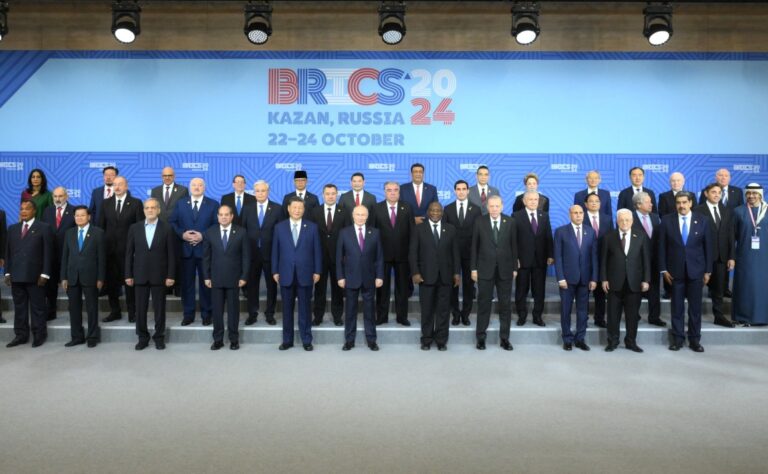
Kazan, Russia: In a speech emphasizing solidarity, innovation, and sustainable development, Chinese President Xi Jinping urged BRICS nations to become a driving force in global governance reform, calling on member states to “forge ahead with one heart and one mind.” Addressing fellow BRICS leaders at the 16th BRICS Summit held in Kazan, Russia, Xi presented a comprehensive vision for the grouping’s role in advancing peace, economic innovation, green development, and people-to-people exchanges among Global South nations.

The summit, hosted by Russian President Vladimir Putin, concluded with the adoption of the Kazan Declaration and outlined new criteria for BRICS partner country status, marking a significant moment for BRICS expansion. “The enlargement of BRICS is a major milestone in its history, and a landmark event in the evolution of the international situation,” Xi remarked, underscoring the importance of collaboration among emerging economies to counterbalance traditional Western-led institutions.

Key Themes from Xi’s Address: Peace, Security, and Cooperation

Xi’s speech called for BRICS countries—Brazil, Russia, India, China, and South Africa—to unify efforts in promoting global stability and addressing international conflicts. He proposed that BRICS act as “defenders of common security,” while adhering to the principles of “common, comprehensive, cooperative, and sustainable security.” This vision aligns with China’s broader foreign policy strategy, which stresses diplomacy and peaceful coexistence, particularly in regions experiencing conflict.

Regarding the ongoing Ukraine crisis, Xi reiterated the need to limit the expansion of battlefields, avoid escalation, and seek swift de-escalation. Addressing the humanitarian crisis in Gaza and the hostilities in Lebanon, Xi urged immediate ceasefires to halt further bloodshed. “We must make unremitting efforts toward a comprehensive, just, and lasting resolution of the Palestinian question,” he emphasized, demonstrating China’s commitment to advocating for diplomatic solutions in the Middle East.

Innovation and Green Development as Pillars of BRICS Collaboration

In a bid to position BRICS as a hub for technological advancement and sustainable practices, Xi announced several initiatives aimed at fostering innovation across member states. These include the establishment of a BRICS Deep-Sea Resources International Research Center, a BRICS Industrial Competencies Center, and a BRICS Digital Ecosystem Cooperation Network. By promoting research in fields like deep-sea exploration, digital infrastructure, and green industries, these initiatives are expected to enhance member countries’ technological capabilities and drive economic growth in emerging sectors.

“China is willing to expand cooperation with BRICS countries in green industries, clean energy, and green mining,” Xi said, stressing the importance of embedding green development practices across industrial sectors. He highlighted the need for BRICS nations to adopt sustainable approaches in every aspect of production, which he believes will help mitigate the effects of climate change and boost economic resilience.

Xi further proposed that the New Development Bank (NDB), a financial institution established by BRICS, be expanded and strengthened to better reflect shifts in the global economic landscape. This suggestion aligns with BRICS’ broader goal of reforming international financial institutions to offer developing countries more equitable representation and influence.

Boosting Digital Education and Cultural Exchanges

Xi also outlined steps to enhance digital education within BRICS nations, announcing a new capacity-building program and the establishment of ten learning centers across member countries over the next five years. The program aims to provide training opportunities for 1,000 local education administrators, teachers, and students, equipping them with digital skills essential for a modern workforce. These initiatives reflect a commitment to increasing educational access, particularly in areas that are underserved.

Highlighting the importance of cultural collaboration, Xi encouraged the exchange of governance practices and knowledge across BRICS members, especially in education, sports, and the arts. “Our diverse cultures can inspire one another and illuminate the path forward for BRICS,” he stated, suggesting that cultural exchange can strengthen bonds among BRICS nations and foster mutual understanding.

Expanding BRICS Membership: A Call to the Global South

At the summit, Xi also expressed support for expanding BRICS membership to include more nations from the Global South. This call for expansion resonates with BRICS’ mission to amplify the voice of developing countries on the global stage. “In light of the rise of the Global South, we should respond favorably to the calls from various countries to join BRICS,” Xi said, emphasizing that a larger coalition could increase BRICS’ influence in shaping global governance.

Expanding membership could enhance the representation of emerging economies in international decision-making processes, thereby balancing global power dynamics that have traditionally favored Western powers. With these changes, Xi envisions BRICS as a primary platform for countries in the Global South to collaborate and advocate for fairer and more inclusive global policies.

Russia and South Africa Support BRICS Vision

The summit saw alignment between Xi’s goals and statements from other BRICS leaders. Russian President Vladimir Putin endorsed the vision of a cooperative BRICS, highlighting the need to boost collaboration in areas such as technology, education, efficient resource development, and finance. “We must significantly increase the scale of investments,” Putin asserted, calling for further integration of the BRICS economies to foster collective prosperity.

South African President Cyril Ramaphosa echoed the sentiment, emphasizing the role of BRICS in building a fairer world. “The Kazan summit serves as an opportunity to harness our collective strength to build a safer, more prosperous, and equitable world,” he said. Ramaphosa pointed out that challenges faced by one BRICS nation affect all members, reinforcing the need for solidarity among emerging economies in the face of global instability.

BRICS’ Commitment to a New Era of Global Governance

The Kazan summit reflected BRICS’ commitment to redefining international cooperation and governance structures. As power dynamics shift and emerging economies gain influence, BRICS is positioning itself as an alternative to traditional Western-led organizations like the World Bank and the International Monetary Fund (IMF). The New Development Bank, in particular, is seen as a symbol of this alternative—a financial institution that prioritizes the needs of developing countries over the interests of developed nations.

Xi’s speech underscored BRICS’ mission to act as a force for stability, inclusivity, and growth for emerging economies. His call for cooperation in green industries, digital innovation, and education serves as a roadmap for the BRICS nations to adapt to the challenges of the 21st century, from climate change to digital transformation. As the world continues to face unprecedented challenges, BRICS leaders are unified in their belief that a collaborative, multi-polar approach to global governance is essential.

Looking Forward: BRICS’ Role in a Changing World

The outcomes of the 16th BRICS Summit mark a pivotal moment for the organization, signaling its readiness to play a more active role in global affairs. The adoption of the Kazan Declaration and the new partner country criteria reflect BRICS’ commitment to inclusivity and growth. By prioritizing issues like peace, sustainable development, and cultural exchange, BRICS is evolving into a platform that not only serves its member states but also advocates for the interests of the broader Global South.

With the expansion of membership and a focus on pressing global issues, BRICS is poised to become a central figure in international governance reform. The vision set forth by President Xi and other leaders at the Kazan summit reaffirms BRICS’ dedication to fostering a balanced, multipolar world order—one where emerging economies have a say in shaping their futures.

Disclaimer: The thoughts and opinions stated in this article are solely those of the author and do not necessarily reflect the views or positions of any entities represented and we recommend referring to more recent and reliable sources for up-to-date information.

PM Internship Scheme: Energy, Automotive, and Banking Sectors Lead with Most Opportunities

New Delhi: India’s recently launched PM Internship Scheme has quickly gained momentum, with the energy, automotive, banking, and financial services sectors emerging as the largest contributors. According to data from the Ministry of Corporate Affairs, these industries together account for approximately two-thirds of the more than 125,000 internships available so far under the initiative. The scheme, designed to bridge India’s skill gap by offering practical experience to young professionals, aims to equip candidates with essential skills in critical sectors to enhance their employability.

The initiative, which was introduced in the Union Budget for FY25, forms part of a larger goal to provide internships to 10 million candidates over five years, focusing on the country’s top 500 companies. A dedicated portal for candidate registration was launched last month, and since then, interest has surged with over 300,000 candidates already registered.

Leading Sectors in Internship Opportunities

The scheme highlights the need to focus on key industries driving India’s economic growth and sustainability goals:

  • Energy Sector: Leading the way, the energy sector, which includes oil, gas, and renewable energy companies, offers the highest number of internships at 29,100 positions. This emphasis on energy underscores the sector’s role in supporting India’s ambitions for energy security and a transition to sustainable sources, with industry giants prioritizing fresh talent for innovation and long-term goals.
  • Automotive Sector: The automotive industry, which is integral to India’s industrial and export growth, has offered 22,000 internships, highlighting the demand for skilled professionals in areas such as electric vehicles, automation, and sustainable mobility. India’s push toward greener transportation and advanced automotive technology has created a need for a workforce skilled in modern automotive engineering and manufacturing.
  • Banking and Financial Services: With 12,265 internships, the financial sector is a significant contributor. This sector has been transforming rapidly with the growth of digital payments, fintech innovation, and the integration of AI-driven financial solutions. The PM Internship Scheme provides students with an opportunity to gain hands-on experience in these evolving financial practices.
  • Travel and Tourism: Despite challenges during the COVID-19 pandemic, the travel and tourism sector has bounced back with 15,639 internship opportunities. This industry’s resilience is critical, as it remains a significant employer and a source of revenue for India. Internships here focus on areas such as hospitality management, travel planning, and tourism marketing, preparing candidates for dynamic roles in a revitalized industry.

Additional sectors, including metals, mining, and manufacturing, have also joined the initiative, each contributing around 8,000 to 9,000 internships. This broad distribution reflects a concerted effort to include essential growth industries crucial for building a skilled and adaptable workforce across the country.

Nationwide Rollout and Initial Targets

The government introduced a dedicated online portal last month to streamline candidate registration, and plans for a comprehensive rollout are already underway. During this pilot phase, the scheme has set an ambitious target to reach 100,000 internships by December. This initiative aligns with India’s broader five-year vision to provide millions of young Indians with industry-relevant skills and experience that can prepare them for jobs in diverse fields.

To achieve this, the Ministry of Corporate Affairs has been closely coordinating with the Ministry of Skill Development and leading corporations across sectors. The collaboration reflects the government’s commitment to not only create job opportunities but also address the skill mismatch that often hampers employability for new graduates.

Regional Distribution and Corporate Participation

Internships are being offered across 745 districts, making it one of the most geographically inclusive government schemes aimed at employment. Major industrial states such as Maharashtra, Tamil Nadu, Gujarat, Karnataka, Haryana, and Uttar Pradesh have taken the lead, collectively offering the highest share of internships. With internships now available in tier-two and tier-three cities as well as rural areas, candidates can access job training without needing to relocate to urban centers.

A wide range of corporations have signed up for the scheme, reflecting the private sector’s enthusiasm for this government-led initiative. Companies such as Jubilant Foodworks, Maruti Suzuki, Oil and Natural Gas Corporation (ONGC), Reliance Industries, and Eicher Motors are among the 280 firms participating. These companies, spanning from manufacturing and automotive to retail and technology, underscore the broad appeal and strategic importance of the PM Internship Scheme for Indian industry.

Industry Leaders Praise the Scheme’s Impact

The scheme has garnered positive feedback from both the industry and prospective interns. Aditya Ghosh, Chairman of the Confederation of Indian Industry’s (CII) National Committee on Skill Development and Livelihood, praised the PM Internship Scheme as a significant step towards industry-led skilling in India. “We have seen an overwhelmingly positive response from the industry in the pilot phase, with more than 125,000 internships posted on the portal. We have participation from diverse sectors, not only in manufacturing and automotive but also in banking, financial services, oil and gas, energy, retail, hospitality, healthcare, IT-ITES, life sciences, and steel,” Ghosh said.

Ghosh also highlighted the scheme’s inclusivity. “Many internships are being offered in tier-two and tier-three cities, and even in rural areas, which brings opportunities closer to candidates. This direct access means that they don’t need to relocate, making it easier for candidates from diverse backgrounds to participate.”

The scheme’s benefits extend beyond mere work experience. It provides candidates with hands-on exposure to real-world projects in leading companies while also offering mentorship from industry experts. This dual approach, according to Ghosh, directly enhances employability by equipping young professionals with practical skills and industry insights.

Meeting the Needs of a Changing Labor Market

The PM Internship Scheme comes at a critical juncture for India’s labor market, as digitalization, automation, and evolving technologies reshape the workforce’s requirements. The shift to a more digitized economy, accelerated by COVID-19, has led to an increased demand for skills in areas like data analytics, machine learning, artificial intelligence, and digital marketing.

Ghosh emphasized that the PM Internship Scheme aligns well with these changes, helping to close the gap between the skills available in the workforce and those needed by modern industries. “With this scheme, candidates will not only gain practical work experience but will also be mentored by industry experts, enhancing their employability,” he said.

The Ministry of Skill Development is also working to implement additional measures to ensure the scheme’s relevance and adaptability. Plans are in place to expand digital and virtual internships to reach a larger pool of candidates and to address the growing demand for remote work skills.

A Future-Ready Workforce

The PM Internship Scheme is set to be a game-changer in preparing India’s youth for a skill-driven, future-ready economy. By partnering with industry leaders and focusing on skills that meet current and future demands, the scheme aims to ensure that young professionals are better equipped to enter and succeed in India’s evolving job market.

This initiative is seen as part of a larger strategy to prepare India’s workforce for the Fourth Industrial Revolution and to position the country as a global talent hub. As India’s economic landscape changes, schemes like this provide a sustainable model for upskilling the workforce and bridging the gap between education and employment.

With the scheme’s initial success and strong industry support, India’s PM Internship Scheme could set a benchmark for other countries looking to modernize their workforce and build a resilient economy.

Disclaimer: The thoughts and opinions stated in this article are solely those of the author and do not necessarily reflect the views or positions of any entities represented and we recommend referring to more recent and reliable sources for up-to-date information.
U.S. Presidential Election: Why It’s Becoming a ‘Super Bowl’ for Hackers

As the U.S. presidential election approaches, the stakes couldn’t be higher—not only for candidates and voters but also for cybercriminals and nation-state hackers who view this political event as a high-profile target. With election interference, misinformation, data theft, and attacks on voting infrastructure posing real threats, the election has been likened to a “Super Bowl” for hackers. The event promises unmatched visibility, and a successful cyber operation could alter the perception—or even the outcome—of a race that impacts the world. This article examines the key vulnerabilities, types of threats, and potential solutions to protect against election-related cyberattacks.

The Significance of Election Cybersecurity

Modern U.S. elections rely on a complex digital ecosystem, with technologies supporting everything from voter registration to the counting and reporting of results. While digital tools streamline the electoral process, they also create attack surfaces that cybercriminals can exploit. In recent elections, we have seen how foreign interference, ransomware, and disinformation campaigns could potentially undermine the electoral system’s integrity. With the right strategy, hackers can manipulate public opinion, disrupt infrastructure, and create doubt about the legitimacy of an election.

Hackers and Nation-States: The Main Players

There are two primary categories of actors that typically target elections: cybercriminals and nation-state hackers. Each group has unique motivations and methods:

  1. Cybercriminals: These hackers are often driven by financial gain. They may employ ransomware or exploit voter information for profit, selling data on the dark web. During an election season, cybercriminals can carry out large-scale phishing campaigns to trick voters into divulging sensitive information, such as voter ID numbers or social security numbers, which can later be used for identity theft.
  2. Nation-State Actors: These hackers work on behalf of a country’s government, usually for political or strategic purposes. In past elections, the U.S. government has attributed interference efforts to Russia, China, and Iran, among others. Such actors engage in disinformation campaigns, direct attacks on election infrastructure, and even influence operations on social media to sway public opinion. These tactics are intended to sow discord, reduce trust in the electoral process, and even shift public sentiment toward specific candidates.

Types of Cyber Threats to the U.S. Presidential Election

The range of cyber threats facing a U.S. presidential election is extensive, and each type of attack has the potential to disrupt the democratic process:

  1. Disinformation and Social Engineering: Social media platforms have become major battlegrounds for influence operations. Foreign actors use fake accounts to spread disinformation or pose as Americans, posting divisive content that exploits existing social and political tensions. Additionally, sophisticated “deepfakes” can be created, generating convincing but false audio or video of candidates to influence voter perceptions.
  2. Ransomware Attacks: Ransomware is a significant concern for state and local election authorities. A successful ransomware attack could lock down voter registration databases or disrupt election results reporting. Such an attack may demand payment to restore access, putting election officials in a position where they must choose between a costly ransom and operational delays that could cast doubt on election outcomes.
  3. Voter Registration System Breaches: In the lead-up to the election, hackers could attempt to access voter registration databases to alter or delete information. This could lead to confusion and even disenfranchise voters who arrive at the polls only to find their registrations have been deleted or altered. Such breaches were attempted during the 2016 election, prompting fears about future attacks on this critical infrastructure.
  4. DDoS (Distributed Denial of Service) Attacks: DDoS attacks flood a website or system with traffic, overwhelming servers and making it difficult for legitimate users to access resources. An attack of this nature against election reporting sites, for instance, could delay the release of results, raising concerns about the legitimacy of the vote.
  5. Supply Chain Attacks: Election systems are supported by a variety of third-party vendors that provide software and equipment. By targeting these companies, hackers can potentially install malware or backdoors that could compromise election infrastructure, even if direct attacks on election systems are challenging.
  6. Insider Threats: Threats can also come from within election organizations. Employees with access to sensitive information could be compromised or bribed into leaking data or altering records. Although less common than external attacks, insider threats are challenging to detect and mitigate, especially in smaller jurisdictions with limited resources.

Why Election Security Matters for Global Stability

The outcome of a U.S. presidential election affects not only Americans but also the broader international community. As a superpower with global influence, the U.S. has a profound impact on world politics, economies, and security alliances. When adversarial countries attempt to influence an election, they often do so with the intention of advancing their geopolitical agendas, aiming to weaken the U.S. or distract it from other international affairs. The consequences of a compromised election could include a reduced ability to respond to international crises, weakened alliances, and a diminished global reputation.

Challenges in Securing the Election

Securing an election at the scale of the U.S. presidential race is extraordinarily challenging. The decentralized nature of the U.S. electoral system, with states and localities overseeing their own voting processes, introduces inconsistencies that hackers can exploit. The technologies, processes, and funding levels vary widely between jurisdictions, with some states investing heavily in cybersecurity while others have fewer resources.

Moreover, protecting elections requires coordination between multiple levels of government, law enforcement agencies, and private technology companies. This coordination must be sustained for months, if not years, to ensure election integrity.

Steps to Fortify Election Security

  1. Enhancing Federal Support for Local Election Offices: Many local election offices lack the funds and resources necessary to implement robust cybersecurity measures. Increased federal funding, along with access to cybersecurity experts, can help these offices upgrade their systems and train staff to prevent breaches.
  2. Public-Private Partnerships: Tech companies play a significant role in election security. Platforms like Facebook, Twitter, and Google are actively working to identify and remove disinformation campaigns. Other companies, particularly those providing election software, have strengthened their security protocols, implemented data encryption, and increased monitoring to safeguard voting systems.
  3. Promoting Voter Awareness and Digital Literacy: Misinformation campaigns can be countered by educating voters about identifying disinformation and verifying sources. Improved digital literacy can help voters distinguish between credible news and fake news, reducing the effectiveness of influence campaigns.
  4. Conducting Simulated Cybersecurity Drills: “Red team” exercises, which simulate attacks on election infrastructure, are becoming a common practice in election cybersecurity. These exercises expose vulnerabilities and help election officials prepare for real-world scenarios, ensuring that teams are ready to respond in the event of an actual attack.
  5. Implementing Audits and Paper Trails: To verify vote counts, many states have adopted paper ballots or systems that produce paper audit trails. These physical records serve as a backup, allowing for recounts or audits if electronic results are questioned. Verifiable paper trails increase trust in the electoral process and limit the impact of cyberattacks on electronic voting machines.

 Navigating the ‘Super Bowl’ for Hackers

As the U.S. presidential election approaches, it’s evident that cybersecurity will play a crucial role in maintaining public confidence and protecting democracy. The stakes for hackers—whether financially or geopolitically motivated—are incredibly high, creating a “Super Bowl” environment where every digital move can have serious real-world consequences. Protecting this election will require a united front, with cooperation across federal, state, and local authorities and partnerships with private companies.

Though significant challenges remain, adopting a proactive, multi-layered approach to election security is essential. By strengthening cyber defenses and fostering digital awareness, the U.S. can ensure that its election remains a testament to democratic resilience, not a victim of cyber manipulation. As the world watches, a secure election will reinforce the idea that democracy can withstand even the most sophisticated cyber threats, preserving trust in democratic processes.

What if ChatGPT’s AI Search Engine Clicks with Users?

OpenAI’s long-awaited release of GPT-5 was recently delayed, leaving many enthusiasts and industry observers waiting for the next major leap in generative AI. However, OpenAI’s decision to integrate AI-powered search capabilities into ChatGPT rather than solely focusing on the next GPT iteration might just signal the future of how we access and interact with online information. If this new search feature clicks with users, it could revolutionize how we search the web and alter the competitive landscape of search engines.

The Evolution of AI Search

The rise of generative AI tools, particularly those developed by OpenAI, has already transformed the way we interact with machines. From writing assistance to coding support, these tools have been integrated into countless industries, enabling users to accomplish tasks faster and with greater creativity. However, the search engine industry, long dominated by Google, has been relatively untouched by this rapid evolution. Enter ChatGPT’s AI search feature: a direct challenge to traditional search engines.

ChatGPT, which was initially designed to assist with conversations, writing, and research, has now evolved to include a search engine integration, allowing users to retrieve real-time information through its powerful natural language understanding and generation capabilities. This change makes sense in the broader context of AI’s development, as OpenAI seeks to bridge the gap between generative AI and traditional search engines by creating a more intuitive, conversational method of retrieving information.

Instead of relying on keyword-based queries and a list of links like traditional search engines, ChatGPT’s AI-powered search promises a more user-friendly, context-aware, and nuanced response, potentially answering questions in full sentences, providing context, and summarizing multiple sources of information.

ChatGPT’s AI Search: A New Kind of Web Search

The core of this transformation lies in how ChatGPT responds to a user query. Traditional search engines function on algorithms that match keywords in search queries to the content of indexed websites. These results are then ranked based on factors like relevance, authority, and user engagement. This model, though highly effective in many cases, often leaves users sifting through multiple pages of search results, reading snippets, and following links to find the information they’re truly looking for.

ChatGPT’s AI search goes a step further by providing direct answers to questions, summarizing information from multiple sources, and even offering context or explanations for more complex topics. This provides users with a more streamlined experience. For example, when searching for a historical event, ChatGPT could summarize the key facts in a few concise sentences, followed by additional context like the political implications or the perspectives of different historians.

This approach, which is based on natural language processing and understanding, could allow for more precise, personalized, and dynamic interactions. It is not merely a collection of static search results—it’s an interactive conversation with an AI that can synthesize vast amounts of data from across the web and provide meaningful, customized outputs.

The Impact on Information Access

One of the most promising aspects of ChatGPT’s AI search engine is how it could change the way information is accessed and organized. By understanding a user’s query in natural language and delivering precise answers, ChatGPT’s search capabilities could reduce the need to click through numerous links to gather information. This kind of streamlined, immediate access to knowledge would be a powerful tool for many users—students, professionals, and curious individuals alike.

For example, when researching a scientific topic, rather than opening multiple tabs, each representing different studies, articles, and papers, users could ask ChatGPT to provide a concise overview, with references to primary sources embedded within the response. The AI could even include data from academic databases, blogs, and news outlets, offering a multi-dimensional view of the subject matter in one tidy answer. This form of search could be especially useful in complex, specialized fields where human expertise and nuanced understanding of context are critical.

Additionally, AI-driven search could help democratize access to information by ensuring that responses are delivered without the noise of irrelevant or low-quality content that often clutters traditional search engine results. The AI could prioritize high-quality sources, offer clear distinctions between conflicting viewpoints, and adapt to the user’s level of expertise. This could significantly reduce the effort involved in research and lead to faster, more accurate results, which would be a game-changer for industries like education, medicine, and legal research.

Enhancing the User Experience

The most significant challenge for any new technology, particularly one that disrupts an established industry like search engines, is user adoption. Traditional search engines, particularly Google, have spent decades refining their algorithms and building vast, complex infrastructures to deliver the best possible search experience. For a new player, like ChatGPT’s AI search, to succeed, it must offer tangible benefits that entice users to switch or supplement their current search habits.

One of the most compelling advantages of AI search is its conversational interface. ChatGPT’s ability to engage users in a back-and-forth dialogue offers a sense of personalization that traditional search engines cannot provide. This personalized experience can be seen in the way the AI asks follow-up questions, clarifies ambiguous queries, and tailors its responses to the individual’s needs. Unlike conventional search engines, where users often need to rephrase queries or adjust keywords to get the best results, ChatGPT’s AI search could create a much more intuitive experience.

Moreover, the dynamic nature of ChatGPT’s learning process means that it can adapt over time. The more a user interacts with the search engine, the better the system can understand their preferences, search history, and areas of interest. This adaptive capability could lead to highly personalized recommendations and insights, much like how AI-driven platforms like Netflix or Spotify learn from user interactions to provide increasingly relevant suggestions.

The Competitive Landscape

If OpenAI’s AI search feature gains widespread adoption, it could pose a significant challenge to established players like Google, Bing, and even newer search platforms like DuckDuckGo. Google, in particular, has already acknowledged the growing influence of AI in the search domain with its own generative AI experiments, such as the integration of Bard, which attempts to offer similar conversational capabilities.

However, OpenAI has an advantage in that its model is built from the ground up with a focus on natural language understanding and generation. Google’s search, while powerful, is still very much rooted in the keyword-centric model, relying on links and ranking systems that may not offer the same level of personalized or contextually aware answers as ChatGPT. If ChatGPT’s AI search can become a go-to resource for people seeking deeper, more nuanced insights or more complex answers, it could erode Google’s dominance in the search market.

Additionally, AI-powered search engines open up the possibility for other companies to develop competing platforms with unique features, tailored search experiences, and more specialized services. Whether it’s a focus on news aggregation, scientific data, or personal assistance, AI search could lead to a more fragmented and competitive ecosystem, where users have access to a broader range of tools tailored to their specific needs.

While the delay of GPT-5 may have disappointed some, OpenAI’s integration of AI search into ChatGPT presents a fascinating glimpse into the future of web search. If this innovation clicks with users, it could fundamentally reshape how we interact with online information, making searches more conversational, personalized, and efficient. It’s an exciting time for tech companies and users alike, as the future of search may be far more dynamic and AI-driven than ever before. Whether ChatGPT’s AI search engine will ultimately replace traditional search engines or complement them remains to be seen, but one thing is certain—OpenAI has just ignited a new wave of competition in the search domain.


Disclaimer: The thoughts and opinions stated in this article are solely those of the author and do not necessarily reflect the views or positions of any entities represented and we recommend referring to more recent and reliable sources for up-to-date information.

US Presidential Election 2024: High Stakes for America, Lower Impact for the World

As the 2024 US presidential election reaches a fever pitch, America finds itself at a crucial crossroads. The stakes are incredibly high for the country itself, yet the rest of the world appears less invested than in previous years. While the two candidates, Democratic nominee Kamala Harris and Republican challenger Donald Trump, present vastly different visions for America’s future, their approaches to international policy surprisingly converge on several critical issues, leaving other nations with limited hope for any substantial shift in US global strategy.

The combative rhetoric and polarization in the current race underscore the intensity of the moment. Harris, who has been subjected to labels like “slow” and “low IQ” by Trump, has responded by calling her opponent “unstable” and a potential “fascist”—a sharp escalation in a country that has long viewed itself as a global standard-bearer for democracy. This vitriolic back-and-forth reflects both the close nature of the race and the high stakes within the US. However, when it comes to matters that concern the global community, analysts suggest that either outcome is unlikely to bring about significant change.

The Domestic Battle: Identity, Autonomy, and Rule of Law

For Americans, this election represents more than just a contest for the presidency; it’s a referendum on fundamental values. The US economy is faring relatively well, with inflation cooling and employment steady. However, issues related to national identity, social justice, and democratic integrity have become far more prominent. Trump’s hardline stance on immigration—encapsulated in his call to “Make America Great Again” by drawing up bridges—remains popular among his base. This approach has forced Harris to adopt a tougher stance on border control while promoting a narrative of inclusivity, a strategy reminiscent of former President Obama’s messaging.

The “idea of America” itself is at stake in this election. Trump’s platform raises existential questions about whether the US still aspires to be a refuge for the world’s “tempest-tossed” or whether it will close itself off from the rest of the globe. Another key issue is reproductive rights, with Harris championing bodily autonomy for women in stark opposition to Trump’s conservative stance on abortion. Many see this as a clash between patriarchy and gender equality, with implications for the country’s broader commitment to individual freedoms.

The election also serves as a sort of referendum on Trump himself. Following the January 6 Capitol riot and multiple legal challenges, Trump’s bid for a second term has reignited questions about the rule of law and respect for democratic institutions. Though “the economy, stupid” has traditionally been the focal point of US elections, this year the social and legal consequences of a Trump victory—or a Harris win—are impossible to ignore.

A Waning Global Impact: The World Watches, but Not as Closely

In previous elections, the world anxiously awaited the results of the US presidential race, anticipating potential shifts in foreign policy that could have global implications. However, this year, while nations like China, Russia, and Iran keep a close eye on the outcome, the broader global community appears less concerned than usual. This indifference stems from an apparent convergence between Trump and Harris on key foreign policy issues, suggesting that neither candidate will significantly alter the US’s current trajectory on international matters.

On climate policy, for instance, Harris would likely pursue a more aggressive stance on carbon emissions than Trump, though her recent softening on fossil fuels marks a departure from the Democratic Party’s past environmental ambitions. Similarly, on trade, while Trump’s proposed tariffs could disrupt global markets, few expect Harris to embrace open trade policies or support World Trade Organization oversight. Both candidates are wary of China’s economic rise and seem committed to maintaining a “small yard, high fence” policy that restricts foreign access to critical American industries. The US no longer champions free-market ideals as it once did, and this shift appears set to continue, regardless of who wins.

Limited Hope for Peace and Stability Abroad

When it comes to international conflict and peacekeeping, expectations for both candidates are notably low. Trump has claimed that he would have prevented the recent escalation in the Middle East, as well as instability in Europe and parts of Asia, but has not offered specifics on how he would have achieved this. His past policies favored a transactional approach to foreign relations, with little regard for diplomatic stability. Meanwhile, Harris has faced criticism for her stance on the Israel-Gaza conflict. Her effort to balance military support for Israel with expressions of sympathy for Gaza has not resonated well, particularly among anti-war advocates and those critical of US interventionism. Critics argue that her rhetoric on Gaza falls flat, and her foreign policy record thus far fails to offer a compelling alternative to America’s current approach to the “axis of upheaval” geopolitical strategy.

Harris has attempted to navigate these complex issues, yet her campaign’s targeted messaging in key states has provided an opening for Trump to present himself as the clearer, if more blunt, option. While Trump remains shrouded in uncertainty on matters of foreign policy, he has successfully leveraged his “you get what you see” persona, appealing to voters wary of political ambiguity. His supporters believe he will keep the US out of entangling alliances and focus on domestic interests, while critics argue that his return to the presidency could exacerbate global instability.

America’s Role in the World: A Reflection of Internal Divisions

As America grapples with its own identity crisis, the rest of the world is left questioning the reliability and direction of US leadership. The chaotic nature of the 2024 race has led many observers to see America as a nation embroiled in internal conflict, distracted from its role as a global leader. Foreign diplomats and analysts alike note that the US’s focus on its internal issues, such as the battle over immigration and reproductive rights, has further diminished its standing as a beacon of democracy and freedom.

Indeed, the polarized nature of this election raises doubts about the US’s ability to unify on a global stage. With one side championing inclusivity and progressive ideals, and the other pushing for a return to traditional values and closed borders, the outcome of this election may reflect America’s future trajectory more than its global ambitions. Yet the consequences of America’s introspection are likely to resonate around the world. As the country continues to debate the nature of its democracy, its global allies and rivals are paying close attention, though with less investment than in the past.

The Path Forward: Internal Focus or Global Responsibility?

For now, it remains uncertain whether the next US president will prioritize global cooperation or continue down a path of nationalistic focus. Both Harris and Trump have taken inward-looking stances on issues that would have previously held significant sway in the international community. This inward focus, combined with the US’s waning commitment to free-market policies, has led many observers to conclude that the era of US-led globalization may be fading.

The 2024 election may indeed be a “photo finish,” with implications for America’s future and its identity. Yet, for the rest of the world, the stakes may be lower than in previous elections. Many international observers are resigned to the fact that, regardless of who wins, the US will continue to prioritize domestic issues and maintain a cautious approach to global engagement.

As America debates its role on the world stage, other nations are watching with tempered expectations. For now, they seem to accept that US influence, while still substantial, will likely focus more on domestic challenges than on reshaping the world order.

Disclaimer: The thoughts and opinions stated in this article are solely those of the author and do not necessarily reflect the views or positions of any entities represented and we recommend referring to more recent and reliable sources for up-to-date information.

US sanctions and Their Impact on Global Relations: A Case Study of Indian Entities and Strategic Implications

In a recent move to curb international support for adversarial nations, the United States imposed sanctions on hundreds of companies and individuals around the world, including 21 entities based in India. This decision reflects Washington’s intent to isolate countries like Russia and Iran, leveraging sanctions as a central tool to deter any actions perceived as hostile to American interests. However, India’s response has been measured and diplomatic, focusing on dialogue rather than confrontation. This incident highlights the complexities and potential shortcomings of U.S. sanctions, especially when they risk straining strategic partnerships.

India’s Measured Response: Strategic Diplomacy

The Indian government’s reaction to the sanctions has been calm and pragmatic. New Delhi has stated that it is in contact with American authorities to “clarify issues” and has stressed that it does not believe the sanctioned entities violated any Indian laws. India has a robust regulatory framework governing strategic trade, including stringent non-proliferation controls. The sanctions seem to hinge on the concept of “dual-use” technology—goods or technologies that could have both civilian and military applications, particularly concerning Russia’s capacity to sustain its war efforts in Ukraine. However, it remains uncertain what exact equipment or technology might have been supplied from Indian entities and whether these items have direct implications for military activities.

India’s calm response is rooted in a broader diplomatic strategy. As a close ally of the United States, India values its strategic partnership with Washington. This partnership is instrumental not only in economic cooperation but also in shared security interests, especially in safeguarding the Indo-Pacific region from perceived Chinese expansionism. India’s careful approach thus avoids antagonizing the United States while signaling its commitment to adhere to international regulations.

The Indo-Pacific and the U.S.-India Partnership

The United States and India have developed a strong, multidimensional partnership over the past two decades, focusing on security, economic growth, and technological collaboration. A critical aspect of this alliance is the Indo-Pacific security framework, where both nations have converging interests. This region is vital to global trade routes, and its stability is essential in countering the strategic influence of China. Washington’s Indo-Pacific strategy relies on India as a key ally in maintaining a balance of power.

Given this background, the U.S. decision to sanction Indian entities risks undermining mutual trust. India has been a significant player in the Quadrilateral Security Dialogue (Quad) alongside the U.S., Japan, and Australia. This forum seeks to uphold the rule of law, freedom of navigation, and regional stability in the Indo-Pacific. Alienating India through unilateral sanctions could weaken this alliance and hinder collective efforts to balance power in the region.

The Challenges of the U.S. Sanctions Regime

U.S. sanctions are among the most comprehensive and widely used tools of foreign policy. Aimed at isolating adversaries like Russia, Iran, and North Korea, sanctions have become a go-to mechanism for exerting pressure. However, the global record of U.S. sanctions reveals a mixed track record. Although they can inflict economic damage on targeted nations, sanctions rarely achieve their broader geopolitical objectives. Nations with established economies, like Russia, often develop workarounds to sustain their economies despite such restrictions.

The extensive and intricate nature of the U.S. sanctions regime presents several challenges. Many allies, including India, find themselves in complex situations where their own interests or relationships with other nations could inadvertently lead to violations. This has led to what some analysts describe as “over-proliferation,” where the U.S. sanctions regime has grown so expansive that even companies from neutral or allied countries can get entangled in its web. For instance, Indian entities could face sanctions simply for engaging in trade that the U.S. perceives as benefiting sanctioned countries, despite these activities being legal within India’s regulatory framework.

Dual-Use Technology and Regulatory Challenges

The current sanctions against Indian entities bring into focus the issue of dual-use technology, which refers to goods and technologies with potential applications for both civilian and military purposes. Such technology could include components for telecommunications, medical equipment, and even certain types of software. For Indian exporters, the ambiguity surrounding what might constitute dual-use items complicates compliance, as the United States may interpret some exports as benefiting Russia’s military capability indirectly, even when Indian entities act within the bounds of local and international law.

Moreover, defining and controlling dual-use technology across borders is increasingly challenging in a globalized world. As technological advances blur the lines between civilian and military use, companies in countries like India may unknowingly supply goods that fall under U.S. scrutiny. This creates the risk of unintended violations and strains economic ties between nations. By refining its sanctions policy to consider the regulatory frameworks of its allies, the U.S. could minimize these frictions.

The Need for a Reassessment of U.S. Sanctions Policy

While sanctions are an essential tool in the U.S. foreign policy arsenal, the Indian case underscores the need for a re-evaluation of their deployment. A more targeted, nuanced approach would help the U.S. avoid unnecessary tensions with strategic allies. As it stands, the over-proliferation of sanctions threatens to alienate countries that do not pose direct threats to U.S. interests. Reassessing these policies could help preserve relationships with nations like India that share common goals with the U.S., even if their regulatory frameworks and geopolitical alignments differ.

Diplomacy and cooperation offer more sustainable paths than blanket punitive measures. For instance, rather than imposing sanctions, the U.S. could collaborate with allied nations to create frameworks for monitoring and regulating dual-use exports. This approach would achieve similar objectives while respecting each country’s sovereignty and regulatory systems. Such cooperation would also prevent misunderstandings, reduce compliance burdens on international businesses, and foster a sense of shared responsibility for global security.

Balancing National Interests with Global Cooperation

The recent U.S. sanctions on Indian entities reflect the broader challenges and unintended consequences of a sanctions regime that has become expansive and complex. India’s diplomatic response, rooted in dialogue and adherence to international norms, highlights the potential for managing these situations without jeopardizing strategic partnerships. While the U.S. has valid concerns about the misuse of dual-use technology, its blanket approach to sanctions may not always yield the desired outcomes and could inadvertently weaken relationships with important allies.

To address these issues, the U.S. should consider a reassessment of its sanctions policy. This would involve reducing the overreach of sanctions, allowing for greater flexibility in dealing with allies whose trade activities do not directly threaten American interests. In a world where multilateral cooperation is increasingly necessary to address global challenges, a more restrained sanctions regime would serve U.S. interests more effectively than an expansive punitive approach. Emphasizing collaboration and regulatory alignment with allies like India would ultimately enhance global security and ensure that sanctions remain a precise tool rather than a blunt instrument.

As India continues to engage diplomatically on this issue, its response serves as a reminder that relationships built on trust and cooperation are far more resilient than those strained by punitive measures. In the ever-evolving geopolitical landscape, the U.S.-India partnership stands as a testament to the power of strategic alliances—one that should be nurtured and strengthened, not compromised by overreaching sanctions.

Disclaimer: The thoughts and opinions stated in this article are solely those of the author and do not necessarily reflect the views or positions of any entities represented and we recommend referring to more recent and reliable sources for up-to-date information.
Escort Trans In Hamburg – Erotische Schönheiten

Trans-Escort – Deutschland

Für eine authentische und einmalige deutsche Erfahrung, unser freundliche, erregendes und attraktiver Trans-Escort kann Ihnen das genau bieten. Wenn Sie für eine schöne Möglichkeit suchen, Ihre langweiligen Nächte in Deutschland aufregender zu machen, dann sind unsere reizenden Trans-Kätzchen die besten Leute zum Abhängen.

Transen aus TS Dating gelten als die besten Begleiter zu haben, während Sie erkunden und reisen durch Deutschland, sehr empfohlen. Ob Sie einen Kurzurlaub oder eine Geschäftsreise machen, vergessen Sie nicht, eine unserer sexy Transvestiten zu buchen, weil sie dafür sorgen, dass Sie schnell stöhnen werden. Willst du nach einem langen Tag eine erfüllende Nacht erleben? Dann ist eine heiße und erotische Nacht mit unseren Trans-Escorts in Berlin der perfekte Weg, es zu tun, weil sie zu den besten in ganz Europa gehören, da sie Meister der Erotik sind. So machen Sie sich bereit, wenn Sie Ihre Sinne beleben in einer atemberaubenden sexuellen Eskapade mit unseren verführerischen Trans-Escorts in München.

Das beste Trans Escort Model

TS Ariana Latina3 TS Ariana Latina3 in Duisburg – 015211474051
TS Priscilla Anaconda TS Priscilla Anaconda in München – 015118983970
TS Camila Brasileña XL TS Camila Brasileña XL in Kassel – 015212390811
TS TAZIA DURAN Brandneu: orhi-di.com/s/models/de-hh/region-hamburg/trans Ich bin eine S*xbombe aus Südamerika. Title: Name Stadt Stadtteil Strasse Berufsbezeichnungen Aussehen TS TAZIA DURAN Description: mindestens 6 Wörter die vulgär sind und im Beschreibungstext vorkommen!
Asia Girl Ploy Dauerrenner: Asia Girl Ploy die Queen der Erotikmassage Asia Girl Ploy die Queen der Erotikmassage Asia Girl Ploy Nutte, Asia Girl Ploy die Queen der Erotikmassage
TS Angie 🔥 Heiße Erfahrungen TS Angie 🔥 Heiße Erfahrungen in Fürth – 015124306554
TRANS VICK Brandneu: einen sündhaft geilen Lustst. mit der fabelhaften Maße 18×5. schlampe, Ingolstadt models, models ingolstadt, Ingolstadt model, sex in Ingolstadt, fotze Ingolstadt, huren Ingolstadt TRANS VICK augsburg models, models augsburg, huren augsburg, nutten augsburg, sex in augsburg, model augsburg, augsburg model, nuten augsburg, hure augsburg
TS Eloiza 🌻 TS Eloiza 🌻 in München – 015158859065
TS Marcelle Herrera TS Marcelle Herrera in München – 015212573074
TS Danielly Lins News: TS Danielly Lins – DT KÖNIGIN Sex in Ulm, Huren in Ulm , GV in Ulm, Nutten in Ulm TS Danielly Lins Bordellsex, Sexinfos, FKK Infos, Hurensex, Sexguide

Hier erwartet Sie etwas ganz Besonderes!

Der Reiz des Unbekannten kann die Begierde ins Unermessliche steigern. Eine attraktive Dame kommt herein, gekleidet in feinster Spitze, ein herrliches Dekolleté erscheint aus der Korsage und die weiche Haut lädt zum Genießen ein – als besonderes Extra, finden Sie eine zarte, aber harte Überraschung zwischen ihren Beinen. Es erwarten einen die schönsten Vorzüge beider Geschlechter, die das Liebesspiel zu einem unglaublichen Erlebnis machen, auch Einsteiger werden behutsam in die faszinierende Welt der TS Damen eingeführt. Auf ORHIDI.com kann man die attraktivsten TS-Damen finden. Wählen Sie aus zahlreichen aktuellen Anzeigen eine rassige Schönheit aus, die Ihre geheimsten Fantasien wahr werden lässt – direkt aus Ihrer Region! Noch mehr Escort- und Domina-Anzeigen finden Sie auf ORHIDI.com!

Welche Leistungen bieten Trans-Huren an?

Von der sinnlichen Masseurin bis zur dominanten Domina – TS-Escorts können in jede vorstellbare erotische Rolle schlüpfen. Grundsätzlich bieten sie dieselben Leistungen wie „herkömmliche” Sexarbeiterinnen. Besonders beliebte Dienstleistungen von Trans-Sexarbeiterinnen sind:

  • Analsex
  • 69er-Position
  • Oralverkehr
  • Tittenfick
  • Doggy-Style
  • Thai-Massage
  • Dirty Talk
  • Girlfriend-Sex
  • BDSM

Selbstverständlich stehen Trans-Escorts auch für Abendbegleitungen zur Verfügung.

Orhidi.com – Die ganze Welt der Erotik

Die Orhidi.com-Erotikplattformen haben derzeit über 10 Millionen monatliche Besuche und wachsen stetig weiter. Damit sind wir der größte Rotlichtführer in Deutschland und bieten die breiteste Auswahl an Hostessen, Modell-, FKK-Club-, Escortservice und Erotikmassageanzeigen in ganz Deutschland. Durchschlagender Erfolg für deine Erotikanzeige und garantiert etwas für jeden Geschmack.

TS Lady sucht XXX, 24/7: Im Tsladies Transgender-Forum kann man die schönsten Tranny TS-Ladies und Sexy XXXL Transen Modelle für einen Transsexuellen-Sex finden. Finde unter vielen aktuellen Kontaktanzeigen eine rassige Transgirl Modell-Schönheit, die deine geheimen Transen-Sex-Fantasien erfüllt – in deiner Nähe! Etwas gay gayt schon! 🙂 Mehr auf Trans Ladies aus allen Regionen.

Oben Frau, unten Mann – die perfekte Kombination für ein aufregendes Sex-Abenteuer. Bei Orhidi.com gibt es die heißesten Shemale Escorts. Die Erfahrung, einen sexy Ladyboy in allen Regionen beim fesselnden ts dating zu vernaschen, ist unbeschreiblich. Gönn dir einen engen Transen Arsch oder lass dein bestes Stück von einem der Transmodelle richtig polieren. Mit schönen Brüsten und hartem Schwanz erwarten dich die Tsladies Sexarbeiterinnen in allen Regionen.

Sind TS-Huren auch in Bordellen zu finden?

Transen-Bordell oder Freikörperkultur-Club? Puff oder Edelclub? In welcher erotischen Einrichtung kannst du Sex mit einer Trans-Lady erleben?

Die Wahrheit ist: Die meisten Trans-Huren arbeiten unabhängig als Escorts. Trotzdem gibt es auch in einigen Clubs und Puffs ein entsprechendes Angebot: Im Kölner Bordell Pascha gibt es beispielsweise im 7. Stockwerk eine eigene Trans-Etage.

Wenn möglich, solltest du vorab telefonisch ein Date mit einer Trans-Hure vereinbaren. Viele transsexuelle Sexarbeiterinnen sind gut beschäftigt und häufig Tage im Voraus ausgebucht.

AKD: How His Rapid Rise Will Shape India’s Future

In recent years, AKD has emerged as a prominent figure in the Indian landscape, marking an impressive journey that has captured the nation’s attention. His meteoric rise has not only redefined his industry but has also had far-reaching implications for India’s economic, social, and cultural dynamics. Here’s a closer look at what AKD’s rapid success means for India and its future.

1. Who is Anura Kumara Dissanayake?

Anura Kumara Dissanayake, often referred to as AKD, is the leader of Sri Lanka’s Janatha Vimukthi Peramuna (JVP) party, a political force known for its leftist and socialist leanings. Born in Mawathagama, Dissanayake’s early involvement in activism and his commitment to advocating for the working class have made him a popular figure, especially among the younger population seeking an alternative to mainstream politics. His straightforward rhetoric, focus on anti-corruption, and insistence on accountability have resonated strongly with voters across the country.

2. What Explains the Rise of AKD?

The rise of AKD can be largely attributed to the growing public discontentment with the established political elite in Sri Lanka. Over the last several years, the country has faced severe economic, social, and political challenges, with citizens increasingly losing faith in traditional parties. AKD and his party have provided a clear alternative, emphasizing transparency, economic reform, and tackling corruption. His relatable approach and promise of structural reforms have struck a chord with many Sri Lankans who are eager for change.

AKD’s appeal also lies in his ability to engage effectively with the youth of Sri Lanka. At a time when many are looking for leaders who are not tainted by years of political scandal and mismanagement, Dissanayake’s rise can be seen as a reflection of the electorate’s desire for a new brand of politics—one that is people-focused and more responsive to the everyday struggles of Sri Lankans.

3. What Can Sri Lanka Expect from Dissanayake?

If AKD’s leadership translates into significant political influence or even power, Sri Lanka can expect substantial shifts in both domestic and foreign policy. Domestically, AKD is expected to focus on policies that aim to reduce income inequality, strengthen social welfare programs, and dismantle systemic corruption. His economic approach centers on social equity, where economic reforms are intended to be more inclusive of the marginalized and working-class populations.

Dissanayake’s emphasis on anti-corruption efforts will likely lead to tougher regulations and enforcement, targeting both public and private sectors. However, implementing such reforms could be a challenging endeavor, especially given the entrenched interests and the powerful networks that have benefited from the status quo.

4. What Could This Mean for Ties with India?

India has traditionally maintained close relations with Sri Lanka due to geographic, cultural, and economic ties. AKD’s rise could introduce a shift in these dynamics. His focus on Sri Lankan sovereignty and independence in foreign policy might mean a cautious approach toward maintaining balance in regional relationships. While India may initially be wary of AKD’s rhetoric, it is possible that the pragmatic approach adopted by his leadership would prioritize maintaining a stable relationship with India.

The emphasis on anti-corruption and equitable growth may align well with India’s interests in ensuring stability in its neighborhood. Additionally, India’s economic ties with Sri Lanka, particularly investments and development projects, could find continuity if AKD is assured that these initiatives benefit the broader Sri Lankan population.

5. How Will AKD Balance India and China?

One of the significant challenges for AKD would be navigating the complex balance between India and China. China’s influence in Sri Lanka has grown considerably over the last decade, with investments in major infrastructure projects and significant lending. On the other hand, India remains a key cultural and regional partner, concerned about security and the increasing presence of China in its neighborhood.

If AKD follows through on his promises of transparency, there could be a push to re-evaluate existing agreements with China to ensure they align with Sri Lanka’s national interests. However, he would need to carefully manage these relationships to avoid alienating either power. A balanced diplomatic approach—one that acknowledges India’s concerns while maintaining beneficial ties with China—will be crucial for Dissanayake as he navigates foreign policy.

Conclusion

Anura Kumara Dissanayake’s meteoric rise represents a shift in the political landscape of Sri Lanka. His focus on anti-corruption, social welfare, and equitable economic reform has garnered significant support from the electorate. The implications for India-Sri Lanka relations will largely depend on how AKD balances the complex geopolitical dynamics involving both India and China. His leadership offers Sri Lanka an opportunity to redefine its path domestically and internationally, bringing hope for a more transparent and people-focused governance model. As AKD continues to gain momentum, his actions will be closely watched not just by Sri Lankans but by the entire region, particularly India, which shares deep historical ties with its southern neighbor.

Decoding the Economic Puzzle: China’s Central Bank Takes Action Amid Challenges

China’s economy often feels like an intricate riddle, a complex puzzle that requires skillful problem-solving. And just like a riddle, the solutions are often clever, with layers of meaning. On Tuesday, China’s central bank made yet another strategic move, a significant step aimed at stabilizing the nation’s economy. In this article, we’ll look at the recent economic measures taken by the People’s Bank of China (PBOC) and consider how they might resemble a Chinese riddle—both in complexity and in their intended effects.

The Recent Move: A Stimulus to Protect the Economy

On Tuesday, China’s central bank took action to prevent its economy from worsening amid the signs of a slowdown. The latest stimulus package includes a 20-basis-point cut in its 7-day reverse repurchase agreement rate. This is on the back of previous actions taken in July, when the bank implemented a range of rate cuts to inject more liquidity into the financial system.

The 7-day reverse repo rate cut means that the PBOC is making it cheaper for financial institutions to borrow money over short periods, essentially adding liquidity to the economy. This is akin to solving a riddle—understanding which lever to pull and when, to ensure stability. In times of economic strain, the central bank must act quickly, balancing a delicate equation involving growth, inflation, and currency value.

The Economy as a Chinese Riddle: Complexity and Layers

Chinese riddles, known as “谜语” (míyǔ), often involve a complex play on words, where meanings can change depending on perspective. Similarly, the PBOC’s policy tools are layered and intricate. The goal is not just to solve an immediate problem but to stimulate longer-term growth while managing inflation and ensuring financial stability.

The Chinese economy has also resembled this riddle recently—sometimes growing rapidly, sometimes slowing down, but always in motion. The PBOC’s decisions are aimed at controlling this flow, ensuring that the economic “water” rises steadily, without falling too drastically.

The July Rate Cuts: The First Attempt at a Solution

Back in July, the PBOC implemented cuts across various rates—a significant move aimed at preventing further economic decline. By cutting rates, the central bank intended to boost lending and encourage spending. Like a series of interwoven riddles, each rate cut aimed to target a specific aspect of the economy—whether it was increasing consumer spending, encouraging businesses to invest, or stabilizing the property market.

But as with any complex riddle, the solution was not straightforward. The cuts helped boost liquidity, but other challenges, such as weak consumer confidence and uncertainties in the property market, have persisted. Tuesday’s action represents the PBOC’s latest attempt to continue crafting an economic answer that addresses multiple layers of problems.

Why a 20-Basis-Point Cut? Understanding the Strategy

A key part of solving riddles is understanding the clues given. The 20-basis-point cut in the 7-day reverse repo rate might seem small, but it is intended to have a wide-reaching impact. By lowering the cost of short-term borrowing for banks, the central bank hopes to encourage more lending to businesses and consumers. The idea is that more affordable loans can stimulate spending, leading to increased demand, job creation, and, ultimately, growth.

The 20-basis-point cut is like the butterfly in this riddle—a small change that could have a significant ripple effect across the broader economy. It’s a subtle but important adjustment aimed at influencing behaviors across the financial system.

Challenges Remain: The Unsolved Parts of the Riddle

While the recent measures are certainly steps in the right direction, challenges remain. The Chinese economy is dealing with a property market that is still facing uncertainties, a potential decline in exports, and fluctuating consumer confidence. Each of these factors adds another twist to the larger economic puzzle.

The PBOC’s actions must be seen as parts of a greater solution—a response to an ever-changing situation. Much like solving a difficult Chinese riddle, achieving economic stability requires not only clever thinking but also patience, perspective, and sometimes trying different answers until the right one fits.

Conclusion: A Riddle Yet to Be Solved

China’s economic situation is, in many ways, like an ancient Chinese riddle—full of twists, layered meanings, and challenges to be overcome. The recent rate cuts, including Tuesday’s 20-basis-point reduction, represent the central bank’s ongoing attempts to stabilize the economy and foster growth.

Just as a riddle tests our understanding and creativity, navigating the economy’s complexities requires flexibility and innovative solutions. The PBOC is continuing to write its own answers to an intricate puzzle, trying to ensure that the economy doesn’t fall apart but continues to rise, like water flowing steadily toward growth.