


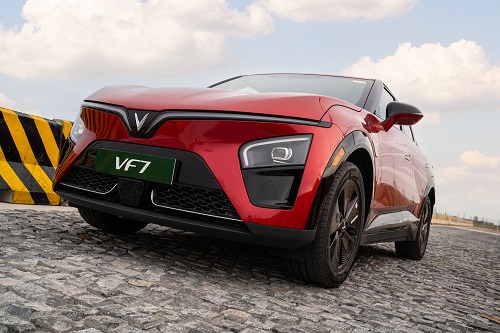
As EVs become more competitive in India, the maths of switching from petrol to electric is getting easier to calculate. For buyers considering models such as the VinFast VF 6 and VF 7, ownership incentives, free charging and ICE-to-EV switching support can help bring the breakeven point forward.
 |
VinFast makes the switch to EV easier with lower running costs, free charging until March 31, 2029, and attractive ownership benefit
Imagine you have owned the same petrol SUV for five years. It has been reliable, familiar and easy to live with, but fuel prices are eating into your wallet, the next service bill is coming up and the odometer is climbing. You start looking at what to buy next, and an electric SUV catches your attention. Its price is a little higher than the petrol equivalent, but every trip to the fuel station could disappear.
The question is whether those savings will ever break even with the higher purchase price.
The answer can be surprisingly specific. A driver covering 20,000 kilometres a year and charging mostly at home could recover the extra cost of an EV in only a few years. Someone driving 8,000 kilometres a year, especially without access to home charging, could take most of a decade. The difference comes down to a handful of numbers: annual mileage, energy cost, purchase price, taxes and how long the car is kept.
The odometer is where the EV starts earning its keep
The easiest place to start is the cost of moving the car one kilometre. Take petrol at around INR 102 a litre in Delhi. If an SUV manages 13-14 km per litre, its fuel cost comes to roughly INR 7.3-7.8 per kilometre.
With an EV, assuming the vehicle travels around 6-7 km per kWh and using household electricity rates ranging from about INR 3/kWh in Delhi to INR 8.98/kWh in Maharashtra, the raw energy cost can range from roughly INR 0.4 to INR 1.5 per kilometre, depending on the local tariff and household consumption. In practice, because an EV can push a household into higher electricity slabs, a more useful working estimate is around INR 0.9-1.3 per kilometre for home charging.
That means the home-charging advantage is roughly INR 6-7 per kilometre in the example above. Let’s use INR 6/km as a conservative estimate of the savings to make the calculation simple.
Now add a representative INR 4 lakh upfront premium for the EV. If the EV saves INR 6 for every kilometre driven, the calculation is INR 4,00,000 ÷ INR 6, which equals about 66,700 kilometres. That is the point at which fuel savings alone have recovered the initial price difference, with every additional kilometre adding to the savings.
A driver covering 8,000 km a year would need roughly 66,700 ÷ 8,000 = 8.3 years to get there. At 12,000 km a year, it takes about 5.6 years; at 15,000 km, around 4.4 years; and at 20,000 km, about 3.3 years.
Of course, that’s for home charging. With public charging, the gap between EV and ICE is smaller, but the EV still has an energy-cost advantage. At INR 15-25 per kWh, the same 6-7 km of driving costs roughly INR 2.1-4.2 per kilometre, before accounting for charging losses. That is still below the INR 7.3-7.8/km fuel cost of the petrol SUV.
Maintenance can bring that breakeven point forward. Petrol and diesel cars typically require around INR 7,000-10,000 a year in scheduled servicing, while comparable EVs can be around INR 2,000-4,000. That creates a potential annual saving of roughly INR 5,000-8,000 before other ownership costs are considered. EV owners can face higher insurance premiums and potentially faster tyre wear, however, so those costs should be included rather than treating all maintenance savings as pure profit.
Taxes can also materially change the calculation. In states offering substantial road-tax exemptions for EVs, part of the upfront price gap can disappear before the car even leaves the showroom. For a representative INR 20 lakh vehicle, an ICE road-tax bill of 8-15% would amount to roughly INR 1.6-3 lakh, although the actual amount varies by state and vehicle.
That’s a lot of numbers to chew through, but if you have to take one thing away from it, it’s this: the more a car is driven, the more opportunities an EV has to recover its initial premium. There is no single mileage at which every petrol owner should trade in for an EV. Instead, the calculation becomes increasingly favourable as three things happen together: annual mileage rises, charging costs fall and the ownership period gets longer.
VinFast is trying to make that transition easier
The financial calculation is only part of the decision. Someone moving from a petrol car to an EV is also changing how they refuel, maintain and think about the vehicle.
VinFast is attempting to reduce some of those barriers in India with a combination of product specifications, warranty coverage and ownership incentives.
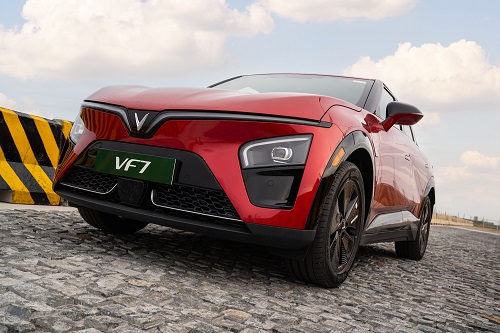
Its B-SUV VF 6 offers up to 468 km of MIDC range and can charge from 10% to 70% in about 25 minutes, while the VF 7, its C-SUV, offers more performance and space, with up to 438 km of MIDC range and charging from 10% to 70% in about 24 minutes. The VF 6 comes with a 7-year/160,000 km vehicle warranty and a 10-year/200,000 km battery warranty, while the VF 7 offers a 10-year/200,000 km warranty for both the vehicle and battery.
The company is also offering measures aimed directly at the transition from ICE ownership. Its current programme includes free maintenance for three years or 36,000 km, free charging at V-Green charging stations until March 31, 2029, and cash support for customers who sell an existing ICE vehicle and purchase a VinFast EV. These incentives change the breakeven calculation because they reduce the effective cost of moving into an EV.
For the petrol-car owner standing in a showroom and wondering whether this is finally the moment to go electric, the answer starts with the odometer rather than the badge. Look at how many kilometres you expect to add each year, calculate what each of those kilometres costs in petrol or electricity, and then ask how many of them you can power at home.
About VinFast
VinFast (NASDAQ: VFS), a subsidiary of Vingroup JSC, one of Vietnam’s largest conglomerates, is a pure-play electric vehicle (“EV”) manufacturer with the mission of making EVs accessible to everyone. VinFast’s product lineup today includes a wide range of electric SUVs, e-scooters, and e-buses.
VinFast is currently embarking on its next growth phase through rapid expansion of its distribution and dealership network globally and increasing its manufacturing capacities with a focus on key markets across North America, Europe, the Middle East and Asia.
Learn more at: vinfastauto.in

