


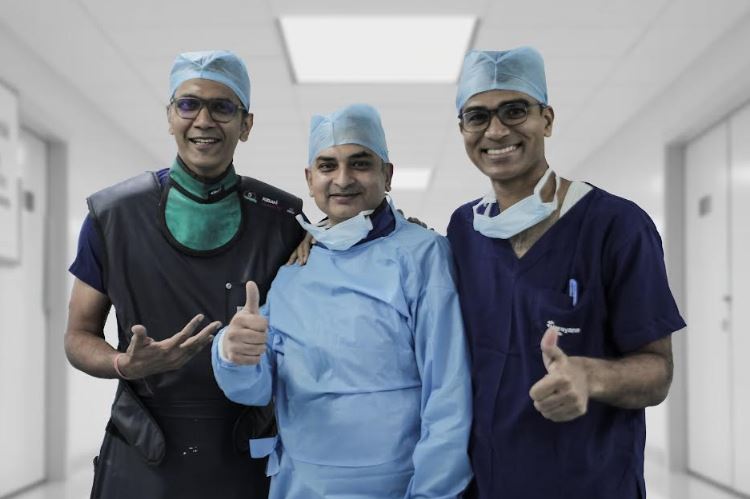
Narayana Health City has announced the achievement of a significant milestone in Cardiac Electrophysiology by performing India’s first Pulsed Field Ablation (PFA) for the treatment of Atrial Fibrillation (AFib), one of the world’s most common and challenging heart rhythm disorders. Breaching a frontier in Cardiac Electrophysiology, the first PFA procedure in India was successfully conducted at Narayana Health City, Bengaluru by the team of Cardiac Electrophysiologists comprising Dr. Deepak Padmanabhan, Dr. Kapil Kumawat, and Dr. Debabrata Bera. This procedure which would have taken up to four hours through traditional methods, was completed within 35 minutes using this new technology.
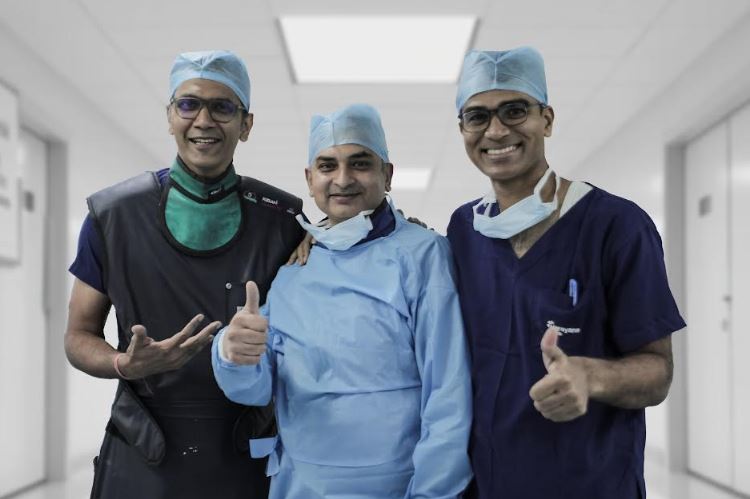 |
Celebrating a landmark in cardiac care, the team at Narayana Health City successfully performed India’s first Pulsed Field Ablation (PFA) for Atrial Fibrillation
As the first centre in India to perform Pulsed Field Ablation (PFA), Narayana Health has integrated this platform with its unique Comprehensive AFib management programme with an intention to deliver state-of-the-art, minimally invasive, and safe AFib ablation to patients suffering from the disease. The Institute performs this procedure on globally recognised technology systems such as Johnson & Johnson, Abbott, Boston Scientific, and Medtronic.
This allows physicians to perform procedures with enhanced precision and efficiency. The technology is safe, patient-centric and compatible with both conscious and deep sedation thereby paving the path towards shorter hospital stays and recovery periods. Narayana Health, with its focus on greater accessibility, offers mechanisms for patients of various socio-economic backgrounds to avail this procedure at prices as low as Rupees 2.5 lakhs despite the use of imported technologies.
Commenting on this significant landmark, Dr. Devi Prasad Shetty, Founder and Chairman, Narayana Health, said, “Pulsed Field Ablation represents a defining leap in the future of cardiac rhythm management. It uses ultra-fast electrical pulses to selectively target cardiac tissue, while preserving surrounding critical structures and minimising damage. This makes it one of the safest and most promising breakthroughs in Electrophysiology in recent times and ushers in a new era in rhythm management in our country. Atrial Fibrillation affects nearly 50 million people worldwide with the prevalence increasing as the age of the population increases. It contributes to 20 per cent of brain strokes with an unknown cause, and incites and worsens heart failure. It is also known to contribute to dementia by causing minor brain infarcts and reducing blood flow to the brain.
In Atrial Fibrillation, the heart’s upper chambers beat out of sync with the lower chambers, making them quiver or ‘fibrillate’ rapidly. This disrupts the heart’s coordinated pumping, causing the blood to collect inside the heart instead of being pumped out fully. This is the mechanism of the clot formation as well as heart failure. In addition, owing to the higher heart rate and poor filling of the cardiac chambers, exercise reserve is reduced leading to a vicious cycle of heart failure, Atrial Fibrillation and Atrial muscle weakness.”
A person experiencing AFib may feel a fluttering sensation in their chest, unusual fatigue, dizziness, or even shortness of breath. While these symptoms can be managed with medications and blood thinners, the best remedy in the long term would be to restore a normal cardiac rhythm.
Hitherto, patients underwent traditional thermal ablation, a minimally invasive catheter-based technique which uses targeted heat or cold to destroy tissue responsible for abnormal electrical signals in the heart, but with a high likelihood of damage to surrounding structures.
Early clinical studies on Pulsed Field Ablation have demonstrated considerable safety, effectiveness, faster recovery times, and shorter duration of the procedure, which means that patients spend less time on the operating table.
Dr. Devi Shetty further added, “As India embraces next-generation cardiac care, the adoption of PFA needs to be supported by rigorous clinical evaluation, structured training for physicians, and strong institutional protocols to ensure effective integration into mainstream practice. This technology has the potential to dramatically reduce procedure times, improve recovery, and redefine the standards of care for patients with complex cardiac arrhythmias. We believe that successful Atrial Fibrillation management extends beyond the procedure itself and requires a comprehensive, patient-centric approach.”
Elaborating about PFA, Dr. Deepak Padmanabhan said, “Patients increasingly seek therapies that are effective, minimally invasive, and associated with quicker recovery. The procedure is performed using a fine catheter, guided through the blood vessels in the leg. Most patients will require just an overnight stay in the hospital and can return to work quickly. It also enables hospitals to be able to deliver care effectively and scale the therapy to cater to the growing needs of our burgeoning population.”
Dr. Kapil Kumawat said, “The most important step remains early recognition. Persistent palpitations, irregular heartbeat, unexplained fatigue, dizziness, or breathlessness should not be ignored. Early diagnosis and timely evaluation can reduce the risk of complications, including brain stroke and heart failure. Even after a successful ablation, patients will need structured, long-term follow-up to maintain heart health. This includes managing overall cardiovascular risk factors—through brain stroke prevention, controlling BP, diabetes and weight management, being consistent with exercise routines and treatment of sleep apnoea.”
Dr. Debabrata Bera said, “As Electrophysiologists, our goal is to provide patients with durable rhythm control while reducing procedural risks and recovery times. Pulsed Field Ablation brings us significantly closer to achieving that objective and offers renewed hope for patients living with Atrial Fibrillation. It also democratises the procedure delivery since the learning curve is expected to be less steep than the existing ablation technologies.”
Narayana Health has developed and deployed advanced technologies to treat electrical disturbances of the heart, generally referred to as Arrhythmias. Comprehensive AFib services are available throughout its network of hospitals across the country.
About Narayana Health
Narayana Health, founded by Dr. Devi Shetty and headquartered in Bengaluru, is a leading presence in the global healthcare landscape. As one of the largest healthcare providers in India, Narayana Health operates a comprehensive range of primary, secondary, and super-speciality tertiary care facilities across India and the Caribbean.
The group’s Centres of Excellence across multiple medical specialties, a team of 18,822 dedicated professionals including 3,868 skilled doctors and specialists, and a relentless focus on patient well-being and clinical excellence underscore its position as a beacon of hope and healing in the healthcare industry.
Narayana One Health (NH Integrated Care) and Narayana Health Insurance are subsidiaries of Narayana Health.
For more information, visit www.narayanahealth.org.

