
Home Blog Page 84

NITKonnect'26 Brings 1200 Alumni to Discuss 'Bharat Unbound' Through Innovation

Over 1200 alumni of NITK Surathkal, who are in leadership roles at global companies, startups and investment communities gathered at the 5th edition of NITKonnect’26 organised by the Institute’s Alumni Association. The event included keynotes from industry leaders, and 37 CXO panels with over 110 speakers on a variety of topics. The “Inspiring Founders’ Panel” showcased 60+ startups and discussions about innovations, AI, and scaling for the world. An MOU was signed between NITK Suarthkal, Bhive (leading Coworking Space Provider) and NITK Alumni Association to provide free co-working space for aspiring student entrepreneurs of the institute. Vision 2035 of NITK Alumni Association was unveiled by Director Prof B Ravi and Prof Prasanna Belur Dean Alumni & Corporate Relations. The event concluded with NITK Awards celebrating excellence and innovation by alumni.


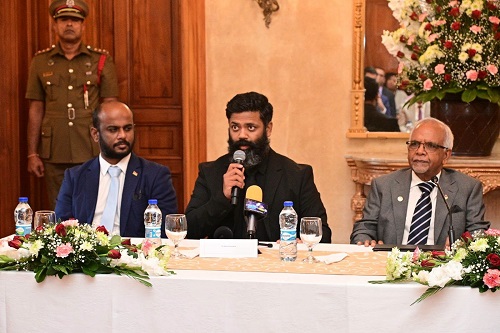
(L-R) Niranjan Mahabalappa, President of NITK Surathkal Alumni Association, Prof. Ravi B, Director of NITK Surathkal and Prof Prasanna Belur, Dean Alumni & Corporate Relations


Over 350 founders, 200 C-level executives, 100 angel investors and 60 startups, made this meet one of the largest innovation events hosted by a global alumni network in India. The summit exhibited the caliber, reach, and entrepreneurial power of NITK alumni across industry, globally.


Prof. Ravi B, Director of NITK Surathkal, said, “We are proud of NITK alumni who have set high standards for professionalism and success in a variety of fields ranging from manufacturing and sports to defense and public service. Their stories are inspiring and their experiences are valuable for the next generation. I am sure every alumnus will directly or indirectly contribute to building the future of Bharat.”


Shri Niranjan Mahabalappa, Global President of NITK Alumni Association said, “NITKonnect’26 is a strategic business aggregation of alumni – a mechanism through which founders, investors, technologists, and business leaders, who have shared values, come together to help provide direction for the next phase of growth of India.”


The day-long event featured keynotes by Ajay Prabhu, Vice Chairman Quest Global and Saumya Swain, Chairman of RT Energy. Under the banner of “Innovate in Bharat, Scale for the World,” the summit explored India’s transformation into a global powerhouse across AI sovereignty, clean energy, and self-reliant space tech. From the “EV Pivot” and FinTech 2030 to the evolution of the “Factory of the Future,” the sessions dissected how capital and conviction are driving India from a plus-one to the one. By bridging the gap between enterprise SaaS, digital infrastructure, and the new consumer playbook, the event will define the next decade of growth, culminating in a Founders’ Panel on scaling with integrity and redefining the future of work.


About NITK
National Institute of Technology Karnataka (NITK), Surathkal is one of India’s premier engineering institutions, established in 1960 and recognized as an Institute of National Importance. Known for its strong academic rigor, cutting-edge research, and industry-linked innovation, NITK offers undergraduate, postgraduate, and doctoral programs across engineering, science, and management disciplines. The institute is renowned for its high-quality faculty, state- of-the-art laboratories, vibrant research culture, and global collaborations. With a coastal campus located along the Arabian Sea, NITK consistently ranks among India’s top engineering institutions and is a key contributor to technological advancement, social impact initiatives, and Nation-building.


About NITKonnect
NITK Surathkal Alumni Association is a global network of 45,000 alumni. NITKonnect is its largest annual alumni summit attracting over 1200+ entrepreneurs, professionals, investors, operators and enablers under one roof to connect, synergise and co-create the next wave of impactful enterprises.

Rethinking Urban Luxury: From Opulence to Livability

For decades, Bengaluru’s real estate story has been dominated by the idea of spectacle. Luxury meant tall glass towers, sprawling clubhouses, and long lists of amenities that often looked better in brochures than they worked in real life. Homes were marketed as lifestyle statements, not living environments.
 

Ventara by Amberstone: An 8-acre, scientifically designed community off Sarjapur Road featuring 11ft ceilings and abundant open space. (Photo: Courtesy of Amberstone)
 

But in recent years, something has shifted. The pandemic years sharpened people’s sense of what really matters inside the four walls they inhabit. Suddenly, natural light, ventilation, and green surroundings felt less like “extras” and more like essentials. As the city expands eastward toward Sarjapur and Whitefield, or northward toward the airport corridor, buyers are asking harder questions: Does this home support my health? Does it give me flexibility as my life changes? Does it belong to a community, not just a complex?
 

The Changing Priorities of Buyers

Research confirms this recalibration. JLL’s 2021 Homebuyer Preference Survey found that while proximity to schools and workplaces remains important, buyers are now placing equal or greater emphasis on healthcare access and green spaces. It’s not just about convenience anymore; it’s about resilience and well-being.
 

Other studies echo the same theme. A global review of residential design showed that both professionals and residents rated natural light and ventilation as the top contributors to comfort – ahead of entertainment spaces or luxury add-ons. In India’s urban metros, sustainability, wellness, and energy efficiency have moved from being “nice to haves” to genuine differentiators. A Colliers-KPMG analysis highlighted how environmental consciousness now drives buying decisions even at the premium and luxury levels, a finding reinforced by recent reports that high-net-worth individuals increasingly prefer sustainable, wellness-led homes over sheer showmanship.
 

From Spectacle to Substance

This shift is reshaping how developers approach design. The older model-stacking hundreds of apartments with shared walls and identical layouts, feels out of step with what today’s aspirational families, senior couples, and young professionals are seeking.
 

The new model emphasizes space, flexibility, and community. Buyers are less impressed by rooftop infinity pools they’ll rarely use; they’re looking for homes that allow them to work remotely, raise children, host parents, or simply step outside without feeling hemmed in.
 

Amberstone integrates modern lifestyle luxuries-swimming pools, a clubhouse, fitness facilities, and more, yet these are not the sole markers of value. What sets the community apart is how these amenities coexist with expansive layouts, low-density planning, and abundant green cover. In other words, spectacle and substance are not in competition here; they are designed to complement one another.
 

The Case of Ventara

Take Ventara, Amberstone’s upcoming residential community off Sarjapur Road. Spread across eight acres, it does not try to overwhelm with vertical scale. Instead, it introduces a low-density plan where apartments feel closer to villas in proportion. Each home is built with 11-foot ceilings-a small design decision with a big impact on daylight, airflow, and the perception of openness.
 

The development also resists the temptation of building amenities for show. Its 60+ features are rooted in actual living needs: coworking lounges for hybrid workers, cricket pitches and play areas for children, jogging and cycling tracks for fitness, a temple for quiet reflection, and even a pet park for families with four-legged members. In an era where many urban residents complain about “vertical anonymity,” Ventara seeks to recreate the fabric of a neighborhood-where recreation, wellness, and community interaction overlap.
 

Why This Matters Now

Bengaluru’s homebuyers are increasingly multi-generational. Millennials are purchasing not just for themselves but with parents in mind. Senior couples want low-maintenance but not isolating homes. Single professionals want investment stability with flexibility to rent. For all of them, a balance of privacy, wellness, and connectivity has become the real measure of value.
 

Developments like Ventara demonstrate that luxury in 2026 is less about being the tallest or flashiest, and more about being attuned to life as it is actually lived. As real estate becomes an investment not only of money but of health and future security, such design philosophies are likely to define the next decade of urban housing.
 

Looking Ahead

The trajectory is clear. As environmental concerns, hybrid working, and wellness continue to reshape lifestyle choices, homebuyers will gravitate toward communities that provide breathing space, both literally and figuratively. Bengaluru, long known for its tech-driven growth, is also emerging as a laboratory for this new model of residential design.
 

Amberstone, with its focus on sustainable density, meaningful amenities, and design that respects human scale, positions itself as part of that evolution. In a market still crowded with glossy towers, it offers a reminder: the best homes are not those that shine the brightest, but those that breathe, belong, and endure.

DeepTech Hackathon Ignites India's Next Wave of Semiconductor & AI Innovation

The India Electronics and Semiconductor Association (IESA), in a landmark collaboration with GlobalFoundries (GF) India, one of the world’s largest feature-rich semiconductor foundries, NXP Semiconductors, a global leader in secure connectivity solutions, and the Inter Institutional Inclusive Innovations Center (i4C) as Hackathon event partner, today announced the winners of the highly anticipated DeepTech Hackathon Grand Finale at the prestigious IESA Vision Summit 2026.


Chennai Institute of Technology’s ALL-GIRLS  team wins at DeepTech Hackathon, takes home Rs. 1,00,000


A Platform Built for the Next Generation of Innovators

India has earned global recognition for its deep semiconductor design talent. As the nation now accelerates toward chip manufacturing, the imperative is clear — India must expand its capabilities across the entire semiconductor value chain to build a truly self-reliant ecosystem.


The IESA Vision Summit 2026 concluded with the DeepTech Hackathon Grand Finale, spotlighting cutting-edge semiconductor talent and Edge AI innovation


The ‘DeepTech Hackathon’ was conceived as a high-impact platform to catalyse this transition — identifying, nurturing, and fast-tracking breakthrough innovations and cultivating a future-ready talent pipeline in India. Bringing together some of India’s brightest engineering minds, the hackathon challenged participants to develop cutting-edge solutions leveraging AI-enabled EDA workflows for “Edge AI based Defect Classification System for Semiconductor Images”, reinforcing India’s readiness for design-led manufacturing and deep-tech leadership.  


The competition drew exceptional engagement from the country’s engineering community, attracting 911 teams across 359 colleges — culminating in 532 high-quality idea submissions that underwent a rigorous, multi-stage evaluation process. The Grand Finale, held at the IESA Vision Summit 2026 — the most influential gathering of India’s electronics and semiconductor leadership — brought together 10 finalist teams who had successfully navigated rigorous qualification rounds, mentorship sessions, and technical evaluations conducted in collaboration with industry experts from GlobalFoundries and NXP Semiconductors.


Commenting on the Mega Finale, Mr. Ashok Chandak, President, IESA and SEMI India, said, “India’s semiconductor ecosystem is at a decisive inflection point. While the India Semiconductor Mission is unlocking unprecedented investments, the true multiplier lies in talent and deep-tech innovation. This Hackathon showcases the depth of India’s semiconductor capability and the power of young engineers to solve complex challenges.”


The momentum in AI and semiconductors is inseparable. As we build next-generation chips, we must also build responsible, human-centric AI systems aligned with the Prime Minister’s vision of MANAV — ethical, inclusive, and globally competitive. Today’s winners are not just award recipients; they represent the new face of India’s design and technology leadership. We congratulate them and thank our partners who are nurturing this innovation ecosystem that will power India’s next wave of startups, IP creation, and global impact.” Chandak added.


GF is committed to building differentiated solutions for the semiconductor industry and our customers. Our leading foundry presence in India enables us to contribute towards building a strong tech ecosystem with our industry partners and educational institutes. The hackathon at the IESA Vision summit is a perfect platform for young talent to nurture industry-ready skills while solving real world problems using semiconductor chip design, manufacturing and AI techniques. It is inspiring to see the critical thinking, curiosity and depth of technical knowledge demonstrated by the students. I look forward to welcoming this talent to the growing semiconductor ecosystem in India and GF in particular in the coming years,” said, Jitendra Chaddah (JC), Vice President and India Country Head, GlobalFoundries.


Hitesh Garg, Vice President and India Managing Director, NXP Semiconductors added, “The DeepTech Hackathon comes at a pivotal moment as India accelerates its semiconductor and AI ambitions. This initiative reflects the kind of industry–academia collaboration that is essential to building India’s next wave of deep‑tech and manufacturing innovation. What stands out in this challenge—bringing together defect detection, Edge AI, and real fab‑level problem‑solving—is how closely it mirrors the demands of modern intelligent manufacturing. At NXP, we are proud to support platforms that strengthen India’s semiconductor and AI capabilities, especially as the industry faces a growing need for system design engineers who can integrate hardware, software, and AI into scalable, real‑world solutions. The ingenuity and technical depth demonstrated by these young engineers reaffirm that India is not just participating in the global shift toward advanced AI‑driven systems, but is strongly positioned to lead it.”


The Winners

Each winning team demonstrated exceptional command of AI enabled semiconductor design principles, systems thinking, and solution viability. A distinguished panel of jury shortlisted the top three winners at the Mega Finale — with the top spot claimed by an all-girls team from Chennai Institute of Technology.


Winning team – Chennai Institute of Technology, honored with prize money of Rs. 1,00,000

1st Runner-Up- Ramco Institute of Technology, honored with prize money of Rs. 60,000

2nd Runner-Up- IIT Indore, honored with prize money of Rs. 40,000. 

President of India Visits Manipal Tata Medical College, Jamshedpur

Manipal Tata Medical College (MTMC), Jamshedpur, a premier constituent unit of the Manipal Academy of Higher Education (MAHE), was privileged to host the Hon’ble President of India, Smt. Droupadi Murmu, at its campus recently. The Presidential visit underscores a pivotal moment for the advancement of medical education and healthcare infrastructure within the state of Jharkhand.
 

Hon’ble President of India, Smt. Droupadi Murmu at Manipal Tata Medical College (MTMC), Jamshedpur, a premier constituent unit of the Manipal Academy of Higher Education (MAHE)
 

The Hon’ble President was received with a warm welcome by dignitaries including:

  • Shri Santosh Kumar Gangwar, Hon’ble Governor of Jharkhand

  • Shri Irfan Ansari, Hon’ble Minister, Ministry of Health, Medical Education and Family Welfare, Jharkhand

  • Lt. Gen. (Dr.) M.D. Venkatesh, VSM (Retd.), Vice Chancellor, MAHE

  • Shri Somnath Das, Group President, Manipal Education & Medical Group (MEMG)

  • Shri D.B. Sundara Ramam, Vice President, Corporate Services, Tata Steel Ltd.
     

The visit commenced with the Hon’ble President group photographs with the Faculty, Management and Students, followed by MIYAZAKI MANGO sapling plantation.
 

In his welcome address at T.M.A Pai Hall, the Vice Chancellor referred to the significant policy change by Government of India in 2019 which led to the establishment of first ever Private Private Consortium model medical college named Manipal Tata Medical College (MTMC). Tata Steel Ltd. has provided its Tata Main Hospital as teaching Hospital. The first batch of 150 MBBS students commenced from the academic year 2020-21 which is now due to pass out in March 2026. Referring to MAHE’s legacy, the VC mentioned specifically on the role of Dr. Ramdas M. Pai, Chancellor, MAHE & Dr. Ranjan Pai, President MAHE Trust. He highlighted about Manipal’s role in medical health care system by establishing first Private Medical College in 1953 followed by first Public Private Medical college in Sikkim.
 

The VC concluded with thanking the Hon’ble President on behalf of entire MAHE family for having spared her valuable time to be present with us today. 
 

During the interaction with the students, Smt. Purnima Hembram (2nd year student) expressed her strong resolve to complete her studies notwithstanding the fact that she is married with three children and a family to support. She belongs to a village in Jharkhand but her parents and family continuously encouraged her to complete her studies and become a doctor to enable her to work in the rural areas for the health care of the downtrodden.
 

The Hon’ble President expressed her admiration for all the students and highlighted the resolve of Smt. Purnima and appealed to the MTMC and its entire student community to adopt Purnima’s resolve as a role model. Hon’ble President lauded the legacy of Manipal Group which led to MTMC formation which has earned its reputation in the region in just six years. She specifically expressed the fact that she felt completely at home while being in the MTMC Campus.

Fintastics Emerges as a Game-Changer in Smart Money Management

  • The new app from Thinking Hats Tech Solutions Pvt Ltd integrates AI-driven analysis, budgeting tools, and financial goal tracking into one secure digital ecosystem-


Chennai-based two-year old startup Fintastics is rapidly gaining traction in India’s personal finance tech space, tapping into the country’s rising demand for smarter digital money management solutions. At a time when financial discipline is becoming central to personal growth and long-term stability, the startup is positioning its platform as a financial life-changing innovation, a next-generation expense manager and budgeting app designed to help individuals and families seamlessly track income, control spending, and cultivate sustainable savings habits in an increasingly digital economy.


Fintastics 


Developed by Thinking Hats Tech Solutions Pvt Ltd, Fintastics integrates expense tracking, goal-based savings, AI-driven insights, and secure transaction monitoring into one unified platform, aiming to make financial clarity accessible to India’s digital-first generation.


According to Mouli Shankar, Founder of Thinking Hats Tech Solutions Pvt. Ltd., “Our mission is to transform the way people manage money. We believe financial clarity leads to financial confidence and that confidence changes lives. We envision Fintastics as a catalyst for stronger financial awareness, responsible money management and lasting abundance through transparent guidance, consistent and long-term support, across Indian households. Designed for the digital generation, the app offers a clean and intuitive interface that makes tracking income, expenses, and savings effortless for students, professionals, and families alike. With secure SMS-based transaction detection (enabled only with user permission) and strong security and encryption standards, we ensure both convenience and complete data protection. By helping individuals build disciplined money habits, reduce unnecessary expenses, and achieve long-term financial stability, we aim to contribute to a financially stronger India.


Currently available for Android and iOS users, Fintastics will continue to evolve with regular updates and AI-driven enhancements in the future.” he added.


Fintastics goes far beyond traditional expense tracking apps by offering a complete financial ecosystem tailored for modern lifestyles. The Features of the app include:

  • AI Insights (Finney AI) – Personalized spending analysis and smart suggestions

  • Smart Expense Tracking – Instantly record daily income and expenses

  • Simple & Custom Budgets – Plan monthly or category-wise budgets

  • Passbook View – Track all accounts in one unified dashboard

  • Financial Goals – Set, monitor, and achieve savings targets

  • Due & EMI Reminders – Never miss important payments

  • Advanced Financial Reports – Clear analytics for better decisions

  • Family Sharing Model – Transparent household budget monitoring

  • Rewards & Achievements – Recognition for disciplined financial habits


Fintastics Introducing a New Business Model

Finbudy – The Face of Fintastics:
A nationwide network of district ambassadors promoting Fintastics services and financial awareness. Strengthening local presence and improving service reach across India.


www.earn100save10.club (Build Disciplined Financial Habits & Awareness)
A community-driven savings initiative focused on creating disciplined financial habits and encouraging consistent saving. Encouraging collective growth and long-term financial security.


Upcoming Innovations

Fintastics continues to evolve with powerful upcoming features designed to elevate personal financial management. According to Thinking Hats Tech Solutions Pvt Ltd, the next phase of innovation will introduce smarter collaboration and predictive intelligence for users.


Split Sharing – Easily split and track shared expenses among friends, roommates, or groups with clarity and transparency.


Advanced Family Sharing – Enhanced multi-member access with improved visibility for household financial monitoring.


Fin Astro – A unique projection model that analyses three months of financial data to forecast trends, spending patterns, and potential savings opportunities.


These upcoming enhancements are designed to deliver predictive financial intelligence and collaborative money management that will empower users with deeper insights and smarter control over their financial future.


Privacy-First & Secure by Design

Fintastics follows strict privacy and encryption standards to protect user data.


Disclaimer:
Fintastics does not connect to real-time banking systems and does not request or store users’ banking usernames or passwords. All financial data entered remains under the user’s control, ensuring complete transparency and security.


For Further information, please visit fintastics.ai or call +91 8892783333


At Thinking Hats Tech Solutions Pvt Ltd

IESA Vision Summit 2026 Inaugurated in Bengaluru, Charting India's Path from Design to Manufacturing: Synergy of Product, Production and Skilling

The India Electronics & Semiconductor Association (IESA), the nation’s premier industry body for the Electronics System Design and Manufacturing (ESDM) sector, today inaugurated the IESA Vision Summit 2026 at The Leela Bhartiya City Convention Centre, Bengaluru on 25th February, 2026. Bringing together the brightest minds from industry, government, and academia, the two-day summit — themed “Design to Manufacturing: Synergy of Product, Production and Skill” — signalled a decisive shift in India’s ambition to becoming a Product Nation.


Shaping the future – IESA President Mr. Ashok Chandak (extreme left) inaugurates IESA Vision Summit 2026 alongside esteemed government dignitaries and industry leaders


The inauguration ceremony was addressed by a distinguished assembly of government leaders, industry luminaries, and stalwarts including Shri. Amitesh Kumar Sinha, (CEO, India Semiconductor Mission and Additional Secretary MeitY), Shri. Manish Chadha (JS, Ministry of Commerce & Industry, GoI), Dr. M M Tripathi (DG-NIELIT), Shri. Rahul Sharanappa, (IAS, Director, Deptt of ITBT, GoK), His Excellency, Ewout de Wit, Consul General, Embassy of Netherlands, Ajit Manocha, President, SEMI, Gilroy Mathew (CEO, UST), Mr Ashok Chandak, President, IESA, Ruchir Dixit, IESA Chairperson, VP & Country Manager Siemens EDA, Prof Tummala Rao, IDSPS and Emiretus Prof Georgia Tech, Advisor ISM.


A Theme That Defines a Movement

The 2026 edition’s theme — Design to Manufacturing: Synergy of Product, Production and Skill — captures what industry leaders describe as the most critical challenge and opportunity facing India’s electronics sector today: bridging the gap between world-class chip and product design capabilities and scalable, high-quality domestic manufacturing.


“India has already demonstrated global leadership in semiconductor design. The next step is clear — we must complete the value chain. We must Create, build, and manufacture world-class products at scale, with uncompromising quality and a deeply skilled workforce to sustain that growth.


India has the engineering talent to power the world. What we now need is the resolve to innovate boldly, the discipline to manufacture competitively, and the foresight to skill our people continuously — not just for India, but for the global technology ecosystem,” said Mr. Ashok Chandak, President, IESA, in his inaugural address.


“The IESA Vision Summit has, over the years, grown into far more than a conference — it has become a “national convergence platform” where ideas, partnerships, policy, innovation, and execution come together to drive real impact. This summit brings together “industry leaders, government policymakers, global investors, start-up innovators, academia, and ecosystem partners” — all united by a shared purpose: “to transform India into a global hub for semiconductor design, manufacturing, and innovation”, commented Mr. Ruchir Dixit, Chairperson IESA.


“India’s electronics manufacturing has grown sixfold in eleven years — a foundation built on policy conviction, industry trust, and global partnership. As we advance into the next phase of our semiconductor mission, we do so with a long-term resolve. India is working on designing various AI applications. Under NSM, Ministry of Electronics and IT is working on design and development of infrastructure that is required for AI. In ISM 2.0, support for design, Manufacturing and packaging will continue and will further expand for semiconductor ecosystem development. Research and Development (R&D) in cutting edge technologies and skilling will also be the key focus areas. India Semiconductor Mission is not only a government initiative, this is a journey of all stakeholders with a resolve to build a resilient, trusted, and future-ready supply chain that brings stability not just to one nation, but to the world,” said Shri. Amitesh Kumar Sinha, CEO & Additional Secretary, ISM, MeitY addressing the summit.  


“Back when I stood up at San Francisco and predicted a $1 trillion semiconductor industry by 2030, I wasn’t thinking big enough. We’re already at $1 trillion — not by 2030, but as of today if we take in account the chips being designed and manufactured in-house by hyperscalers and major system companies-the industry has already crossed that threshold. So today, I’m putting a new stake in the ground: $2 trillion by 2035. That’s not a hope. That’s a strategic projection grounded in where this industry is heading — driven by AI, advanced packaging, and the insatiable demand for compute at every layer of the technology stack. We’ve surprised ourselves before. We’ll do it again. Prime Minister Modi invoked Moore’s Law at one of our SEMICONs, calling for India’s semiconductor industry likewise to grow exponentially now that the stars are aligned. The government has done its part. Now it’s up to the people of India to step up,” said Mr. Ajit Manocha, CEO and President, SEMI at the inauguration.


“The vision of sand-to-silicon ecosystems reflects India’s focus on building an integrated semiconductor ecosystem. We already have strong global leadership in chip design, with several global semiconductor companies operating design centers in India, contributing significantly to global chip design talent and innovation. Global trends indicate that the semiconductor value chains are becoming increasingly diversified and resilience-oriented. Nations are seeking trusted partners for manufacturing, design, packaging, and components. Through the strategic trade agreements, market access negotiations and export promotion frameworks, we are expanding opportunities for India’s electronics and semiconductor industry in the global markets. Our objective is not just participation, but leadership in targeted segments of the global electronics trade ecosystem,” said Shri. Manish Chadha, Joint Secretary Ministry of Commerce and Industry at his inaugural address.


“Karnataka isn’t just participating in India’s electronics revolution — we’re leading it. From being the first TCC in the ESDM space in 1985, to contributing 46% of national electronics sales, hosting 500+ R&D centers, 100+ chip design centers, and global giants – our story is one of pioneering leadership. Our policies — from the Karnataka ESDM Policy to being the first state with a dedicated GCC Policy — reflect our unwavering commitment to growth. The IESA Vision Summit is the ideal platform to amplify this story to the world,” said, Shri Rahul Sharanappa Sankanur, IAS, Director, Dept. of E, IT and Bt, GoK; Managing Director, KITS


“The electronics and semiconductor sector is perhaps the clearest example of what coordinated national intent can truly achieve. In over three decades of my association with this industry, I have never witnessed such an extraordinary alignment of vision and execution — with multiple central ministries, including MeitY, the Ministry of Commerce, and the Department of Science & Technology, working in sync with nine proactive state governments and industries under harmonized electronics and semiconductor policies. At IESA, our responsibility is to ensure that industry, academia, and government move forward in formation — aligned in purpose, speed, and direction.


‘Design to Manufacturing’ is not merely a theme; it is a strategic national imperative. India is positioning itself to be a Product Nation, a Production Nation, and a Skills Nation. And this summit marks the moment we confidently declare that ambition to the world,” continued Mr. Ashok Chandak, President, IESA.


The most Impactful development at the IESA Vision Summit, the official formation of IDSPS (Indian Design, Semiconductors, Packaging and Systems) — was announced as a dedicated division under IESA, marking a significant milestone for India’s semiconductor R&D landscape. The division, formed with active participation from industries and Institutes will be led by Dr. Prof. Rao Tummala, appointed as CEO of the division and is envisioned to build a long-term R&D for manufacturing technology needs spanning 3, 5, and even 10 years ahead into the future — with ambitions that extend well beyond national boundaries to create global impact.


Other highlights:

One of the most significant highlights of this year’s summit included Grand Finale of the IESA DeepTech Hackathon 2026, a national competition (having 900+ registrations) that challenged India’s brightest engineering minds to build practical, industry-ready solutions in the country’s most strategically critical technology domains.


The summit also set the stage for one of the most anticipated traditions in India’s ESDM calendar — the IESA Technovation Awards 2026, the sector’s most prestigious recognition since their institution in 2008.


The Vision Summit 2026 set a landmark gathering by bringing together over 1,500 delegates alone on the 1st day for a dynamic exchange of ideas and innovation. Featuring 30+ keynote addresses and 7 insightful panel discussions, the summit showcased 100+ booths. The vibrant Startup Zone and dedicated skilling workshops enlightened aspiring students from top engineering colleges. Along with a State Pavilion, Technovation Awards, Startup Mitra Sessions, Hackathon challenges and product launches the large-scale ecosystem exhibition offered unparalleled opportunities for networking, collaboration, and business development across the ESDM sector.


About IESA Vision Summit

The IESA Vision Summit is India’s foremost annual event for the Electronics System Design and Manufacturing sector, organized by the India Electronics & Semiconductor Association (IESA). Each year, the summit brings together thousands of industry leaders, policymakers, innovators, startups, and academics to shape the strategic direction of India’s ESDM ecosystem. The 2026 edition is being held on February 25–26, 2026, at The Leela Bhartiya City Convention Centre, Bengaluru.


About IESA

The India Electronics & Semiconductor Association (IESA) is India’s premier industry body for ESDM and Intelligent Electronics. Working at the intersection of government policy, industry, and academia, IESA’s mission is to establish India as a leading global hub for electronics manufacturing and design — and to harness the power of technology to positively impact the lives of over a billion Indians.


For more information, visit: www.iesaonline.org | www.iesa-visionsummit.com

Amitians Shine at AI Summit 2026

Students from Amity International School, Noida; Gurgaon Sector 46; Mayur Vihar; Saket; Vasundhara 6, Ghaziabad; Pushp Vihar; and Amity Global School, Noida made a powerful impact at AI Summit 2026, held from 16–20 February 2026 at Bharat Mandapam.


Amitians Shine at AI Summit 2026, Amity International School, Noida


The prestigious summit convened leading policymakers, global technology experts, and emerging innovators to deliberate on how Artificial Intelligence can drive inclusive, responsible, and sustainable growth. Amitians stood out for presenting high-impact, solution-oriented innovations spanning connectivity, healthcare, cybersecurity, communication skills, animal wellbeing, pathology diagnostics, and energy security—demonstrating technical excellence combined with social relevance.


Key Highlights:

  • Signal Surge – A sustainable Wi-Fi booster enhancing signal strength without external power, by Chinmay Karwa (Amity International School, Gurgaon Sector 46).

  • Shwaas – An AI-enabled wearable for real-time respiratory monitoring, by Kairavi Budhiraja (Amity International School, Mayur Vihar).

  • NEMO AI – A smartphone-based early cardiac risk screening tool, by Abhigyan Nayak (Amity International School, Saket).

  • QN-ASTRA – A quantum-inspired AI cybersecurity framework, by Anant Jain, Akshaj Rastogi & Advik Sharma (Amity International School, Noida).

  • SpeakBuddy.net – An AI-powered public speaking enhancement platform, by Aryaveer Chauhan (Amity Global School, Noida).

  • Mood Minder for Pets – An AI smart collar monitoring pets’ health and emotional wellbeing, by students of Amity International School, Vasundhara 6, Ghaziabad.

  • Path-O-Medics and Power Guard – Cutting-edge AI innovations focused on affordable medical diagnostics and smart electricity theft detection, developed by Kritin Raina, Asmi Rawat & Hridank Arora (Class VIII) and Aadit Arora, Aryavardhan Kumar Chauhan & Saisha Ahuja (Class IX) of Amity International School, Pushp Vihar.


A particularly proud moment was the interaction of Adhiraj Chauhan (Amity International School, Pushp Vihar) with Deepak Bagla, Director of the Atal Innovation Mission under NITI Aayog, who appreciated the students’ forward-thinking vision for nation-building through AI innovation.


Further recognition came from Sara Kemp, Vice President at Intel, who commended the young innovators for their global perspective, technical maturity, and responsible approach to artificial intelligence.


The remarkable participation of Amitians at AI Summit 2026 reaffirms the institution’s commitment to nurturing future-ready leaders and ethical innovators empowered to shape a smarter, more inclusive tomorrow.

Mars Impact Fund Launches in India with Humane World for Animals as Part of Global Grant to Advance Science-Led Dog Population Management

Mars, Incorporated, a global leader in snacking, pet care and food & nutrition, announced a USD $726,000 global grant through the Mars Impact Fund, its enterprise-wide philanthropic entity designed to accelerate meaningful and lasting impact in the communities where it operates. As part of this global commitment, India will be a key focus market for implementation, with Humane World for Animals leading a comprehensive, science-based approach to street dog population management, expanded access to veterinary care, and long-term municipal and professional capacity strengthening across high-need regions.


The programme prioritises science-led dog population management, institutional strengthening, and sustainable workforce development in high-need regions.


The programme integrates sterilisation and rabies vaccination efforts with mobile veterinary clinics, hands-on training for professionals, and meaningful partnerships with communities. Through these efforts, the project aims to deliver large-scale preventive care, public health interventions, and sustained community action helping animals across targeted geographies.


Delivering impact starts with listening to communities and partnering with organisations that understand local needs,” said Michelle Grogg, Executive Director, Mars Impact Fund. “Our partnership with Humane World for Animals reflects this approach by helping expand access to veterinary care and training in communities where it is needed most.


India is home to one of the world’s largest free-roaming dog populations. While the Animal Birth Control Rules, 2023, provide a clear legal and scientific framework for humane management, implementation across municipalities remains uneven due to funding constraints, limited veterinary infrastructure, and inconsistent operational capacity. Rapid urbanisation has intensified human–animal conflict in several cities, reinforcing the need for sustained, structured, and science-led solutions. Mars’ State of Pet Homelessness Report highlights that millions of dogs globally lack secure homes and underscores that sustained sterilisation coverage, often benchmarked at 70 per cent or higher, is essential to stabilise and humanely reduce street dog populations over time. In many Indian cities, achieving this threshold stays a structural challenge. This initiative seeks to close that gap through coordinated, systems-based intervention rather than episodic response.


In India, the partnership will work in Uttar Pradesh and Uttarakhand to deliver high-quality spay-neuter services and professional training for veterinary professionals, while fostering strong partnerships with communities and local governments. Humane World for Animals will facilitate the launch of the country’s first dedicated National Animal Birth Control Training Center in Lucknow and a Mobile Training and Capacity-Building Program for animal welfare NGOs across the country.


In Hyderabad and Ahmedabad, Humane World for Animals will launch a pet welfare initiative to improve access to vaccinations and encourage formal registration of owned dogs. This program will deliver a large-scale, city-supported pet welfare and rabies vaccination campaign, complemented by a targeted communications effort designed to raise awareness, increase registration, and promote long-term owner commitment.


Manish Syag, Managing Director, Mars Pet Nutrition India, said, “India is at a defining moment in how it manages human–animal coexistence. According to Mars’ State of Pet Homelessness Report 2023, nearly 69 million dogs and cats in India are without secure homes. These figures reinforce that free-roaming dog populations cannot be addressed through fragmented or short-term measures. Through this initiative, we aim to advance sterilisation coverage, vaccination access, and professional capacity building in alignment with the widely recognised 70 per cent sterilisation benchmark necessary for long-term population stability. This initiative is more than a grant; it represents a long-term blueprint for building safer, healthier, and more resilient cities for both people and animals.


What better partners than Mars to work together to address one of the biggest challenges surrounding street dogs – human – dog conflict. We are delighted to be partnering with them! By promoting science-led Animal Birth Control programs and strengthening human-dog interactions through community engagement, we are working towards long-term solutions. Through high-volume sterilisation, vaccination, and community engagement initiatives in states like Uttarakhand and cities like Lucknow, we are demonstrating how these programs effectively reduce conflict, dog bite incidents and rabies risks,” said Alokparna Sengupta, Managing Director, Humane World for Animals India. “Our expansion of mobile animal clinics in underserved regions is further supporting community-driven solutions that make our neighbourhoods safer and healthier and addresses street animal welfare.


As a family-owned, principle-driven company, Mars has long believed that business should be a force for good. Building on this legacy, the Mars Impact Fund is designed to complement existing sustainability efforts and foundation activities with strategic, long-term investments. The Mars Impact Fund will contribute $85 million between 2025 and 2027. From 2028 onward, the company expects to distribute $50 million annually in philanthropic capital.


About Mars, Incorporated www.mars.com. Join us on Facebook, Instagram, LinkedIn and YouTube.


Humane World for Animals – Global Animal Welfare Org | Humane World for Animals.

9th Responsible Business Membership Organisations Awards Spotlight Green Finance, Sustainability, and MSME Leadership

The 9th Responsible Business Membership Organisations (BMO) Awards, organised by the Foundation for MSME Clusters (FMC), brought together policymakers, financial institutions, Business Membership Organisations (BMOs), industry leaders, development partners, and MSMEs to advance dialogue on green finance, sustainable industrial growth, and responsible enterprise development in India. The event served as a collaborative platform to align policy, finance, and industry action toward building a resilient, sustainability-driven MSME ecosystem.
 

With Mukesh Gulati, ED FMC; Rakesh Rewari, Jury Member BMO Awards; Asim Sharma, WWF India; Padma Shri Nila Madhab Panda; Dr Nidhi Pundhir, HCLTech & HCLFoundation
 

A defining highlight of this year’s Awards was its design as a carbon-neutral programme, reflecting a conscious commitment to minimising environmental impact and embedding sustainability into practice. Sunkonnect partnered as the Carbon Neutral Partner, while WWF India supported the initiative as Knowledge Partner, reinforcing the programme’s focus on climate responsibility and green transition.
 

Focus on Green Finance and Responsible Growth

The inaugural session set the tone for the day’s deliberations. Delivering the welcome address, Shri Ajay Shankar, Chairman, Foundation for MSME Clusters, emphasised the evolving developmental role of BMOs in strengthening sustainable MSME ecosystems.

He stated, “MSMEs are the backbone of India’s economy and a major driver of employment. Collaboration among MSMEs, think tanks, NGOs, and policymakers can reshape India’s growth trajectory. With some of the world’s most affordable green energy and growing certification of green electricity, Indian MSMEs have a strong opportunity to access global markets, particularly in the European Union. India has the potential to emerge as the Green Factory of the World.”
 

Offering an international perspective, Smt. Smita Singh, Senior Programme Manager, Cooperation Section, European Union Delegation to India, highlighted EU–India collaboration in climate finance, clean energy transition, and sustainable industrial development.
 

From the industry viewpoint, Smt. Amita Sarkar, Deputy Director General, Confederation of Indian Industry (CII) shared insights on enabling green finance adoption within industry ecosystems.
 

Addressing financial system readiness, Dr. Subhransu Sekhar Acharya, Chairman & Managing Director, National Small Industries Corporation (NSIC), Ministry of MSME, Government of India, emphasised strengthening financial systems to meet sustainability imperatives across MSME supply chains.
 

Shri Arun Kumar Shrivastava, Former Member, Warehousing Development and Regulatory Authority, further stressed the need for innovative financing mechanisms, infrastructure support, and capacity-building initiatives to help MSMEs transition toward sustainability.
 

Delivering the inaugural address, Chief Guest Shri Dhiraj Mathur, Former IAS Officer and Senior Advisor – Strategy, Public Policy & Green Growth, highlighted the importance of cluster-led MSME development and accessible green finance, “India hosts the world’s largest MSME ecosystem, contributing nearly one-third of the national GDP. To remain globally competitive, sustainability must translate into investment and innovation. Green finance must be affordable, simplified, and accessible, especially for cluster-based MSMEs that drive employment and exports.”


Launch of Panipat Recycled Textile Cluster Study

A major highlight of the inaugural session was the launch of the Diagnostic Study Report of the Panipat Recycled Textile Cluster, prepared by FMC in collaboration with Reverse Resources and SUSTENT Consulting, supported by Denmark’s Ministry of Foreign Affairs (Danida).
 

The study presents actionable recommendations on circular economy integration, traceability systems, resource efficiency, decarbonisation pathways, operational improvements for textile MSMEs, and enhanced access to green financing opportunities — aimed at strengthening the global competitiveness of India’s textile recycling sector.


Technical Sessions and Industry Dialogues

A high-level panel discussion titled “Unlocking Green Finance for India’s MSMEs” examined challenges in defining, measuring, and scaling green finance. The session was curated and moderated by Shri Anand P. Srivastava, Senior Consultant & Advisor, FMC, and featured experts including:

  • Shri Ajay Kumar Kapur, Board of Trustees, FMC

  • Dr. Pawan Singh, Chairman, Amphi Green Solutions Pvt. Ltd. and former MD & CEO, PTC India Financial Services

  • Shri Saurabh Bansal, Geography Head – North, Commercial Banking Group, Axis Bank

  • Shri Nilotpal Pathak, Partner, Sagacia Growth Partners LLP

  • Shri Satyaki Rastogi, Chief General Manager, SIDBI
     

The panel highlighted the importance of developing structured green finance taxonomies, strengthening lender–industry coordination, and improving MSME awareness on sustainability-linked finance.
 

An Information Session on Resource Efficiency and Traceability for Enterprises featured Smt. Ina Bahuguna, Traceability & Circularity Expert, and Shri Rajat Batra, CEO, SUSTENT Consulting, who shared practical tools, use cases, and strategies for sustainable industrial transition.
 

The Green Finance Pitch Clinic created direct interaction between MSMEs, BMOs, and financial institutions. Participating experts included:

  • Shri Vinit Gupta, – North & East India, HSBC Business Banking

  • Shri Saurabh Bansal, Axis Bank

  • Shri Rohit Kumar Sikkewal, General Manager, Sunkonnect
     

The event also hosted exhibitions showcasing financial products, innovative technologies, cluster success stories, and digital market tools supporting MSME growth.

Celebrating Champions of Responsible Enterprise

The Awards & Closing Ceremony recognised Business Membership Organisations and enterprises demonstrating excellence in environmental sustainability, social responsibility, and inclusive development.
 

Chief Guest Shri Manoj Tiwari, Member of Parliament, felicitated the awardees and remarked, “MSMEs remain the backbone of India’s economy and a powerful driver of employment and inclusive growth. Sustainability initiatives must be practical and aligned with industry realities, supported by stronger coordination between government, industry bodies, and financial institutions.”
 

Distinguished dignitaries present on the dais included:

  • Padma Shri Nila Madhab Panda, National Award-winning filmmaker and sustainability advocate

  • Dr. Nidhi Pundhir, SVP Global CSR, HCLTech & Director, HCL Foundation

  • Shri Asim Sharma, Senior Expert & Lead – Sustainable Finance, WWF India

  • Shri Rakesh Rewari, Jury Member and Former Deputy Managing Director, SIDBI

Delivering the Vote of Thanks, Shri Mukesh Gulati, Executive Director, FMC, said, “The strength of this platform lies in collaboration. When BMOs, policymakers, financial institutions, and development partners work together, sustainability becomes achievable and scalable. FMC remains committed to building resilient clusters where responsible practices translate into competitiveness, livelihoods, and long-term economic transformation.”
 

The ceremony also marked the launch of the “Super 16” publication, documenting inspiring case studies of organisations promoting sustainable practices across India’s MSME clusters.


A Growing National Platform for Responsible Business

Since its inception in 2015, the Responsible BMO Awards have emerged as India’s first dedicated platform recognising BMOs promoting responsible business practices among MSMEs. The initiative continues to foster peer learning, institutional collaboration, and innovation toward sustainable economic development.
 

The central message emerging from this year’s conference was clear:
 

Sustainable MSME growth requires alignment between policy, finance, industry action, and institutional collaboration — transforming responsibility into long-term competitiveness.
 

About FMC
The Foundation for MSME Clusters (FMC) works to enhance the competitiveness, sustainability, and inclusive growth of micro, small, and medium enterprises through cluster development, policy advocacy, capacity building, sustainability initiatives, and market linkages.

Nykaa Retail Beauty Ranked Among India's Top 15 Best Workplaces in Retail 2026

Nykaa, India’s leading beauty and lifestyle Company, announced that its Retail Beauty Business (FSN Brands Marketing Private Limited) has been recognised among India’s Top 15 Best Workplaces in Retail 2026 by Great Place To Work®
 

Now in its 10th edition, the prestigious study reflects the voices of over three lakh employees across the country and celebrates organisations that have built exceptional workplace cultures for both frontline and corporate teams. Nykaa’s inclusion in the Top 15 reinforces its continued focus on creating an environment where employees feel valued, heard, and empowered.
 

Nykaa Retail Beauty Ranked Among India’s Top 15 Best Workplaces in Retail 2026


This recognition holds special meaning as it is rooted in employee feedback. Through the Great Place To Work® Trust Index™ Survey, Nykaa’s retail workforce shared insights into their everyday experience across stores and corporate functions. The findings highlight strong levels of trust in leadership, pride in work, and a deep sense of belonging within teams.


At the heart of Nykaa Retail Beauty’s culture is a simple belief: when employees thrive, customers feel it. Across its growing network of stores, teams are supported with clear processes, safe work environments, collaborative leadership, and opportunities to grow. Employees expressed pride in delivering exceptional customer experiences and in representing a brand that champions authenticity and inclusion.
 

Great Place To Work® evaluates over 2,200 organisations in India annually, making the Top 15 ranking in retail is a significant benchmark of workplace excellence within the retail sector. The study recognises companies that go beyond policies and truly embed trust, fairness, and camaraderie into daily operations.


For Nykaa, this milestone builds on last year’s Great Place To Work® Certification and reflects the brand’s sustained investment in people and culture. As the company continues to expand its omnichannel footprint, it remains committed to nurturing a workplace where frontline beauty advisors, store managers, and corporate teams feel equally inspired and supported. Guided by its vision to bring inspiration and joy to people everywhere, every day, Nykaa believes that a joyful customer journey begins with a motivated and confident employee. Being named among India’s Top 15 Best Workplaces in Retail 2026 marks an important chapter in that journey, as Nykaa continues to strengthen its culture and build for long-term growth.