Home Blog Page 79

Galgotias University Champions Global Dialogue Through TGUMUN 2025

Galgotias University successfully concluded the inaugural edition of the Galgotias Model United Nations (TGUMUN 2025), hosted under the visionary leadership of Dr. Dhruv Galgotia, CEO, Galgotias University. The two-day conference brought together over 200 delegates from institutions across India, fostering impactful discussions on global peace, climate justice, human rights and international security.


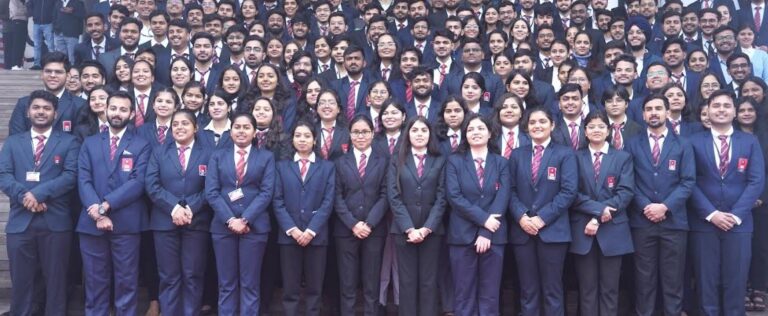
Delegates, dignitaries and award winners during the Closing Ceremony of TGUMUN 2025 at Galgotias University


The Closing Ceremony, held at the Knowledge Centre (AI & DS Block), featured Col (Retd.) Gopal Karunakaran as Chief Guest and Ms. Lakshmi Hariharan, CEO, Spectra Genie, as Guest of Honour.


Addressing the delegates, Col Karunakaran stressed the rising significance of India in global affairs. “India is a fast-growing economy with strong military capability. It is time for India to take its rightful place in the UN Security Council and help shape global decisions,” he said. 


This year’s conference simulated committees including UNHRC, UNGA, UNEP, UNODC, and UNCSW, challenging students to draft resolutions, negotiate positions and engage in moderated caucuses that mirrored real-world diplomacy.


Reflecting on the success of TGUMUN 2025, Dr. Dhruv Galgotia said, “At Galgotias University, we are committed to nurturing globally informed, socially conscious leaders. TGUMUN is a platform where young minds learn diplomacy, dialogue and problem-solving-skills essential for shaping a better world.”


The ceremony also included the felicitation of the Executive Board, screening of The Making of TGUMUN, committee awards and recognition of the Secretariat. The conference concluded with a Vote of Thanks by the Director General and formal closure by Secretary-General Kashish Wadhawan, who praised students for their dedication and collaborative spirit.


TGUMUN 2025 reaffirmed Galgotias University’s mission to strengthen leadership, negotiation and analytical abilities among youth-preparing the next generation of diplomatic leaders.


About Galgotias University
Galgotias University Among the World’s Leading Universities in QS and THE Rankings.


Galgotias University proudly ascends in the QS World University Rankings 2026 by Quacquarelli Symonds, securing a coveted position in the 1201-1400 global band. Ranked 15th among top private universities and 43rd among all Indian universities-public and private combined-this achievement marks a powerful endorsement of Galgotias’ unwavering commitment to academic excellence, global relevance, and innovation in higher education.


In the Times Higher Education (THE) World University Rankings 2025, Galgotias University has been ranked 45th among Indian universities (including both government and private institutions) and placed in the globally prestigious 1001–1200 band. This significant achievement reinforces the university’s growing stature in the international academic arena and validates its consistent progress in global higher education benchmarks.

Mpower's 5-Year Data Reveals Rising Mental Health Challenges Among Indian Men

Mpower, a leading holistic mental health care provider and an initiative of the Aditya Birla Education Trust, founded by Mrs Neerja Birla, has released a consolidated analysis of five years of data from its helpline, counselling ecosystem and youth outreach programmes, highlighting a steady rise in mental health challenges experienced by Indian men. The findings show that more men are reaching out for help than ever before, yet the emotional strain they carry continues to intensify, particularly among younger and working-age groups.


Across all service verticals and outreach channels, Mpower engaged with an estimated 2.83 lakh men over the review period, with the largest segment being young men between 18 and 25 years. Youth-focused programmes alone reached around 2,07,350 young men through screenings, early-intervention initiatives, campus engagements, community projects and multi-city outreach efforts. This indicates not only high vulnerability within this age group but also greater receptiveness to mental health conversations when support is made accessible at educational and community touchpoints.


For working-age men between 26 and 40 years, help-seeking behaviour was most visible on the 24×7 Mpower 1on1 helpline, which recorded 75,702 male callers between 2022 and 2025. Many of these callers reached out anonymously, reflecting the hesitation men often feel about approaching in-person services due to stigma or fear of judgment. Of these calls, 16,698 were specifically linked to relationship issues, depression and stress, indicating that emotional strain, interpersonal conflict and mood-related concerns remain the most prominent triggers for seeking support. Encouragingly, 40% of male callers reported feeling a reduction in stress by the end of the call, demonstrating the tangible value of immediate, empathetic intervention.


Geographically, urban and semi-urban regions showed strong engagement, with Pune accounting for 1,13,435 young male beneficiaries and Mumbai engaging 53,657 young men through clinical services, outreach and youth initiatives. Other regions including Rajasthan, Delhi, Bangalore, Goa and Hyderabad collectively contributed over 40,000 additional young male engagements, reflecting a broad, national footprint of mental health needs across diverse communities.


The most common mental health challenges reflected across Mpower’s helpline and programme interactions include stress, burnout, depression, anxiety, relationship distress, academic pressure, family conflict, low self-esteem, loneliness and financial uncertainty. Many men expressed difficulty sharing their emotional struggles openly and frequently described coping by suppressing feelings, withdrawing socially or over-focusing on work. Some also reported resorting to unhealthy coping mechanisms such as substance use. These behavioural patterns underline the cultural and social expectations that continue to discourage men from acknowledging or expressing distress.


Mpower’s clinical presence ensures access to qualified experts in key metros, including:


This multi-city network enables timely and professional support for men nationwide.


Mpower continues to strengthen its mental health services for men through clinical care, multi-lingual helplines, university and school programmes, early screening, community-based initiatives, capacity-building workshops pan India. Its integrated model, combining clinical expertise with proactive outreach, aims to create safe spaces for men across age groups, cities and socio-economic backgrounds to seek help without stigma.


Furthermore, for those in need of immediate, confidential support, Mpower’s 1on1 Mental Health Toll-Free 24×7 Helpline is available at 1800-120-820050.


About Mpower
Mpower, an initiative of Aditya Birla Education Trust is a pioneering social enterprise dedicated to transforming India approach to mental health. Founded 9 years ago, Mpower has emerged as a leading force in spreading awareness, reducing stigma, and delivering holistic mental health care. With a robust team of over 200 trained professionals, Mpower impacts more than 121 million lives across seven cities, including Mumbai, Bengaluru, Kolkata, Delhi and Pune. Operating through five key verticals—Movement, Clinical Care, Outreach, Academia, and Mpower 1 on 1—Mpower offers a comprehensive range of services. The Movement focuses on changing cultural perceptions and alleviating stigma. Clinical Care provides world-class mental health services through the Centre, the Foundation, and the Cell, catering to various needs from holistic care to affordable support for the underprivileged. The Outreach vertical drives awareness and capacity-building through IGNITE Programs for schools, colleges, NGOs, and corporates. Academia equips individuals and professionals with skills to handle mental health crises and foster empathy. The Helpline offers 24/7 multilingual support, while special projects like Samvedana enhance mental health care in primary health centers. Mpower’s integrated approach and collaboration with government agencies underscore its commitment to creating a supportive and stigma-free mental health landscape.

Study by Indian Body, Center for Chronic Disease Control Reiterates Link Between Lower Salt Intake and Reduced Hypertension & Cardiovascular Disease

A new study by the Centre for Chronic Disease Control (CCDC) for the first time concurrently estimated the daily salt and iodine consumption levels of the adult population in India and examined the effect of the World Health Organization (WHO) recommended salt intake levels on iodine levels. The study demonstrated that in India, where universal salt iodization is mandatory, a reduction in salt intake to the Government of India’s National Multisectoral NCD Action Plan and WHO-recommended levels of ≤ 5 g/d does not compromise the level of iodine intake. This was measured by the gold standard method of collecting and analysing 24-hour urine samples for salt intake and iodine intake by measuring Urinary Iodine Concentration (UIC) and urinary iodine excretion (UIE). These findings provide strong support for the current recommendations to reduce population salt intake to prevent hypertension and cardiovascular diseases (CVD), which are rapidly increasing in India. Notably, salt reduction is unlikely to impact iodine supplementation efforts, indicating compatibility between the two interventions, which should be continuously monitored through robust surveillance. The study can be accessed here.


CCDC field staff collecting samples from a patient


Excess dietary salt intake is a major preventable risk factor for hypertension and CVDs. Thus, salt reduction is recommended by most global health organizations and the National NCD Action Plan as a key strategy to reduce CVDs. Reducing the salt intake by 30% by 2025 is among the WHO’s nine voluntary global targets. The most recent WHO status report shows that the world is far behind in achieving this target.


Prof. (Dr) Dorairaj Prabhakaran, Executive Director, CCDC and senior author of the study, explained the relevance of these findings and population study in the context of national efforts to combat the global burden of noncommunicable diseases (NCDs) reported in India. He said, “One of the major concerns in terms of reducing salt intake is whether it would impact iodine consumption, given that there is a mandatory fortification of salt with iodine to prevent hypothyroidism and goitre. However, this study clearly shows that even with reduced sodium intake, iodine intake remains adequate, and the fear that lowering sodium intake will reduce iodine intake is misplaced. It is crucial, as a public health measure, to reduce sodium to reduce the prevalence of hypertension in the population. To give a context, more than 300 million Indians live with hypertension. And one of the most essential lifestyle measures is reducing salt intake. In this regard, the study has provided major insights: reducing salt intake will not adversely affect iodine intake.”


Speaking about the findings, Professor Sailesh Mohan, Deputy Director & Head-CVD Epidemiology, CCDC, and one of the senior study authors, said, “Salt intake is high in India, and its reduction through population-wide efforts is an urgent imperative to control the rising burden of hypertension, which affects a third of Indian adults. This study’s findings provide much-needed evidence to indicate that salt reduction to recommended levels is unlikely to impact iodine levels among adults.”


Study Design and Findings

This study aimed to estimate the daily salt and iodine consumption levels of the adult population in India and examine the effect of the WHO-recommended salt intake levels on iodine levels. The study sites were selected to include slum and non-slum urban and rural areas. The urban part of the survey was conducted in Delhi, and the rural part in Faridabad, Haryana. Participant recruitment was done using a stratified random sampling method to recruit individuals from urban, urban slum, and rural areas, from 6 age and sex groups.


Iodine in salt, which was collected from 205 households, was estimated by iodometric titration with sodium thiosulfate. All samples were analyzed in triplicate with two levels of controls. The intra- and interassay coefficient of variation were 1.39% and 1.42%, respectively


Key Takeaways

A cross-sectional study was conducted in Delhi and Haryana, India, among adults aged ≥20 years, and 24-hour urine samples were collected to assess the salt and iodine levels.

  1. Sample – The mean salt intake was 8.07 g/d (95% confidence interval: 7.03, 9.11), median urinary iodine concentration (UIC) was 167.8 μg/L (102.63–284.5), and the mean urinary iodine excretion (UIE) was 276.1 μg/ 24h (254.5–297.8).

  2. Observation – Analysis to assess iodine intake adequacy by salt intake levels indicated that the median UIC, as well as UIE, were adequate when salt intake was as per the WHO- WHO-recommended level, i.e., ≤5 g/d. The conclusion was that even at the WHO-recommended salt intake levels, population iodine intake in this study population was adequate, likely indicating that upward titration in iodine concentration in salt may not be required.

  3. Conclusion – Thus, current salt reduction recommendations are unlikely to impact iodine supplementation efforts, indicating compatibility between the 2 interventions, which should be continuously monitored through robust surveillance.

This study demonstrates that in India, where universal salt iodization is mandatory, a reduction in salt intake to WHO’s recommended levels of ≤ 5 g/d does not compromise the level of iodine intake among participants as measured by 24-h UIC and UIE in adults.


These findings provide strong support for the WHO’s recommendations to reduce population salt intake to prevent hypertension and cardiovascular diseases, and also allay concerns regarding the requirement of an upward iodine titration in salt to account for the reduced dietary salt intake. Thus, current salt reduction recommendations are unlikely to impact iodine supplementation efforts, indicating compatibility between the 2 interventions.


The study protocol was approved by the Indian Health Ministry’s Screening Committee and the ethics committee of the Centre for Chronic Disease Control, New Delhi. It was supported by a funding award made by the Global Alliance for Chronic Disease through the National Health and Medical Research Council of Australia (NHMRC).


About CCDC

The Centre for Chronic Disease Control (CCDC) is leading efforts to transform public health and empower public health professionals to combat the growing challenge of chronic diseases across India and low- and middle-income countries (LMIC). Established in 2000 as a non-profit scientific organization, this Delhi-based organization has been working alongside the Government of India (GoI) to reduce the burden of chronic diseases in India. 

APD Leads Large-Scale Accessibility Audit Drive on IDPD 2025

On the International Day of Persons with Disabilities (IDPD) 2025, the Association of People with Disability (APD) mobilised one of India’s largest community-led accessibility assessments, a coordinated effort across 33 districts in five states, including aspirational districts, bringing together 507 volunteers and conducting 2,514 audits in a single day.
 

At a time when India is reimagining its public infrastructure, this initiative highlights a critical question: Are our public spaces truly built for everyone?
 

APD’s Kalaburagi CMHP team volunteers during the IDPD audit drive organised by APD using the Yes to Access app
 

Through the Yes to Access (YTA) app, volunteers assessed everyday spaces, public buildings, transportation hubs, schools, workplaces, health centres, and community facilities, offering a ground-level view of how accessible India really is. As of November 30, the platform has already collected over 2,00,000 audits nationwide.
 

This year’s drive aligns with the global IDPD 2025 theme, “Fostering disability-inclusive societies for advancing social progress,” and brings to the forefront a systemic issue that often remains invisible. Teams across APD’s programmes, Early Intervention, Inclusive Education, Livelihoods, Rehabilitation, Spinal Cord Injury Rehabilitation, and Advocacy, joined staff, volunteers, persons with disabilities, and community members to evaluate both rural and urban locations.
 

The YTA app enabled participants to conduct structured assessments capturing physical access, safety, signage, service usability, and overall inclusiveness.
 

Speaking about the initiative, Dr NS Senthil Kumar, CEO, APD, said, “Accessibility cannot remain an afterthought. It has to be measured, witnessed, and acted upon. This audit drive shows what collective action can achieve when communities, persons with disabilities, and technology come together. The insights we gather will help us push for real, on-ground improvements across the country.”
 

The coordinated effort also included 1,243 website accessibility audits conducted by 44 APD employees. APD will share key findings with local authorities, civic agencies, and partner networks to advocate for actionable upgrades and support compliance with accessibility standards.
 

About The Association of People with Disability (APD)
The Association of People with Disability (APD) is a non-profit organization based in Bengaluru, working since 1959 to empower people with disabilities from underprivileged backgrounds. APD’s comprehensive programs span early intervention, education, healthcare, livelihoods, and advocacy, reaching children and adults with physical, intellectual, and multiple disabilities. With a strong focus on creating sustainable impact, APD partners with communities, corporates, and governments to build a more inclusive society where persons with disabilities live independent, dignified lives.

More information: www.apd-india.org.

CoinSwitch Releases India's First Comprehensive VDA Handbook for Police and LEAs

CoinSwitch, India’s largest crypto trading platform, today announced the launch of Virtual Digital Assets Decoded, the country’s first comprehensive handbook designed to help Indian law enforcement agencies, cybercrime units, and policymakers to navigate through the rapidly evolving VDA ecosystem.


With crypto adoption accelerating across India, police and cybercrime units are increasingly facing complex cases involving digital assets. Recognizing this urgent need, CoinSwitch has developed the handbook to simplify VDA concepts and provide practical guidance for on-ground investigations. The handbook will be distributed across key police stations and cybersecurity units nationwide, ensuring frontline officials have direct access to the tools and insights they need.


Commenting on the launch, Mr. Ashish Singhal, Co-founder & CEO of CoinSwitch, said, “India has emerged as a global leader in grassroots-level crypto adoption, ranking first in the Global Crypto Adoption Index for the third consecutive year in 2025. With this growth comes a responsibility for service providers to safeguard consumer interests and foster a safer, more inclusive crypto ecosystem. This handbook is our contribution to that mission.”


Mr. Sukant Dukhande, Senior Director, Legal at CoinSwitch, added, “Crypto is a rapidly evolving global asset class, bringing inherent complexity. This handbook is designed to assist police officials, policymakers, and regulatory bodies by providing practical insights, case studies, and best practices to enhance coordination and support informed, effective decision-making.”


This launch builds on CoinSwitch’s ongoing efforts to support law enforcement and regulatory engagement in India. The company has conducted over 35 workshops and training programs on blockchain tracing and crypto fraud investigations. It has also established advisory partnerships to help shape balanced and effective crypto regulation. Looking ahead, CoinSwitch plans to expand these initiatives. The goal is to create a sustained ecosystem of knowledge.


To facilitate collaboration, law enforcement agencies can submit official requests via nodaldesk@coinswitch.co. Virtual Digital Assets Decoded complements these efforts, offering actionable insights to support investigations, improve coordination, and enhance decision-making in India’s fast-growing crypto ecosystem.


Link to full report: coinswitch.co/switch/crypto/vda-handbook-for-police-law-enforcement-agencies

AONMeetings to Launch in India Within Two Weeks with Affordable Video Conferencing Plans Starting at Rs. 169/Month

AONMeetings, the award-winning video conferencing platform known for its browser-based simplicity and HIPAA compliance, today announced its official entry into the Indian market, set to launch in two weeks, with specialized pricing designed specifically for Indian consumers, businesses, healthcare providers, educational institutions, religious organizations, and communities.


AonMeetings: Built for business, priced for all


The company is introducing three competitively priced monthly subscription tiers tailored to the Indian market, with no annual commitment required. All plans include integrated webinar capabilities at no additional cost:

  • Starter Plan – Rs. 169/month ($1.99 USD): Up to 10 participants for calls and webinars

  • Professional Plan – Rs. 339/month ($3.99 USD): Up to 25 participants for calls and webinars

  • Business Plan – Rs. 599/month ($6.99 USD): Up to 100 participants for calls and webinars

  • Enterprise Plan – Custom pricing available for larger organizations (email jhawthorne@aontv.com for pricing)


India represents one of the world’s fastest-growing markets for digital communication solutions, and we’re excited to bring AONMeetings’ reliable, secure platform to Indian consumers and organizations alike, said Dwight Reed, CEO and Founder of AONMeetings. Our India-specific pricing reflects our commitment to making professional-grade video conferencing accessible to everyone across the country—from individuals and families to small businesses, religious communities, and large enterprises. With flexible month-to-month billing, users can scale their communication tools as they grow without long-term contracts.


Unlike competitors that charge premium fees for webinar capabilities—often $79 or more per month—AONMeetings includes integrated webinar functionality in every plan at no additional cost, making it an exceptional value for anyone who needs both video conferencing and webinar hosting.


Key Features for Indian Users:

  • Integrated Webinar Capabilities Included in All Plans – No additional fees for professional webinar hosting

  • Flexible Monthly Billing – No annual contracts or upfront commitments required

  • No Downloads Required – Fully browser-based platform works on any device

  • HIPAA-Compliant Security – Enterprise-grade encryption and privacy protection

  • Reliable Performance – 99.9% uptime with robust infrastructure

  • Multi-Language Support – Platform supports multiple languages for diverse teams

  • Local Payment Options – Flexible payment methods for Indian customers

  • Perfect for Personal and Professional Use – Ideal for families, freelancers, content creators, coaches, religious services, and businesses

  • Ideal for Religious Organizations – Stream services, host prayer meetings, conduct religious education classes, and connect congregations

  • Enterprise Solutions Available – Custom plans for larger organizations and special requirements


AONMeetings has earned a 4.9-star rating on G2 and serves over 1,000 businesses globally across healthcare, education, legal, religious organizations, and corporate sectors. The platform’s combination of affordability, reliability, and compliance features has made it a trusted choice for organizations and individuals requiring secure communication solutions.


Indian consumers and organizations deserve access to world-class video conferencing technology without the premium price tag, added Reed. Whether you’re a content creator in Delhi, a religious leader streaming services, a freelance consultant, a startup in Bangalore, a healthcare clinic in Mumbai, or an educational institution, AONMeetings provides the tools you need to connect, collaborate, and grow your community.


The India launch includes dedicated customer support during Indian business hours and resources tailored to local market needs.


Interested consumers and organizations can sign up to be notified when AONMeetings launches in India by visiting www.aonmeetings.com. Early registrants will receive exclusive launch updates and special introductory offers.


For enterprise pricing inquiries, contact jhawthorne@aontv.com.


About AONMeetings

Founded in 2020, AONMeetings is a Des Moines-based video conferencing platform that provides HIPAA-compliant, browser-based video communication solutions for consumers, businesses, healthcare providers, educational institutions, religious organizations, and communities worldwide. With a 4.9-star G2 rating and a commitment to affordability without compromising quality, AONMeetings serves over 1,000 businesses globally.


For more information, visit www.aonmeetings.com.

GJC Requests Formation of Gujarat State Level Vigilance Committee to Safeguard Jewellers' Interests

The All India Gem and Jewellery Domestic Council (GJC) announced that it has formally requested the Government of Gujarat to establish a State Level Vigilance Committee dedicated to protecting the interests of jewellers across the state.
 

L to R: Mitesh Dhorda, Avinash Gupta, Bharat Zaveri, Shri Harsh Sanghavi Ji, Rajesh Rokde, Avi Shah & Salim Daginawala
 

A high-level delegation from GJC, led by Chairman Rajesh Rokde, Vice Chairman Avinash Gupta, Director Salim Daginawala, ZCM Avi Shah, Bharat Zaveri, and National Secretary Mitesh Dhorda, met with Shri Harsh Sanghavi ji, Honourable Deputy Chief Minister of Gujarat, to present the proposal.
 

The meeting was described as extremely positive, with GJC expressing confidence in receiving strong support from the Honourable Minister and the Government of Gujarat for the swift implementation of the committee.


Key Highlights of the Proposal

  • Formation of Gujarat State Level Vigilance Committee to safeguard jewellers from undue harassment.

  • Involvement of key local jewellers to ensure fair representation and transparency.

  • Joint preparation of SOPs by jewellers and authorities to streamline processes and build trust.

  • Shri Devendra Fadnais ji, Honourable Chief Minister of Maharashtra, Minister of State for Home (Rural), Housing, School, Education, Cooperation and Mining, Shri Pankaj Bhoyar ji and Smt Chitra Kishor Wagh, Member of Legislative Council played a leading role in implementing Dakshata Committee Model in Maharashtra. GJC shall be using this as benchmark for effective implementation in Gujarat.

  • Creation of District-Level and City-Level Committees under GJC to strengthen vigilance and provide localized support to jewellers.


Rajesh Rokde, Chairman, GJC, said, “The establishment of a Gujarat State Vigilance Committee will be a landmark step in ensuring that jewellers can operate without fear of harassment, while maintaining compliance and transparency. Alongside the state committee, GJC will also form district and city-level committees to provide grassroots support and ensure jewellers’ concerns are addressed swiftly. We are grateful to Shri Harsh Sanghavi ji for his positive response and look forward to working closely with the Government of Gujarat to bring this initiative to life. We are also thankful to our valued members Zaveribhai Mandalia, Bharatbhai Mandalia and Avibhai Shah for facilitating this important meeting.”


Avinash Gupta, Vice Chairman, GJC, added, “This initiative will create a structured mechanism where jewellers and authorities work hand-in-hand to prepare SOPs and resolve issues collaboratively. By involving local jewellers at every level – state, district, and city – we can ensure fairness, accountability, and a strong support system across Gujarat. We are confident that this model will set a benchmark for other states as well.”


About GJC
All India Gem and Jewellery Domestic Council is a national trade council established with the objective to address the industry, its functioning, and its cause with a 360° approach to promote and progress its growth, while protecting the industry’s interests. As a self-regulated trade body, GJC, since the last 20 years, has been serving as a bridge between the Government and the trade as well as undertaking various initiatives on behalf of and for the industry.

N+ Crosses 122,000+ Installs With a 270 percent Monthly Growth

N+, the AI-native eLearning platform from Sarder Inc., has continued to gain momentum as more learners seek reliable training. The platform offering 120 Microsoft courses and 48 AI CERTs certifications has now crossed 122,000 installs. Over the last month, another 55,000 people joined the platform, pushing monthly growth to 270%. For the team at N+, this marks one of the clearest signs yet of how quickly the appetite for AI-ready skills is growing.


A large part of this growth is coming from corporate L&D teams, universities, training institutions, technologists, and working professionals who are choosing N+ for its simple, mobile-led learning experience and its clear path to certifications upon course completion. These groups have become the strongest drivers of the platform’s expansion, especially as more organisations around the world begin focusing on skills that prepare their teams for an AI-driven future.


Speaking on the platform’s trajectory, Mr. Abdul Ahad said, “At N+ our focus has always been clear and consistent, we want to empower learners with the skills that matter today and the capabilities they will need tomorrow. The momentum we are seeing across enterprises, institutions, and individual professionals shows that the shift toward AI-native learning is already underway. Being able to stand at the forefront of this transformation and support people as they prepare for the future means a great deal to us.”


N+ is preparing for its next phase of growth with deeper AI-driven personalization features that will introduce adaptive learning paths, smart practice modules, and advanced analytics designed for corporate L&D decision-making. 


The team is strengthening the mobile experience to ensure smooth and reliable learning across all devices. Learners can access content offline, open lessons with faster load times, and engage with short, flexible learning formats that fit varied schedules. At the same time, N+ is building a wider network of partners by working more closely with universities, government skill programs, and global technology organisations. The idea is to make high-quality training accessible at a scale that truly matters.


For more information, please visit: www.nplus.global

Aseptic Carton Recycling Rates Improving Despite Rising Consumption, Reveals TERI Study

India has made significant strides in recycling used beverage cartons, with rates more than doubling over the past decade, according to the sixth edition of the Used Beverage Carton (UBC) Management Study released by The Energy and Resources Institute (TERI). Commissioned by Tetra Pak, the study tracks over 15 years of progress across the surveyed cities, offering a comprehensive view of India’s journey towards circularity.
 

Launch of Used Beverage Carton (UBC) Management Study at the conference themed Closing the Loop: Advancing Carton Recycling for a Circular Economy
 

Recycling of post-consumer cartons has seen a significant rise, with the latest study showing an increase from 29% in 2011 to 63.66% in 2025 across 24 surveyed cities. When extrapolated to a national level, this translates to a 48% recycling rate for India. This progress is largely attributed to sustained efforts by Tetra Pak and the broader industry – ranging from investments in collection infrastructure and partnerships with recyclers to widespread consumer awareness campaigns.
 

In comparison, the previous study published 2022 reported a 62% recycling rate across 22 cities, which extrapolated to 45% nationally. The current findings reflect continued momentum, even in the face of rising consumption. When extrapolated nationally, the study estimates that one in every two cartons in India is now being recycled, marking a major milestone in waste management.
 

The highlights of the study were presented by Dr. Suneel Pandey, Director, Circular Economy and Waste Management Division, TERI. Key insights from the study include:

  • Recycling rates have increased to 63.66% in 2025 across 24 surveyed cities

  • Cities like Lucknow, Pune, and Bengaluru show very high recycling rates, supported by robust collection centres and active recycler networks.

  • The volume of cartons recycled in a pure stream has increased over time, thanks to strengthened dedicated collection and recycling systems.

  • A growing network of Material Recovery Facilities (MRFs), substations, and waste dealers is contributing to improved collection and recycling outcomes.
     

Cassio Simoes, Managing Director, Tetra Pak South Asia, added, “These findings reaffirm that long-term partnerships and consistent investment can deliver real environmental impact. While it’s encouraging that nearly half of all cartons are now recycled, our ambition is to go further – to ensure every carton finds its way to a recycler. Together with our partners, we remain committed to advancing circularity and strengthening the recycling value chain across India.”
 

TERI recommends further actions to boost recycling

  • Innovate new products from recycled cartons to expand end-use markets.

  • Strengthen the waste dealer network with better economic incentives.

  • Enhance paper mill capacity and technology to process multi-material packaging.

  • Promote source-level segregation and awareness to improve collection efficiency.

  • Strengthen the EPR policy framework to catalyze more investment from industry.
     

The report was launched at a conference titled “Closing the Loop: Advancing Carton Recycling for a Circular Economy.” The event focused on strengthening India’s beverage carton recycling ecosystem and identifying collaborative pathways to accelerate circularity.
 

The keynote address was delivered by Mr. N. Subrahmanyam, Scientist ‘E’, Ministry of Environment, Forest and Climate Change (MoEFCC), who remarked, “The recycling system is bound to improve – from collection to recycling – as producers increasingly invest a portion of their revenues to purchase EPR certificates. This revenue will enable recyclers to adopt more advanced technologies and improve overall recycling efficiency.”
 

Sharing a global perspective on beverage carton recycling, Ms. Kinga Sieradzon, Vice President, Sustainability Operations, Tetra Pak, emphasized, “Social Responsibility and Extended Producer Responsibility are not just about ticking boxes. It is about real transformation – getting engaged and collaborating to transform the entire value chain of collection and recycling.”
 

Two thematic panel discussions formed the core of the dialogue. The first, moderated by Mr. Jaideep Gokhale, CEO of the Action Alliance for Recycling Beverage Cartons, brought together entrepreneurs and industry leaders to deliberate strategies for scaling UBC recycling through collaboration, technological innovation, and infrastructure development. The second panel focused on policy direction, Extended Producer Responsibility (EPR), and industry collaboration as key enablers to mainstream circular practices and drive large-scale implementation.
 

The report combines scientific rigour with on-ground insights, mapping collection flows, analysing formal and informal sector dynamics, and quantifying recycling rates. It serves as a data-backed roadmap for accelerating India’s transition to a more inclusive, circular, and low-carbon future.
 

Access the full report here: Used Beverage Cartons Management Study 2025.

Oxford University Press India Strengthens its Commitment towards Digital Literacy, Partners with Adobe to Equip Students with Next-Generation Computer Science Curriculum

With India’s education system evolving from traditional classrooms to immersive, technology-driven learning ecosystems, digital literacy is emerging as a critical priority. The National Education Policy (NEP) 2020 and the National Curriculum Framework for School Education (NCF) 2023 underscore digital literacy as a foundational skill essential for democratic participation, employment opportunities, and cognitive development.


OUPxAdobe partnership


In alignment with this transformation, Oxford University Press India (OUP), a department of the University of Oxford, has partnered with Adobe in India. Through this partnership, OUP’s textbook series MegaByte and Cyber Master, designed for Grades III to VIII, will integrate lessons and creative modules based on Adobe Express for Education, a content creation app that helps students and teachers design real-world visuals, animations, videos, and much more. This is designed to support student learning and creativity, including safe search functionality. This collaboration aims to equip new-age learners with world-class digital tools, fostering future-ready skills in creativity and emerging technologies.


In alignment with the transformative vision of India’s National Education Policy (NEP) 2020, the MegaByte and Cyber Master have been developed as pioneering digital learning solutions—crafted to make students smarter, more creative, and future-ready. These textbooks introduce learners to Computer Science through a well-balanced integration of conceptual knowledge and hands-on skills, fostering both understanding and application from an early age. They cover a wide range of emerging domains including Artificial Intelligence, Robotics, Data Science, Internet of Things (IoT), Augmented & Virtual Reality, Digital Creativity and 3D Printing. By laying strong foundations at an early stage, the programs equip students with the confidence, curiosity, and core understanding needed to engage meaningfully with advanced technologies throughout their academic and professional journeys.


Announcing the partnership, Sukanta Das, Managing Director, Oxford University Press India said, “At Oxford University Press, our mission is to equip young minds with the skills they need to thrive in a rapidly evolving world. By integrating Adobe Express for Education into our flagship MegaByte and CyberMaster series, we’re not just teaching students about technology, we’re inspiring them to use it as a canvas for creativity and innovation. This partnership with Adobe in India underscores our digital-first vision and reinforces our commitment to transforming classrooms into dynamic spaces where imagination meets real-world application.”


Mala Sharma, VP & GM, Student Product & Marketing, Adobe said, “Digital creativity and AI skills are essential for the next generation to thrive in an increasingly technology-driven world. Through our collaboration with Oxford University Press India, we’re helping make creative digital tools accessible to young learners across the country. By integrating Adobe Express into the MegaByte and Cyber Master textbooks, students can explore the power of creativity and AI to express ideas, solve problems, and collaborate meaningfully, building the skills they need to succeed in the future.”


Unique Features of MegaByte and Cyber Master
For Grades 6–8, these textbook series also introduce learners to real coding environments with HTML5, Python, and JavaScript. This fosters deeper computational thinking and equips students with the digital skills essential for the future workforce. The program ensures seamless compatibility with widely used platforms such as Windows 10/11 and MS Office 2019, 2021, or 365, enabling smooth transitions into higher education and professional settings.


A standout feature of the program is ‘MegaNext’ – a future-skills booklet that bridges classroom learning with real-world tech trends and career pathways in AI, FinTech, and Green Tech. It encourages students to imagine the possibilities of tomorrow and explore how technology can shape a better world.


With far-reaching implications for pedagogy and 21st-century learning, OUP’s new-age series MegaByte and Cyber Master go beyond traditional curricula—they serve as gateways to foundational digital skills in creativity, coding, and emerging technologies. These programs prepare students to thrive in a digital-first future, where innovation, adaptability, and technological fluency are essential.


About Oxford University Press 
Oxford University Press (OUP) is a department of the University of Oxford. It furthers the University’s objective of excellence in research, scholarship, and education by publishing worldwide. OUP is one of the world’s largest university presses with a wide global presence. It currently publishes thousands of new publications a year, has offices in around fifty countries, and employs approximately 5,000 people worldwide. It has become familiar to millions through a diverse publishing program that includes scholarly works in all academic disciplines, bibles, music, school and college textbooks, children’s books, materials for teaching English as a foreign language, business books, dictionaries and reference books, and academic journals.