
Home Blog Page 604

Heart Disease Warning Signs And Symptoms

Over time, heart disease frequently progresses. Before you experience major cardiac problems, you may already be exhibiting early indications or symptoms. Additionally, you might not be conscious of your heart disease’s onset. Heart disease may not have clear warning signals. Furthermore, not everyone experiences the same symptoms.

Shortness of breath, ankle swelling, and chest pain are a few examples of symptoms that could indicate an issue. Knowing the symptoms can help you seek medical attention and perhaps stop a heart attack or stroke.

Chest Pain

Between your neck and upper belly, along the front of your body, is where you get chest pain. There are numerous reasons of chest pain that are unrelated to the heart. However, the most typical sign of inadequate heart blood flow or a heart attack is still chest pain. Angina is the name for this kind of chest pain. When the heart is not receiving enough blood or oxygen, chest pain may develop. From person to person, pain might differ in intensity and nature. The severity of the issue is not always correlated with the degree of pain.

  • While some may experience a crushing ache, others may just experience slight discomfort.
  • Your heart can feel as though it is being squeezed or that your chest is heavy. Additionally, you can have a piercing ache in your chest.
  • You might experience discomfort in your neck, arms, stomach, jaw, or upper back in addition to the sternum (under your breastbone).
  • Angina’s chest pain frequently worsens with exercise or emotion and subsides with rest or the use of the drug nitroglycerin.
  • Chest pain can also be a symptom of poor digestion.

People with diabetes, women, older people, and those who experience little to no chest pain Other signs and symptoms that some people experience include:

  • Fatigue
  • Breathing difficulty
  • Generally weak
  • Alteration in skin tone or a pallor (episodes of change in skin color associated with weakness)

Breath Control Issues

Blood backs up in the veins leading from the lungs to the heart when the heart can’t pump blood as efficiently as it should. Breathing problems are brought on by fluid leaks into the lungs. This indicates cardiac failure. You might experience breathlessness:

  • During a game
  • As you’re sleeping
  • When you’re flat on your back, it might even cause you to become awake.

Wheezing or Coughing

Another indication that fluid is accumulating in your lungs is persistent cough or wheezing. 
Additionally, you can cough up pink or crimson mucous.

Swelling in the Legs, Ankles, or Feet

Another indication of a cardiac condition is edoema, or swelling, in your lower legs. Blood flow in the veins of your legs slows and backs up when your heart isn’t pumping as efficiently. Your tissues begin to fill up with fluid as a result. Additionally, you can experience stomach swelling or weight gain.

Reduced Blood Vessel Size

Your chance of having heart attack may be significantly increased if the blood arteries that carry blood to other parts of the body narrow. 
It can happen when plaque—a buildup of fatty substances—and cholesterol—develops on the walls of your arteries. Having inadequate blood flow to the legs can cause:

  • Muscle aches, pains, weariness, burning, or discomfort in your calves, thighs, or foot.
  • Symptoms that frequently develop during exercise, such as walking, and disappear after a few minutes of relaxation.
  • Legs or feet that feel numb when you’re at rest. Additionally, your legs could feel chilly to the touch and have pale-looking skin.
When blood flow to a portion of the brain is cut off, a stroke develops. Sometimes a stroke is referred to as a “brain attack.” Stroke symptoms can  include trouble speaking or interpreting language, difficulty moving the limbs on one side of your body, and one side of your face drooping.
Fatigue
Many factors can contribute to fatigue. Sometimes it merely indicates that you require more sleep. However, feeling exhausted can be a sign of a more serious issue. When Fatigue could be an indicator of cardiac problems:
  • You have a lot more fatigue than usual. Women frequently experience extreme fatigue before or during a heart attack.
  • You’re so worn out that you find it difficult to perform your regular tasks.
  • You feel quite weak all of a sudden.

Fast or Uneven Heartbeat (Palpitations)
Your heart may beat more quickly in an effort to keep up if it can’t pump blood as well. Your heart can be pounding or racing. Another indication of an arrhythmia is rapid or erratic heartbeat. This is problem with the rhythm or beat of your heart.

Additional Attempts And Age Relaxation For Civil Service Candidates Are Impractical

The government has not deemed it practicable to alter the current rules governing the number of attempts and age limit for the civil services test, according to Union Minister Jitendra Singh on Wednesday.

According to the Minister of State for Personnel, the candidates filed writ petitions with the Supreme Court of India asking for an age relaxation and an additional chance to pass the civil services examination (CSE) because of COVID-19.

In a written response to Lok Sabha, he stated, “The matter was considered and it has not been found feasible to change the existing provisions regarding number of attempts and age-limit in respect of the civil services examination. This is in accordance with the judgments passed by Hon’ble Supreme Court of India.

However, COVID-19 caused a delay in the Staff Selection Commission’s (SSC) hiring process. Therefore, the SSC has determined that the key date for determining age for the exams being advertised in 2022 is January 1, 2022, Singh added.

According to the schedule for the administration of tier-II examinations, the key date for establishing age for these exams would have been August 1, 2022, or January 1, 2023, he continued.


What is UPSC?

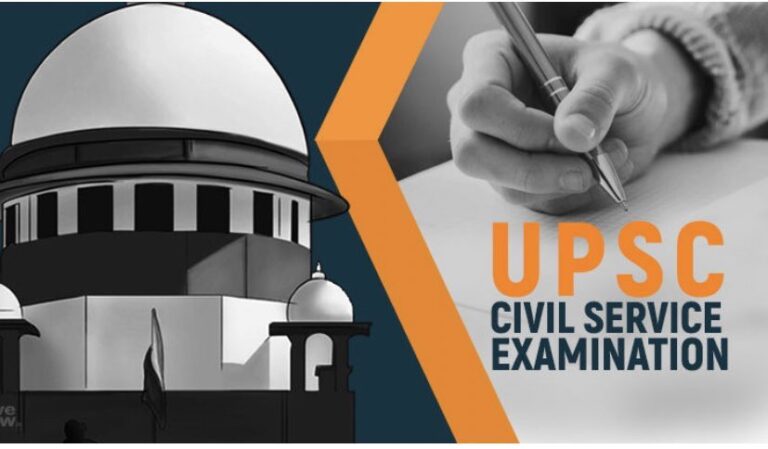
The Union Public Service Commission is the full form  of UPSC. The Union Public Service Commission (UPSC), India’s main regulatory organisation, conducts the civil services test, one of the most difficult and prestigious examinations. The Indian government’s UPSC also holds a variety of competitive exams to fill open positions in the civil service.

The Civil Services Examination (CSE), often known as the IAS (Indian Administrative Service) exam, is administered by the UPSC. It is divided into the UPSC Prelims and UPSC Mains examinations. Objective-type questions are asked in the prelims exam, whereas descriptive and essay-style answers are required for the mains examinations. The UPSC is in charge of holding numerous exams for positions including IAS, IPS, and IFS, among others.


Background of UPSC.

In 1854, the British East India Company pioneered the idea of a Civil Service exam. The Indian Civil Service tests were first solely given in London. The first Indian to pass this test was Shri Satyendranath Tagore, the brother of Shri Rabindranath Tagore, in 1864. Indian civil service exams didn’t start being given in India till after the Montagu Chelmsford reforms.

On October 1, 1926, the Public Service Commission was established for the first time in India. The first Chairman of the Commission was Sir Ross Barker, a British member of the Home Civil Service. The Federal Public Service Commission became known as the Union Public Service upon the promulgation of the Constitution of India on January 26, 1950.As a result, UPSC was established as the central body for holding interviews for government jobs.


What roles does the UPSC play?

According to Article 320 of the Constitution, the UPSC has the following responsibilities:

  • Creating and amending the recruitment regulations for government services and positions.
  • Handling disciplinary matters involving various Civil Services or officers.
  • Hold the recruitment exams for those seeking employment in Union services.
  • Direct recruitment of candidates through interview selection.
  • Appointments of officers to the cadre based on promotions, deputations, or incorporation.
  • Giving advice to the government on any issues the commission is given by the president of India.


Which tests are administered by the UPSC?

You must be familiar with the UPSC’s examinations in order to comprehend the UPSC. Here is a list of tests that the UPSC has offered:

  1. Exams for the Naval Academy and National Defense Academy (NDA)
  2. Examining for the Indian Statistical Service (ISS)
  3. Examination for Indian Economic Service (IES)
  4. Examination for the Indian Forest Service (IFS)
  5. Exam for Combined Geoscientists and Geologists
  6. Indian Civil Services Examination (ICSE) for the selection of officers in the IAS, IPS, IRS, and other professions
  7. Examination for Indian Engineering Services
  8. Examination by the Combined Medical Services
  9. Examination for Central Armed Police Forces (ACs)
  10. Examination for the Combined Defence Services (CDS)
  11. Various Exams and Recruitment Tests for UPSC EPFO


UPSC Eligibility Criteria

Anyone  who holds Indian nationality who has completed their graduation in any subject with a grade point of 60 percent and falls between the age range of 21 to 32 as specified in the category is eligible to take this exam.


Number of UPSC Exam Attempts for Any Candidate

  • Candidates who are in the General and OBC Categories and Is a Member of the Creamy Layer – 7 Attempts
  • Candidates who belong from  OBC non-creamy layer have 9 attempts .
  • candidates for the Scheduled Caste and Scheduled Tribe classification, there is no cap on the number of tries till they are 35.
  • On the off chance that they so desire, candidates who belong to the OBC, SC, or ST categories can take the first four exams as General Class competitors. After that, they can benefit from the category relaxation to reduce the number of exams they must take.

Liquor Sales in Noida, Ghaziabad, And Faridabad Are Halted By Delhi Discounts!

According to excise and industry data, Gurugram, Noida, Ghaziabad, and Faridabad, which are Delhi’s neighboring markets, saw a 20–25 percent decline in liquor sales in May after the national capital permitted private shops to give significant discounts on the maximum retail price (MRP) of alcohol. Companies and analysts claimed that because of price parity, consumers from Delhi who had previously purchased from these markets, particularly Gurugram, moved purchases to their city. Delhi opened the market toward the end of last year by allowing private retailers to sell alcohol alongside government-owned stores.

“Delhi was always a major customer, but due to a price difference of at least 15-20%, they purchased their goods from adjacent markets. Since there is no longer a price differential between Delhi and Haryana, the capital’s sales have increased significantly “According to Vinod Giri, director general of the Confederation of Indian Alcoholic Beverage Companies (CIABC), a uniform tax system across states would prevent sales from migrating to regions with lower taxes.

The Delhi government opted to leave the liquor vending sector in November and turned it over to private enterprises, which resulted in substantial price reductions and sizable crowds outside of stores. While this led to the government outlawing discounts in March, private liquor stores were once again permitted to provide customers up to a 25% discount off the MRP a month later.

According to VK Beniwal, deputy commissioner of excise and taxation in Gurgaon, “there is an influence on liquor sales in Gurgaon due to the discounting in Delhi, and we are in touch with the state government to ensure it doesn’t become a motivation for smuggling.” But almost a dozen new stores in Delhi have given up their licenses, citing unfair competition from big wholesalers who were giving greater discounts. Companies, though, showed no signs of concern.

“The industry in the state was on a growth trajectory throughout the test months of the new policy, which was centered on price parity. It made room for new competitors to try their luck in both the wholesale and retail markets. The subsequent withdrawal of certain players and worries about a few regulation changes slowed the pace, but consumer demand held steady “According to Amar Sinha, chief operating officer of Radico Khaitan, the volatility will subside and the supply chain will become more efficient in the months to come.

Additionally, according to representatives of the industry, interstate and black marketing of alcohol have increased. 
For instance, approximately 10,000 bottles of alcohol have been seized and about 100 persons have so far been arrested for carrying alcohol from Delhi to Noida.

“In May 2021, we sold 10 lakh bottles, but in May 2022, that number fell to 8 lakh. In Noida, 9 lakh bottles of alcohol were sold in June of previous year; as of June 15 of this year, only 3 lakh bottles had been sold. Because of the discount provided by the Delhi government, we will fall short of our revenue goal, said Rakesh Bahadur Singh, the excise officer for Gautam Buddh Nagar. He added that there are discussions taking place at the government level to bring rates into parity so that people won’t shop elsewhere. To prevent smuggling, the excise department also performs arbitrary inspections at the Delhi border.

Ghaziabad, a neighboring town, is dealing with a comparable problem. “While June data is not yet available, there has been a significant decline in our revenue from Rs 125 crore in May of previous year to Rs 112 crore in May of this year. We were unable to match last year’s income levels despite the fact that sales were already down due to the second wave of COVID cases, according to RK Singh, a Ghaziabad excise inspector.
The excise policy 2021 was extended up to July 31 but licensees in nine out of 32 zones did not renew their licenses due to different reasons, an excuse department official said. The government held an expensive auction last year for 32 zones’ licenses, each of which allowed for the opening of 27 shops.
Zone 31, which includes the Delhi Cantonment and New Delhi Municipal Council (NDMC), was sold at auction for Rs 315 crore, above the Rs 217 crore reserve price. Zone 19, which included the neighborhoods of Daryaganj, Chhatarpur, CR Park, Sangam Vihar, and Chandni Chowk, sold for Rs 313 crore as opposed to the reserve offer price of Rs 225 crore. The bids were given at an average premium of 20%, with the average bid price settling at Rs 265 crore, according to officials. The reserve bidding price was established at Rs 221 crore.
“The businesses were unable to recoup their expenditures after paying the exorbitant license fees because the new policy’s implementation was put off and stores could not operate until November 2021. This further damaged the market, along with problems with non-conforming wards and unregulated discounts “a company insider claimed.
Many neighborhoods in the city, including Hauz Khas, Laxmi Nagar, Dwarka, Model Town, and Shakurpur, are now without liquor vends as a result of license holders being compelled to close their businesses, they claimed.

Govt to levy 5% GST on daily consumable items.

The latest changes relating to GST recommended in the 47th GST council meeting, came into effect from 18th of July. 

The Central Board of Indirect Taxes and Customs issued a set of FAQs on Sunday night, just before when new GST rates will be applicable to specified products. This move is seen as an attempt to clarify the scene of ambiguity regarding the news decision. 

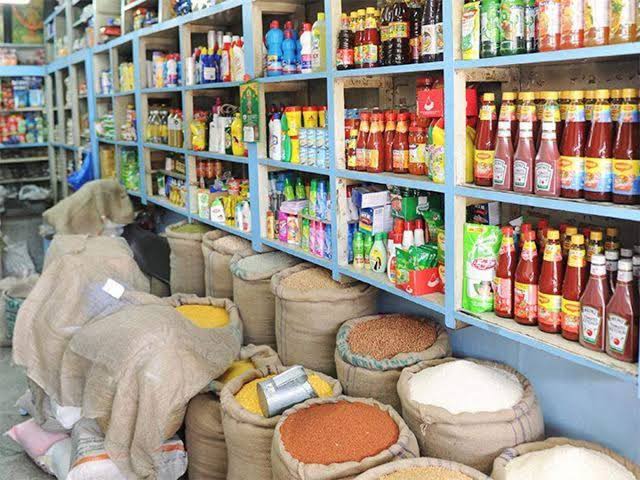
As per the decision implemented by CBIC, food items like cereals, pulses, flour along with curd, lassi, paneer weighing up to 25 kg/litre will be considered as ‘pre-packaged and labelled’, and shall be liable to five per cent GST, with effect from 18th of July. 

CBIC stated that if a retail shopkeeper sells loose items bought from a manufacturer or dealer in a pack of 25kg/litre, then that shall be exempted from the purview of GST.  

CBIC also clarified that a single package of items (cereals, pulses, flour etc.) containing a quantity of more than 25 Kg/25 litre would not fall in the category of pre-packaged and labelled commodity for the purposes of GST and would therefore not attract GST. Along with this clarifications, it also made clear that single packages of unbranded and labelled food items like cereals, pulses, flour etc will be liable for the exemption when weighing in excess to 25kg/litre. 

For example, pre-packaged atta of 25kg meant for retail sale to the consumer shall be liable to GST, however sale of 30kg atta pack shall be exempted from levy of GST. 

We should be seeing up some of the basic question that arises from the decision: 

What is the scope of ‘pre- packaged and labelled’ for the purpose of GST levy on food items like pulses, cereals, and flours?

Pre-packaged and labelled food items (such as pulses, cereals like rice, wheat, flour etc), would fall within the purview of the definition of ‘pre-packaged commodity’ under the Legal Metrology Act, 2009, if such packages contain a quantity up to 25 kilogram (or 25 litres).


Will GST apply to a package that contains multiple retail packages? For example, a package containing 10 retail packs of flour of 10 Kg each?

Yes, if several packages intended for retail sale to the ultimate consumer, say 10 packages of 10 Kg each, are sold in a larger pack, then GST would apply to such supply.

However, a package of say rice containing 50 Kg (in one individual package) would not be considered a pre-packaged and labelled commodity for the purposes of GST levy.


GST would also apply when pre-packaged and labelled packages are sold by a distributor/ manufacturer to a retailer purchasing food items in packages weighing up to 25 kg/25 litre. However, if for any reason, the retailer supplies the item in loose quantity from such a package, such supply by the retailer will not be a supply of packaged commodities for the purpose of GST levy, the CBIC said.


At what stage would GST apply on such supplies, i.e., whether GST would apply on specified goods sold by manufacturer/producer to wholesale dealer who subsequently sells it to a retailer?

GST would apply whenever a supply of such goods is made by any person, i.e. manufacturer supplying to distributor, or distributor/dealer supplying to retailer, or retailer supplying to individual consumer. Further, the manufacturer/wholesaler/retailer would be  entitled to  input  tax credit on GST charged  by  his  supplier  in accordance with the Input Tax Credit provisions in GST, as clarified by CBIC. 


Whether tax is payable if such goods are purchased in packages of up to 25 kg/25liters by a retailer, but the retailer sells it in loose quantities in his shop for any reason?

GST applies when such goods are sold in pre- packaged and labelled packs. Therefore, GST would apply when pre-packaged and labelled packages are sold by a distributor/ manufacturer to such retailers. However, if for any reason, the retailer supplies the item in loose quantity from such a package, such supply by retailer is not a supply of packaged commodity for the purpose of GST levy.


Whether tax is payable if such packaged commodities are supplied for consumption by industrial consumers or institutional consumers?

Supply of packaged commodity for consumption by industrial consumer or institutional consumer is excluded from the purview of the latest update and won’t be considered as pre-packaged and labelled for the GST collection. 

Question and queries are prepared with the help of offical clarification put forward by department.

A lot of buzz is going around this in the market and the decision is sure to increase the inflation for the daily products as well along with the global inflation crisis, according to some media reports it can affect the unorganised market in the daily consumable goods segment. 

As a lot of these products are sold in India’s 3rd tier and rural market, also some of them in major cities of the country, it will make the market more friendly towards organized and big players.

How To Securely Store Your Cryptocurrency Prevent Hacks.

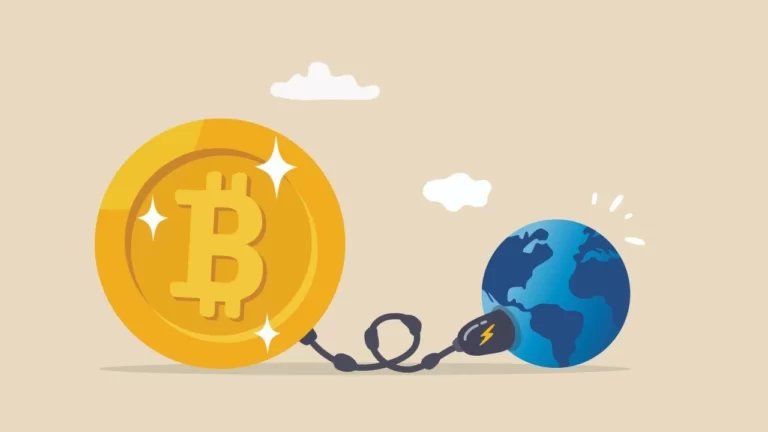
Cryptocurrency exchanges and decentralized finance platforms are vulnerable to attacks and financial instability. Experts advise investors against storing their cryptocurrencies on such platforms.

Find out  about alternative safe places to store your crypto here.  With the various attacks and liquidations of cryptocurrency exchanges and decentralized finance (DeFi) platforms, experts are advising crypto investors not to  keep their crypto funds in these places.

But what other options do investors have?

Well, investors have not one but several other options depending on their needs. But  first let’s understand

Why it is dangerous to keep your cryptocurrency in the aforementioned places. Why don’t you keep your crypto on a DeFi platform or exchange?

It is advisable not to  store your cryptocurrencies on a central platform such as exchanges or DeFi platforms. Because the custody of the funds belongs to the platform itself and not to the investor.In addition, these platforms are vulnerable to attacks.  In the recent past, DeFi platforms like  Celsius Network, 3 Arrows Capital, Voyager Digital, Vauld, and others have faced financial stress as investor funds became inaccessible. Therefore, investors are advised to store their cryptocurrencies in different types of crypto wallets.


Yet what are cryptocurrency wallets?

Crypto wallets are portions of hardware or software programs used to save your crypto assets. Every crypto pockets has an identity, which accommodates a couple of personal keys and public keys.


What are private and public keys, and what are their functions?

Public and personal keys offer an alphanumeric identifier to your crypto pockets, that’s called, your pockets deal with. What do crypto pockets deal with? The crypto pockets deal with specifies wherein the crypto tokens may be dispatched at the blockchain network.

The non-public keys of a crypto pockets are in no way speculated to be disclosed. The public secret’s disclosed to the sender of cryptos to perceive the deal with. Crypto wallets may be divided into groups- a) Based on how often they may be related to the net and b) Based on their generation. Based on net connectivity, they may be divided into classes –

  1. Hot Wallets Hot wallets are often related to the net. They are extra user-pleasing, however much less stable considering they may be often related to the Internet. Hot wallets are normally utilised for each day’s transactions. They provide instant entry to the price range and are smooth to set up
  2. Cold Wallets Cold wallets aren’t related to the net often. As a result, they may be tremendously stable.

HODLers gain maximum from bloodless wallets. Crypto wallets are cut up into huge classes primarily based totally at the underlying generation with which they may be built 1. Hardware Wallets 2. Wallets for software program Hardware wallets are in addition subdivided into: quality

1.USB flash drives These gadgets use USB ports to hook up with your pc or laptop. Cold wallets are often used for long-time storage.

2.Bluetooth These devices use Bluetooth to talk together with your PC, laptop, or cellular phone. Cold wallets also are usually utilised for long-time period storage.

3.Paper Wallets The QR codes of the receiver are revealed on paper in paper wallets. These are now no longer relevant. Their principal drawback is they no longer allow partial fund transfers.

Software wallets are in addition labeled as follows:

(a)Desktop Wallets–  These are software program applications that can be set up on severa working structures and have become extra famous over time. Anti-virus safety is needed considering any pc related to the net poses sizable safety hazards. Desktop crypto wallets are most advantageous over conserving cryptocurrency on a change due to incessant hacks on exchanges .

  1. b) Mobile Applications -.Mobile apps are much like laptop wallets. These wallets are designed to be utilised on cellular phones. They are specifically handy due to the fact they behave transactions using QR codes. They are suitable for common ordinary use. However, they may be prone to malware attacks. Encryption is needed for cellular wallets. They are transportable and handy, but they may be prone to viruses. Two famous cellular wallets are Coinomi and Mycelium.

(c) Browser primarily based totally wallets These wallets may be brought as browser extensions to your browser. It is really well worth noting that non-public keys withinside the case of browser extension wallets are liable to DDOS attacks. They may be hosted by way of means of themselves or via way of means of a 3rd party. Being self-hosted is favored considering cash is constantly withinside the buyers control. Two examples of browser extension wallets are MetaMask and Coinbase.

How Did Anand Desai of DSK Legal Manager To Recruit a Major Lawyer From L&L Partners and Other Firms?

When was the last time you read about more than 60 corporate lawyers making a big-bang transition from one corporate law firm to a competitor? That’s exactly what happened when DSK Legal announced the admission of 63 attorneys from L&L Partners in a variety of practise areas. Ashwin Mohan from Money Control managed to have a brief, exclusive conversation with Anand Desai, managing partner of DSK Legal, the man of the hour. Desai discussed several topics, including the reasons behind the mega-crossover, synergies, and the goals for DSK Legal 2.0.

Question: Taking on the team led by Bobby Chandhoke and Sudhir Sharma, which consists of 63 lawyers, 19 of whom are partners, is likely the greatest crossover deal in corporate law firms ever completed in one go. DSK Legal is taking a risky, aggressive action here. Please first explain how the discussions got started and what the major motivating forces were that brought the two sides together. Do you have any anecdotes you’d like to share?

Answer: Many thanks. DSK Legal has spent the last three and a half years growing. This staff, which is by far the largest, is the sixth to join us from other organisations during this time. In this time, we have increased from 110 lawyers to almost 250 lawyers (including partners).

It was unanticipated, for sure. We were contacted and asked if we would be interested in hiring Bobby and Sudhir when they left L&L with an unknown number of team members stationed in Delhi. This was quite intriguing because Bobby and Sudhir are reputable lawyers with a lot of experience, but it was a significant choice because this might have involved a sizable team and was taking place right after the team from Dua Associates joined us in Bangalore.

Sajit, our deputy managing partner, and Padmini, our CEO, both agreed that it was worth investigating, which is how the conversation got started. All of us felt that like-minded individuals were coming together, which augured very well. We believed the chemistry worked well in the very first meeting, and everything moved very quickly after that. Our Delhi office now has more lawyers than our Mumbai office for the first time in our company’s 21-year history! I should also point out that I have known Rajiv Luthra for a long time and that I told him I would talk to him before making a decision, which I did.

Question: In recent years, DSK Legal has placed a strong emphasis on litigation, and Bobby’s core team also comes from this industry. What prompted you to explore beyond litigation and consider non-litigation areas such as M&A, trade, IP, tax, and competition law? Was this done to diversify the revenue mix, and might we anticipate more hiring in these industries in the future?

Answer: Yes, our already strong litigation and arbitration capabilities have now greatly improved. Sincerity be damned, Bobby and Sudhir said they worked with those who wanted to join them. We didn’t even look at the teams’ practises. We recognised a great fit for each partner when I later learned about the practise areas in which the partners who wanted to join us worked.

Question: Mumbai is the company’s headquarters for DSK Legal. What future plans do you have for the Delhi office, which has been bolstered by the addition of the new team? In addition to the Hyderabad branch, which is a result of the integration process, are you also planning any new offices?

Answer: We’ll wait and see how things turn out. This was sudden and unexpected, as I previously stated. We currently have offices in Mumbai, Delhi, Pune, Bangalore, and Hyderabad, as well as one lawyer who is headquartered in Chennai. In Bangalore, Pune, Delhi, as well as for both of our locations in Mumbai, we are taking larger or additional office space. For the time being, there are no urgent plans to open an office in any other city.

Question: After this transaction, DSK Legal has more than 250 attorneys and 63 partners (including associate partners). What new, expanding fields and business segments do you anticipate for contemporary corporate law firms?

Answer: I think there will be rapid growth in the potential for private client work, healthcare, energy (including renewable energy), projects and project financing, restructuring and insolvency, and fintech, edtech, and related fields like the metaverse, blockchain, etc. Of course, conflicts work, and other industries like corporate/M&A/PE, real estate, IPR, media and entertainment, competition, and global trade will also continue to expand.

Question: More than 20 years have passed since you founded DSK Legal. What words of wisdom would you offer to young attorneys who wish to follow in your footsteps and launch their own businesses in 2001?

Answer: It’s great to see so many young lawyers starting their own firms. Currently, India is quite appealing to entrepreneurs in general. In India, unicorns are becoming more and more common in a variety of industries, notably those that use technology to distribute goods and services. I think there are a lot of opportunities in India if one has the desire to start a business, including everything that entails it, especially in specialised practise areas and regions where business and industry are expanding.

Cryptocurrencies Investors: How To Avoid Having The Rug Pulled Out From Under You

Blockchain technology promised to revolutionise the way the world transacts in finance by combining the security of encryption with the usability of the internet. Information would be securely kept, eliminating the need for central banks and other intermediaries like banks, and it would be hard for other users to add, delete, or modify it.

However, scams in the cryptocurrency industry defrauded investors of more than $7.7 billion in 2021. Of this sum, malevolent individuals and developers perpetrated “rug pulls” or “pump and dump” activities that destroyed more than $2.8 billion. Rug pulls, which are often identified by an excessive surge in the price of a crypto token, take place when the project’s token developer artificially inflates the token’s price before abandoning it and fleeing with investor money.

By value, these pump and dump schemes made up just 1% of total cryptocurrency frauds in 2020. That percentage skyrocketed to 36% in 2021, signalling a steadily worsening issue for crypto investors worldwide.

For blockchain initiatives with specialised use cases like decentralised finance (DeFi), gaming, media, and entertainment, crypto tokens serve as the medium of exchange. These tokens are created according to a predetermined supply mechanism and only in certain circumstances, such as when validators on the underlying blockchain take part in the consensus process.

Developers, on the other hand, occasionally build the token code with flaws that allow them to steal money without investors having any control over it. Hard rug pulls, which commonly take place during the first token launch phase or right after, include the business’s developers fleeing with the funds gathered for further building the project.

Soft rug pulls, in contrast, happen when the creators figuratively dump tokens on cryptocurrency exchanges, driving the token’s price down. Although not technically unlawful, soft rug pulls are significantly simpler to detect than hard rug pulls because they make it evident that the inventors had ulterior motives.

When the developers of the SnowDogDAO project decided to undertake a buy-back exercise, they switched to a special market maker platform called SnowDog AMM and sold the native SDOG token before most investors could even react to the sharp decline in price. Investors should be wary of projects that make grandiose claims since the likelihood of a pump and dump scam occurring increases when people rush to purchase the underlying token without considering the project’s fundamentals.

Types of rug pulls
There are three major types of pump and dump schemes: dumping, limiting sell orders, and outright liquidity snatching. All pump and dump methods leave investors with either no tokens or a token that has been significantly devalued.

It is more likely that projects that have quickly attracted a large number of investors would be the target of dumping, in which the token developers themselves sell all of their holdings at the height of investor demand. Investors can identify these projects by the excessive social media promotion or any other incentives that can seem unreal.

Similar to this, liquidity snatching has emerged as the main technique for taking investor cash secretly from DeFi projects that have a lot of value locked in liquidity pools where investors stake their tokens in the goal of obtaining market-beating returns on their investment.

A far more sophisticated version is when developers restrict how many tokens or how quickly token holders can sell them. Such tokens can climb to remarkable amounts in a short amount of time since investors are constrained in their capacity to sell their holdings, which is typically introduced as an anti-dumping feature. As a result, a fictitious demand-supply gap is produced, giving the developers the advantage of being able to sell tokens whenever they choose.

When the iconic Squid Game token was introduced in November of last year, a classic instance of this kind of rug pull happened, with the SQUID token surging to roughly $3,000 within a few days of introduction. But because the built-in anti-dumping provision prevented investors from selling any of the acquired tokens, the project’s developers sold off their token holdings during the height of the frenzy and appeared to have gotten away with no actual criminal activity.

How to avoid such schemes
Investors can avoid falling victim to a pump and dump scheme by paying attention to the warning indications, but there is little they can do after they have invested in a token that is the target of one. Some blatant indicators of a cryptocurrency fraud include the guarantee of spectacular returns, projects created by an anonymous company, restrictions on sell orders, and one-way price movements. A telltale symptom of an upcoming rug pull for savvy investors who read the token’s whitepaper is that the project developers have locked in weak or no liquidity, which can be clearly understood.

For less experienced investors, it might be challenging to notice more sophisticated strategies, such as writing the token’s code in the developer’s favour, which can only be prevented by carefully reviewing the developer’s credentials.

By thoroughly investigating a project’s “tokenomics” and avoiding tokens that come from developers without a track record or experience in a blockchain project, cryptocurrency investors can safeguard themselves from pump and dump schemes.

“Digital Piracy ” Web of Concern Among The International Markets.

Running a red light and downloading movies or series from Torrent and countless other sites is illegal and punishable by law. But how many of us think twice before clicking that tab to download copyrighted content?

Over a decade ago, piracy PC games were all the rage, and Delhi’s infamous Palika Bazaar was in good business  selling them. A set of CDs costs between Rs 500 and Rs 30, depending on who you are – a confused beginner or a passerby who has caused a relationship with the shop owner. Today, in the digital age, piracy is rampant as consumers seek to dodge the fees charged by premium streaming sites or watch the latest cricket match or match on screen for free large images.


 So What Exactly Is Digital Piracy?

This term refers to the illegal copying or distribution of any copyrighted material over the Internet. Essentially, it negatively impacts the revenue of creative industries – like film, television, publishing, music, and games.

According to DataProt,  annual worldwide revenue losses due to digital piracy range from $40 billion to $97 billion  for the global film industries.

According to a joint report published by Akamai and MUSO, India ranks third among consumers of pirated content in 2021. Between January 2021 and September 2021, India recorded 6.5 billion visits to hacking sites, behind the US at 13.5 billion and Russia at 7.2 billion.  It may seem like a victimless crime, but the criminals who run these hijacking websites can sometimes be  part of dangerous organized crime groups that use your money to carry out their crimes. present much more serious crimes.


 Types of Piracy

 Piracy, when presented thoroughly in terms of software, can be classified into 5 categories, as follows –

Counterfeiting: Is the  acquisition, copying and distribution of illegally distributed copyrighted material that directly imitates the copyrighted work. The nature of the distribution of  said products may  or may not be. The most common way to distribute these pirated works is through compact discs.

Internet Piracy: Internet piracy is the process of downloading a file from the Internet or obtaining software online  through a compact disc. Methods of stealing data on the Internet are websites that offer free software downloads, illegally obtained software auctions, or P2P servers that transfer bots. An example would be software that licenses users and installs it on multiple systems, or upgrades pirated software.

Excessive client-server abuse: In a computer network, when the number of clients exceeds the number specified in the server license,  it is called excessive hacking. Hard Disk Loading: This happens when a company selling a new computer downloads illegal copies of software  onto the hard drive to make the machine more attractive to buy.


 Concerns Around

Many laws have been introduced to prevent privacy. Internationally, anti-piracy laws  in developed countries are strict and punitive in nature. In Asian countries and even India, have less attention at the national level due to more interesting issues. However, the industry, especially  IT and music, has shown a positive interest in combating corruption. These organizations identify the cause of music piracy and  conduct raids with the help of  police. However, there are few convictions and the penalties are not severe enough to act as a deterrent.

Piracy is carried out in a variety of ways, including video infringement, cable infringement, and DVD / CD infringement. Video piracy occurs when  film is distributed in the form of video cassettes without the proper permission of the rights owner. H. Produced by the producer. Film producers often sell video rights to third parties who sell or rent videocassettes (usually at least six weeks after theatrical release). The

video cassettes for  sale are  for home playback only. Cable piracy refers to the unauthorized transmission of movies over a cable network. Movies, especially  new ones, are often shown on cable without the permission of the rights owner. Piracy is a rare phenomenon because satellite channels  are organized and usually do not show movies without  proper rights.

Music Piracy refers to the illegal reproduction of music cassettes that flood the market as soon as  a new release hits the market. Music companies’ revenues have been hit hard by the surge in pirated CDs and cassettes available at much lower prices than retail.

Indian movie DVD / VCD piracy is taking place in the international market. Prints sent to show movies abroad are usually pirated at one of the airports in the Middle East. A DVD / VCD print will be created and sent to Pakistan. From Pakistan, these prints can travel to Nepal and enter the country by land.

Why Elon Musk Hurt Twitter And Made it Worse

Elon Musk is leaving Twitter in a worse position than when he first declared he would purchase it as he tries to back out. Each scathing tweet and public jeer has damaged the social media company’s reputation, destroyed staff morale, scared away potential sponsors, highlighted its financial problems, and circulated rumors about how it functions. Elon Musk tweeted that the legal action would force Twitter to reveal information on bots and spam accounts in court as word of the deal falling through spread.

Kate Conger and Mike Isaac
THE SAN FRANCISCO — Twitter was a runner-up social networking firm for many years. It was never as big and successful as Facebook or Instagram. It merely struggled on. Elon Musk, a fervent user of the site, then barged in. He said he could run Twitter far better if he were in control and made an offer to buy it for $44 billion. He mocked Twitter’s management, criticized the company’s content guidelines, voiced complaints about the service, and misled the company’s more than 7,000 employees with his statements. Twitter’s shares fell more than 30% after Musk exposed the company’s poor commercial and financial prospects.

Now that billionaire Musk is trying to back out of the huge transaction, Twitter will unavoidably be in worse shape than it was when Musk first stated he would buy it. Musk has damaged employee morale, frightened potential advertisers, emphasized Twitter’s financial difficulties, and circulated false information about how the social media platform functions with every scathing tweet and public jeer.

Founder of Twitter and current member of its board of directors Jason Goldman said, “His engagement with Twitter had a tremendous toll on the firm.” “Employees, advertisers, and the general market cannot have faith in a firm whose path is unknown and which will now go to court to finalize a transaction with a bad-faith actor,” the statement reads.

The hazardous circumstance highlights the reason Twitter plans to sue Musk this week to force the conclusion of the purchase. The court case is probably going to be huge and drawn out, requiring months of expensive litigation and competitive negotiations by top attorneys. The outcome is far from certain; Twitter might prevail, but Musk might leave by paying a breakup fee if it loses. The parties could also agree to renegotiate or settle.

Lipstick Under My Burkha Director Alankrita Shrivastava “Think They Don’t Have Any Sense of Sensuality”

The 2016 film Lipstick Under My Burkha, which was directed by Alankrita Shrivastava, generated a lot of buzz. There was a lot going on during and surrounding the movie. The censor board disallowed the movie’s theatrical release due to some of its “graphic and unpleasant” content. However, when it was finally made public, people’s reactions to it ranged greatly. I recall seeing it in a neighbouring theatre and being horrified by the movie’s initial reception. While majority of the female audience members at a multiplex in the nation’s capital were entranced by the representation of the film’s female stars, a sizable portion of the male audience were busy making crude, sexist remarks, notably during Ratna Pathak Shah’s “Bua ji” moments.

But over time, we’ve grown to accept it for what it is—the quintessential female-driven film, delivered from the viewpoint of an educated, conscious woman. Unfortunately, this doesn’t happen frequently in Hindi film. Ironically, the sections of the movie that men thought obscene and stupid in the theatre are the parts that I have clung to for so long. Usha/Rosy, who belongs to Ratna, should be treasured. Women rarely display vulnerability or desire on TV, much less elderly Indian women, as was previously mentioned. As the consummate actor that she is, Ratna Pathak Shah not only made Bua ji seem real but also inspired you to cheer for Usha’s success. We were with her on the voyage, encouraging her from the stands, whether she understood that or not is another thing.

Usha’s first encounter with the swimming instructor was the occasion for her to symbolically take off her “Bua ji” robe and realise that she was a full-fledged lady with unwavering aspirations and desires (played by Jagat Singh Solanki). Then, after gathering the bravery, she decides to go shopping in a mall for a “acceptable bikini,” when she eventually runs across Shireen Aslam, who is played by Konkona Sen Sharma.

Director and writer Alankrita Shrivastava described how tough it was to shoot those moments. “We had two days to complete the pool sequences. The good news was that our phone conversation with Ratna (Pathak Shah) and the coach artist was over. We were well prepared, so you know what you’re aiming for when you fire. Although we only had access to the pool for a short period of time, I remember it being a little stressful, but it was also enjoyable. It resembled a romantic setting but wasn’t one at all. It was somewhat a “rom-comy” scenario. At the very least, it was the mood Alankrita was striving for.

The scene in which Usha and Jaspal first set eyes on one another is reminiscent of a typical, formulaic romantic comedy’s meet-cute. The hesitation, awkward fluttering of Usha’s eyelashes, and Jaspal’s ignorance of the kind of impact he had on her were reminiscent of scenes from American teen comedies in which the girl next door meets the popular jock. The sequence is, of course, also deliciously subversive because we already know that Jaspal and Usha do not end up together. Instead, it is his rejection of her that ultimately allows her to be wholly herself.

“The concept was that these are really ordinary women who have the urge to repress a variety of desires. Additionally, Konkona is keeping her prized microwave a secret (in that mall scene). The purpose was to continuously examine modernity and tradition, desire and ambition, and how those things interact with these ladies. A more lived-in lens was used to depict how one woman may support another woman in practical, everyday ways, the director continued.

When asked if real women had any influence on Ratna’s persona, Alankrita responded, “Bua ji was not inspired by anyone. However, you do notice that these elderly folks continue to hold onto the idea that they lack any sexuality.

The filmmaker still has pleasant memories of Lipstick Under My Burkha’s debut screening in Japan, even though it has been almost six years since that time: “I have great memories of filming it, it was a wild, hectic pace. The performers and crew were fantastic. I will always be grateful to the four women (the primary cast, Ratna Pathak, Konkona Sen Sharma, Ahana Kumra, and Plabita Borthakur) who made the movie possible. I can recall a woman in Japan crying after the initial showing when she simply touched both of our hearts. It was quite emotional.