
Home Blog Page 575

Crop output boosts soil nitrous oxide emissions, according to computer simulations.

The greenhouse gas nitrous oxide emissions from soils have grown during the previous century, according to a computer modelling study. The newly released study discovered that since 1900, the expansion of agricultural acreage and extensive fertilizer inputs have mostly driven an overall increase in nitrous oxide emissions from U.S. soils.

To feed the model and quantify variations in nitrous oxide emissions from soils in the United States, the researchers used huge amounts of data on everything from weather patterns to soil conditions to land use and agricultural management techniques. The findings, which were published in the peer-reviewed academic journal Global Change Biology, break down soil emissions by ecosystem types and major crops, finding that the expansion of agricultural land since 1900, as well as intensive fertilizer inputs, have largely driven an overall increase in nitrous oxide emissions.

According to Chaoqun Lu, associate professor of ecology, evolution, and organismal biology and the study’s corresponding author, using such ecosystem models to determine the origins of nitrous oxide emissions could benefit policymakers in enacting conservation measures and responses to climate change. “We’re utilising a process-based ecosystem paradigm,” Lu explained. “It’s analogous to simulating an ecosystem’s patterns and processes on our computer. We use algorithms to mimic how natural systems respond to changes in climate, air composition, and human activities by dividing land into thousands of uniformly sized pixels.”

The results suggest that emissions have increased

Nitrous oxide emissions from U.S. soil have more than tripled since 1900, from 133 million metric tonnes of carbon dioxide equivalent (MMT CO2 eq) per year at the turn of the century to 404 MMT CO2 eq per year in the 2010s, according to the study. According to the report, agricultural soils are responsible for about three-quarters of the increase in emissions, with corn and soybean cultivation accounting for over 90% of the increase in ag-related emissions. The study authors noted in their report, “Our study implies a large [nitrous oxide] mitigation potential in farmland and the need of exploring crop-specific mitigation strategies and prioritising management approaches for targeted crop varieties.”

According to Lu, the increase in emissions is due to the expansion of agriculture in the United States. According to the computer models, farmed land generates more nitrous oxide than wild landscapes. According to Lu, this is largely owing to the widespread use of nitrogen fertilisers on agricultural land and legume crop output. The additional nitrogen is utilised in part by crops, with the remainder remaining in soils or being lost to the environment. Microorganisms in soil eat nitrogen-containing substances and produce nitrous oxide as a byproduct during this process. According to Lu, a better understanding of the dynamics of which crops produce the most emissions will assist define climate mitigation strategy. Because maize requires more nitrogen fertiliser than other crops, the study discovered that soils where corn is planted generate more nitrous oxide per unit of fertiliser used, according to Lu.

Mathematical models that simulate natural processes were created by the researchers. According to Lu, the models are based on mountains of data acquired and built over many years. Government data on crops, land use, weather, and other variables was collated by the researchers. Farmers and other landowners’ historical and survey data were also taken into account.

In order to validate their findings, the researchers matched the outcomes of their model to real-world data. For example, the scientists demonstrated that their model’s production projections matched national yield data for important crops such as corn, soybean, wheat, rice, and others dating back to 1925. This demonstrates that the model simulation was able to trace the long-term trajectory of nitrogen intake, which has supported growing crop yield over the last century. They then compared their model’s nitrous oxide emission projections to real-world data from a variety of natural and managed soils around the country, as well as seven-year time-series measurements from a central Iowa corn-soybean rotation site.

“Our group has spent a lot of work enhancing model performance and building the driving force history for the model simulations, which includes natural and human disruptions,” Lu added. “Thousands of lines of algorithms are used behind the scenes to aid the computer model in making predictions. To reduce modelling uncertainties and include greater ecological process understanding arising from field scientists’ hard work, it will require decades of effort, and more to come.”

Swiggy, a food delivery service, is aiming an IPO of $800 million

Swiggy, the food delivery giant, plans to raise $800 million through a public offering as soon as next year. In addition, the Bengaluru-based food aggregator is more than likely to register as a logistics startup rather than a food delivery service.

According to Nikkei Asia, it has started the process of becoming a public company and has begun to appoint independent directors to its board of directors. The appointment of independent directors is one of the most telling signs that a company is on the verge of going public. We’ve seen it with ixigo, OYO, and Snapdeal, among others.

Swiggy will use the proceeds from the IPO to expand its market share, according to the report. The news comes after Swiggy announced a $700 million funding round led by Invesco Group a few months ago. The round, which included several new investors as well as existing investors, helped it join the decacorn club. The status (decacorn) is reserved for startups with a valuation of $10 billion or more.

Swiggy’s IPO plans arrive on the heels of one of the company’s largest acquisitions, which has yet to be revealed. Swiggy is in the final stages of acquiring Times Internet-backed online restaurant table booking service platform Dineout, which is worth noting for the uninitiated.

Inc42 stated in a report dated February 15, 2022, that this deal will cost between $150 million and $200 million. Swiggy will benefit from the deal because it will allow it to enter the dine-in market, which it has lacked so far and which its competitor Zomato has dominated.Swiggy will be able to expand into outdoor event management as a result of the agreement.

Swiggy


In the wake of the pandemic, the Bengaluru-based startup has doubled down on its Instamart quick commerce service. It has already committed $700 million in funding to expand its quick commerce operations. The startup’s quick commerce business competes with Dunzo, a Reliance-backed hyperlocal delivery startup, Blinkit, a Zomato-backed startup, and Zepto, a newcomer to the market.

Swiggy’s competitor Zomato was one of the first new-age startups to go public, raising INR 9,375 crore in the process. Zomato, like other tech startups, is feeling the heat of market volatility, with its stock trading at an all-time low. On the NSE, Zomato’s shares were trading at INR 79.85 at the time of filing this story.

Swiggy’s IPO preparations come as India’s benchmark stock index is trending lower after a sharp rise in 2021, owing to signs of potential Fed rate hikes, a slowing global economic recovery, and geopolitical tensions. Since mid-October, the index has dropped 6.5 percent, and foreign investors have been net sellers of Indian stocks since then.

Indian startups such as Paytm, Zomato, Policybazaar, and Nykaa, which went public last year to much fanfare, have since seen their stock prices plummet. Zomato’s stock has dropped 41% since October 1, while Paytm’s stock is trading at less than half its initial public offering price of 1,950 rupees per share. Nykaa’s stock has dropped 33% from its listing price, while Policybazaar’s has dropped 36%.

Swiggy will be under pressure to tell an equity story that will entice investors in this environment. Swiggy will position itself as a logistics company, not just a food delivery company, according to a second person familiar with the company’s IPO plans, adding that its success will hinge on the valuation it seeks, market share, and path to profitability.

“Swiggy is a good story,” the individual stated. “Their value proposition to investors will be strengthened by the integration of quick commerce under one roof. To woo the public markets and expand market share, they will need to demonstrate a clear path to profitability.”

After a period of intense land grabs that sapped most startups’ cash as they splurged on customer acquisition, India’s food delivery sector has been reduced to a two-horse race between Swiggy and Zomato. Several food delivery companies, including Swiggy, TinyOwl, Dazo, Yumist, and Spoonjoy, among others, received their first investments from the likes of Accel Partners, Saif Partners, Sequoia Capital, and Nexus Venture Partners during the funding boom of 2014 and 2015. Around the same time, Zomato shifted its focus from restaurant listings to food delivery.

The majority of the startups failed after investors tightened their purse strings a few years later, perplexed by the cash burn and lack of profitability. In terms of sales, Swiggy and Zomato are neck and neck. Swiggy reported monthly food delivery sales of $250 million in December, while Zomato reported sales of $733 million in the October-December quarter.

Swiggy has also branched out into fast commerce, promising delivery of groceries and other daily necessities in less than 30 minutes. The instant delivery service Instamart, which will launch in August 2020, will consume the majority of the $700 million Swiggy raised in January. Swiggy expects Instamart gross sales to reach $100 million per month by September. Swiggy also offers a pick-up and delivery service.

How Drones Are Changing the Future of India

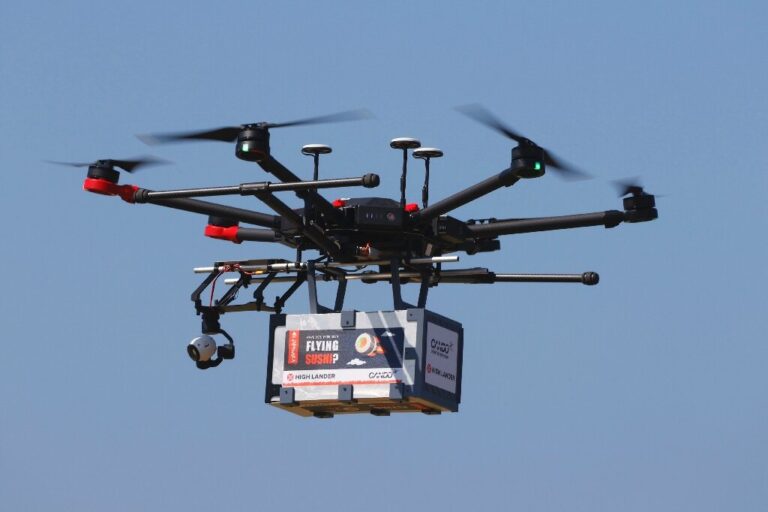
The central government is now trying to make the use of drones a part of modern life just like mobiles, computers, and the Internet. The use of drones will be promoted as a mission. Just like under the Jal Shakti Mission, the goal of delivering water from door to door was set. The use of drones in the country will no longer be limited, but it can be used everywhere in everyday life. It can be used from industry to disaster management. It will be used from jawan to farmer.

That is, along with protecting the borders, the drone will also protect the crops in the fields. In this way, it will become a necessity for the people. The central government is focusing a lot on the use of drones in the agriculture sector. Drones have important technical features like sensors and cameras. Through drones, many important problems of agriculture such as where diseases have been found in crops, where pests are present, which nutrients are lacking in crops, etc. can be detected.

Drones will also be used for crop evaluation, digitization of land records, monitoring of plant growth, etc., which will be of great help to the farmers. Timely detection of diseases will reduce the input cost of farmers and increase production. With this, insecticides can be sprayed over a large area in just a few hours. This will save the time of the farmers. The biggest advantage will be that pest management can be done in agriculture at the right time.

Drones were used for the first time in various states of the country to prevent locust attacks last year. Experts believe that in an agricultural country like India, creating skilled workers with drone technology will prove to be a revolutionary step. For this, the central government will promote startups in the drone sector this year. If the youth of the country want to start in the drone industry, then the central government will help them.

The government is changing the policy to promote indigenous drones. Measures like the Drone Rules 2021, PLI scheme for the drone industry, and grants for drones used in the agriculture sector will give a boost to the sector. In the next five years, the drone industry will become self-sufficient. When the demand for drones increases, the manufacturing of the equipment used in them will also start.

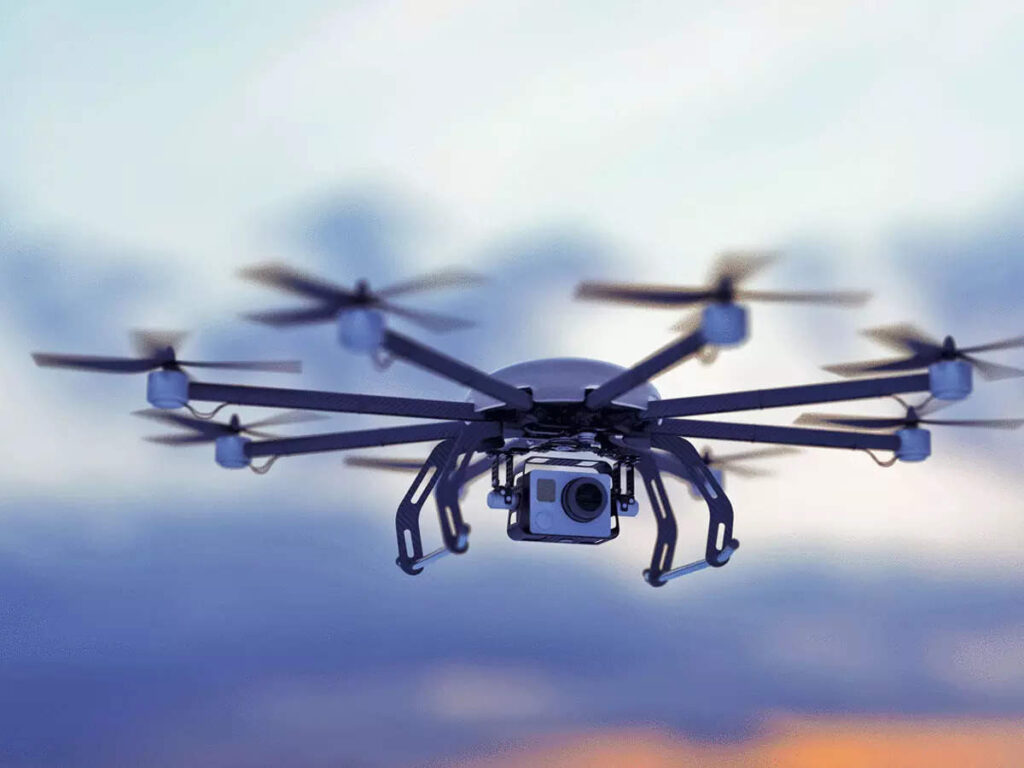
Drones
Source: Google
Image By: The economics times

New update for flying drones, certification scheme started for owner and pilot: If you also want to fly a drone, then know about the new rules for this. Because to fly a drone, the owner and pilot must have his license. The Central The government has issued the Drone Certificate Scheme on Wednesday. The government says that it is working towards making a world-leading drone system in the country. After this lakhs of drones of Indian airspace will be able to be used with complete safety. Let us know what is Drone Certification Scheme is.

Let us tell you that after this decision of the government, it will help in creating physical and digital infrastructure in the country. Getting a drone certification is not that difficult for anyone, its process is quite easy.

The Drone Certificate Rules were issued by the government in August 2021. According to these rules, people will be successful in establishing a global certification and good framework for drones. Because of this commercial drone technology will be able to grow easily with appropriate security measures.

Digital sky platform:

Let us tell you that a Digital Sky platform has been created by the government for drone registration and operation, which is completely digital. With the help of single window of airspace map, PLI scheme, and digital sky platform, it will help in increasing the drone manufacturing industry in the country.

Every user has to register:

To get a drone, it will be very important for every user to register once. Along with this, it will also be mandatory for the owner and the pilot to register for using the drone. To fly a drone in any yellow or red zone, permission will have to be taken first.

After this decision of the government, it will help in creating physical and digital
infrastructure in the country. Getting a drone certification is not that difficult
for anyone, its process is quite easy.

Jio announces US$15 million investment in Two Platforms Inc:

Jio has made a huge contract. Giants Jio Platforms Limited (Jio) has declared an investment of US $ 15 million (about Rs 112 crore) in Silicon Valley-based deep tech startup Two Platforms Inc (TWO). This investment has prevailed brought about a 25 percent stake in Two Platforms Inc. This is occurring supposed a big deal for Jio. JIO

What is the plan of both the companies?

TWO is an artificial reality company with a priority on interactive and immersive AI experiences. Subsequently text and voice, TWO believes that the future of AI lies in the visual and interactive. TWO’s artificial reality platform creates real-time AI voice and video calls, digital humans, immersive space, and realistic gaming. TWO plans to take its interactive AI technologies to buyer applications first, obeyed by entertainment and gaming as well as enterprise solutions containing retail services, education, health, and wellness. Jio and Two will work jointly: TWO’s founding team has several years of leadership experience in research, design, and operations with leading global technology companies. Its founder is Pranav Mistry. TWO will work almost with Jio to build new technologies such as AI, Metaverse and, Mixed Reality. Talking about the investment, Akash Ambani, Director, Jio, said, “We at TWO are instilled by the powerful experience and capabilities of the founding team. We will work nearly with Two to assist stimulate the growth of new products in the areas of interactive AI, immersive gaming, and the metaverse. TWO CEO’s Pranav Mistry also conveyed prosperity over this deal and expressed his excitement to work closely with Jio. White & Case functioned as legal advisor to Jio for this agreement.

What does Ambani say on investment?

Speaking on the investment, Akash Ambani, Director, Jio said, “We at TWO are affected by the big experience and abilities of the founding team. We will work approximately with Two to help accelerate the development of new products in the areas of interact- ive AI, immersive gaming, and the metaverse. Two’s CEO said: Mistry may also have a chance on the deal as TWO goes on. The connection is acted as the legal chancellor for this transaction. Reliance Jio has declared an investment of US$15 million in Silicon Valley-based deep tech startup Two Platforms Inc. Jio has generated this investment to acquire a 25% stake in Two Platforms Inc. TWO’s founding team has many years of leadership experience in research, design, and operations with leading global technology companies. Its founder is Pranav Mistry. TWO will work closely with Jio to build new technologies such as AI, Metaverse, and Mixed Reality.

Future of AI, the visual and interactive world: Two (TWO) is an artificial reality company with a priority on interactive and immersive AI experiences. After text and voice, TWO believes that the future of AI lies in the visual and interactive world. Its artificial reality platform enables real-time AI voice and video calls, digital humans, immersive space, and lifelike gaming. TWO plans to take its interactive AI technologies to customer applications first, followed by entertainment and gaming as well as enterprise solutions including retail, services, education, health, and wellness.

Jio is the foundation of India’s digital transformation: TWO CEO Pranav Mistry

TWO will work closely with Jio to accelerate the adoption of new technologies and build technologies such as AI, Metaverse and Mixed Realities. On this, Pranav Mistry, CEO, TWO Platforms said, ‘Jio is the foundation of India’s digital transformation. We are excited to partner with Jio to push the boundaries of AI and introduce applications of artificial reality to consumers and businesses.’

The market cap of Reliance Industries is Rs 15,77,382.90 crore.

It is known that today the stock of Reliance Industries Limited closed at the level of 2331.80 with a fall of 20.90 points or 0.89 percent on the Bombay Stock Exchange (BSE). At present, the company’s market cap is Rs 15,77,382.90 crore. 

Let us tell you that Jio Platforms Limited, a subsidiary of Reliance Industries (RIL), operates India’s largest mobile network Jio and other digital businesses of RIL.


Ashneer Grover seeks removal of CEO Suhail Sameer from BharatPe’s board

Ashneer Grover, founder and managing director of BharatPe, has asked the company’s board members to remove CEO Suhail Sameer from the board.

In a note to the board members dated February 2, Grover wrote, “I, now, in exercise of the power vested in me by Clause 3.7 of the SHA and Clause 91.7 of the AoA do hereby withdraw my nomination of Suhail Sameer as a Director nominated by me to the Board of Directors of the Company.” ET has reviewed the document. Sameer, who was hired by Grover in 2020, was made chief executive of BharatePe in August 2021. Grover had assumed the role of managing director around the same time. Interestingly, the letter also includes the consent of BharatPe’s other cofounder Shashvat Mansukhbhai Nakrani to remove Sameer from the board. Bharat Pe’s agreement says that each founder has the right to nominate other person as the director (instead of herself/ himself) prior to the consent of the other investors presenting the majority investor threshold. On Friday morning, ET reported that a preliminary investigation by Alvarez and Marsal (A&M) commissioned by BharatPe’s board had found evidence of financial irregularities around recruitments and payments to non-existent vendors. The report by A&M, dated January 24, said BharatPe pays recruitment fees to a number of ‘consultants’ for employees recruited through them. “In five sample cases, the employees have confirmed their date of joining as slated in the vendor invoice. But they have denied being recruited or engaged through the stated consultant or any knowledge of them,” said the report, which has been reviewed by ET. The report also said Grover’s wife Madhuri Jain received at least three of these invoices herself and forwarded them to the company for payment. The invoices were created by Shwetank Jain, Jain’s brother, the report added. Apart from having the same typeface, these ‘irregular’ invoices also had similar physical addresses, and some even named the same bank branches, A&M’s investigation found. “All of them appear to have a ‘Panipat connection’. It may be mentioned that Madhuri Grover is originally from Panipat,” the report read.

On the other, BharatPe Board is about to accept cofounder Ashneer Grover’s payout demand unlikely amid a battle between the two parties. Expected to lead to a complex legal battle between Grover and the Fintech Startup’s Board. Another shocking arrives, Grover about to leave BharatPe without compensation. Grover has also hired New Delhi Law firm Karanjawala and Co. mounting pressure on him to leave the company permanently. Since then, initial findings of an preliminary investigation conducted by Alvarez & Marsal commissioned by BharatPe’s board has found evidence of financial irregularities around recruitments and payments to non-existent vendors. Emails sent to Insight Partners and Ribbit Capital did not elicit a response. Sequoia Capital India, which owns nearly 20% in the firm, said it had no comment on the ongoing controversy. BharatPe board chairman Rajnish Kumar and board member Kewal Handa declined a request.

UGC made new headlines on National Higher Education Qualification Framework

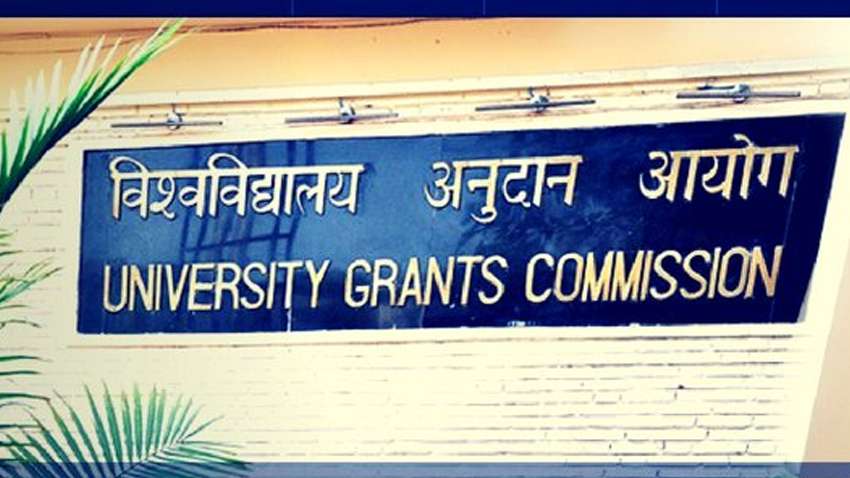
The University Grants Commission (UGC) has transmitted the design National Higher Education Qualification Framework (NHEQF) prepared to the state governments and universities.
The current academic session is taking off to make a big difference to the Indian education system. In the educational session 2022-23, all universities and higher educational institutions are getting on to get the entry-exit facility in undergraduate, postgraduate and, doctoral programs under the new policy 2020.

At the same time, the student will be prepared to alter from evacuating studies in the middle to university according to his comfort (Portable Facility). Interestingly, from where the student will drop out in the middle, there will also be a choice to publish it within 7 years. Later schooling, now higher education will similarly be established on learning consequences. Each year there will be an examination assessment based on knowledge, ability, and competence.

UGC

Notably, at least 20 values per semester will be necessary, but universities will be lent the freedom to improve the value record standards. The University Grants Commission (UGC) gives birth to sending the draft National Higher Education Qualification Framework (NHEQF) willing to the state governments and universities.

The National Higher Education Qualification Framework is getting on to begin from the impending session from the Central Universities. Later this, state universities will moreover be comprised from next year.

Now UG and PG design will be like this:

The undergraduate program will be in three- and four-year degree programs. Certificate on completion of the early year, Diploma on completion of the second year, Bachelor’s degree on completion of the third year. Subsequently, the four-year degree program will also be expanded to this. If a student wishes to do honours, then he will have to study for the fourth year. The choice of pursuing Honors will be available to all students.
Nonetheless, after finalizing the third-year degree program, if a student expects to make a future in the research field, he/she must have a CGPA of 7 in the third year. This, after finalizing the fifth year of studies, he will get a PG diploma and after completing the sixth year he will get a master’s degree. Now the name of these degree programs will be Graduate Attribute and Graduate Profile.

Research field studies in bachelor degree then directly PhD:
If a student also opts for a research area in the undergraduate program, then he will not require to do post-graduation. Relatively he will be prepared to rapidly enrol in a PhD program with a UG research degree. Students with BA, BCom, BSc will be able to continue multidisciplinary studies in the second and third years. The examination-based assessment will also furnish a choice for multidisciplinary studies.

Lateral entry option in the second year also:
People who are employed or performing their work will also obtain the selection to finalize the degree. Those who remembered dropping out in the middle unpaid to household or any additional crisis will also be encompassed in the mainstream of education.

For instance, people involved in any additional skilled work comprising automobile, electrical, mechanical will receive an opportunity to study technical degree programs like BTech or BE. There will be an alternative for this in the second year of the UG program. Nonetheless, before admission, those who dropped out years since will retain to ratify a test to be prepared to join the mainstream of education.

Knowledge of community assistance along with ethical education along with books: In this modern age course, apart from bookish knowledge, professional knowledge, skills, a makeover of students will similarly be done. In this, they will have to do mandatory studies and empirical fieldwork especially in moral education, community service, internship, etc. For this objective, they will also get tricks of bargaining with colleagues while operating with home, family, society, country.

Now there will be grade not division in degree:
There will no longer be a division in a degree. For example, grades have overcome fixed from 10 to 4. In this 10 will be terrific, 9 excellent, 8 very good, 7 rough, 6-5 average, and 4 passes. All below this would be the failed classification. There will be 10 levels from school to postgraduate. Of this, one to four are for school education and five to 10 for higher education.

The first year in the undergraduate program will be level 5, with 40 credits, level 6, 80 credits in the second year, 120 credits in level 7, 160 credits in level eight. At the same time, the first year in the PG program will be level eight 40 credits in diploma, level nine 40 credits in the second year, and level 10 doctoral program i.e. PhD.

Job Training for Diploma and Certificate holders:
If a student drops out of the first and second year due to any motive, then a two-month bridge course will be performed in the summer. This will be for 10 credits. In this, he will get training to relate with the job.