
Home Blog Page 559

Optimize Your Technology Innovation

Since the outbreak of the pandemic, the rate of digital transformation has risen dramatically across industries. As more customers move to remote working and online consumption, businesses’ reliance on technology, particularly cloud, data, AI, and other related technologies, has grown. The term “digital transformation” refers to a wide range of technology, business process, and human interaction experience changes, including both front-end and back-end technologies and procedures. Digital transformation is a continual process that aims to increase efficiency, improve security, and lower operating costs.

The migration to the cloud, as well as the modernization of infrastructure and applications through the use of cloud services, is a significant component of digital transformation. Many “low hanging” tasks have already been shifted to the cloud in recent years, leaving the more complex mission critical systems to be migrated. Many firms that have transferred more essential workloads to the cloud “as-is” are not investigating restructuring and re-architecting the applications to get additional value from cloud native technology.

Some of the most important considerations to consider when embarking on the Digital Transformation path are:
Multi-Step Journey – The digital transformation is a multi-step journey, with the starting point and number of steps required varying greatly from one commercial enterprise to the next. The key is to enlist the assistance of a trusted partner to assess the existing status of the business in terms of digital strategy and transformation, establish the objectives and goals of the transformation, and then develop a high-level strategy for the journey. A typical strategy roadmap might include many waves of projects that must be completed in order to reach the desired end state.

Plan and mobilise – Investing time in breaking down the digital transformation journey roadmap into more manageable initiatives is vital to the success of the transformation programme. Engaging experts to drive the deeper discovery and planning process ensures that the expert partners’ tested methods, processes, tools, and skills are leveraged to ensure a thorough understanding of the current state is attained, and a more detailed approach and plan for application migration or modernization is laid out.

Hybrid IT infrastructure — As the digital revolution continues, many applications and business activities will be dispersed over several cloud and on-premise systems. It is critical to review and conduct necessary projects to ensure that the manageability of this hybrid environment is not jeopardised by the considerable changes brought about by transformation programmes. Change management and risk management – Any change brings hazards into an already operational IT infrastructure. It is vital to implement a thorough change management and risk mitigation approach to enable a smooth migration programme with minimal disruptions to business users.

Skills, skills, assets, and tools — Collaborate with partners who have extensive experience managing and migrating major mission important settings for enterprises. These organisations contribute best practises, assets, resources, and extensive experience to support a successful migration and modernisation effort. The Line of Business and IT Teams’ Roles – IT teams and line of business teams are important to the success of the transformation effort. To contribute information about the business and its IT systems, these teams will need to actively participate during the discovery, planning, and migration phases. It is critical to build in enough time and effort from these teams when planning a transformation programme.

Governance and stakeholder engagement – Ensuring that a strong governance structure is created and implemented from the start of the programme is vital to its success. We will undoubtedly encounter hurdles and issues that will necessitate the participation of numerous stakeholders in order to choose the best course of action. As a result, establishing this governance and communicating it to the programme team will enable a smoother and faster resolution of difficulties in the programme. A combined architectural board comprised of the IT team, Line of Business representatives, and the partner’s would guarantee that the proper architectural decisions are made based on the various demands and objectives of the business and other stakeholders.

Last but not least, ensure that a strong testing plan is in place at all levels – technology, apps, and users. Early preparation of testing resources will address any possible issues before they have a negative impact on the business.

To summarise, digital transformation, including app migration and modernization, is an exciting journey that requires the company to be as involved as external specialised partners with significant experience dealing with major corporate clients and their mission important systems.

In April, Coal-Fired Electricity Generation Increased By 9%

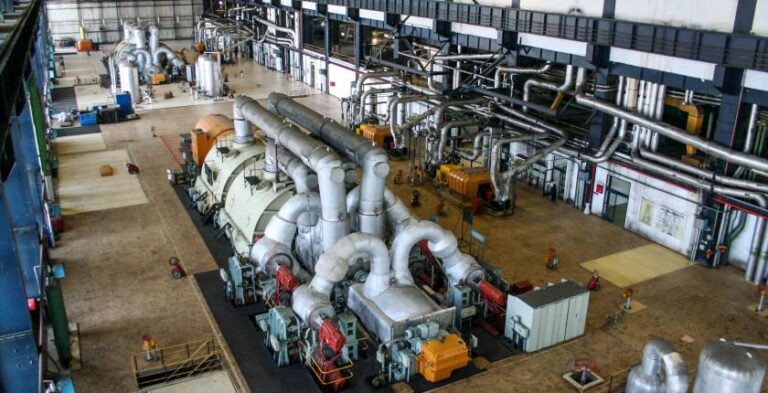
In April, coal-fired electricity generation increased by 9.26% to 1,02,529 million units (MU) compared to the same month the previous year. This comes as the country experiences a power outage. According to official data, the thermal power generation in April 2021 was 93,838 MU. “Coal-based power generation increased by 9.26% in April 2022 compared to April 2021, and by 2.25 percent compared to March 2022,” the report stated. Thermal power generation increased by 2.25 percent in April, compared to 1,00,276 MU in March, according to the report. It noted that overall electricity generation grew 11.75 percent last month to 1,36,565 MU, up from 1,22,209 MU the previous month.

“Total power generation climbed to 1,36,565 MU in April 2022 from 1,33,584 MU in March 2022,” it added. The coal ministry previously stated that the current power problem is primarily due to a dramatic fall in energy generation from various fuel sources, rather than a lack of domestic coal. Coal Secretary A K Jain told PTI that the low coal stocks at power plants were due to a number of factors, including increased power demand following the pandemic, the early arrival of summer, rising gas and imported coal prices, and a sharp drop in electricity generation by coastal thermal power plants. He went on to say that a plethora of steps are already in the works to improve the country’s overall electricity supply. The situation was exacerbated by the country’s dramatic drop in gas-based electricity output.

Because of the substantial spike in the price of imported coal, the coastal thermal power plants are presently producing roughly half of their capacity. As a result, there is a disconnect between electrical demand and supply. States in the South and West, according to the secretary, are reliant on imported coal. When domestic coal is delivered to these states’ facilities through wagons/rakes to compensate for the loss of imported coal generation, the rake turnaround time is more than 10 days, causing delays rake availability issues for other plants. Since last year, the railways have loaded more coal than ever before, despite reducing rake delivery to other industries to satisfy the increased demand for power. In March, there was a lot of rake loading.

Higher coal imports may increase discom power supply costs by 4.5-5% in FY23, according to ICRA.
In order to fulfil the growing demand for energy, all states and power generating companies (gencos) based on domestic coal will be required to import at least 10% of their fuel consumption for blending with domestic coal. Icra stated on Tuesday that government plans to address electricity supply restrictions by increasing coal imports are projected to raise discoms’ supply costs by 4.5-5.0 percent in 2022-23. According to Icra NSE -0.14 percent, on May 5, the Ministry of Power (MoP) issued an order under Section 11 of the Electricity Act, stating that all imported coal-based power plants must run and generate power at full capacity to fulfil growing demand.

In order to fulfil the growing demand for energy, all states and power generating companies (gencos) based on domestic coal will be required to import at least 10% of their fuel consumption for blending with domestic coal. The ministry’s directive is in effect until October 31, 2022. Because current power purchase agreements (PPAs) do not allow for a pass-through of fuel costs for these projects, a committee comprised of representatives from the Ministry of Power, the Central Electricity Authority, and the Central Electricity Authority Commission will determine the tariff for supply from these plants under PPAs, taking into account current coal prices. State gencos and IPPs (independent power producers) were advised by the Ministry of Power in December 2021 to meet their coal demand by blending imported coal to the tune of 4%. The directive was issued in light of the slow improvement in the average coal stock level for thermal generation capacity across India, as evidenced by the stock position of 8 days on May 7, 2022, compared to 9 days in November-2021, which had recovered from a low of 4 days on September 30 last year, as compared to the normative requirement level of 24 days.

According to Girishkumar Kadam, Senior Vice President and Co-Group Head – Corporate Ratings at Icra, all-India energy demand increased by 11.5 percent and 17.6 percent year over year in April and May 2022, respectively, owing to heat waves and weather conditions, while tight domestic coal supply and high international coal prices continued to affect energy generation levels. As a result of the MoP’s actions, the power sector’s coal import dependency is expected to rise from around 4% in FY2022 to around 12-13% in FY2023, he noted.

“Considering the increase in the share of imported coal and coal price level at USD 110 per MT for coal gross calorific value (GCV) of 4,200 kcal/kg as directed by MoP, the higher share of imports for thermal generation under a pass-through arrangement is further expected to lead to an increase in the cost of supply for state discoms by 4.5-5.0 per cent in FY2023 at an all-India level,” Kadam said. Despite a rise in international coal prices of more than 150 percent over the previous 12-month period, the share of coal imports in the power industry fell to around 4% in FY2022 from 8% in FY2021.

According to Vikram V, Vice President & Sector Head – Corporate Ratings at Icra, the estimated increase in the cost of supply for discoms, combined with a higher share of coal imports to meet demand, is expected to push the cash gap per unit for discoms at the all-India level to 68 paise per unit in FY2023, up from 50 paise per unit previously estimated. “This assumes a 5% rise in supply costs and a 4.5 percent increase in discom tariffs across the country. As a result, regulators’ timely and proper tariff determination, as well as the timely implementation of fuel cost adjustment (FCA) pass-through, remain critical monitorables for discoms “He continued.

The outlook for state-owned distribution utilities remains bleak, owing to their persistent financial difficulties as a result of inadequate rates, higher-than-allowable distribution loss ratios, and insufficient reliance on subsidies. Nonetheless, operational strengths originating from demographic profile, operational efficiencies, tariff adequacy, and sponsor strengths continue to sustain the credit profile of privately owned distribution utilities.

Sri Lanka Economic Crisis: A Member of Sri Lanka’s Ruling Party Was Found Dead!

Sri Lanka is experiencing unparalleled economic turbulence since gaining independence from the United Kingdom in 1948. A lack of foreign currency has contributed to the issue, since the country has been unable to pay for imports of basic goods and gasoline, resulting in severe shortages and exorbitant costs. Since April 9, tens of thousands of people have taken to the streets across Sri Lanka, demanding President Gotabaya and Prime Minister Mahinda’s resignations because the government has run out of money to pay for basic imports, and there are severe shortages of fuel, medicines, and electricity.

The island’s economic crisis is altering political dynamics both within and beyond the country, while India-China brinkmanship remains unabated. The poorest people in Sri Lanka have been impacted the hardest by the country’s economic turmoil. Except for the power outages, it’s mostly business as usual for Colombo’s aristocracy and upper middle class. A random flare of light from a posh hotel or posh apartment complex bursting through the dark streets of the capital—lights are switched off to save electricity—is a reminder that the city still offers what it did before the crisis behind the closed doors of the affluent and powerful.

The disparity in the country’s metropolitan landscape is exacerbated by the fact that some fancy hotels and highrise gated communities appear to be untouched by the blackouts. They just stored enough fuel to keep their generators running properly and provide adequate power backup. Although the top crust of society has become more careful about flaunting their wealth during such a time, live events, performances, and parties at nightclubs, pubs, and high-end houses across Colombo tell a different narrative.

According to the news agency AFP, a legislator from Sri Lanka’s ruling party, Amarakeerthi Athukorala, was found dead outside the capital Colombo on Monday after a battle with anti-government protesters, while dozens were injured elsewhere. Athukorala allegedly opened fire at Nittambuwa, seriously injuring two individuals who were blocking his car, and was later discovered dead after attempting to take sanctuary in a neighbouring building.

The news comes as Prime Minister Mahinda Rajapaksa announced his resignation in the midst of the island nation’s worst economic crisis since independence, which has sparked huge protests. “The prime minister has sent the president his letter of resignation,” a source stated on condition of anonymity.

The prime minister’s younger brother, President Gotabaya Rajapaksa, is the president. The worst fights since the crisis began erupted in Colombo on Monday, when fans of the Rajapaksa family went on the rampage. Police used tear gas and water cannon and proclaimed an instant curfew in Colombo, which was eventually extended to the entire 22-million-strong South Asian island nation. At least 78 persons were injured, according to Pushpa Soysa, a spokeswoman for the Colombo National Hospital. The army riot squad was brought in to help police, according to officials. Soldiers have been deployed throughout the crisis to secure fuel and other crucial deliveries, but until now, no one has been killed now not to prevent clashes.

Since April 9, AFP correspondents have reported that scores of Rajapaksa supporters have attacked unarmed demonstrators camped outside the president’s office on the seafront Galle Face promenade in downtown Colombo. Several thousand followers of Mahinda Rajapaksa streamed out of his adjacent official mansion, carried in by buses from rural areas. Rajapaksa spoke to a crowd of 3,000 supporters at his home, promising to “defend the nation’s interests.”

On Monday, a Sri Lankan legislator from the ruling Rajapaksa family and two others were found dead in the country during violent skirmishes between anti- and pro-government protestors. Anti-government groups surrounded Amarakeerthi Athukorala, a 57-year-old SLPP MP from the Polonnaruwa district, in the northwestern town of Nittambuwa, according to police. People claimed that gunshots came from his SUV, and that when the enraged mobs overturned it, he rushed to a building and committed suicide by drawing his own revolver. Thousands of people had gathered around the structure by the time he committed suicide. The legislator and his personal security officer were later discovered dead, according to the authorities.

According to the News First website, a 27-year-old guy was also killed in the shooting. Meanwhile, following the violent attacks on peaceful protestors in Colombo’s GotaGoGama’ and MynaGoGama’ demonstration sites, the law-and-order situation spiralled out of control, with many more SLPP lawmakers’ residences being targeted. Angry crowds stormed former minister Johnston Fernando’s offices in Kurunegala and Colombo. His taverns were set on fire as well. Former minister Nimal Lanza’s home was attacked, while Mayor Saman Lal Fernando’s home was set on fire. The mansion of ruling party Trade Leader Mahinda Kahandagamage in Colombo was also targeted. Earlier in the day, he was spotted leading the charge at the two protest sites, according to the report.

After supporters of Mahinda Rajapaksa, who resigned as Prime Minister, attacked nonviolent protestors, the entire country erupted in violence. As they were leaving the capital to return home, the populace turned against the pro-Rajapaksa supporters. In most towns, their vehicles were stopped and attacked. At least 174 people were injured as Mahinda Rajapaksa’s supporters beat anti-government protestors outside President Gotabaya Rajapaksa’s office, forcing authorities to declare a statewide curfew and deploy army soldiers in the city.

Elon Musk Might Invest in India, According To Adar Poonawalla

Serum Institute of India Pvt. Ltd. is presently the world’s largest vaccine maker, with more than 1.5 billion doses produced and marketed worldwide, including Polio vaccine, Diphtheria, Tetanus, Pertussis, Hib, BCG, r-Hepatitis B, Measles, Mumps, and Rubella vaccines. Around 65 percent of the world’s children are anticipated to receive at least one vaccine produced by Serum Institute. The World Health Organization in Geneva has recognized the Serum Institute’s vaccines, and they are utilised in over 170 nations throughout the world in their national immunization programmes, saving millions of lives.

Serum Institute of India is India’s No. 1 biotechnology business, producing highly specialized life-saving biologicals such as vaccines, antisera, and other medical specialties utilising cutting-edge genetic and cell-based technologies. Dr. Cyrus Poonawalla started the Serum Institute of India in 1966 with the goal of producing life-saving immuno-biologicals that were in low supply in India and had to be imported at exorbitant prices. Following that, several life-saving biologicals were manufactured at affordable prices and in large quantities, resulting in the country becoming self-sufficient in Tetanus Anti-toxin and Anti-snake Venom serum, then DTP (Diphtheria, Tetanus, and Pertussis) vaccines, and finally MMR (Measles, Mumps, and Rubella) vaccines.

The company’s philanthropic attitude is still alive and well, with modern vaccinations like Hepatitis-B vaccine, Combination vaccine, and others being brought down in price so that not only Indians, but all underprivileged children throughout the world are protected from birth.

Serum Institute of India’s chief executive officer (CEO)  Adar Poonawalla (born 14 January 1981). It was founded by his father, Cyrus Poonawalla, in 1966 and is the world’s largest vaccine maker in terms of doses manufactured. Adar Poonawalla attended The Bishop’s School in Pune, St Edmund’s School in Canterbury, and the University of Westminster after that. Poonawalla graduated from university in 2001 and joined the Serum Institute of India. Poonawalla then focused on expanding the company’s worldwide business, obtaining new product licences, and becoming pre-qualified by the World Health Organization for supply to UN agencies such as UNICEF and PAHO. He has assisted the company in exporting its products to over 140 countries and 85 percent of its revenues are from overseas as of 2015.

He was named CEO in 2011. He was instrumental in the acquisition of Bilthoven Biologicals, a government vaccine manufacturing company based in the Netherlands, in 2012. Poonawalla is a member of the worldwide vaccine alliance, the GAVI Alliance. He developed and marketed Serum Institute’s oral polio vaccine in 2014, which became a corporate bestseller. During the same year, it was stated that he sought to expand the product range to include vaccinations for dengue, flu, and cervical cancer. He is currently the CEO of the Serum Institute of India. He was named chairman of Magma Fincorp on May 31, 2021, after acquiring a 66 percent share in the financial services company.

Poonawalla stated in an interview with ‘The Times’ that he fled India for London due of threats seeking COVID-19 vaccines. Poonawalla also stated that, in addition to the current production in India, he will begin producing Covid vaccines outside of the country. As soon as the threats were made public, the Indian government supplied him with ‘Y’ level protection. SII stated in 2020 that it would donate $66 million to the University of Oxford to help support the Poonawalla Vaccines Research Building’s construction.

Adar Poonawalla receives the Business Leader of The Year award at the Economic Times Awards
Adar Poonawalla, CEO of Serum Institute of India receives the Business Leader of The Year award at The Economic Times Awards for Corporate Excellence 2021 held in Mumbai on 7 May 2022. At The Economic Times Awards for Corporate Excellence 2021, Serum Institute of India CEO Adar Poonawalla was named Business Leader of the Year, while software giant Infosys NSE -2.67 percent was named Company of the Year. Finance Minister Nirmala Sitharaman was named Business Reformer of the Year by an 11-member select jury led by Kotak Mahindra NSE 2.17 percent Bank MD & CEO Uday Kotak. The pharma and technology sectors dominated nominations for India’s prestigious NSE 0.93 percent business awards, which began in 1998, as the Covid-19 outbreak loomed large over the past two years.

Elon Musk might invest in India to manufacture Tesla automobiles, according to Adar Poonawalla
Adar Poonawalla of the Serum Institute of India (SII) has invited Tesla CEO Elon Musk to invest in India for large-scale Tesla automobile production if his $44 billion Twitter deal falls through. According to Forbes magazine, Musk is the world’s richest person, running Tesla Inc., The Boring Company, and SpaceX. In April, SpaceX CEO Elon Musk announced a $44 billion deal to buy Twitter. After the acquisition, Twitter will become a privately held firm, according to the company’s announcement. Musk is now in talks with investors to raise money for his $44 billion purchase of Twitter. In one of the world’s largest leveraged buyouts, he intends to complete his $54.20 per share Twitter takeover this year.

Musk should explore investing funds in India for high-quality large-scale manufacturing of Tesla cars, according to Poonawalla, if he does not wind up buying Twitter. Musk was also promised by Poonawalla that this would be the best investment he has ever made. “Hey @elonmusk just in case you don’t end up buying @Twitter, do look at investing some of that capital in INDIA for high-quality large-scale manufacturing of @Tesla cars. I assure you this will be the best investment you’ll ever make,” Poonawalla tweeted.

Elon Musk’s Twitter buy-in was sponsored by worldwide crypto exchange Binance, among other important names, according to a Securities and Exchange Commission (SEC) filing on Thursday. Binance, which is founded by Changpeng Zhao, contributed $500 million to Musk’s takeover of Twitter. Sequoia Capital, Fidelity Management, Qatar Holding, and many more were also involved in the transaction. Larry Ellison, a Tesla board member and Musk’s self-described close buddy, has pledged $1 billion to the fund. According to the SEC filing, Sequoia put in $800 million, while Fidelity put in $316,139,386. A.M. Management & Consulting, Andreessen Horowitz (a16z), created by Marc Andreessen and Ben Horowitz, Brookfield, Honeycomb Asset Management LP, Litani Ventures, and others were among the investors who took part.


The government may inject up to Rs 5,000 crore in extra capital into public sector general insurers

Public Sector Insurance
Life Insurance Corporation of India

The Insurance Act of 1956, which was passed by Parliament on September 1, 1956, merged 243 companies into the LIC of India. The Insurance Act of 1938, the LIC Act of 1956, the LIC Regulations of 1959, and the Insurance Regulatory and Development Authority Act of 1999 control LIC. LIC has 8 Zonal Offices, 113 Divisional Offices, 2048 Branch Offices, 73 Customer Zones, 1401 Satellite Offices, and 1240 Mini Offices in India as of March 31, 2016.

Fiji, Mauritius, and the United Kingdom are all home to the Corporation’s branch offices. Life Insurance Corporation (International) B.S.C.(c), registered in Manama (Bahrain); Kenindia Assurance Company Ltd., registered in Nairobi; Life Insurance Corporation (Nepal) Ltd., registered in Kathmandu; Life Insurance Corporation (Lanka) Ltd., registered in Colombo; and Saudi Indian Company for Co-operative Insurance (SICCI), registered in Riyadh. On December 14, 2015, Life Insurance Corporation of India, Strategic Equity Management Ltd, and Mutual Trust Bank Ltd launched a joint venture company called Life Insurance Corporation (LIC) of Bangladesh Limited. On April 30, 2012, Life Insurance Corporation (Singapore) Pte Ltd., a wholly owned subsidiary, was founded. Kenindia Assurance Co. Ltd., Nairobi, Kenya, and Saudi Indian Company for Co-operative Insurance (SICCI), Riyadh, Kingdom of Saudi Arabia, are composite businesses that transact life and non-life business, and two JVs, LIC (Nepal) Ltd. and SICCI, are both listed on their respective stock exchanges.

GENERAL INSURANCE CORPORATION OF INDIA


In 1972, 107 insurers were united and amalgamated into four companies: National Insurance Co. Ltd., The New India Assurance Co. Ltd., The Oriental Insurance Co. Ltd., and United India Insurance Co. Ltd. The GIC was founded in 1972, and the other four firms were spun out as subsidiaries. GIC was designated as the Indian Reinsurer in November 2000, and its supervisory responsibility over its subsidiaries was terminated. GIC’s role as a holding company for its subsidiaries ended on March 21, 2003, and the subsidiaries’ ownership was transferred to the Government of India. The Corporation employs 558 people as of March 31, 2016. The company’s authorised capital is Rs.1000 crore, and its paid-up equity capital is Rs.430 crore.

THE NEW INDIA ASSURANCE COMPANY LIMITED

Sir Dorabji Tata created the corporation on July 23, 1919, and it was nationalised in 1973 after a merger of Indian companies. As of March 31, 2016, the company had 2329 offices and 18783 employees. Customers can get insurance from the company, which has over 170 products that cover practically every aspect of general insurance. The company’s authorised capital and paid-up equity capital are respectively Rs.300 crore and Rs.200 crore.

UNITED INDIA INSURANCE COMPANY LIMITED


In 1938, United India Insurance Company Limited was established. With the nationalisation of India’s general insurance business, United India Insurance Company Limited merged 12 Indian insurance companies, four cooperative insurance societies, and the Indian operations of five foreign insurers, as well as the general insurance operations of Life Insurance Corporation of India’s southern region. As of 31.03.2016, the company had 2080 offices and 16345 employees. Customers can get insurance services from the corporation, which covers practically all aspects of general insurance. The company’s authorised capital and paid-up equity capital are respectively Rs.200 crore and Rs.150 crore.

THE ORIENTAL INSURANCE COMPANY LIMITED

The Oriental Insurance Company Limited was founded in 1947. The General Insurance Corporation of India surrendered all of the company’s shares to the Indian government in 2003. As of 31.03.2016, the company had 1924 offices across the country and 13923 employees. Customers can get insurance services from the corporation, which covers practically all aspects of general insurance. The company’s authorised capital and paid-up equity capital is Rs.200 crore.

NATIONAL INSURANCE COMPANY LIMITED


The corporation was established in 1906. It was merged with 21 international and 11 Indian enterprises after nationalisation to become National Insurance Company Ltd. As of 31.03.2016, the company had 1998 offices across India and 15079 employees. Customers can get insurance services from the corporation, which covers practically all aspects of general insurance. The company’s authorised capital and paid-up equity capital are respectively Rs.200 crore and Rs.100 crore.

According to sources, the government may inject Rs 3,000-5,000 crore in extra capital into the three public sector general insurance companies, depending on their performance and needs for the year. The capital injection will help the general insurance firms National Insurance Company Limited, Oriental Insurance Company Limited, and United India Insurance Company enhance their financial health. The government invested Rs 5,000 crore in these three insurance businesses during the previous fiscal year. The government would invest Rs 9,950 crore in three PSU general insurers in 2020-21, with Rs 3,605 crore going to United India Insurance, Rs 3,175 crore to National Insurance, and Rs 3,170 crore to Oriental Insurance.

Last financial year, fund help was granted to the weak general insurance businesses, but sources say further funding is needed to get them back on track to profitability. Sources stated that a capital infusion of Rs 3,000-5,000 crore could be made in these firms dependent on their performance, and that the government has already increased their allowed capital in anticipation of future financial infusions. The three public sector general insurers are short on solvency buffer, and an external expert will be hired soon to improve operational efficiencies. Four public sector enterprises have filed a request for proposal (RFP) to restructure insurers and achieve profitability and employee development through the General Insurers’ Public Sector Association of India or GIPSA.

“Through performance management and capability management, there is a proposal for restructuring the organisation to bring in profitable growth and employee development, in alignment with the Key performance indicators (KPIs) devised by the Public Sector General Insurance Companies (PSGICs),” the RFP stated. The deadline for proposal submissions is June 2, 2022. Only New India Assurance Company, one of four state-run general insurance firms, is publicly traded; the other three are completely controlled by the government. It should be remembered that the government has already stated that one general insurance business will be privatised. The General Insurance Business (Nationalisation) Act has previously been amended by Parliament to promote privatisation (GIBNA).

In the Budget 2021-22, Finance Minister Nirmala Sitharaman unveiled a big-ticket privatisation strategy that comprised two public sector banks and one general insurance firm. “In the years 2021-22, we propose privatising two public sector banks and one general insurance firm. This would necessitate legislative changes “she stated at the time.


In Downtown Delhi, BI Group & Oberoi Hotels Launching 19 Serviced Apartments

The Oberoi Group is a premium hotel conglomerate based in Delhi. The company, which was founded in 1934, owns and manages 31 luxury hotels and two river cruise ships in five countries under the Oberoi Hotels & Resorts and Trident brands. It began in 1934, when the group’s founder, Rai Bahadur Mohan Singh Oberoi, purchased two properties: the Maidens in Delhi and the Clarke’s in Shimla. Oberoi, with the help of his two sons, Tilak Raj Singh Oberoi and Prithvi Raj Singh Oberoi (P.R.S. Oberoi), continued to expand their group with assets both in India and abroad in the following years. As part of the 2008 Mumbai attacks, two Lashkar-e-Taiba terrorists, Fahadullah and Abdul Rehman, targeted Hotel Trident-Oberoi on November 26, 2008. During the three-day siege, 32 employees and visitors were killed.

EIH Ltd and EIH Associated Hotels are The Oberoi Group’s two principal holding entities (formerly East India Hotels). [6] The Oberoi Group’s current chairman is P.R.S. Oberoi. At the holding firms, his son, Vikramjit Singh Oberoi, and nephew, Arjun Singh Oberoi, both serve as Joint Managing Directors. With a 32.11 percent interest in EIH Ltd, the Oberoi family is the main shareholder. [ITC Limited], a tobacco-to-hotels conglomerate, owns a 14.98 percent stake in EIH Ltd. The Oberoi family sold a 14.12 percent share in EIH Ltd. to Mukesh Ambani’s Reliance Industries Investment and Holding Pvt Ltd to stave off pressure from ITC Ltd., whose holding is dangerously near to the automatic open offer trigger at 15%.

The stake sale took place on August 30, 2010, for Rs. 1,021 crores, valuing EIH Ltd. at Rs. 7,200 crores. Reliance Industries’ share in ITC was recently increased to 20%, bringing the total ownership in the company to 20%. The firm now operates 33 luxury hotels under the Oberoi Hotels & Resorts brand, as well as 10 five-star properties under the Trident Hotels brand. The Clarkes Hotel in Shimla and the Maidens Hotel in Delhi are also part of the company. These two hotels, however, are not part of the Trident or Oberoi brands. The Clarkes Hotel reopened on September 16, 2012, after being temporarily closed due to development in the environmentally sensitive area causing its grounds to cave in.

The BI Group, located in Delhi, has collaborated with Oberoi Hotels & Resorts to offer 19 ultra-luxury properties in central Delhi, with prices ranging from Rs 20 to Rs 48 crore, indicating that demand for ultra-luxury real estate is recovering. Trident Residences will be the capital’s first of its kind. According to BI Group chairman Shashank Bhagat, apartment sizes will vary from 4000 to 8000 square feet. According to him, the company’s land investment is close to Rs 150 crore, and the building cost will be around Rs 100 crore. The three-block flats are close to the Delhi Golf Club and Lodi Gardens.

“The smallest apartments are approximately 4000, 4300, and 4700 square feet (super size), whereas penthouses are approximately 8000 square feet. The cheapest apartments cost around Rs 20 crore, while the most expensive penthouses cost Rs 48 crore. He added, “Those were the first ones to sell.” Bhagat stated that the premium homes will be ready by the third quarter of 2023. In addition to the location, the homes are managed by a hotel chain. “We sought to make a housing product for anyone who wished to buy a flat at Jorbagh Golf Links.” To compete, we needed to provide a lifestyle and services that only a hotel brand could provide,” he explained.

Concierge services, a rooftop lounge with a television, a private meeting room, residents’ lounges, a gym, and terraced gardens are among the amenities available. Residents at The Oberoi, New Delhi, can also take advantage of amenities such as priority bookings at award-winning restaurants and bars, business centre reservations, and salon services. Architecture Discipline will design the Trident Residences. The project was not started until the structures were complete, according to Bhagat. “We decided to hold off on launching the idea until we were ready. A year ago, we got our RERA (Real Estate Regulatory Authority) registration. Two of the three structures are complete, and interior construction has begun.”

Similar homes are also being planned by the BI Group in Goa and Bengaluru. The corporation has purchased land in Goa but is unsure what product mix it would introduce in Nerul. Land is continually being acquired in Bengaluru. According to him, the company intends to build a villa project in Nandi Hills. “The opening of these branded houses in the centre of the capital is a signal that ultra luxury is once again in demand.” “Those looking to buy property in the Golf Course, Jor Bagh, and Malcha Marg areas are clearly looking for something more, especially in terms of unmatched amenities,” said Rohit Chopra of Southdelhiprime.com, adding that it will also alleviate concerns most high net worth individuals have about their neighbours and who will manage common areas, among other things.

An independent real estate expert, Hyderabad has surpassed Mumbai Metropolitan Region as the second most expensive housing market after the increase in average prices

In the fourth quarter of 2021, housing prices in Hyderabad increased by 7%. According to PropTiger, an independent real estate expert, Hyderabad has surpassed Mumbai Metropolitan Region as the second most expensive housing market after the increase in average prices. The jump in building material rates following the Covid-19 outbreak in early 2020, due to supply-side limitations, is mostly to blame for the increase in yearly pricing of new units. The average per square foot prices of home projects in Hyderabad is presently between Rs 5,900 and Rs 6,100, according to PropTiger. Hyderabad, along with Ahmedabad, experienced the most price increase in the fourth quarter of 2021, which coincides with India’s festive season. Housing demand in Telangana’s capital city remains strong, with property sales up 36% in 2021 compared to the same period in 2020. In 2021, a total of 22,239 residences were sold, compared to 16,400 in 2020. While Bachupally, Tellapur, and Miyapur were the most popular neighbourhoods among Hyderabad homebuyers in 2021, 3BHK homes remained the most popular configuration, accounting for 48 percent of purchases. As a result of improved consumer attitude, new supply in Hyderabad increased by two-fold from 22,940 units in 2020 to 48,566 units in 2021.

According to the research, the majority of new supply during the year was focused in the micro-markets of Puppalaguda, Miyapur, and Bachupally, with 36% of units introduced costing more than Rs 1 crore.
“The recent festive season in 2021 had a visible impact on both demand and supply, resulting in good adjustments for the Hyderabad home market.” This recovery in real estate may gather further momentum in 2022 as the economy calms in, providing buyers with greater job stability,” said Rajan Sood, PropTiger’s Business Head.


The new master plan for Hyderabad would cover 84 villages along GO 111
Following repeated setbacks in the integration of five master plans in order to construct a holistic master plan, the Telangana government has hired an international consultancy to create a new master plan for the Hyderabad Metropolitan Region (HMR). The new master plan would encompass 84 villages that were previously under GO 111, as well as the catchment areas of the Himayat Sagar and Osman Sagar reservoirs. KT Rama Rao, the minister of municipal administration, recently announced the creation of a new master plan for Hyderabad as well as 141 new municipalities. The master plan spans an area of around 7,200 square kilometres under the control of the Hyderabad Metropolitan Development Authority (HMDA).

“We are in informal contact with a few international and Indian corporations,” special chief secretary (municipal administration) Arvind Kumar told TOI. “A request for proposal (RFP) would be published based on the approved terms of reference for the master plan.” According to official sources, the new master plan will endure until 2041. The master plan will include all new projects, such as the existing regional ring road, the proposed regional ring road, metro rail, satellite townships, truck terminals, and other necessities. The government just repealed GO 111 and replaced it with GO 69. Officials stated that the government-appointed group will simply offer guidelines, and that the consultant will produce a master plan for specific zones to protect the lake from pollution.

The government will appoint a new consultant to draught the plan for GO 111 areas as well. The HMDA suggested combining five master plans covering the former Hyderabad Urban Development Authority, Cyberabad Development Authority, Hyderabad Airport Development Authority, Municipal Corporation of Hyderabad, and HMDA’s extended areas into an unified master plan and GIS data. The integration of the multiple master plans is required, according to HMDA officials, because different regions have varied zoning restrictions and land uses. The HMDA’s ability to award building and layout licences has been hampered by differences in the drawings.

Property taxes bring in Rs 708 crore to the city of Hyderabad
Greater Hyderabad Municipal Corporation (GHMC) property tax collection for FY 2022-23 is off to a flying start, with Rs 708 crore in income generated in the first month of the financial year thanks to the Early Bird initiative. This is a 23 percent increase over the amount received in 2020-21, when the scheme was first introduced, which was Rs 572.29 crore. On Saturday, there were long lineups at the GHMC counters as citizens rushed to take advantage of the plan before it expired on April 30. The Early Bird scheme offers property owners a 5% property tax refund in order to encourage early payments. According to official figures, 7.18 lakh persons have paid property taxes in all six zones. Serilingampally circle had the largest collection of Rs 87 crore, followed by Jubilee Hills with Rs 75 crore and Khairatabad with Rs 61 crore. The scheme began on April 1 and authorities believe that it will bring in an additional Rs 700 crore to the GHMC’s coffers this financial year.

Despite the fact that the service is offered online at https://onlinepayments.ghmc.gov.in, only Rs 325 crore has been collected. The rest of the people paid through citizen service centres, MeeSeva centres, and bill collectors. “This year’s Early Bird response shows that people are bouncing back, and more households can afford to pay property taxes in the first month of the fiscal year.” This will greatly boost the overall property tax collection for this fiscal year, according to a senior GHMC official. The GHMC fell short of its property tax collection target of Rs 1,852 crore in the fiscal year 2021-22, collecting only Rs 1,495 crore. Officials claim that the inability to meet the property tax objective is due to losses incurred as a result of the second and third waves of the Covid pandemic.

Logix Insolvent? NCLT initiates insolvency proceedings against Logix City Developers

On May 2, the National Company Law Appellate Tribunal halted the National Company Law Tribunal’s (NCLT) judgement initiating insolvency proceedings against Logix City Developers Private Limited. Homebuyers of Logix Blossom Zest, a project in Noida, filed an appeal against the NCLT judgement. The NCLAT delayed the NCLT order after hearing the arguments. “Learned Counsel for the Appellant submits that the Operational Creditor’s application under Section 9 of the I&B Code, 2016 was both blocked by Section 10A of the Code and barred due to non-compliance with the Rs. 1 million threshold.” He also claims that an amount of Rs. 88,90,740/- was claimed in an email dated 04th March, 2020, and that an amount of Rs. 7,02,100/- and Rs. 4,36,600/- was claimed in two invoices dated 01st April, 2020 and 04th April, 2020, respectively, and that by combining these two invoices, the threshold is sought to be crossed,” the order said.

“It is submitted that the amount claimed, being for March 2020, was obviously impacted by Section 10 A of the Code, and those two invoices could not be combined together, resulting in the amount falling short of the threshold.” The NCLAT order noted that “submissions must be scrutinised.” It gave the respondents four weeks to file their reply affidavits. It said that any rejoinder could be submitted within two weeks following that. The date for the appeal has been set for July 6, 2022. The ruling given by Justice Ashok Bhushan, the chairperson, stated, “In the meanwhile, the Order dated March 22, 2022 challenged in this Appeal shall remain stayed.”

After March 25, 2020, if a party defaulted in clearing its obligation as a result of the COVID-19 pandemic, insolvency cannot be filed for that default under Section 10A. According to Sahil Sethi, Partner, Saikrishna & Associates, who represented the homebuyers in the case, the government instituted this to provide relief to companies. “We argued before the NCLAT that Colliers’ petition is barred by Sections 4 and 10A of the Insolvency and Bankruptcy Code, because the amount claimed by Colliers is less than Rs 1 crore and the payment to Colliers is due after the COVID-19 deadline.” As a result, Colliers’ application cannot be used to start the insolvency process. We are grateful that the NCLAT took notice of our representations and stayed the NCLT order,” he said.

Neither the developer nor Colliers had anything to say about it. NCLT began insolvency proceedings against Logix Blossom Zest in March, when operating creditor Colliers International (India) Property Services filed a petition. The business began working on the project in 2011. The project has 3,400 units split across 14 towers, nine of which are still under construction. Several homeowners have been unable to register their flats due to the developer’s outstanding dues with the Noida Authority.

The Comptroller and Auditor General stated in a study released in December last year that officials in Noida eroded and altered rules to benefit real estate developers, while ignoring the interests of homeowners who had spent their life savings. The anomalies had a financial impact on the authority, with builders owing Rs 18,633 crore against an allocation value of Rs 14,000 crore and no action taken against defaulters. Between 2005 and 2018, three real estate corporations named Wave, Three C, and Logix Group received about 80% of the total allotments of plots in the commercial sector. Despite these companies’ repeated violations in terms of outstanding dues totaling Rs 14,958.45 crore, the authority failed to take any action against them, the CAG had noted.

After Supertech, the Logix group is now in financial trouble, putting the destiny of roughly 2700 property owners in jeopardy. Logic Builder has been sued by Collier International (India) Property Services at the NCLT.
After real estate giant Supertech, another well-known building business in Noida, Logix, has filed for bankruptcy. In the Logix Blossom Zest housing project in Noida’s Sector 143, the fate of around 2700 home owners appears to be in jeopardy. The project, which began in 2011, has yet to be finished and given back to the buyers, who have been waiting for relief for the past 11 years. There are around 3400 units in the society, with nine towers totaling 14 in total. The claimed project’s construction work is yet to be completed. The Noida Authority owes Logix Builders around 500 crores.

Meanwhile, Logix Builder has been brought before the NCLT by Collier International (India) Property Services. The NCLT has assigned an Interim Resolution Professional (IRP) to the case, and buyers must file financial creditor information by April 5. The news comes amid rumours that real estate developer Supertech has filed for bankruptcy. The National Company Law Tribunal (NCLT) declared Supertech insolvent last week, a move that might affect more than 10,000 property buyers in the Delhi and NCR region. The bankruptcy court ordered the beginning of insolvency proceedings against real estate firm Supertech Ltd, one of the firms of the Union Bank of India, based on a petition filed by the Union Bank of India for non-payment of roughly Rs 432 crore in dues.

Several large real estate enterprises, notably Jaypee Infratech and Mumbai-based HDIL, are facing insolvency procedures. Thousands of homeowners have been affected by the Amrapali and Unitech groups’ failure to complete various projects, mainly in Delhi-NCR. Unitech’s management has been taken over by the government, while NBCC is working on Amrapali’s stalled projects under the supervision of the Supreme Court.

Your EMIs are set to go up; why has RBI suddenly raised Repo rate by 40 bps?

Reserve Bank of India Governor Shaktikanta Das’ unscheduled 15-minute statement today was nothing short of a (thunder)bolt from the blue. And like all thunder, it foretells stormy weather ahead.
First, even at 10 am when the RBI announced that the governor would deliver a statement at 2 pm, the guess by a reluctant 50 percent of the economists polled was a 25 bps hike in repo rate at worst or a CRR (cash reserve ratio) hike. The actual package packed much more dynamite.
It is clear the RBI wants to convey that the inflation situation is very serious, hence the choice of a mid-cycle hike. Heavens wouldn’t have fallen if RBI had waited till the June 7 policy, but the central bank wanted to make a point by announcing the hike mid-cycle — that it is dead serious about inflation.
The critics ask, “Why not in April, then?” Perhaps the RBI was bound by its word. It had been said several times that the turn in the rate cycle would be well-telegraphed. And hence it had to warn in April and then hike in May.
The central bank is conveying the urgency of the surging inflation in several ways: 1) The timing — can’t wait till June; 2) The extent of the repo hike — 25 bps not enough, at least 40 bps was needed for a bang off the first ball; and 3) A rate hike isn’t enough, crunching the quantity of money was also needed — hence the 50 bps hike in CRR to 4.5 percent.
CRR is the percentage of a bank’s deposits that it can’t lend but has to keep idle as cash. CRR hikes, hence, have a higher impact because a bank’s cost of money immediately goes up as it has to keep more cash idle. Also, it has a multiplier impact as banks have to keep an additional 0.5 percent of deposits idle on every new loan. So the net amount drained from the system is not just Rs  87,000 crore, but 2-3 times that number depending on loan growth.
The other reason for this unscheduled action by RBI could be that it is an effort by the central bank and the Monetary Policy Committee (MPC) to show the Parliament that they are doing their job. The inflation targeting Monetary Policy Framework, in vogue since 2016, requires the MPC and the RBI to keep CPI  at 4 percent, give or take two percentage points. That is, CPI cannot go above 6 percent for three quarters in a row. By this measure, most definitely by September, the MPC would have failed this test and would have had to write to the Parliament explaining why it failed and what steps it has taken to remedy the failure. The RBI and the MPC will now be able to explain to the Parliament that they have, indeed, taken timely steps.
Another reason for the outsized hikes could be to send a message to foreign investors — the RBI is serious about inflation targeting. Often the mere narrative of the central bank is behind the curve can trigger higher foreign exchange outflows than warranted.
So what’s the impact of the RBI hike? Firstly, it won’t bring down inflation anytime soon, since much of the price rise in fuel and edible oils and dairy products and wheat is supply-driven. What the RBI’s dramatic hike can do is push up the cost of money and bring down secondary price hikes caused by inflation expectations, though this will take a while to take effect.
More immediately it’s clear that inflation is worse than we thought. RBI usually has a good idea of the CPI by the last day of the month. The RBI’s emphatic action indicates that the April inflation is probably higher than the 7.3-7.5 percent that the street is expecting.

What about growth? Economists worry that all rate hikes will dampen consumption and investment, albeit marginally. But this may not be the case in the initial stages of the rate hiking cycle. Senior bankers point out that salaries are all set to rise at least 10 percent on an average, and much more for IT jobs. As long as the rate of rising in EMI (equated monthly installments) is less than the rate of salary hikes, loan demand is not dampened. So chances are the growth in realty sales and home loan demand may continue.

Likewise, the export growth due to global diversification from China, or still losing of money in major economies, may keep exports ticking. The IT sector may likewise continue its hiring spree given that the demand for digitalization will be unaffected by the rate hikes.
Any immediate hit to growth will come not from the latest rate hikes but inflation, as it drives down company margins and consumption in the lower echelons.
The interest rate hit to growth may come a year or two later, especially if the US Fed rate hikes push up the global cost of money and Indian corporates have to fall back on Indian banks. By then, domestic rates may also have been pushed higher by successive RBI rate hikes and higher government borrowing to meet higher food and fertilizer bills.

PayTm Money is Bringing The LIC IPO to Retail Outlets

Paytm was the catalyst for India’s Digital Revolution. You can recharge your phone, pay your bills, book flights and movie tickets, start a savings account, invest in stocks and mutual funds, and much more. We went on to become India’s most popular payment app. Paytm is now used by over 20 million merchants and companies to accept payments digitally. This is due to the fact that more than 300 million Indians use Paytm to pay for their purchases in stores. Not only that, but the Paytm App is also used to pay bills, recharge mobile phones, send money to friends and family, and book movies and travel tickets. This is only one of the milestones reached toward our mission—to bring 500 million unserved and underserved Indians into the mainstream economy—with financial services and products in the pipeline.

The IPO of the Life Insurance Corporation of India (LIC) is expected to be the largest in the Indian stock market. Meanwhile, the government has reserved 10% of LIC shares, or roughly 3.16 crores, through an initial public offering (IPO). Keep an eye out for more information. The Government of India owns the Life Insurance Corporation of India (LIC). It is the only life insurance firm with a significant presence in both rural and urban settings. It has 8 zone offices and 113 divisional offices.

QR codes for free demat accounts are placed to make investing more accessible to the general public. Paytm Money, a wholly owned subsidiary of Paytm, is ready to take the largest ever public offering in India to retail outlets ahead of the 21,000 crore mammoth LIC IPO. To promote the average man to the power of investing with free lifelong demat accounts, the bargain broker has posted QR codes at kirana outlets around the country. Any individual will be able to simply create their free demat accounts (which are required for stock market trading) and put bids for the LIC IPO using these QR codes, according to a Paytm Money spokeswoman.

“Over the last few years, we’ve witnessed a rise in retail investor participation in the capital markets, and the LIC IPO is expected to add to that trend.” We are displaying our QR codes at Paytm merchant partners’ outlets around the country to give them free demat accounts, as many keen investors will want to start their wealth management journey right now. This highlights Paytm Money’s dedication to empowering small investors by assisting them in beginning their IPO journey in a quick and seamless manner,” said the spokesperson.

Retail participation

The LIC IPO is India’s largest market debut, and because the brand is so well-known, QR codes are being displayed at Paytm-partnered merchant outlets to make it easy for potential investors to apply for the IPO. As a result of the free demat accounts, this move will help to expand retail involvement in the capital markets. Paytm Money has become the first discount broker in India to allow HNIs to submit higher bids of up to Rs 5 lakh using UPI, skipping Bank ASBA flows. It has developed a distinct category for policyholders who are qualified to apply for the LIC IPO, in addition to the retail investor category.

Applications for initial public offerings (IPOs) that are not yet open to the public
Paytm Money has also enabled pre-open IPO applications, which will allow investors to subscribe even before the IPO opens for subscription. As soon as the IPO becomes live, such applications will be registered in Paytm Money’s system and submitted to exchanges. With over 8.5 lakh trading accounts and 9 million registered direct Mutual Fund investors, Paytm Money has grown at a rapid rate organically. Over 75% of the platform’s users are under the age of 35. Paytm Money has an AUM of 11,000 crore and a daily turnover of more than 70,000 crore. Over 16.2 million mutual fund transactions and over 31 million equity orders were executed using the platform in the previous year. With 1L+ registered users, the portal is also among India’s Top 3 digital distributors of NPS on fintech apps.