Home Blog Page 24

Revealing Roo Rise: OceanX Expedition Establishes a New Scientific Baseline for the High Seas

OceanX today announced the completion of High Seas: Revealing Roo Rise, a 22-day scientific expedition aboard R/V OceanXplorer to investigate one of the eastern Indian Ocean’s most ecologically significant and under-characterized high seas regions.
 

Scientists monitor a deep-sea sampling dive from Mission Control aboard OceanXplorer as an ROV pilot navigates ROV Chimaera
 

Conducted in collaboration with Minderoo Foundation, Minderoo OceanOmics Centre at UWA, the Western Australian Museum, and the Living High Seas Initiative, the expedition surveyed two seamount features within Roo Rise. One lies within the South of Java Island Ecologically and Biologically Significant Marine Area (EBSA), while the other is located near its southwestern boundary. Researchers from the Nanyang Technological University, Singapore also participated in the expedition.
 

The research team used high-resolution seafloor mapping and remotely operated vehicle (ROV) surveys to document the structure and biodiversity of the two features. Environmental DNA (eDNA) sampling, water-column profiling, plankton surveys, and targeted specimen collection produced complementary datasets spanning the seafloor through the upper ocean.
 

Expedition outputs include:

  • 12,833 square kilometers of seabed mapped, including 9,333 square kilometers in international waters. Approximately 8,232 square kilometers, or 64 percent of the total area, represents new mapping when compared with existing global and Australian datasets.

  • Eight ROV dives, one submersible dive, nine CTD casts, 15 bongo net deployments, and six XBT deployments. The deepest CTD cast reached 3,845 meters.

  • 2,365 samples recorded across the expedition’s scientific workstreams, including 329 specimen lots and 528 eDNA samples collected across ROV transects and CTD stations.

  • Tissue samples from 243 specimens across nine phyla collected for whole-genome sequencing and the development of genomic reference resources in collaboration with the OceanOmics Centre.
     

Preliminary observations documented extensive sponge gardens and coral communities across Roo Rise, including large habitat-forming species and taxa recognized as indicators of Vulnerable Marine Ecosystems (VMEs). Several surveyed areas supported dense coral and sponge assemblages with diverse associated communities of echinoderms, crustaceans, molluscs, annelids, and fishes.
 

Scientists also identified four xenophyophore morphotypes that may represent undescribed species, subject to further taxonomic and molecular review. An unusual seafloor habitat consisting of probable early diagenetic carbonate colonized by abundant agglutinated foraminifera was documented during a Roo Rise dive.
 

“Roo Rise sits within a region that is globally important for ocean productivity and fisheries, yet its deep-sea habitats have remained largely under-characterized,” said Dr. Alexis Weinnig, Science Program Manager and Expedition Coordinator at OceanX. “Over the past 22 days, our team mapped the structure of these seamounts and documented deep-water communities. We also collected samples from the seafloor through the water column. Bringing these datasets together will give scientists and decision-makers a stronger evidence base for understanding this part of the high seas.”
 

The South of Java Island region is shaped by seasonal upwelling and complex oceanographic processes. It is also associated with the only known spawning area for endangered Southern Bluefin Tuna, although this expedition took place outside the species’ peak spawning season. The data collected will help scientists examine how seafloor structure, water-column conditions, and biological communities interact across this productive open-ocean ecosystem.
 

Minderoo Foundation and Minderoo OceanOmics Centre at UWA led environmental DNA sampling and associated tissue sample collections in support of genomic biodiversity research across the expedition. The ship-based program generated 528 eDNA samples from ROV transects and CTD stations, while representative tissue samples from 243 specimens collected in situ via ROV dives will support whole-genome sequencing and the creation of genomic reference resources. At Christmas Island, an adjacent marine protected area under Australia’s jurisdiction, eDNA samples were collected from 90 sites, including 20 locations revisited from a 2023 survey.
 

“This expedition lays the groundwork to support genomics-based biodiversity monitoring in one of the ocean’s most under-studied and difficult-to-reach regions. By combining eDNA and tissue samples from Roo Rise with our growing datasets from Christmas Island, we can compare biodiversity across a clear protection gradient, from a recently established marine park to the less-protected waters of the adjacent high seas. As nations move to implement the BBNJ Agreement, this kind of evidence will be critical for understanding and safeguarding the deep-water habitats that support many vulnerable species. The expedition also gives people a window into places they will likely never see for themselves, offering a way to explore deep-ocean biodiversity in some of the planet’s most remote waters and feel connected to it,” said Dr Shannon Corrigan, Principal Research Fellow and OceanOmics Centre Lead at the Minderoo OceanOmics Centre at the University of Western Australia.
 

Western Australian Museum scientists contributed taxonomic expertise and specimen-based research. Voucher specimens will be curated within the Museum’s permanent reference collections, supporting species identification, taxonomic description, and open access to specimens for future deep-sea biodiversity research.
 

The expedition also connected deep-sea science with public audiences through live broadcasts with scientists aboard the R/V OceanXplorer. More than 100 people attended a Live Cross at the Western Australian Museum Boola Bardip, while an earlier event broadcast to Christmas Island brought together approximately 80 to 100 community members and Parks Australia staff. The WA Museum live cross was recorded and is now available on the WA Museum website and YouTube, enabling broader audiences to engage with the research.
 

“The real legacy of expeditions like this lies in the specimens that come back to the Western Australian Museum collections. While the footage is spectacular, it is the specimens that allow us to verify what we’ve seen, describe the species, and provide a permanent record that scientists can return to as new questions and technologies emerge. What stood out was the diversity of coral and sponge habitats we encountered across the deep water environments of Roo Rise. Even for the seamounts that appeared similar on a map, the communities at each turned out to be very different, reinforcing just how diverse and patchy these deep-sea ecosystems are and how much there is still to discover,” said Jennifer McIlwain, Director, Science at the Western Australian Museum.
 

Around Christmas Island, the onshore program combined eDNA sampling with community engagement and local capacity building. Thirteen activities were offered to the community, alongside participation in locally organized events. Total attendance reached approximately 345, reflecting repeat participation by community members across sampling trips, presentations, and education activities.
 

The expedition also collected baseline plankton and microbial data relevant to research into the Milky Seas phenomenon. Bioluminescent bacteria were successfully and consistently isolated from radiolarian and zooplankton material collected through bongo net surveys. Further population genomics and physiological analysis will examine the characteristics of these cultures.
 

The expedition’s scientific datasets may contribute to future assessments of biodiversity, seamount ecosystems, and ecological connectivity in areas beyond national jurisdiction. The work may also inform future area-based management discussions under the Agreement on Biodiversity Beyond National Jurisdiction (BBNJ Agreement). Future designation and management decisions sit with the relevant international processes.
 

The next phase of research will focus on taxonomic review, eDNA metabarcoding, whole-genome sequencing, and the processing of seafloor mapping and oceanographic data. Any observations involving organisms that may represent undescribed species will be communicated following scientific validation and partner approval.
 

Pending a data-sharing agreement, processed bathymetry is intended for submission to the National Oceanic and Atmospheric Administration’s National Centers for Environmental Information and global mapping initiatives including GMRT, GEBCO, and Seabed 2030.
 

About OceanX

OceanX is a nonprofit working to unlock the ocean’s sustainable potential. Through a dual focus on science and education, we’re building a new paradigm where humanity and the ocean mutually thrive. Our approach is fueled by exploration, leveraging advanced research, multimedia educational programs, cross-sector partnerships, and advanced technology to transform how people understand and value the ocean. Our work strives to fortify biodiversity and increase the sustainable use of ocean resources to help ensure the ocean remains a foundation for human wellbeing and future potential. OceanX is a nonprofit operating program of Dalio Philanthropies.

For more information, visit www.oceanx.org and follow OceanX on FacebookInstagramX, TikTokLinkedIn, and YouTube.


About Minderoo Foundation

Minderoo Foundation is driven by a commitment to create a future where people and the environment we depend on can thrive. Its work focuses on strengthening communities, advancing gender equality, and protecting natural ecosystems. While its approach centers on long-term systems change, when urgent challenges arise, including humanitarian crises, it acts quickly through targeted impact missions. Minderoo Foundation drives change by working alongside those closest to the challenge, advocating for reform, building evidence for what works, and developing solutions when none exist.
 

About Minderoo OceanOmics Centre at UWA (OceanOmics Centre)

As a leading ocean research institute located in the Indian Ocean region, the UWA Oceans Institute harnesses transdisciplinary expertise to drive transformative research, pioneer solutions, collaborate with communities, protect marine and coastal biodiversity, and guide critical decisions for climate change mitigation and adaptation. Embedded in the UWA Oceans Institute, the Minderoo OceanOmics Centre at UWA integrates advanced genomics infrastructure, specialist expertise, and strong collaborative networks to support large-scale environmental DNA and whole-genome sequencing research characterizing marine biodiversity. Its work establishes a genomics-enabled foundation for biodiversity discovery, ecological understanding, informed conservation management, and the development of innovative biomonitoring solutions.
 

About Western Australian Museum

The Western Australian Museum is the state of Western Australia’s premier cultural organization, housing the state’s scientific and cultural collection. For over 120 years, the Museum has made Western Australia’s natural and social heritage accessible through research, exhibitions, and public programs. Today, the Museum has seven public locations and a Collection and Research Centre that houses more than eight million objects. The OceanXperience exhibition is currently on display at WA Museum Boola Bardip, with activities organized to engage members of the public in person and virtually.
 

NTU, Singapore

Nanyang Technological University (NTU) is a globally recognized research university with strengths in marine science, environmental engineering, sustainability, and Earth systems science. Through interdisciplinary research and technological innovation, NTU contributes to understanding and conserving marine ecosystems while supporting collaborative initiatives that address regional and global ocean challenges.
 

About Living High Seas Initiative

The Living High Seas Initiative is an international collaboration dedicated to improving scientific knowledge and governance of biodiversity in areas beyond national jurisdiction. By supporting research, policy development, and international cooperation, the initiative contributes to implementation of the BBNJ Agreement and promotes the conservation and sustainable use of biodiversity on the high seas. Its collaboration with OceanX helps generate scientific data that can inform global ocean management.

DS Group Leads the Digital Transformation Dialogue in FMCG with ASCEND 2026

Dharampal Satyapal Group (DS Group), one of India’s leading FMCG conglomerates and multi-business corporations, successfully concluded the first edition of ASCEND 2026, a three-day technology experience that brought together over 5000 employees, business leaders, industry experts and technology partners to explore how digital technologies are reshaping the future of business. Held from 27–29 July at the DS Group headquarters under the theme “Diversified by Business. United by Technology,” ASCEND 2026 reinforced DS Group’s belief that technology is a strategic business imperative that drives growth, agility, efficiency and competitive advantage.


DS Group Leads the Digital Transformation Dialogue in FMCG with ASCEND 2026


The event showcased practical applications across Artificial Intelligence, Generative AI, Agentic AI, Machine Learning, Data Analytics, Cloud, Cybersecurity, Data Privacy, Enterprise Applications, Robotic Process Automation, Industry 4.0 and Sustainability Technologies. Leading technology partners including SAP, Microsoft, Salesforce, Snowflake, PwC, EY, Deloitte, Grant Thornton, Bizom, Mitsubishi, PeopleStrong, o9 Solutions and others demonstrated how emerging technologies are creating measurable business impact across industries. Employees experienced interactive technology showcases, live demonstrations, expert sessions, workshops, panel discussions, innovation labs and immersive learning experiences designed to encourage experimentation and accelerate digital adoption across every function.


Over the last three years, DS Group has significantly accelerated its digital transformation journey by doubling its technology investments, expanding its technology ecosystem from nearly 20 partners to over 50, and implementing enterprise-wide digital solutions across multiple businesses. As it approaches its centenary, the DS Group plans to triple its investments in technology, recognising digital innovation as a key enabler of future growth. 


Santosh K Singh, Senior Vice President, Information Technology, DS Group, said, “Technology today is not merely about digitising processes; it is about reimagining the way businesses create value. At DS Group, every technology investment is guided by one principle, business impact. Whether it is AI-powered decision-making, intelligent supply chains, cloud transformation or enterprise-wide data capabilities, technology must enable faster decisions, greater efficiency and sustainable growth. As we move towards becoming a Rs. 20,000 crore organisation by our centenary year, technology will be one of our strongest growth enablers. Our objective is to build a future-ready enterprise where innovation is embedded across every business, every function and every employee. ASCEND 2026 reflects that vision by bringing together people, ideas and technology on one platform to accelerate learning, collaboration and transformation.”


ASCEND also reflected DS Group’s commitment to responsible growth. Conducted as a paperless, digital-first event, it demonstrated how technology can simultaneously enhance operational efficiency while supporting sustainability goals. More than a technology showcase, ASCEND 2026 represented a cultural shift, one that encourages curiosity, continuous learning and cross-functional collaboration. It highlighted DS Group’s commitment to staying ahead of the technology curve by adopting new technologies and best practices in the industry, ensuring the organisation remains relevant, resilient and future-ready in an increasingly digital world.


With the successful conclusion of ASCEND 2026, DS Group has strengthened its position as one of the few FMCG organisations driving an enterprise-wide conversation on digital transformation, demonstrating that the future of business will be shaped not just by products and brands, but by the intelligent application of technology across the entire value chain.


About DS Group
The DS Group (Dharampal Satyapal Group) is a one of the leading FMCG conglomerates and a Multi-Business Corporation with a strong Indian and International presence. Founded in the year 1929, it is an inspiring and successful business story that blends a remarkable history and legacy with visionary growth. It has an extensive and diverse portfolio with presence in Food and Beverage, Confectionery, Mouth Freshener, Hospitality, Agri, Luxury Retail businesses, and other investments. Catch, Pulse, Pass Pass, Silver Pearls, Ksheer, Rajnigandha, Ovino, L’Opera, Le Marche, Birthright, LuvIt, Chingles, Golmol, Namah are some of the leading brands, the Group proudly shelters today.


As a corporate, DS Group is guided by a clear set of values that are built on a strong foundation of collective good to give back to society and protect the planet. The DS Headquarters has been awarded Leadership in Energy and Environmental Design (LEED) Platinum certification, under the USGBC (US Green Building Council) existing building O&M (Operation and Maintenance) program version 4.0. The DS Headquarters has also received LEED Zero Carbon Certification, by the USGBC. DS Group has aligned its financial performance with global ESG priorities with the launch of a pioneering Double Materiality Assessment across all businesses. Further demonstrating its environmental leadership, the DS Group has a water positivity index at 1.8 across its business units in 30 locations of India.


For details, log onto www.dsgroup.com

What Makes IIMT University Stand Out in India's Competitive Higher Education Landscape

India’s higher education sector has never been more crowded or more competitive. With hundreds of institutions competing for attention, students today have to look past glossy brochures and ask a harder question: which university actually delivers on accreditation, industry relevance, and career outcomes? IIMT University, Meerut, has steadily positioned itself as a top private university in India, backed by measurable rankings, a 30+ year academic legacy, and outcomes that speak for themselves.


Discover why IIMT University is redefining higher education with global rankings, industry-ready learning, strong placements, and academic excellence. Admissions 2026-27 are now open


A Legacy Built Over Three Decades

IIMT University’s foundation stretches back more than 30 years, giving it a maturity that many newer private institutions simply don’t have. Today, the IIMT Group serves over 30,000 current students and counts more than 1,00,000 alumni across the globe a scale that places it firmly among the best private universities in India. This isn’t a campus built overnight to capitalize on demand; it’s an institution that has grown its academic ecosystem spanning Engineering, Management, Law, Pharmacy, Education, Agriculture, Computer Applications, Sciences, Health Sciences, and more into 140+ programs.


IIMT University’s 2026 Rankings: A Closer Look

For students comparing private universities in India, third-party rankings offer an objective benchmark, and 2026 has been a strong year for IIMT University:

  • NAAC ‘A’ Grade Accreditation — recognition from India’s premier academic accreditation body

  • World University Rankings for Innovation (WURI) 2026 — ranked India’s #1 university and globally #4, in Entrepreneurship and also ranked in 16 different categories

  • IIRF 2026 — ranked #6 in all of India among New-Age Emerging Universities and #1 in Uttar Pradesh

  • QS I-Gauge 2026 — awarded a Diamond Rating for academic excellence

  • Times Higher Education Sustainability Impact Ranking 2026 — ranked 301-350 band in World

  • OBE Rankings 2026 — achieved the Titanium+ Band for outcome-based education

  • NPTEL 2026 — ranked in the Top 10 in Uttar Pradesh and Top 200 in India

  • NIRF Innovation Rankings — recognized for research and innovation

  • Shortlisted for the THE Awards Asia 2026, an international recognition for institutional excellence


Taken together, this cluster of recognitions is what makes the case for IIMT University as a genuine top ranking university in India not on the strength of one list, but across innovation, sustainability, outcomes, and academic quality simultaneously.


Industry-Aligned, Future-Ready Academics

A degree is only as valuable as the doors it opens, and IIMT University has invested heavily in keeping its curriculum aligned with where the job market is heading. The university offers a joint degree collaboration with Google Cloud across programs like BCA with Google Cloud Specialization, B.Sc. in Cloud Innovation, and B.Tech CSE with Google Cloud Specialization giving students direct exposure to enterprise-grade cloud technology as part of their core coursework. It is also positioned as one of the region’s early AI-enabled universities, with dedicated AI labs and specialized programs in Artificial Intelligence, Machine Learning, and Data Science.


All programs are approved by the relevant statutory bodies: UGC, BCI, PCI, NCISM, AYUSH, INC, and NCTE ensuring degrees carry recognized weight with employers and higher education bodies alike.


Placements That Reflect Real Outcomes

Rankings matter, but placements are where theory meets reality. IIMT University’s Corporate Resource & Interface Centre has built partnerships with 2,500+ recruiters, resulting in 4,000+ offers in recent placement cycles. Recruiters on campus have included TCS, IBM, Oracle, ICICI Bank, HDFC, Lenskart, Titan, Fortis, and Tech Mahindra, among others. The university also facilitates international internship opportunities, including placements in Europe and East Africa, a detail that matters increasingly to students planning global careers.


Financial Support and Accessibility

Quality education shouldn’t be limited by financial background, and IIMT University backs that philosophy with over Rs. 15 crore disbursed in scholarships every year, covering merit-based, need-based, sports, and category-specific support. This combination of scale and accessibility is part of what continues to draw students comparing the best private universities in India rather than settling for the first option they find.


Considerations for Admissions 2026-27

For students evaluating options for the 2026-27 academic session, the current moment is arguably one of IIMT University’s strongest yet multiple 2026 rankings have landed in the same year, the Google Cloud collaboration is fully active, and the placement and scholarship numbers reflect sustained momentum rather than a one-off spike. Combined with modern infrastructure, smart classrooms, advanced labs, a digital library, and dedicated innovation and incubation centers, the university offers a genuinely complete environment for both academic and professional growth.


Final Word

In a landscape crowded with private universities in India making similar claims, IIMT University distinguishes itself through a rare combination: institutional maturity, verifiable 2026 rankings across multiple independent bodies, industry partnerships that translate into real placements, and a financial support system that keeps ambition within reach. For students and parents evaluating where to invest the next chapter of an academic journey, IIMT University merits serious consideration among India’s top private universities.

SBI General Insurance Launches New Motor Insurance Film Featuring Pankaj Tripathi

SBI General Insurance, one of India’s leading general insurance companies, has unveiled the next chapter of its integrated brand campaign, ‘Chuniye Bharosa, Apno Sa, with a new film centered on Motor Insurance. Featuring actor and brand ambassador Pankaj Tripathi, the campaign continues to bring alive SBI General’s core message of trust by highlighting the importance of choosing an insurance partner with confidence.


SBI General Insurance launches its new motor insurance film with Pankaj Tripathi, reinforcing its promise of trust and dependable protection


The Motor Insurance film carries forward the core thought of ‘Chuniye Bharosa, Apno Sa’, into another important aspect of everyday life. Built around a simple yet relatable insight, the film highlights that just as people are careful about whom they trust with something as valuable as their vehicle, choosing the right motor insurance partner also deserves the same thought and confidence. Through a simple yet engaging narrative, the film encourages consumers to look beyond just a product and choose a partner who stands by them when it matters.


For most customers, buying a vehicle is a carefully considered decision, yet motor insurance is often treated as a routine purchase. Through the motor film, SBI General Insurance encourages consumers to make informed choices by looking beyond the policy and choosing a partner they can trust. Reinforcing its commitment to making insurance simpler, more accessible and more relevant, the company continues to deliver protection backed by trust and support when it matters most.


Commenting on the campaign, Mr. Naveen Chandra Jha, MD & CEO, SBI General Insurance, said, “Insurance is built on the confidence customers have in the partner they choose. As vehicles become an integral part of everyday life, customers are looking for protection that is simple, transparent and dependable. Through the Motor Insurance chapter of ‘Chuniye Bharosa, Apno Sa’, we continue our commitment to making insurance more relevant while delivering the support customers need throughout their ownership journey.”


Adding to it, Mr. Rathin Lahiri, Head – Marketing & CSR, SBI General Insurance, said, “At the heart of this campaign is a simple idea: A car is an achievement, its private space, self-expression, gives independence and control, and is one of the most valuable assets one owns. When it comes to protecting something so valuable to you, why would you take a chance? It is better to go with the most trusted brand with its wide network of garages and documented claims support experience. Pankaj Tripathi’s natural warmth and authenticity make this message resonate effortlessly across audiences. Through this campaign, we hope to encourage customers to view motor insurance not just as a policy, but provide assurance of having a dependable partner by their side.”


Known for his relatable screen presence and effortless storytelling, Pankaj Tripathi continues to embody the values of trust, simplicity and dependability that define the ‘Chuniye Bharosa, Apno Sa’ campaign. His natural connection with audiences across geographies and demographics makes him an ideal ambassador for SBI General Insurance’s customer-first philosophy.


The campaign will be amplified across a wide range of platforms including television, print, outdoor, OTT, and digital channels, allowing SBI General to connect with consumers through multiple formats and touchpoints.


Supporting the campaign is SBI General Insurance’s comprehensive motor insurance proposition, designed to make vehicle ownership simpler and more secure. Backed by an extensive network of over 8,400+ network garages, cashless repair facilities, faster approvals and a transparent claims process, the company continues to enhance the overall customer experience while helping vehicle owners stay protected against unexpected situations with greater confidence.


View the film at –

YouTubeInstagramFacebookXLinkedIn


About SBI General Insurance

SBI General Insurance, one of the fastest-growing private general insurance firms, backed by the robust support of SBI, upholds a legacy of trust and security. We position ourselves as India’s most trusted general insurer amidst a dynamic landscape. Since our establishment in 2009, our expansion has been substantial, growing from 17 branches in 2011 to a nationwide presence in 182 branches. In FY 2025-26, SBI General Insurance reported a Gross Direct Premium (GDP) of INR 15,904 crores, recording a YOY growth of 14.5%.


The company received numerous prestigious accolades, showcasing its excellence across various domains. Key honors include winning the Domestic General Insurer of the Year – India and Claims Initiative of the Year – India at the Insurance Asia Awards 2025 in Singapore, Smart Insurer for the year 2025 at the ETNOW Insurance Summit & Awards 2025, India’s Leading General Insurance Company (Mid) for its outstanding performance at the 18th edition of the Dun & Bradstreet BFSI & Fintech Summit 2026 and Best General Insurance Company of the Year at 4th Edition of Future of Insurance Summit 2025.


Certified as a Great Place to Work in 2025, the company also excelled at 8th ICC Social Impact Award 2026 for its commitment to CSR Activities in Project Mission for Vision in Meghalaya, and “ET NOW Champions of CSR” at the ET Edge ET NOW Champions of CSR 2025.


With a team of over 9,900+ employees and our multi-distribution model covering Bancassurance, Agency, OEM, Broking, Retail Direct Channels, and Digital collaborations, we are committed to providing both Suraksha and Bharosa to all our consumers. Leveraging a vast network that includes over 23000+ SBI branches, plus agents, financial alliances, OEMs, and digital partners, we extend our services to even the most remote areas of India. Our offerings cater to Retail, Corporate, SME and Rural segments, and our diverse product portfolio ensures accessibility through both digital and physical channels.

Indian Kitchen Appliances Brand Glen Announces Independence Day Offer on BLDC Kitchen Chimneys

Glen Appliances Pvt. Ltd., one of India’s leading kitchen appliance brands, today announced the return of its annual Glen Independence Day Offer, running from August 1 to 17. This year’s edition puts the spotlight on the brand’s BLDC (Brushless DC Motor) chimney range, offering customers up to 60% off as part of Glen’s continuing mission to bring smoke-free, healthier kitchens into Indian homes.
 

Held every year around India’s Independence Day, the offer has become one of Glen’s most anticipated shopping moments. This edition’s core message is an upgrade: encouraging households still using conventional chimneys to move to BLDC technology, which delivers stronger suction, quieter operation and greater energy efficiency. Alongside the BLDC range, the sale also covers Glen’s heat auto-clean and designer chimney collections.
 

Hero Products in the Sale

Three models anchor this year’s campaign:

Commenting on the sale, Rintu Dasgupta, COO, Glen Appliances Pvt. Ltd., said, “Indoor air quality is one of the most overlooked aspects of kitchen wellness in Indian homes. Every year, the Independence Day Offer gives us an opportunity to encourage this shift, moving households from conventional chimneys to our BLDC range, which is quieter, more powerful and more energy-efficient. Smoke-free kitchens aren’t a luxury anymore; they’re fast becoming an essential part of how modern Indian families cook and live, and we’re glad to make that upgrade more accessible this festive season.”
 

Availability

The Glen Independence Day Offer is live on the Glen India website and across the brand’s network of 200+ exclusive Glen Galleries nationwide.
 

Shop the sale: glenindia.com/pages/independance-day-offer-2026


About Glen Appliances

Founded in 1999, Glen Appliances Pvt. Ltd. is one of India’s leading kitchen and home appliance brands, known for pioneering products such as auto-ignition cooktops and silent chimneys. With a growing focus on wellness-driven innovation, including smoke-free kitchen solutions that address indoor air pollution, Glen operates a nationwide network of 200+ exclusive Glen Galleries and 300+ service centres, supported by in-house manufacturing and a strong after-sales infrastructure.

India is Still Clutching Hard: 72% of Used Car Buyers Pick Manual, but the Under 35 Buyers are Switching

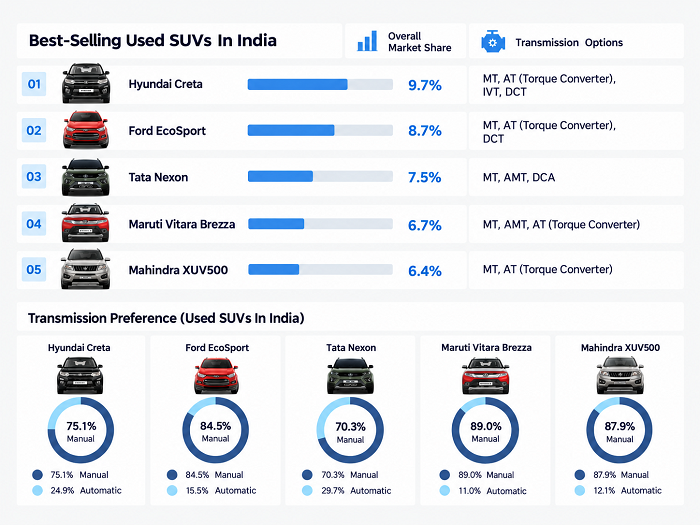
Ask most Indian car buyers whether they want a manual or an automatic and the answer is still the clutch pedal. Manual gearboxes account for 72 percent of used car sales in 2025, against 28 percent for automatics, according to the Gears of Growth 2025 report. It is roughly a three-to-one preference, and it has held even as automatics have become cheaper and more common in new cars.


But the single number hides the more interesting story. The report breaks transmission preference down by age, gender and region, and every one of those cuts shows the same thing: the manual majority is real, and it is also starting to erode from the edges.


Manual or automatic: what do used car buyers in India actually choose?

Buyers under 35 show a higher preference for automatics than the market average. Buyers over 45 stay strongly with manuals. The 35 to 45 group sits in between, with no firm tilt either way. In other words, the younger the buyer, the likelier the automatic, which tells you where the market is heading as this cohort ages into its peak earning years.


Gender pulls in the same direction. Women buyers show a higher-than-average preference for automatics. Men skew manual, though the report notes automatic adoption among male buyers is rising too. Geography completes the picture. Metro markets have a significantly higher automatic share, while non-metro India stays firmly manual.


Source: Cars24 x Team BHP Gears of Growth 2025 Report


Why do most used car buyers in India still choose manual?

Three things keep the manual in front.

  • Cost is the first. A used manual car is usually cheaper to buy and cheaper to keep running, and it matches the value-first mindset of the non-metro markets that make up the bulk of demand.

  • Familiarity is the second. Most Indians learned to drive on a manual, and a first-time used car buyer tends to stick with what they can already handle.

  • The third is resale. A manual sells to a wider pool of buyers across more of the country, so it moves faster when the owner decides to let it go.


The report links the metro automatic tilt to the same models that lead metro demand. Models like the Maruti Baleno and the Honda City sell strongly in cities partly because buyers there accept newer model years and convenience features, automatic gearboxes among them. Outside the metros, demand concentrates on cars built to be cheap and simple, the used Swift Dzire, Wagon R, i10, Grand i10 and Alto, most of which move as manuals.


Why are used car buyers switching to automatics?

The change is being driven by how and where India drives today. The report points to traffic conditions, driving convenience and changing lifestyles as the forces pushing buyers toward automatics. Anyone who commutes daily in Bengaluru or Mumbai traffic knows the appeal of a car that does not need a clutch worked a thousand times a trip.


Younger buyers feel this most, and they are the ones entering the market in growing numbers. As the cars they bought new in the last few years cycle into the used market, automatic supply in the resale channel grows too. The 28 percent share looks more like a starting point than a settled ceiling.


Are used automatics riskier to buy than manuals?

A manual gearbox and clutch are mechanically simple and cheap to inspect and repair. An automatic, whether a torque converter, an AMT, a CVT or a dual-clutch unit, is harder to assess and costs far more to rebuild if it fails. The fear is real and specific: you buy an automatic, it drives beautifully on the test drive, and weeks later you are handed a repair bill several times what the same fault would cost on a manual. A short drive will not reveal a unit that is a few thousand kilometres from trouble.


This is exactly the fear a proper inspection and warranty are built to remove, which is why they matter more on an automatic than on a manual. Cars24’s 300-point inspection tests full transmission operation inside a process that runs over 10 hours per car, refined across more than 1 crore inspections since 2015. Every car bought comes with a 30-day repair assurance that covers the transmission with no deductible, and the transmission also sits inside the lifetime warranty cover. Bought this way, a used automatic stops being a gamble on the gearbox and becomes a car whose costliest part has been checked and is covered.


Manual or automatic: which should you actually buy?

There is no single right answer, only the right answer for how you drive. If most of your driving is stop-start city traffic, an automatic earns its slightly higher price through the daily comfort alone. If you cover long highway distances, drive mostly outside the big cities, or want the lowest running cost and the easiest resale, a manual still makes plain sense and comes with the widest choice of cars on the market.


One extra point for automatics: because the gearbox is the costly part to repair, weigh the inspection report and the warranty terms more heavily than you would on a manual. On a manual, a worn clutch is a routine, affordable fix; on an automatic, the equivalent failure is the expensive one, so ‘checked and covered’ is worth paying attention to.


Note: All figures in this article are drawn from Cars24’s own Gears of Growth 2025 report, original research based entirely on Cars24 first-party transaction data as of December 2025. Transmission preference refers to the manual or automatic split of used car transactions on the platform. No external data sources are used; the figures are proprietary to Cars24.

KALKI Announces Ishaan Khatter and Janhvi Kapoor as Brand Ambassadors, Ushering in a New Era of Bride & Groom Couture 2026

KALKI, one of India’s leading luxury occasion wear and bridal couture brands, has named Ishaan Khatter and Janhvi Kapoor as the faces of Bride & Groom Couture ’26. As the brand’s new ambassadors, the two lead the campaign for KALKI’s latest bridal and groom collection and will front its bridal, and occasion-wear campaigns across the women’s and men’s lines. Together, they embody the modern bride and groom the collection is designed for – confident, expressive and rooted in tradition, yet unmistakably contemporary.


The actors front a new chapter of modern Indian celebration wear – unveiled through the campaign’s first look: a crimson hand-embroidered bridal lehenga paired with a champagne ceremonial achkan


The announcement arrives with the reveal of the campaign’s first look – a moment that pairs Ishaan Khatter in a champagne ceremonial achkan with Janhvi Kapoor in a rich maroon bridal lehenga. Photographed against a grand heritage backdrop for the campaign, titled Bride & Groom Couture‘26, the opening look sets the tone for the season: heritage craftsmanship reimagined through a contemporary lens, with quiet romance at its centre.


The Opening Chapter

The campaign opens with a considered dialogue between heritage and modernity. Ishaan Khatter appears in a champagne ceremonial achkan while Janhvi Kapoor compliments him in a rich maroon bridal lehenga, together setting the tone for Bride & Groom Couture ’26. Photographed against a grand heritage backdrop, this opening chapter offers an initial glimpse into a world shaped by exquisite craftsmanship, contemporary design and the spirit of modern Indian celebration. As the story unfolds, the collection will reveal further expressions of KALKI’s vision for the modern bride and groom — each chapter adding to a larger narrative of tradition, individuality and timeless celebration. 


The Modern Bride & Groom

The pairing is deliberate. Ishaan Khatter and Janhvi Kapoor represent a generation that celebrates beyond convention – carrying tradition forward while making it their own. Their ease, individuality and genuine appreciation for Indian craftsmanship mirror the couple’s KALKI designs for: those who want heritage and contemporary fashion to live in the same frame, with authenticity and ease.


I’ve always believed that style says the most when it feels effortless and true to who you are. What I really appreciate about KALKI is the way it embraces tradition without feeling bound by it. Wearing these pieces felt natural, expressive and very much like myself. I’m excited to be part of a story that celebrates individuality while staying rooted in something timeless,” Ishaan Khatter.


For me, fashion has always been about how it makes you feel. What I love about KALKI is that every piece carries the beauty of our traditions while still feeling effortless and modern. There’s something so special about wearing an outfit that makes you feel graceful, beautiful and confident all at once. That’s exactly what this collection does for me, and I can’t wait for everyone to experience it,” Janhvi Kapoor.


We are delighted to welcome Janhvi Kapoor and Ishaan Khatter to the KALKI family. They perfectly represent the spirit of today’s India — modern, confident and deeply connected to their roots. At KALKI, we’ve always believed that occasion wear is about more than clothing; it’s about celebrating life’s most meaningful moments with authenticity, craftsmanship and individuality,” Saurabh Gupta, Founder, KALKI.


More From the Collection

The first look marks the beginning of Bride & Groom Couture ’26 with Chapter One: Love in Bloom, inspired by the sacred pheras, the moment when two lives come together through timeless vows, marking the beginning of a shared journey. Capturing the emotion, significance, and beauty of this cherished ritual, the chapter reimagines occasion dressing for the modern bride and groom through a contemporary lens. As the story unfolds, each chapter will reveal a new expression of celebration, craftsmanship, and modern romance.


With more distinctive creations and celebratory moments yet to be unveiled, KALKI invites audiences to stay tuned as the world of Bride & Groom Couture ’26 continues to unfold.


Designed as a complete couture wardrobe for the modern Indian wedding, Bride & Groom Couture ’26 seamlessly transitions across ceremonies and celebrations. From regal bridal statements to contemporary menswear and occasion dressing, the collection embraces clean lines, graceful movement, thoughtful layering, and elevated styling, offering a fresh perspective on timeless Indian couture.


Bride & Groom Couture ’26 is now available across all KALKI’s stores and on the brand’s official website.


About KALKI

KALKI is one of India’s leading luxury occasion wear and bridal couture brands, renowned for redefining contemporary ethnic fashion through a seamless blend of timeless craftsmanship and modern design. From bridal lehengas and elegant sarees to festive ensembles, occasion wear and sophisticated menswear, every KALKI creation reflects meticulous artistry, refined detailing and a distinctly contemporary aesthetic. With 14 flagship stores across 11 cities in India and a global e-commerce platform serving customers across international markets, KALKI continues to create fashion that celebrates individuality while staying deeply rooted in India’s rich artisanal heritage.

Investigation Across 100 plus Dairy Units in Six States Highlights Systemic Animal Welfare and Public Health Concerns

Sentient World today released the findings of a first-of-its-kind multi-state investigation into dairy operations across India, documenting widespread animal welfare, public health, and environmental concerns across more than 100 dairy units in Chandigarh, Punjab, Uttarakhand, Bihar, West Bengal, and Chhattisgarh. Conducted between 10 February and 15 April 2026, the investigation examined a diverse range of dairy operations, from household-level farms to medium-scale facilities and large unregulated dairy clusters.


The investigation found that poor animal welfare and unhygienic dairy practices were not isolated incidents but recurring patterns across locations. Many dairy units were operating in residential neighbourhoods or near public spaces, often within 10 to 300 metres of homes and water bodies, raising concerns about public health, environmental contamination and regulatory compliance.


Investigators documented overcrowding across a majority of facilities, with animals routinely subjected to prolonged tethering, including double and triple tethering and, in many cases, restraint through the nose or mouth. Dairy units housed anywhere between 10 and 500 animals, with an average of approximately 50 animals per unit.


The report records widespread evidence of compromised animal welfare, including malnutrition, untreated wounds, swollen joints, skin infections and behavioural signs of distress. Calves were frequently found tethered for extended periods, often without adequate shelter, while investigators documented multiple instances of Khal baccha practices used to stimulate milk let-down. Indications of oxytocin use, including visible bottles, syringes and admissions by some dairy operators, were also recorded during the investigation.


Investigators further observed that milking was commonly carried out in highly unhygienic conditions, often adjacent to open drains, sewage and accumulated waste. Milk was frequently stored in open containers, while manure and slurry were routinely discharged into open drains. In several locations, improper carcass disposal and dairy waste management practices pointed to broader environmental and public health risks.


The investigation also highlighted systemic challenges facing the sector. Across multiple states, dairy owners reported inadequate access to veterinary care, vaccination programmes, insurance and government support. These findings, coupled with inconsistent enforcement of existing regulations, suggest significant gaps in oversight and accountability.


Key Observations

  • 100 plus dairy units investigated across six states between 10 February and 15 April 2026.

  • Dairy operations ranged from 10 to 500 animals, averaging around 50 animals per unit.

  • Overcrowding and prolonged tethering, including double and triple tethering, were commonly documented.

  • 2 instances of Khal baccha practices and 90 per cent of units used oxytocin

  • In urban areas, 70-80% of dairy units are close to residential areas, and around 5-10% units are close to water bodies in cities.

  • In rural areas, 40-60% of the dairy units work close to residential areas, similar to cities, and around 20% are close to water bodies in villages.

  • Established operational patterns: Similar husbandry, milking and waste management practices were observed across multiple locations, indicating standardized operational methods rather than isolated occurrences.

  • Limited regulatory monitoring: There was little evidence of regular inspections or timely corrective action, suggesting gaps in routine enforcement.

  • Gaps in farmer support systems: Limited access to veterinary care, training and institutional support appears to contribute to poor welfare and management practices.

  • Low accountability: Inadequate oversight allows non-compliance with existing animal welfare standards to continue with few consequences.

  • Cross-state consistency: The recurrence of similar findings across different states indicates that these challenges are widespread rather than location-specific.

  • Need for stronger implementation: Existing regulations require more consistent implementation, monitoring and accountability to drive meaningful improvements in animal welfare.


Investigation videos-

1. Video 1: youtu.be/8G-YPiSSPbE

2. Video 2: youtu.be/es7xD-IpAII


This investigation demonstrates that poor animal welfare and unhygienic dairy practices are not isolated incidents but systemic issues observed across multiple states where we conducted our investigations. The findings highlight the urgent need for stronger implementation of existing laws, better oversight and greater accountability to safeguard animal welfare, public health and environmental standards,” said Abhishek Pandey, CEO, Sentient World.


Following the investigation, Sentient World calls for stronger implementation of existing animal welfare, environmental and public health regulations governing dairy operations. The organisation also urges regular inspections of dairy units, improved veterinary support for farmers, and greater accountability to address practices that compromise animal welfare and hygiene.


About Sentient World

Sentient World is an organisation working to document and expose animal welfare concerns through evidence-based investigations, research and public awareness initiatives. By bringing credible documentation to light, the organisation seeks to strengthen accountability and encourage meaningful improvements in animal welfare standards across sectors.

PlatinumRx Helps Indians Save Crores on Medicines, Expands Access to Quality Branded Generics

PlatinumRx, one of India’s fast-growing branded generic medicine platforms, has helped its customers collectively save over crores on their medicine purchases by choosing high-quality branded generic alternatives. The platform has earned the trust of more than 10 lakh+ customers and now delivers medicines across 19,000+ PIN codes nationwide.


PlatinumRx Helps Indians Save Crores on Medicines, Expands Access to Quality Branded Generics


Founded in September 2023 by Ashutosh Pandey and Piyush Kumar, IIT and IIM alumni, PlatinumRx was built with a simple mission: to make quality medicines affordable without compromising on safety, efficacy, or trust. Since commencing operations in early 2024, the company has rapidly expanded its reach by offering clinically equivalent branded generic medicines at significantly lower prices than many conventional brands.


For millions of Indians living with chronic conditions such as diabetes, hypertension, heart disease, thyroid disorders and other long-term illnesses, medicines are a recurring monthly expense rather than a one-time purchase. Over time, these costs can place a significant financial burden on households and sometimes even affect treatment continuity. PlatinumRx addresses this challenge by providing quality-assured branded generic alternatives that help patients lower their medicine expenses while continuing their prescribed treatment without compromising on quality or manufacturing standards.


Healthcare should never become unaffordable because of medicine costs,” said Ashutosh Pandey, Co-founder of PlatinumRx. “For patients managing chronic conditions like diabetes or heart disease, medicines are an essential part of everyday life. Even modest savings on monthly prescriptions can add up to a meaningful difference over the years. Our goal has always been to make quality medicines more accessible and affordable. Seeing our customers collectively save more than Rs. 137 crore while placing their trust in PlatinumRx is a strong validation of that mission. We are only getting started.”


PlatinumRx follows a rigorous quality framework by partnering exclusively with WHO-GMP certified manufacturing facilities. The company is also LegitScript certified, reinforcing its commitment to operating with global standards of compliance and patient safety. Unlike conventional procurement-led models, every medicine available on the platform is evaluated and shortlisted by a dedicated team of qualified medical professionals. This ensures that customers receive reliable, quality-assured branded generic alternatives that meet strict safety and manufacturing standards. This medical-first approach is particularly valuable for patients on long-term therapies, where consistent access to affordable medicines plays an important role in supporting treatment continuity.


Alongside affordability, PlatinumRx continues to invest in improving medicine accessibility across the country. The company currently fulfills nearly 60% of orders within 48 hours through its network of nine strategically located warehouses. To further strengthen its nationwide logistics infrastructure, PlatinumRx is adding six new warehouses, enabling faster deliveries and expanding access to affordable medicines across more regions.


“Making medicines affordable is only part of the solution-they also need to reach patients quickly and reliably,” said Piyush Kumar, Co-founder of PlatinumRx. “Many patients rely on regular medicine refills for ongoing treatment, making timely delivery just as important as affordability. By expanding our warehouse network, we’re strengthening our supply chain to improve delivery timelines and ensure quality medicines are available to more households across India.”


About PlatinumRx

PlatinumRx is an India-based branded generic medicine platform founded by Ashutosh Pandey and Piyush Kumar. The company offers quality-assured medicines manufactured in WHO-GMP certified facilities, curated by a team of qualified medical professionals, and operates with LegitScript certification. With a mission to make healthcare more affordable, PlatinumRx helps millions of Indians reduce their medicine expenses by providing trusted branded generic alternatives while ensuring access to safe, high-quality treatments across the country.


For more information, visit: www.platinumrx.in

Major General Gaurav Gautam Inspires NCC Cadets at Galgotias University to Combine Discipline, Patriotism and Modern Technology in Service of the Nation

Major General Gaurav Gautam, VSM, Additional Director General (ADG), NCC Directorate Uttar Pradesh, visited Combined Annual Training Camp (CATC) 136 of 40 UP Battalion NCC at Galgotias University, Greater Noida.
 

Major General Gaurav Gautam, VSM, inspires NCC cadets at Galgotias University to unite discipline, patriotism and technology in service of the nation
 

Upon his arrival, Major General Gautam was accorded a Guard of Honour by the NCC cadets. He inspected the Guard and appreciated the cadets’ discipline, turnout and bearing.
 

Colonel Ravinder Khatri, Commanding Officer, 40 UP Battalion NCC, Greater Noida, and Camp Commandant, briefed Major General Gautam on the conduct of CATC 136 and the various training activities being undertaken during the camp.
 

During the visit, Major General Gautam interacted with the cadets and praised their enthusiasm, discipline and dedication. He also witnessed a drone-training activity and commended the cadets for embracing modern technology as an integral part of their training.
 

Addressing the cadets, Major General Gautam emphasised the vital role of young people in nation-building. He encouraged them to uphold discipline and patriotism, develop modern skills and prepare themselves to become responsible citizens and capable leaders committed to serving the nation.
 

The ADG was accompanied by Colonel Kumar Ankur, Shaurya Chakra, Sena Medal, Deputy Commander, and Colonel Amod Chandna, Training Officer, both from Group Headquarters Ghaziabad. Also present were Colonel Ravinder Khatri, Commanding Officer, 40 UP Battalion NCC and Camp Commandant; Colonel Mohit Sharma, Deputy Camp Commandant; and Subedar Major Jagram.
 

The visit also provided an opportunity to discuss the strengthening of NCC infrastructure and institutional support for training activities, enabling cadets to benefit from improved facilities and greater opportunities.
 

Welcoming the ADG’s visit, Dr Dhruv Galgotia, CEO of Galgotias University, highlighted the importance of educational institutions and youth organisations working together to support nation-building.
 

“Nation-building begins by developing young people of character, individuals who are disciplined, skilled, patriotic and prepared to serve. Through our association with the NCC, we remain committed to creating opportunities that empower cadets to become responsible citizens and future leaders who will contribute meaningfully to India’s progress,” Dr Galgotia said.
 

The visit reaffirmed the shared commitment of 40 UP Battalion NCC and Galgotias University to nurturing disciplined, technologically capable and socially responsible young citizens equipped to serve and lead the nation.