Home Blog Page 15

100+ Porsches Take Over Mumbai for a Friendship Day Drive

Mumbai witnessed an impressive display of automotive passion this Friendship Day as more than 100 Porsche cars across Porsche SUVs, Sports cars and EVs came together for an exclusive drive organised by Porsche Centre Mumbai – Infinity Cars for its customers. Bringing together Porsche owners and their families, the drive celebrated friendship, camaraderie and the shared passion for driving that connects the Porsche community.
 

More than 100 Porsche cars came together in Mumbai for a special Friendship Day drive, celebrating community and the passion for driving
 

The convoy made its way through some of Mumbai’s most iconic roads, including the Coastal Road and Marine Drive, creating a striking sight across the city. With more than 100 Porsche cars travelling together, the drive offered owners an opportunity to experience the city from behind the wheel while connecting with fellow members of the Porsche community.
 

Speaking about the initiative Pooja Choudary, Director Porsche Centre Mumbai – Infinity Cars, said, “Friendship Day provided us with a wonderful opportunity to bring our Porsche community together and celebrate the shared passion that connects our customers. Seeing more than 100 Porsche cars come together across Mumbai was a testament to the strong sense of camaraderie within our community. At Porsche Centre Mumbai – Infinity Cars, we remain committed to creating memorable experiences that extend beyond the automobile and foster meaningful connections among our customers and their families.”
 

The drive concluded with an exclusive breakfast for Porsche owners and their families, providing an opportunity for members of the community to interact, exchange experiences and celebrate their shared connection with the marque in a relaxed setting.
 

The strong participation reflected the enthusiasm and sense of community among Porsche owners in Mumbai, while highlighting Porsche Centre Mumbai – Infinity Cars’ continued focus on creating meaningful customer experiences that extend beyond the automobile. Through curated drives and community-led initiatives, the centre continues to foster stronger connections among customers who share an appreciation for the Porsche brand and the experience of driving.
 

The Friendship Day drive served as a celebration not only of the cars, but also of the people and relationships that make the Porsche ownership community distinctive.
 

About Porsche Centre Mumbai – Infinity Cars

Porsche Centre Mumbai – Infinity Cars is committed to delivering an exceptional Porsche experience to customers across Mumbai, extending beyond the purchase and ownership of a vehicle. Through curated customer experiences, drives and community-led initiatives, the centre creates opportunities for Porsche owners to connect, engage and celebrate their shared passion for the marque.

M3M Foundation Takes 'Ek Ped Maa Ke Naam' Forward with a Community-Led Green Movement in Gurugram

As the monsoon creates a crucial window for plantation and ecological regeneration, M3M Foundation is stepping up its green action across Gurugram, with its flagship environmental programme Sankalp set to commence a large-scale plantation drive tomorrow under the “Ek Ped Maa Ke Naam” campaign.


M3M Foundation planting over 1 lakh trees this monsoon taking forward ‘Ek Ped Maa Ke Naam’


The Foundation aims to plant 1 lakh+ trees, engaging 11 Panchayats across identified areas of Gurugram and Tauru Block with local communities, including locations in and around the Aravalli landscape.


The initiative will begin across Ghata, Kadarpur, Ullawas, Ramgarh, Bahrampur and Bailyawas, bringing local communities together around a shared vision for greener and more sustainable villages. Local leaders Govardhan from Ghata, Satbir from Ullawas, Sanjeet from Kadarpur and Giriraj from Bahrampur are supporting the initiative and helping mobilise residents to participate in the plantation and take collective responsibility for the trees. Their involvement reflects Sankalp’s belief that lasting environmental change is strongest when it is led and nurtured at the community level.


The initiative is designed to make the most of the monsoon season while ensuring that plantation translates into sustained environmental action. Communities and Panchayats will be mobilised not only to participate in planting but also to take responsibility for the subsequent care, protection and nurturing of the trees, creating a stronger foundation for their long-term survival.


The campaign builds on M3M Foundation’s experience of connecting environmental conservation with an emotional sense of responsibility. Inspired by the Hon’ble Prime Minister Shri Narendra Modi’s “Ek Ped Maa Ke Naam” campaign, Sankalp introduced “Ek Ped Ghar Ke Bachche Ya Bachchi Ke Naam” across villages of Tauru Block in Nuh, Haryana. The initiative encourages families to dedicate a tree to every son or daughter, creating an emotional bond between the family and the tree and encouraging them to nurture it as it grows.


Taking this philosophy forward, the new plantation drive will bring 11 Panchayats and communities together in a wider stewardship effort, extending responsibility beyond the day of plantation and making local participation central to sustaining the green cover created through the campaign.


Dr. Payal Kanodia, Chairperson & Trustee, M3M Foundation, said, “The monsoon gives us the opportunity to put thousands of saplings into the ground, but the real responsibility begins once they are planted. A tree needs more than soil and rain, it needs people who are willing to care for it. ‘Ek Ped Maa Ke Naam’ has shown us the power of connecting environmental action with emotion, and through Sankalp we are turning that connection into community stewardship. With 1 lakh+ trees being planted across 11 Panchayats in Gurugram, we want every sapling to have a story, a community behind it and the opportunity to grow into a lasting green legacy. Our aim is not simply to plant more trees, but to inspire more people to take ownership of the environment around them.”


The initiative adds to the significant environmental footprint of Sankalp, which has facilitated the plantation of more than 6.7 lakh trees across six states, including over 1.70 lakh trees across 54 Panchayats. The programme has also undertaken Miyawaki forests, orchard-based agroforestry, restoration of degraded landscapes, biodiversity enhancement and groundwater recharge, reflecting an integrated approach to ecological restoration.


The latest campaign will contribute to strengthening green cover across Gurugram while supporting the ecological landscape around the Aravallis. By involving communities directly, it also seeks to foster everyday environmental stewardship and reinforce the principles of Mission LiFE and the broader vision of Viksit Bharat 2047.


With the monsoon planting season underway, 1 lakh+ trees targeted and 11 Panchayats across identified areas of Gurugram and coming together, M3M Foundation aims to turn a seasonal opportunity into a lasting environmental commitment, creating greener spaces today and communities that continue to nurture them tomorrow.


Through Sankalp, M3M Foundation believes that the strongest green legacy is one that communities plant, protect and pass on.


About M3M Foundation

M3M Foundation is the philanthropic arm of the M3M Group, working across education, health, livelihoods, sports, and environment. With a reach across 22 states and over 1,300 villages, the Foundation has positively impacted more than 5 million lives, driven by a vision of inclusive, sustainable, and transformative nation-building.

HiLITE Group Launches 'Mandara Women's Wellness,' India's First AI-Integrated Wellness Retreat for Women

HiLITE Group, leading real estate and infrastructure developer, has officially launched ‘Mandara Women’s Wellness, (www.mandarawellness.in/) India’s first AI-integrated holistic wellness retreat created exclusively for women. Building on over three decades of innovative developments across commercial, retail, and residential sectors, including India’s largest World Trade Center development, WTC Kozhikode, HiLITE Group first expanded into healthcare with Elanine Women’s Hospital. Mandara represents the next evolutionary phase of this vision, establishing a dedicated nurturing destination designed to complement traditional clinical care with hyper-personalized wellness solutions tailored for optimal vitality.


https://www.newsvoir.com/images/article/image1/36448_Image_HiLITE_Group.png

Mandara Women’s Wellness by HiLITE Group


Speaking on the launch, P. Sulaiman, Chairman, HiLITE Group, said “Mandara represents a meaningful step for HiLITE Group as we extend our commitment into healthcare and wellness. This launch strengthens our long-term vision of scaling women-centric healthcare infrastructure in India, and Mandara is just the beginning of that journey.” 


Mandara is a reflection of our belief that true progress must include the health and well-being of women at every stage of life. Mandara, more than an expansion of our portfolio, it is an extension of our purpose. We are taking a meaningful step into women’s health,” said Ajil Muhammed, CEO of HiLITE Group.


Situated near Calicut University, the property features 20 independent, IoT-enabled private cottages categorized into Signature Private, Executive, and Wellness options. These serene living spaces incorporate integrated environmental and health sensors designed to support focused, unhurried recovery in complete privacy and complete comfort. Under the leadership of Dr. Azhar Mubarak, CEO of the Healthcare Wing at HiLITE Group, Mandara is structured to transform postnatal recovery and long-term restorative health for women across every stage of life.


The way a society cares for its women says everything about the future it is building,” said Dr. Azhar Mubarak, CEO of the Healthcare Wing at HiLITE Group. “Mandara Women’s Wellness became a reality when we asked why women in India shouldn’t have access to world-class, dedicated wellness experiences right here at home. Every detail the space, the therapies, the conversations are intentionally crafted around women so they can heal and rejuvenate,” he added.


Mandara structures its clinical and wellness programming around six primary life stages to provide complete continuity of care. The retreat offers foundational Women’s Wellness for everyday vitality, Prenatal Wellness for guided physiological support during pregnancy, and specialized Postnatal Wellness for mother and newborn recovery. Additionally, the retreat provides Menopausal Wellness to assist with hormonal transitions, Preventive Women’s Wellness focused on early intervention and health optimization, and dedicated Geriatric Care designed to support healthy aging and mobility.


Therapeutically, Mandara pairs advanced medical recovery technology with traditional healing modalities to ensure comprehensive healing. Its modern infrastructure features Hyperbaric Oxygen Chambers for cellular recovery, HiFEM Pelvic Strength Chairs for non-invasive core rehabilitation, Infrared Therapy Beds, and Terahertz Bioresonance Energy Therapy. These technologies operate alongside classical Ayurvedic treatments, all customized using personalized herbal formulations. The retreat integrates an AI-driven clinical spa, naturopathic detox pathways, postpartum-safe Pilates, aquatherapy, and dietitian-guided therapeutic culinary menus prepared specifically to boost immunity. 


Postnatal care forms the core operational priority at Mandara, offering a dedicated framework that serves mother and baby simultaneously in a safe environment. A 24/7 baby nursery and infant spa, fully staffed by qualified medical professionals, allows new mothers dedicated time for recovery, therapy, and restful sleep with full reassurance. Complementing this is a specialized Mother’s Lounge featuring zero-gravity recliners and a supportive community space, alongside daily educational workshops covering lactation guidance, infant CPR training, newborn care, and postpartum mental wellbeing to build lasting confidence.


For booking inquiries, clinical consultations, or further details regarding residential retreat programs, visit www.mandarawellness.in/contact or call +91 99612 00055.

World Animal Protection Appeals to Chief Minister of Rajasthan to End Elephant Rides on Occasion of World Elephant Day

Launched on August 12, 2012, World Elephant Day is an international annual event dedicated to the preservation and protection of the world’s elephants. The initiative brings together conservation organisations and citizens from all backgrounds to voice support for better protection measures and to combat illegal poaching, habitat loss, and the mistreatment of elephants in captivity. On the occasion of World Elephant Day, World Animal Protection has appealed to the Government of Rajasthan to end elephant rides in Amer Fort in Jaipur by writing to the Chief Minister Of Rajasthan. World Animal Protection seeks a phased out but permanent cessation of elephant rides at the historic Amer Fort in Jaipur. This campaign highlights the severe physical and psychological trauma inflicted on these endangered animals. It proposes a swift transition toward a sustainable, cruelty free model of Indian heritage tourism that highlights the historical and cultural artifacts of Rajasthan, excluding elephant rides in Jaipur that abuse people and endangers safety of humans. On this occasion, more than seventy five individuals expressed their opposition to elephant rides in Amer Fort and raised their voice for keeping elephants free in the wild.
 

Citizens raising awareness on wild elephants and captive Amer Fort elephants in Jaipur at Patrika Gate Photograph: Shubhobroto Ghosh
 

Amer Fort remains one of India’s most iconic tourist destinations. Yet, its global reputation faces significant risks due to the practice of using captive elephants for daily tourist entertainment. Decades of scientific research, veterinary assessments, and investigative wildlife reports reveal a grim reality. The elephants suffer from chronic foot infections, painful arthritis, and severe psychological distress. These conditions stem directly from walking on hard concrete surfaces under scorching heat while carrying heavy iron howdahs and multiple tourists.
 

The welfare issues inherent in the Amer Fort elephant rides are systemic and deep rooted. Captive elephants are wild animals by nature. They undergo a brutal training process known as ‘the crush’ to break their spirit and make them submissive to human commands. At Amer Fort, many elephants are forced to work despite advanced age and serious medical ailments. Investigative audits have consistently found that a vast majority of these elephants suffer from compromised vision, permanent limb deformities, and severe nutritional deficiencies from poor diets.
 

Furthermore, the public safety risks associated with this practice are escalating rapidly. Elephants are highly intelligent, social, and emotional animals. When subjected to prolonged stress, isolation, and physical abuse, they can experience sudden bouts of psychosis, that results them in running amok. Over the years, multiple incidents at Amer Fort have seen stressed elephants turn aggressive, endangering international tourists, handlers, and local people. In an era where global travellers actively seek responsible tourism experiences, the continuation of animal exploitation severely damages Jaipur’s tourism brand. An elephant named Chanchal was painted pink by the Russian artist Julia Buruleva for a photoshoot in 2025 and this elephant died earlier this year.
 

World Animal Protection is not merely demanding an end to the rides but presenting a viable solution. Under the phase out plan there lies a new framework whereby tourists can observe elephants in a natural sanctuary setting. This model promotes educational tourism, allowing visitors to watch elephants walk, bathe, forage, and socialise safely from a respectful distance.
 

Crucially, this proposed transition protects local livelihoods. The plan will propose that the current elephant handlers, known as mahouts, receive specialized training to transition into sanctuary guides, educational instructors, and caretakers. Financial models demonstrate that global tourists are willing to pay a premium for ethical wildlife encounters. This shift will secure stable, long term revenue for local communities while elevating Jaipur as a global pioneer in sustainable heritage tourism.
 

“As the international community celebrates World Elephant Day 2026, the eyes of the world are on Rajasthan. Progressive travel agencies worldwide are removing elephant rides from their itineraries. Global travel platforms are refusing to promote venues that exploit captive wildlife. Thirty companies have undertaken the wildlife friendly pledge of World Animal Protection in India to not offer elephant rides in their itineraries. World Animal Protection urges the Chief Minister of Rajasthan to act decisively and end elephant rides in Amer Fort and retire the elephants. Ending the Amer Fort elephant rides will honour India’s wildlife protection laws and secure a humane future for these gentle giants which are India’s National Heritage Animal,” says Gajender Kumar Sharma, Country Director, World Animal Protection in India.
 

For more information, please contact:
Gajender Kumar Sharma, Country Director, World Animal Protection in India
Email: gajenderksharma@worldanimalprotection.org.in
Phone Number : 9313333283

Nikhil Kamath Explores the Battery Technologies That Could Power India's Next Manufacturing Wave

  • India’s lithium-ion battery demand is expected to roughly quintuple to over 115 GWh by 2030, while the country remains heavily dependent on imported battery cells and critical materials.

  • As India pushes toward 500 GW of non-fossil power capacity, batteries have become one of the country’s most important manufacturing and energy-security challenges.


Lithium batteries keep catching fire. Why do they keep failing – and is there a safer alternative already on the production line? Can a country build a battery industry without depending on China for rare earths? And what would it actually take to build a battery company in India today?


Henning Rath, CEO of EnerVenue and Kun Tang, Executive Chairman of HiNa Battery on WTF is, with Nikhil Kamath


In the latest episode of People by WTF, Nikhil Kamath, who has been investing in energy-transition companies through his private-equity fund, sits down with Henning Rath, CEO of EnerVenue, and Kun Tang, Executive Chairman of HiNa Battery, to understand what the next battery industry could look like and whether India should build it. The conversation moves from battery chemistry to industrial policy, manufacturing, AI infrastructure, and the economics of building a battery company from scratch in India.


One of the episode’s sharpest moments comes when Kamath presses on lithium-iron-phosphate (LFP) batteries – the chemistry powering most electric vehicles globally, including many Teslas and BYDs. Rath explains “thermal runaway”: once a battery reaches a certain temperature, its internal reaction becomes self-accelerating and cannot be stopped. Tang then offers a number that visibly stops Kamath – the world recorded over 14,000 LFP battery fires in 2025 alone. “The higher the energy, the more safety issues,” Tang says. “The energy is like water in a pump, but the tube is thin. That’s easy to break.” Neither guest treats this as purely a chemistry problem: Tang notes that safety incidents cluster heavily among smaller, tier-two Chinese manufacturers. At the same time, leaders like CATL and BYD charge a premium precisely because of tighter production quality.


The conversation turns to what comes after lithium. Tang, whose company has already supplied what it describes as the world’s first 100-megawatt-hour sodium-ion storage project, argues sodium costs roughly a tenth of lithium, resists thermal runaway at current energy densities, and is built from materials – sodium, iron, phosphate – that almost any country can source domestically. Its trade-off is energy density, which for now limits it to grid storage and short-range vehicles like scooters and three-wheelers rather than long-range cars. Rath’s EnerVenue bets on a different route entirely: a nickel-based, water-electrolyte battery adapted from technology NASA once used, designed to sharply reduce fire risk by removing the higher-risk components that trigger thermal runaway, and rated for 30,000 charge cycles, though it currently works only for stationary storage, not vehicles. Both are skeptical that solid-state batteries, often billed as lithium’s true successor, are close to market, citing an industry readiness scale of one to nine, Tang places the technology at around level four, strong in research papers but far from commercial production.


Looking further out, Rath frames the next decade around three converging “super cycles” – electrification, manufacturing and AI – all running ahead of supply, and argues that any country serious about competing will need genuine energy independence rather than dependence on imported lithium and rare earths, a dependency he expects to grow more contested as globalisation gives way to regional blocs. He points to 2023 as the year renewable power paired with batteries quietly became cheaper than fossil fuels across much of the world, a shift he expects AI data centres to accelerate as they move away from diesel backup power toward safer battery storage.


The discussion turns directly to India, where Kamath is weighing an entry into the energy transition himself. “After my trip in China, I want to go back to India and start a business,” Kamath says, asking his guests point blank whether he should build an electric car company or a battery company. Rath’s answer is unambiguous: skip the car company. Build a battery company decoupled from lithium and rare earths altogether, pointing to India’s scooter and three-wheeler market as a natural first customer for sodium-ion technology. The two also unpack how BYD went from a phone-battery maker to a fully vertically integrated EV and battery giant within roughly a decade, backed by what Rath calls China’s “government venture capital” model: funding dozens of companies in a sector and expecting only a handful, BYD and CATL among them, to ultimately survive and dominate.


The episode closes on China’s relationship with AI, which both guests describe as defined more by curiosity than anxiety – spanning three generations in Tang’s own family, from his 90-year-old grandfather ordering drone food delivery to his six-year-old daughter. “The excitement is outpacing the anxiety,” Rath says, calling it a marked contrast to the mood he encounters in the United States.


“No single technology will solve our problem,” Tang offers as a closing thought. “We need more different chemistry to meet different demands.” It’s a fitting close to a conversation that treats the search for the next great battery less as a single breakthrough than an unglamorous, ongoing race, measured in charge cycles, safety margins and cost curves rather than headlines.


The episode is available now on YouTube.


About People by WTF

People by WTF is a global podcast platform hosted by Nikhil Kamath, featuring in-depth conversations with leaders across business, policy, technology, culture and academia. The show explores long-term institutional, technological and economic questions shaping global society through candid, high-signal dialogue. Past guests include Elon Musk, Prime Minister Narendra Modi, Bill Gates, Rishi Sunak, Akshata Murty, Martin Escobari, Bryan Armstrong and Ranbir Kapoor.


Notes to the Editor


Guests

Henning Rath – CEO of EnerVenue, a California-based energy storage company commercializing nickel-hydrogen battery technology originally developed by NASA and refined at Stanford University. EnerVenue closed a USD 300 million Series B extension in 2026 and is scaling manufacturing in Changzhou, China. Rath previously served as Managing Director and Chief Supply Chain Officer at German renewable energy company Enpal.


Kun Tang – Executive Chairman of HiNa Battery, a Beijing-headquartered sodium-ion battery company spun out of the Chinese Academy of Sciences in 2017. HiNa has supplied what it describes as the world’s first 100MWh sodium-ion energy storage project and holds over 30 patents across sodium-ion cathode, anode and electrolyte technology.


Key Themes Discussed:

  • Why LFP batteries dominate EVs and why they catch fire

  • Sodium-ion and nickel-hydrogen batteries as alternatives to lithium

  • China’s industrial-policy playbook for building battery and EV giants

  • Energy independence amid deglobalisation

  • Data centres, diesel backup power and the case for safer batteries

  • Solid-state batteries: hype versus technological readiness

  • Advice for building a battery company in India

  • AI adoption in China across generations


Related Episode – WTF is Happening In EV?:


  • Punit Goyal (Blusmart):

  • Explores why electric mobility is fundamentally an energy and infrastructure business, arguing that charging networks, renewable power procurement and fleet financing must be built together for EVs to scale.

  • Discusses the economics of battery ownership, including battery life cycles, second-life battery use and how battery costs shape the long-term economics of EV businesses.

  • Explores how EVs become more environmentally and economically compelling as India’s renewable energy share rises, linking battery demand directly to the country’s evolving power mix and energy security.

  • Chetan Maini (SUN Mobility): Examines battery swapping as an alternative to larger batteries, discussing how swapping can lower vehicle costs, reduce downtime and make electric mobility more viable for scooters, commercial vehicles and logistics fleets.

  • Tarun Mehta (Ather Energy): Examines India’s battery and EV manufacturing opportunity, highlighting GST structures, PLI incentives and supply-chain challenges that could determine whether India builds a globally competitive battery and electric mobility ecosystem.

VinFast's New Calculator Shows the True Cost of EV Ownership

VinFast‘s new Total Cost of Ownership Calculator helps buyers compare the long-term costs of EVs and gasoline vehicles, turning one of electric mobility’s biggest promises into personalized figures that support smarter purchasing and financial decisions.


VF 6 Earth delivers significant potential savings in total ownership costs compared with a comparable gasoline vehicle in India


In this day and age, a car buyer comparing models can find horsepower, cargo space, and safety ratings in minutes. What is much harder to see is which vehicle will actually cost less to own after years of loan payments, fuel bills, and maintenance. Those factors make up a vehicle’s total cost of ownership (TCO), a metric that encompasses all expenses incurred throughout the ownership period.


That information gap has become increasingly important as electric vehicles move into the mainstream. While EVs are widely promoted for their lower operating costs, consumers can still struggle to translate those promises into their own finances. For example, how much can an EV really save after five years? The answer depends on how far people drive, how long they keep the vehicle, and even how they choose to finance it.


VinFast is betting that making those calculations easier and more transparent could help more buyers make the switch.


The Vietnamese EV maker has introduced a Total Cost of Ownership (TCO) Calculator, initially across its Asian markets, giving consumers a way to compare the long-term economics of electric vehicles with gasoline cars and even rival EVs based on their own driving habits. Rather than comparing sticker prices alone, consumers can see the cumulative financial impact of ownership, including financing and running costs, over several years.


On the web-based tool, users simply enter basic information such as the vehicle model, monthly mileage, battery ownership option, and expected ownership period to receive a personalized cost projection. Within seconds, the calculator estimates monthly payments, monthly energy costs, and total ownership costs before showing how much an owner could save over the chosen period compared with comparable internal combustion vehicles and even other EVs.


For example, a buyer in the India selecting a VF 6 Earth, driving 2,000 km per month over five years, would see an estimated total ownership cost of INR 1,782,655. Under the same assumptions, the calculator estimates a comparable gasoline vehicle would cost INR 2,464,371 over the same period, representing potential savings of INR 681,716, or about 28%.


Beyond product marketing, the TCO tool also functions as a financial planning tool, helping households, commuters, and commercial users forecast transportation expenses before making a purchase. That approach is particularly relevant in emerging EV markets, where energy-saving technologies often face adoption challenges because of higher upfront purchase prices despite offering long-term financial benefits. Consumers may not always realize that, over time, reduced energy consumption can offset much or even all of that initial price premium.


Research suggests that making those savings more transparent can influence purchasing decisions. One survey found that simply showing consumers five-year fuel savings had little effect on vehicle preferences, whereas providing total cost of ownership information increased the likelihood that buyers of small and mid-sized cars would choose hybrid and battery electric vehicles over gasoline models.


More recently, Deloitte’s 2026 Global Automotive Consumer Study found that 52% of U.S. consumers considering an EV cited lower fuel costs as their primary motivation, while 40% said overall vehicle cost remains one of their biggest concerns. The findings suggest buyers are increasingly evaluating vehicles based on lifetime ownership economics rather than purchase price alone.


For automakers, that means helping consumers understand lifetime ownership economics may become as important as communicating battery range or performance.


For VinFast, the calculator reflects that evolution. Instead of asking consumers to take its claims of lower ownership costs at face value, the company is giving them a tool to test different scenarios themselves, turning one of the industry’s most common selling points into something measurable, personalized, and easier to act on.

Blue Dart Celebrates "YaadonKaBandhan" with Special Rakhi Express Offers

Every Raksha Bandhan celebrates a bond built on memories, traditions and shared moments. While families may now live across different cities and states, the festival continues to bring siblings together through Rakhis, gifts and heartfelt gestures.


Blue Dart celebrates Raksha Bandhan with #YaadonKaBandhan campaign


This festive season, Blue Dart Express Limited, South Asia’s premier express air and integrated transportation and distribution company, is celebrating these cherished connections through its #YaadonKaBandhan campaign. As part of the campaign, Blue Dart has introduced special Rakhi Express shipping offers to help customers send festive packages conveniently across India.


Valid from 27 July to 28 August 2026, the offer provides special flat rates on Domestic Priority shipments weighing up to 2.5 kg and discounts of up to 50% on eligible international shipments weighing between 0.5 kg and 3 kg. Customers can use the service to send Rakhis, personalised gifts and festive packages across Blue Dart’s extensive domestic network.


Through the campaign, Blue Dart aims to make festive shipping more accessible while ensuring that every package is handled with care and delivered with the speed, reliability and precision associated with its express network.


Offer Details*:

Period: 27th July to 23rd August

  • 0.5 Kg → Rs. 200

  • 1 Kg → Rs. 400

  • 1.5 Kg → Rs. 600

  • 2 Kg → Rs. 800

  • 2.5 Kg → Rs. 1000


Period: 24th August to 28th August

  • 0.5 Kg → Rs. 300

  • 1 Kg → Rs. 500

  • 1.5 Kg → Rs. 700

  • 2 Kg → Rs. 900

  • 2.5 Kg → Rs. 1100


*The offer is applicable only to Domestic Priority shipments. Taxes and other applicable charges, if any, will be additional. Terms and conditions apply.


International Shipments (27th July – 28th August)

  • Campaign Discount → Up to 50%

  • Weight Break → 0.5 Kg – 3 Kg


*Custom Duty, Taxes and other applicable charges, if any, will be additional. Terms and conditions apply.


As families increasingly celebrate festivals across distances, dependable logistics plays an important role in ensuring that traditions continue uninterrupted. Supported by its integrated air and ground network, Blue Dart continues to connect people, businesses and communities across the country through reliable and time-definite delivery solutions.


The limited-period offer is available across Blue Dart–DHL retail stores and Franchisee Collection Centres. Customers can also avail of free doorstep pickup by booking through Blue Dart’s website or Customer Care, subject to service availability.


For further details, customers may visit their nearest Blue Dart–DHL retail store, contact Blue Dart Customer Care at 022 4061 1234, or email customerservice@bluedart.com.


For more information or to book a shipment, visit www.bluedart.com.

Dairy, Fisheries, Livestock to Drive Rural Economy's Growth: Union Minister Lalan Singh at the 3rd National Sustainable Agriculture Summit & Awards

0

The vision of building a resilient, self-reliant and future-ready agricultural ecosystem took centre stage at the 3rd National Sustainable Agriculture Summit & Awards 2026, where policymakers, industry leaders, financial institutions, scientists, cooperatives, agri-entrepreneurs and progressive farmers came together to deliberate on the theme “Krishi Samridhi 2047: Building a Resilient and Self-Reliant Agriculture Ecosystem”.


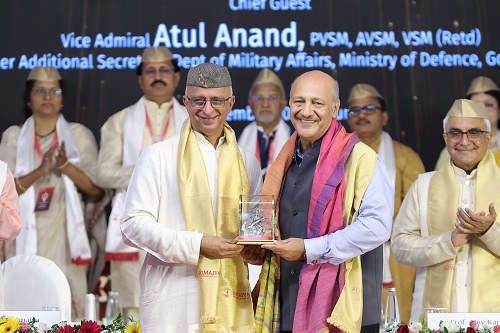
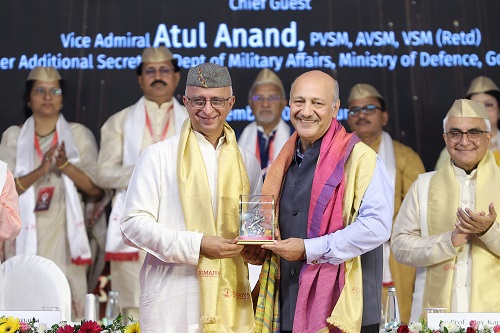
Union Minister Lalan Singh lights the ceremonial lamp at Sustainable Agriculture Summit 2026, with Rajya Sabha MP Sanjay Kumar Jha and NDDB Chairman Dr. Meenesh Shah


Organised by Sustainability Matters, IndiAgri and Alliance for Change, Transformation & Innovation (ACTION), the Summit emerged as a national platform for dialogue on the future of Indian agriculture, focusing on sustainability, climate resilience, innovation, rural entrepreneurship, food security, natural resource management and farmer prosperity.


In his keynote address, Rajiv Ranjan (Lalan) Singh, Union Minister for Fisheries, Animal Husbandry & Dairying and Panchayati Raj emphasised that the goals of Atmanirbhar Bharat and Viksit Bharat 2047 can only be achieved through a strong rural economy and empowered farmers. He highlighted the government’s efforts to strengthen agriculture and allied sectors through scientific interventions, infrastructure development, value-chain enhancement, technology adoption and sustainable rural enterprises.


“For India to emerge as a developed nation by 2047, our farmers must be empowered and our rural economy must become stronger and more self-reliant. Agriculture and allied sectors will continue to play a central role in driving inclusive growth and prosperity,” the Minister said.


The Summit brought together a distinguished gathering of leaders and stakeholders including Sanjay Kumar Jha, Member of Parliament (Rajya Sabha); Dr Meenesh C. Shah, Chairman, National Dairy Development Board (NDDB); Manoj Kumar Dubey, Chairman & Managing Director, Indian Railway Finance Corporation (IRFC); Dr Rajendra Prasad, General Manager, SIDBI; Gajendra Kumar, Joint General Manager (Marketing), KRIBHCO; senior policymakers, researchers, industry leaders and representatives of farmer organisations and cooperatives.


Addressing the Summit, Sanjay Kumar Jha, MP (Rajya Sabha) said, “The future of Indian agriculture lies in creating integrated and diversified rural economies. Agriculture, horticulture, dairy, fisheries, water conservation and rural enterprises must work together to generate sustainable livelihoods and strengthen rural India. The vision of Krishi Samridhi 2047 requires collaborative action from governments, institutions, industry and farmers alike.”


Dr Meenesh C. Shah, Chairman, NDDB said, “India’s agricultural future depends on creating strong and sustainable rural ecosystems where productivity, value addition, institutions and innovation work together. Cooperatives have demonstrated the power of collective action, and partnerships across sectors will be critical in building a resilient and globally competitive agricultural economy.”


As India advances towards Viksit Bharat 2047, investments in infrastructure, connectivity, logistics and financing will play a critical role in transforming rural economies. Sustainable agricultural growth requires long-term institutional support, and platforms such as this Summit help bring together diverse stakeholders committed to that objective,” opined Manoj Kumar Dubey, CMD, IRFC.


Dr Rajendra Prasad, General Manager, SIDBI, said, “Innovation, entrepreneurship and access to finance are vital pillars of a self-reliant agricultural ecosystem. Strengthening agri-enterprises, startups, farmer producer organisations and rural businesses will not only create employment but also unlock new opportunities for value creation and inclusive growth across rural India.”


Gajendra Kumar, Jt GM (Marketing), KRIBHCO, highlighted the need to make agriculture more attractive and future-ready for younger generations. He said, “One of the biggest challenges before Indian agriculture today is that many young people are moving away from farming. Rural India has been transformed by the communication revolution, and agriculture must evolve accordingly. At the same time, challenges such as climate change and excessive use of fertilisers require collective solutions driven by innovation, sustainability and responsible resource management.”


Speaking on the occasion, Dr K.C. Ravi, Director General, Sustainable Agriculture Summit & Awards, said, “Krishi Samridhi 2047 is not merely a vision for agricultural growth; it is a roadmap for building resilience across the entire rural ecosystem. Sustainability, technology, water security, market access and farmer-centric policies must work together to create long-term prosperity and strengthen India’s food and economic security.”


The journey towards Krishi Samridhi 2047 requires policy continuity, institutional innovation and stronger convergence between government, industry, academia and farming communities. Agriculture today is no longer confined to food production alone; it is intrinsically linked to livelihoods, sustainability, climate resilience, water security and rural economic growth. Building a self-reliant agricultural ecosystem will require integrated solutions that are scalable, inclusive and future-ready.” said Dr Jayadev Sarangi, IAS (Retd.), Former Secretary, Government of Delhi and Goa.


Dr Navneet Anand, Executive Director, Sustainability Matters, said, “The future of Indian agriculture will be defined by partnerships. Governments, financial institutions, industry, academia, startups and farmers must collaborate to build an ecosystem that is productive, sustainable, climate-resilient and economically rewarding. This Summit seeks to catalyse those partnerships and contribute meaningfully to India’s journey towards Krishi Samridhi 2047.”


The Summit featured high-level discussions on climate-smart agriculture, digital innovation, sustainable farming systems, water stewardship, agricultural financing, cooperative development, rural entrepreneurship, natural farming, technology adoption and emerging opportunities across the agricultural value chain.


A major highlight of the event was the National Sustainable Agriculture Awards 2026, which recognised exemplary contributions by farmers, cooperatives, agribusinesses, startups, institutions, government agencies and development organisations from across the country for advancing sustainability, innovation and inclusive growth in agriculture and allied sectors.


The Summit was supported by IRFC, SIDBI, COMFED, OMFED, HURL, KRIBHCO and SIRA Seeds, reflecting a shared commitment to strengthening India’s agricultural ecosystem and advancing the vision of a resilient, self-reliant and prosperous rural economy.

Monsoon Bites: Delicious California Walnut Recipes for Rainy Days

When the skies turn grey and the rain begins to fall, cravings inevitably turn towards something warm, comforting and delicious. This monsoon, give those rainy-day favorites a wholesome twist with California walnuts. Their satisfying crunch, rich flavour and versatility make them an easy addition to everything from crispy snacks and hearty bites to comforting treats. So, put the kettle on, gather around the table, and make the most of the season with these delicious walnut-inspired recipes made for rainy-day indulgence.


Walnut-Crusted Mozzarella Bites with Sun-Dried Tomato and Walnut Aioli


Walnut-Crusted Mozzarella Bites with Sun-Dried Tomato and Walnut Aioli


Ingredients

California Walnut-Crusted Mozzarella Bites
2 cups California walnuts
14-15 mozzarella balls (bocconcini)
1 ½ cups panko breadcrumbs
1 ½ teaspoon salt
½ teaspoon ground black pepper
2 teaspoons onion powder
2 teaspoons garlic powder
3 teaspoons Italian seasoning
4 eggs, beaten
1 ½ cups all-purpose flour
Vegetable oil for frying, about 4 cups
Sun-Dried Tomato and California Walnut Aioli
½ cup finely ground California walnuts
½ cup water
1 cup mayonnaise
2 cloves garlic, minced
1 tablespoon Dijon mustard
6 tablespoons sun-dried tomatoes in oil, drained and chopped


Preparations

For the Ground California Walnuts
1. Place walnuts into a food processor and pulse until finely chopped and texture is similar to breadcrumbs.
2. Measure 1 cup of ground walnuts for use in mozzarella bites and reserve remaining ½ cup for use in aioli.

For the Mozzarella Bites
1. Preheat the oven to 180°C.
2. Dry mozzarella balls with paper towels to remove excess moisture.
3. In a medium bowl, combine 1 cup ground walnuts, panko breadcrumbs, salt, and spices.
4. In a shallow or medium-sized bowl, beat eggs together until combined. Add flour to a separate shallow or medium-sized bowl.
5. One at a time, dredge each mozzarella ball in the flour, followed by dipping in the egg, coating completely. Shake off excess egg, then roll in the walnut and panko mixture until fully coated.
6. Transfer the mozzarella bites onto a baking sheet lined with parchment paper and freeze for about 30 minutes prior to frying.
7. Heat oil in a large, deep skillet to 180 – 190°C.
8. Remove mozzarella bites from the freezer. While still cold, fry bites in small batches until golden brown. Using a slotted spoon, remove fried mozzarella bites from the oil and place onto a paper towel-lined tray.
9. Serve immediately. Mozzarella bites can be kept warm in a 120°C oven until ready to serve.


California Walnut Loaded Roast Potatoes


California Walnut Loaded Roast Potatoes


Ingredients

1.2 kg potatoes, cut into chunks
8 tablespoons oil
100g California walnuts, chopped
3 garlic cloves, thinly sliced
3 sprigs rosemary, leaves chopped
50g Parmigiana Reggiano, finely grated
½ x 25g pack parsley, chopped


Preparations

1. Preheat the oven to 200°C.

2. Cook the potatoes in boiling salted water for 8-10 minutes until they begin to soften round the edges. Drain and return to the pan. Toss in 3 tablespoons oil.

3. Place half the walnuts in a food processor and blitz to give a fine crumb texture, mix in the garlic, rosemary, Parmesan and half the remaining walnuts, season well.

4. Toss into the potatoes and transfer to a large roasting tin, spreading them out evenly.

5. Drizzle over the remaining oil and roast for 30 minutes. Turn the potatoes and add the remaining walnuts and cook for a further 5-10 minutes until golden.

6. Sprinkle with parsley to serve.


Dahi Walnut Kebab


Dahi Walnut Kebab – Chef Abinas Nayak


Ingredients
1 cup hung curd
1 teaspoon of brown onion paste
1 teaspoon of roasted California walnut paste (Blend handful of roasted walnuts with little bit of water and a teaspoon of walnut)
3 teaspoons of grated paneer
2 teaspoons of grated cheese
1/2 teaspoon of chopped coriander,
1/2 teaspoon of mint leaves
1-2 chopped green chillies
1/2 teaspoon of roasted cumin and fennel
1/2 teaspoon of finely chopped ginger.
Salt as per taste


Preparations
1. Mix everything to make a thick paste. Keep it in fridge for half an hour.
2. To make walnut crust or crumb, roughly blend roasted walnuts and spread in a flat tray.
3. To finish take a dollop of Dahi Kebab mixture and coat it with prepared walnut crust. In hot seasoned tawa, shallow fry the Dahi Kebabs with ghee.

4. Enjoy hot with chutney of your choice.

HDFC Life Establishes Expeditious Claim Settlement Framework for all impacted by Assam Floods

HDFC Life has enabled an expedited claim settlement framework for families that have been impacted by the recent floods in Assam. A life insurance claim can be initiated by nominees or legal heirs of policyholders by simply providing proof of death issued by the Local Government, Police or Hospitals. 
 

Sameer Yogishwar, Chief Operating Officer, HDFC Life


For further support, claimants can connect with HDFC Life via the below touch points:
 

Dedicated claim helpline: 022-68446529
Call Centre Number: 022-68446530
WhatsApp: +91 8291890569
Email:service@hdfclife.com
Nodal Officer: Ruma Konwar | 8876517557


Claimants may also choose to visit any of HDFC Life’s branch offices. The branch addresses for affected areas are given below:
 

Jorhat: 2nd Floor, Sneha Heights, New Balibat, Jorhat, Assam 
Sivasagar: 2nd Floor, Jagannath Plaza, Transport Tiniali Sivasagar, Assam 
Golaghat: Ground Floor, Om Arav Building, Thana Road, Golaghat, Assam


Sameer Yogishwar, Chief Operating Officer, HDFC Life said, “We at HDFC Life are committed to stand by our policyholders’ families who are impacted by this calamity. We will ensure that each claim request, received from anyone impacted by the floods in Assam, is treated as priority to ensure a smooth and hassle-free payout.


For more information, please visit www.hdfclife.com. You may also connect with us on Facebook, Twitter, YouTube and LinkedIn