Home Blog Page 14

Moscow Fashion Week Highlights Global Talent and Indian-Inspired Collections

Moscow is once again embracing its role among the world’s leading fashion centers, hosting designers from across the globe — including talents from China, Turkey, Spain, Armenia, and Russia. Running until March 19, Moscow Fashion Week brings together promising brands and emerging designers, creating a platform for new discoveries while shaping the future of the global fashion landscape.


Madame & Mister Sibarita at Moscow Fashion Week


Many collections by Russian designers showcased this season at Moscow Fashion Week have sparked considerable media attention and drawn the interest of fashion industry experts. The brand Koss focused on a play of textures and a contrasting palette in its new collection, combining classic New Look–inspired silhouettes with airy chiffon and rich velvet. Designers of Capparel explored the idea of physical presence and material memory, turning folds and imprints of body movement into the central elements of the collection’s architectural structure. The brand MME showcased a collection that harmoniously blends precision and sculptural structure with softness, capturing the inner strength and understated elegance of the contemporary woman. XakaMa – Fashion House of Lena Makashova, which celebrated its 35-year anniversary, presented a collection enriched with avant-garde details – intricate straps, asymmetrical multi-tiered folds, dresses with vests, voluminous accent trousers and an interplay with pockets. The Ammonit collection featured flowing silhouettes and soft fabrics designed to provide comfort and confidence in the rhythm of the modern city.


The global spirit of the event was reflected in the participation of the Spanish label Madame & Mister Sibarita. Designer Patricia Emma Fernandez Ortiz draws inspiration from Indian aesthetics, incorporating its vibrant colors and rich craft traditions into the brand’s collections.


“Our brand offers something truly distinctive: a fusion of cultures and aesthetics. Madame & Mister Sibarita combines the rich textile traditions of India with a contemporary Western vision, creating pieces that are not only luxurious but also unique and full of personality. The Russian market is particularly receptive to fashion with character, craftsmanship, and story. For us, this represents a significant opportunity to introduce our differentiated approach, while for the Spanish fashion industry, it opens doors to showcase creativity, quality, and innovation on a new international stage”, – shared Patricia Emma Fernandez Ortiz.


Moscow Fashion Week has long been a most effective platform for the development of emerging brands, opening doors for up-and-coming designers to enter new international markets. A great example of this is Russian label Hatsibana, a regular participant at Moscow Fashion Week, which proudly showcased its collection at Lakmé Fashion Week in India last October.


“This trip was more than just a runway show for me — it became a true dialogue of cultures, a moment when the heritage of the Caucasus was expressed in a language understood around the world. We didn’t simply present our brand; we laid the foundation for future collaborations and for entering one of the world’s most promising markets,” said Fatima Shogenova, designer and founder of Hatsibana.


Moscow Fashion Week is now in full swing, with many remarkable shows and exciting collections still to come. The event continues to serve as a space where local traditions meet the global demands of the fashion industry, helping designers connect with audiences around the world.

India to Lead Global Dialogue at World Public Summit. India in New Delhi

World Public Summit. India will take place from 23 to 26 March 2026 in New Delhi, positioning India at the forefront of global dialogue on emerging frameworks of international cooperation. Organized by the World Peoples Assembly in cooperation with the BRICS Chamber of Commerce and Industry, the Summit opens the international cycle of regional public summits in 2026. Following events in India, the Arab World, Latin America, Africa and Europe, it will develop practical civil society initiatives and proposals for the World Public Summit in Moscow in September 2026.


Hosting the Summit in India reflects the country’s growing role in shaping a new architecture of international cooperation. Held under the theme “New World: India in the Architecture of a Shared Future”, the Summit highlights India’s position as one of the key centres of the emerging multipolar world, actively participating in global humanitarian initiatives and holding the BRICS presidency in 2026.


Secretary General of the World Peoples Assembly, Andrey Belyaninov, noted, “The Indian Summit continues the ideas of the ‘New World of Conscious Unity’ and opens the series of regional Summits in 2026. India, a country that embodies the principle of unity in diversity, becomes a platform for dialogue on the values that shape our shared future. Holding the Summit will allow us to mobilize the intellectual, cultural and social potential of the country to develop practical initiatives and meaningful proposals. We are confident that the New World is built on trust, respect and cooperation.”


The Summit is anchored around key objectives that include clarifying and providing practical content to the values of the New World of Conscious Unity by drawing on the Indian experience, developing a package of regional initiatives and working models from Asia and the Global South for inclusion in the agenda of the Second World Summit “New World: Values that Unite”, strengthening the network of public diplomacy in the region by engaging Indian NGOs, academia, business communities and youth organizations, and developing long-term cooperation with Indian partners.


Vice President of the BRICS Chamber of Commerce and Industry, Sameep Shastri, said: “India has always adhered to the philosophy that the whole world is one family. This Summit brings that vision into reality by bringing us together to explore how our diversity of perspectives can help build a more responsible and sustainable future for all.”


Following the Summit, the Delhi Declaration is expected to be adopted, contributing to the global agenda. Key themes span culture and spiritual heritage as the foundation of a shared future, leadership of the New World of Conscious Unity, tradition and innovation, media and humanitarian dialogue, partnership economy and social responsibility, and integration formats and public diplomacy.


Programme highlights include the Plenary “India: Unity in Diversity — the Architecture of a Shared Future. Values that Unite”, along with panel sessions on “Peace through Culture,” “Leaders of the New World,” and “Culture of Trust”. The programme will also feature international round tables on UNESCO, cultural diplomacy, youth, space, women, media, and more.


The Summit will bring together representatives from civil society, academia, business communities, international organizations and youth initiatives, serving as a platform for engagement and collaboration aimed at advancing public diplomacy and humanitarian cooperation. The World Peoples Assembly forms a humanitarian platform based on trust, respect, and shared values.

PwC India Foundation strengthens climate Resilient Livelihoods for more than 400 Farming Households through Flood Recovery Initiatives

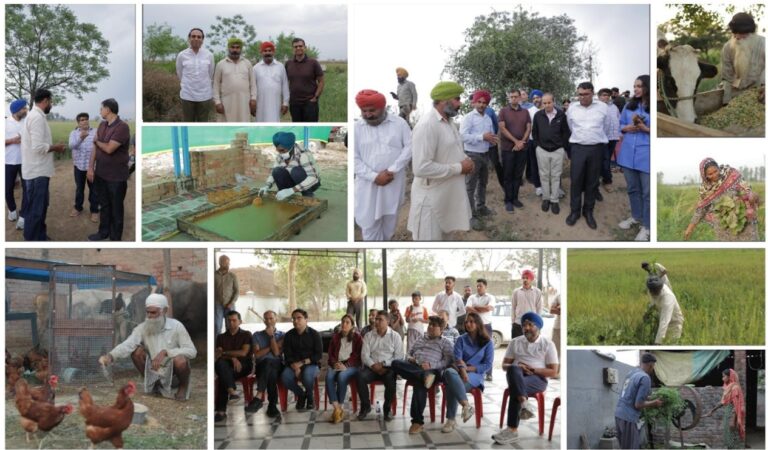
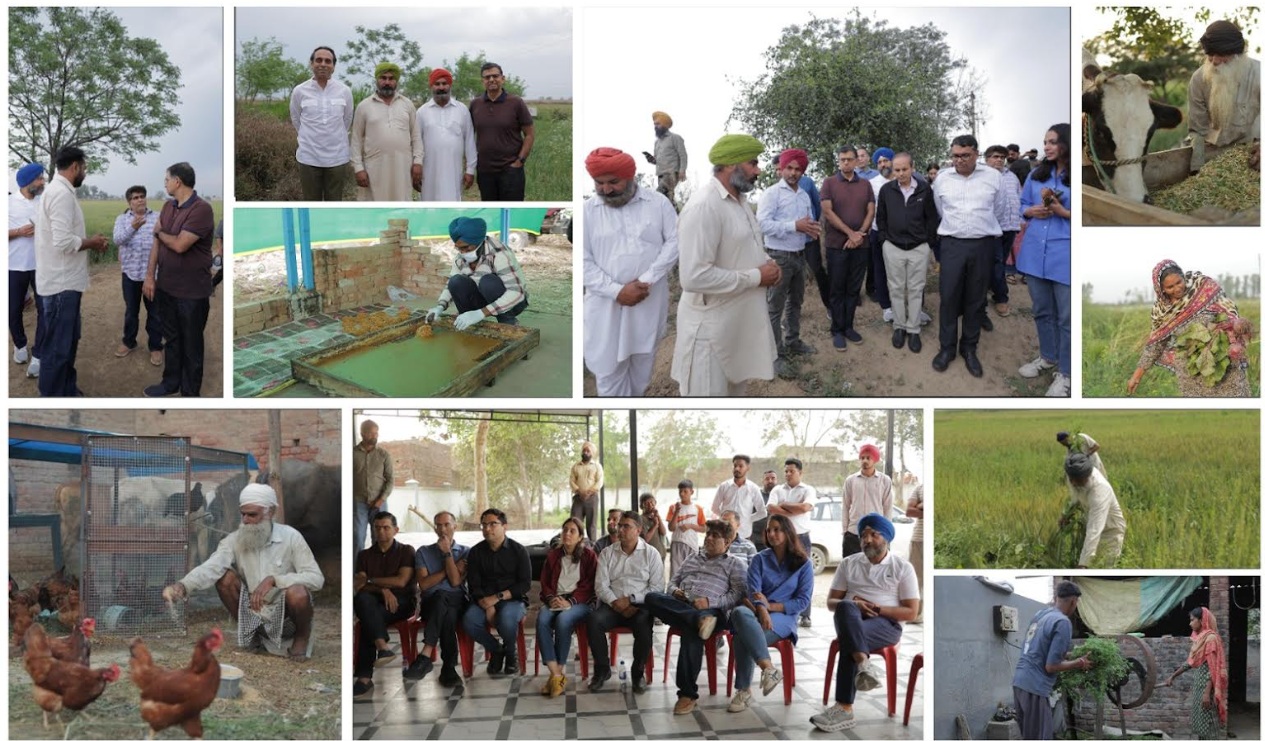
PwC India Foundation (PwCIF) is expanding its commitment to integrated flood recovery interventions by supporting more than 400 farming households through climate-smart agriculture and rural livelihood interventions. In collaboration with Shramik Bharti, an NGO focused on grassroots development, PwCIF is aiding communities across Moga and Tarn Taran in Punjab to transition to natural farming, diversify income streams, and enhancing village-level disaster readiness.


PwC India Foundation strengthens climate resilient livelihoods for more than 400 farming households through flood recovery initiatives


In Moga, the initiative begins at the household level. PwCIF is supporting more than 90 beneficiary households, with kitchen gardens and backyard poultry, to move towards natural farming, boosting household income and improving nutritional outcomes. Each garden, of about 600 sq. ft., provides year-round access to safe, chemical free vegetables and enables families to save an estimated INR 1,500–2,000 per month on vegetable purchases.


At the same time, the project is building proof points for scale. Ten multi-crop model farms are demonstrating how natural farming, intercropping and soil friendly practices can improve farm economics, with model farmers targeted to increase their incomes by 40%. As these practices gain traction, neighbouring farmers are beginning to replicate them, creating a growing circle of indirect beneficiaries.


To further strengthen farm-based livelihoods, the initiative includes a community-based jaggery processing unit that supports value addition to locally grown sugarcane and better price realisation for farmers. Shared fossil fuel‑free multi-seeding drills are also being used as village-level tool banks to enhance farm efficiency and encourage climate-smart cultivation practices.


As part of the ongoing efforts, the PwC India leadership team visited Moga to engage with farmers and community groups, assess the progress of natural farming and livelihood diversification projects, and reaffirm the organisation’s long-term dedication to disaster resilience and livelihood restoration programs.


PwC India Foundation’s role in Punjab is centred around helping farming communities transition from crisis to resilience,” said Jaivir Singh, Vice Chairman, PwC India Foundation. “By merging natural farming, diversified livelihoods, and robust village institutions, we aim to support farmers in Moga and Tarn Taran to rebuild with dignity with these initiatives in turn creating replicable models that can be curated to different local contexts across more districts in the country.


The successful implementation in Moga laid the foundation for an extension of the initiative to Tarn Taran. In this flood-affected border district, PwCIF is collaborating with more than 325 households to restore agricultural land, integrate natural farming, and strengthen village disaster response and resilience committees.


Beyond Moga and Tarn Taran, PwCIF’s broader engagement across India focuses on restoring livelihoods, strengthening critical local infrastructure and building community-led disaster preparedness across districts affected by floods. The Foundation aims to create integrated, scalable models that can support farming communities in navigating future climate and livelihood risks, while contributing to India’s long-term sustainable development.

What We have Learned is a Handful; What We have not Learned is the Size of the World

The School of Law at Vels Institute of Science, Technology and Advanced Studies (VISTAS), Chennai, successfully organized the 8th Thiru. Isari Velan Memorial Moot Court Competition 2026 from March 12 to March 14, bringing together talented law students from across the country to showcase their legal research, advocacy, and courtroom argumentation skills.
 

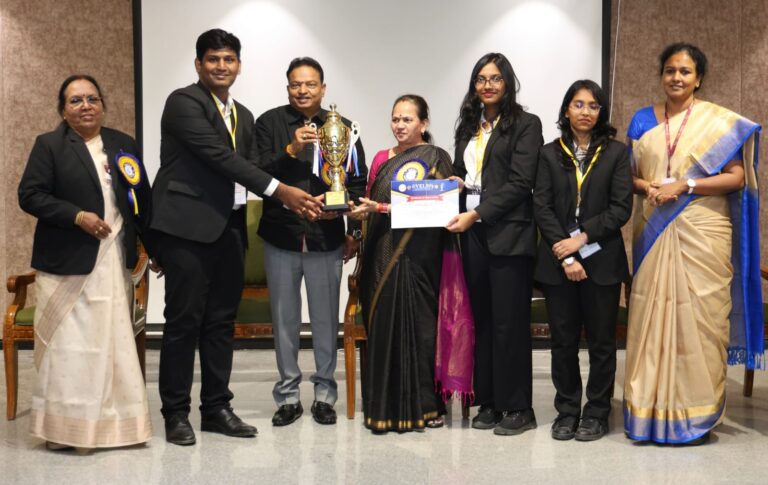
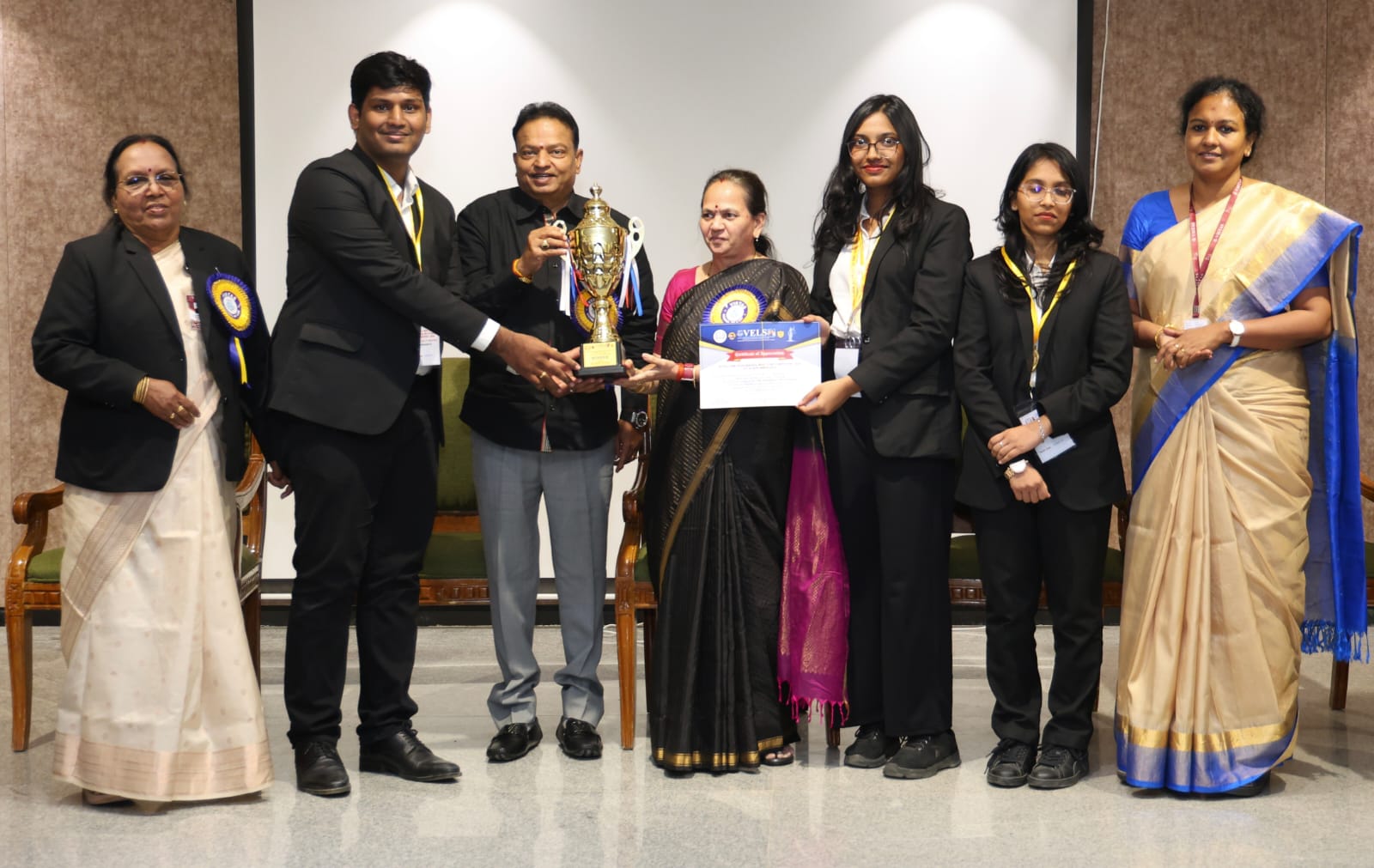
N. Mala, Judge of the Madras High Court and Dr. Ishari K. Ganesh, Founder- Chancellor of Vels University, presented awards to winners at the 8th Thiru. Isari Velan Memorial Moot Court Competition
 

The prestigious national-level moot court competition witnessed participation from 22 teams representing prominent law colleges across India, reaffirming VELS University’s commitment to promoting excellence in legal education and advocacy training.
 

The competition was inaugurated by A. Kulasekaran, former Judge of the Madras High Court, who encouraged students to cultivate strong legal reasoning, analytical thinking, and persuasive advocacy skills to succeed in the legal profession.
 

The final round, held on March 14, was presided over by N. Mala, Judge of the Madras High Court, along with R. Srinivasan, Professor at Tamil Nadu Dr. Ambedkar Law University.
 

Prof. Dr. S. Ambika Kumari, Dean of the Vels School of Law, presented the annual report and explained the rules and structure of the competition. The welcome address was delivered by Dr. T. Sasipraba Vice Chancellor VISTAS, who greeted the distinguished guests, faculty members, and student participants.
 

At the prize distribution ceremony, Dr. Ishari K Ganesh, Founder – Chancellor Vels University & Chairman Vels Group of Institutions & Companies, delivered the presidential address and distributed prizes to the winners.
 

In his speech, he remarked that law has always been very close to his heart and expressed pride in identifying himself as a lawyer in addition to being an educationist. He advised students to continuously develop their advocacy skills and legal knowledge to excel in the profession.
 

Dr. Ishari K Ganesh, Founder – Chancellor Vels University & Chairman Vels Group of Institutions & Companies also announced that from 2027 onwards the first prize amount for the competition will be increased from ₹50,000 to ₹1,00,000, which was warmly welcomed by the participants.
 

Justice N. Mala’s Inspiring Message

Delivering the special address, Justice N. Mala began her speech with the well-known quote:
 

“What we have learned is a handful; what we have not learned is the size of the world.”
 

She emphasized that young lawyers should listen carefully to senior advocates, learn through observation, and develop the ability to work independently. She also highlighted the importance of courage, dedication, discipline, and perseverance in building a successful legal career.
 

Winners of the Competition

The winners of the 8th Thiru. Isari Velan Memorial Moot Court Competition 2026 were:

  • First Prize: Saveetha School of Law – Trophy, medals, and Rs. 50,000 cash prize

  • Second Prize: Tamil Nadu Dr. Ambedkar Government Law College – Rs. 30,000 cash prize

  • Best Memorial Award: Bharath Law School – Rs. 15,000 cash prize

  • Best Speaker Award: Ms. S. Shalini from Saveetha School of Law – Rs. 15,000 prize money
     

The event concluded with a vote of thanks delivered by Mr. Rohan Kumar, Head of Department at the Vels School of Law, marking the successful completion of the competition.
 

The event once again reflected the commitment of Vels Institute of Science, Technology and Advanced Studies to nurturing future legal professionals and strengthening academic excellence in legal education.

About VELS University
VELS Institute of Science, Technology & Advanced Studies (VISTAS) continues to be recognised as one of the best deemed university in Chennai, distinguished by its prestigious NAAC A++ accreditation and UGC Category I status. Home to over 20,000 students and supported by a dedicated faculty strength of 1,220 members, VISTAS offers more than 150 undergraduate and postgraduate programmes across a wide spectrum of disciplines. These include Medicine, Engineering, Nursing, Allied Health Sciences, Pharmacy, Management, Law, Mass Communication, Maritime Studies, Aviation, Physiotherapy, and Computing Sciences, among others. With its commitment to academic excellence, innovation, and holistic development, VISTAS remains a premier destination for quality higher education in India.

For more information, please visit www.vistas.ac.in.

Moscow Fashion Week Highlights Global Talent and Indian-Inspired Collections

Moscow is once again embracing its role among the world’s leading fashion centers, hosting designers from across the globe — including talents from China, Turkey, Spain, Armenia, and Russia. Running until March 19, Moscow Fashion Week brings together promising brands and emerging designers, creating a platform for new discoveries while shaping the future of the global fashion landscape.


Madame & Mister Sibarita at Moscow Fashion Week


Many collections by Russian designers showcased this season at Moscow Fashion Week have sparked considerable media attention and drawn the interest of fashion industry experts. The brand Koss focused on a play of textures and a contrasting palette in its new collection, combining classic New Look–inspired silhouettes with airy chiffon and rich velvet. Designers of Capparel explored the idea of physical presence and material memory, turning folds and imprints of body movement into the central elements of the collection’s architectural structure. The brand MME showcased a collection that harmoniously blends precision and sculptural structure with softness, capturing the inner strength and understated elegance of the contemporary woman. XakaMa – Fashion House of Lena Makashova, which celebrated its 35-year anniversary, presented a collection enriched with avant-garde details – intricate straps, asymmetrical multi-tiered folds, dresses with vests, voluminous accent trousers and an interplay with pockets. The Ammonit collection featured flowing silhouettes and soft fabrics designed to provide comfort and confidence in the rhythm of the modern city.


The global spirit of the event was reflected in the participation of the Spanish label Madame & Mister Sibarita. Designer Patricia Emma Fernandez Ortiz draws inspiration from Indian aesthetics, incorporating its vibrant colors and rich craft traditions into the brand’s collections.


“Our brand offers something truly distinctive: a fusion of cultures and aesthetics. Madame & Mister Sibarita combines the rich textile traditions of India with a contemporary Western vision, creating pieces that are not only luxurious but also unique and full of personality. The Russian market is particularly receptive to fashion with character, craftsmanship, and story. For us, this represents a significant opportunity to introduce our differentiated approach, while for the Spanish fashion industry, it opens doors to showcase creativity, quality, and innovation on a new international stage”, – shared Patricia Emma Fernandez Ortiz.


Moscow Fashion Week has long been a most effective platform for the development of emerging brands, opening doors for up-and-coming designers to enter new international markets. A great example of this is Russian label Hatsibana, a regular participant at Moscow Fashion Week, which proudly showcased its collection at Lakmé Fashion Week in India last October.


“This trip was more than just a runway show for me — it became a true dialogue of cultures, a moment when the heritage of the Caucasus was expressed in a language understood around the world. We didn’t simply present our brand; we laid the foundation for future collaborations and for entering one of the world’s most promising markets,” said Fatima Shogenova, designer and founder of Hatsibana.


Moscow Fashion Week is now in full swing, with many remarkable shows and exciting collections still to come. The event continues to serve as a space where local traditions meet the global demands of the fashion industry, helping designers connect with audiences around the world.

India to Lead Global Dialogue at World Public Summit. India in New Delhi

World Public Summit. India will take place from 23 to 26 March 2026 in New Delhi, positioning India at the forefront of global dialogue on emerging frameworks of international cooperation. Organized by the World Peoples Assembly in cooperation with the BRICS Chamber of Commerce and Industry, the Summit opens the international cycle of regional public summits in 2026. Following events in India, the Arab World, Latin America, Africa and Europe, it will develop practical civil society initiatives and proposals for the World Public Summit in Moscow in September 2026.


Hosting the Summit in India reflects the country’s growing role in shaping a new architecture of international cooperation. Held under the theme “New World: India in the Architecture of a Shared Future”, the Summit highlights India’s position as one of the key centres of the emerging multipolar world, actively participating in global humanitarian initiatives and holding the BRICS presidency in 2026.


Secretary General of the World Peoples Assembly, Andrey Belyaninov, noted, “The Indian Summit continues the ideas of the ‘New World of Conscious Unity’ and opens the series of regional Summits in 2026. India, a country that embodies the principle of unity in diversity, becomes a platform for dialogue on the values that shape our shared future. Holding the Summit will allow us to mobilize the intellectual, cultural and social potential of the country to develop practical initiatives and meaningful proposals. We are confident that the New World is built on trust, respect and cooperation.”


The Summit is anchored around key objectives that include clarifying and providing practical content to the values of the New World of Conscious Unity by drawing on the Indian experience, developing a package of regional initiatives and working models from Asia and the Global South for inclusion in the agenda of the Second World Summit “New World: Values that Unite”, strengthening the network of public diplomacy in the region by engaging Indian NGOs, academia, business communities and youth organizations, and developing long-term cooperation with Indian partners.


Vice President of the BRICS Chamber of Commerce and Industry, Sameep Shastri, said: “India has always adhered to the philosophy that the whole world is one family. This Summit brings that vision into reality by bringing us together to explore how our diversity of perspectives can help build a more responsible and sustainable future for all.”


Following the Summit, the Delhi Declaration is expected to be adopted, contributing to the global agenda. Key themes span culture and spiritual heritage as the foundation of a shared future, leadership of the New World of Conscious Unity, tradition and innovation, media and humanitarian dialogue, partnership economy and social responsibility, and integration formats and public diplomacy.


Programme highlights include the Plenary “India: Unity in Diversity — the Architecture of a Shared Future. Values that Unite”, along with panel sessions on “Peace through Culture,” “Leaders of the New World,” and “Culture of Trust”. The programme will also feature international round tables on UNESCO, cultural diplomacy, youth, space, women, media, and more.


The Summit will bring together representatives from civil society, academia, business communities, international organizations and youth initiatives, serving as a platform for engagement and collaboration aimed at advancing public diplomacy and humanitarian cooperation. The World Peoples Assembly forms a humanitarian platform based on trust, respect, and shared values.

What We have Learned is a Handful; What We have not Learned is the Size of the World

The School of Law at Vels Institute of Science, Technology and Advanced Studies (VISTAS), Chennai, successfully organized the 8th Thiru. Isari Velan Memorial Moot Court Competition 2026 from March 12 to March 14, bringing together talented law students from across the country to showcase their legal research, advocacy, and courtroom argumentation skills.
 

N. Mala, Judge of the Madras High Court and Dr. Ishari K. Ganesh, Founder- Chancellor of Vels University, presented awards to winners at the 8th Thiru. Isari Velan Memorial Moot Court Competition
 

The prestigious national-level moot court competition witnessed participation from 22 teams representing prominent law colleges across India, reaffirming VELS University’s commitment to promoting excellence in legal education and advocacy training.
 

The competition was inaugurated by A. Kulasekaran, former Judge of the Madras High Court, who encouraged students to cultivate strong legal reasoning, analytical thinking, and persuasive advocacy skills to succeed in the legal profession.
 

The final round, held on March 14, was presided over by N. Mala, Judge of the Madras High Court, along with R. Srinivasan, Professor at Tamil Nadu Dr. Ambedkar Law University.
 

Prof. Dr. S. Ambika Kumari, Dean of the Vels School of Law, presented the annual report and explained the rules and structure of the competition. The welcome address was delivered by Dr. T. Sasipraba Vice Chancellor VISTAS, who greeted the distinguished guests, faculty members, and student participants.
 

At the prize distribution ceremony, Dr. Ishari K Ganesh, Founder – Chancellor Vels University & Chairman Vels Group of Institutions & Companies, delivered the presidential address and distributed prizes to the winners.
 

In his speech, he remarked that law has always been very close to his heart and expressed pride in identifying himself as a lawyer in addition to being an educationist. He advised students to continuously develop their advocacy skills and legal knowledge to excel in the profession.
 

Dr. Ishari K Ganesh, Founder – Chancellor Vels University & Chairman Vels Group of Institutions & Companies also announced that from 2027 onwards the first prize amount for the competition will be increased from ₹50,000 to ₹1,00,000, which was warmly welcomed by the participants.
 

Justice N. Mala’s Inspiring Message

Delivering the special address, Justice N. Mala began her speech with the well-known quote:
 

“What we have learned is a handful; what we have not learned is the size of the world.”
 

She emphasized that young lawyers should listen carefully to senior advocates, learn through observation, and develop the ability to work independently. She also highlighted the importance of courage, dedication, discipline, and perseverance in building a successful legal career.
 

Winners of the Competition

The winners of the 8th Thiru. Isari Velan Memorial Moot Court Competition 2026 were:

  • First Prize: Saveetha School of Law – Trophy, medals, and Rs. 50,000 cash prize

  • Second Prize: Tamil Nadu Dr. Ambedkar Government Law College – Rs. 30,000 cash prize

  • Best Memorial Award: Bharath Law School – Rs. 15,000 cash prize

  • Best Speaker Award: Ms. S. Shalini from Saveetha School of Law – Rs. 15,000 prize money
     

The event concluded with a vote of thanks delivered by Mr. Rohan Kumar, Head of Department at the Vels School of Law, marking the successful completion of the competition.
 

The event once again reflected the commitment of Vels Institute of Science, Technology and Advanced Studies to nurturing future legal professionals and strengthening academic excellence in legal education.

About VELS University
VELS Institute of Science, Technology & Advanced Studies (VISTAS) continues to be recognised as one of the best deemed university in Chennai, distinguished by its prestigious NAAC A++ accreditation and UGC Category I status. Home to over 20,000 students and supported by a dedicated faculty strength of 1,220 members, VISTAS offers more than 150 undergraduate and postgraduate programmes across a wide spectrum of disciplines. These include Medicine, Engineering, Nursing, Allied Health Sciences, Pharmacy, Management, Law, Mass Communication, Maritime Studies, Aviation, Physiotherapy, and Computing Sciences, among others. With its commitment to academic excellence, innovation, and holistic development, VISTAS remains a premier destination for quality higher education in India.

For more information, please visit www.vistas.ac.in.

India Global Innovation Connect Heads to New Delhi for the First Time with Landmark 5th Edition on May 6–7, 2026

The fifth edition of the India Global Innovation Connect (IGIC), India’s leading international platform for innovation and technology collaboration, will take place on May 6–7, 2026, in New Delhi bringing together some of the world’s most influential leaders shaping the future of technology and innovation.


The theme for this year’s annual gathering is “India in the age of AI”. IGIC 2026 will convene global decision-makers from industry, government, venture capital, startups, academia, and policymaking circles to explore India’s rapidly expanding role in the global innovation ecosystem and in frontier technologies, as a new hub for next-generation technologies.


Organized by Smadja & Smadja Strategic Advisory and supported by key ecosystem stakeholders, including partner organizations such as TiE Delhi NCR and the US-India Strategic Partnership Forum (USISPF) IGIC 2026 will serve as a powerful platform to strengthen collaboration between India’s vibrant venture capital and innovation ecosystem and its global counterparts.


The two-day event will feature high-profile keynote addresses, fireside conversations, and panel discussions with prominent global and Indian business leaders, technology pioneers, investors, and policymakers. Discussions will focus on some of the most transformative sectors shaping the global economy, including artificial intelligence, fintech, aerospace, sustainability, semiconductors, data centres, defence technologies, biotech, healthtech, and strategies for scaling breakthrough startups.


IGIC 2026 is expected to welcome international delegations and participants from North America, Europe, Asia, and emerging innovation hubs worldwide, further strengthening its position as a truly global forum for dialogue, partnership, and technology collaboration.


India has become one of the most dynamic innovation ecosystems in the world, driven by its entrepreneurial talent, digital infrastructure, and growing investor interest. IGIC provides a unique platform where global investors, corporates, startups, and policymakers can come together to explore new partnerships and accelerate the development of transformative technologies,” said Claude Smadja, Chairman of Smadja & Smadja Strategic Advisory.


Through its platform, IGIC aims to expand technology and business interactions between India’s and global startup ecosystems, provide actionable insights on accelerating technology innovation in India, support the conversion of innovative ideas into market-ready products and services, identify opportunities emerging from global technology and business trends, highlight India’s rise as a global hub for innovation and entrepreneurship, and assess the impact of policy and regulatory developments on business and innovation.


Confirmed speakers for IGIC 2026 include Ashishkumar Chauhan, Managing Director & CEO National Stock Exchange of India (NSE), Avi Avula, President & MD, Corporate Vice President Semiconductor Products Group Asia, Applied Materials India, USA, Will Poole, Co-Founder & Managing Partner, Capria Ventures, USA, Thierry Porté, Managing Director & Vice Chairman, JC Flowers & Co LLC, USA, Sanjeev Sanyal, Member, Prime Minister’s Economic Advisory Council; Baijayant “Jay” Panda, national Vice president and spokesperson of the Bharatiya Janata Party (BJP), Member of the Lok Sabha; Ruchir Dixit, Vice President & Country Manager, Siemens EDA; Amarjeet Singh Makhija, Markets Lead Advisory, PwC India;; Mohandas Pai, Chairman, Aarin Capital; Satish Shukla, Co-Founder, Addverb Technologies; Umakant Soni, Chairman, AI Foundry; Sudhir Rao, Managing Partner, Clesta Capital; Yunpeng Qu, Founder & CEO, Yaya Zhixian Technology; and Rachelle Jensen, CEO, Luminis Water Technologies.


For more information and registration details, visit: indiaglobalinnovationconnect.com


India Global Innovation Connect Heads to New Delhi for the First Time with Landmark 5th Edition on May 6–7, 2026

The fifth edition of the India Global Innovation Connect (IGIC), India’s leading international platform for innovation and technology collaboration, will take place on May 6–7, 2026, in New Delhi bringing together some of the world’s most influential leaders shaping the future of technology and innovation.


The theme for this year’s annual gathering is “India in the age of AI”. IGIC 2026 will convene global decision-makers from industry, government, venture capital, startups, academia, and policymaking circles to explore India’s rapidly expanding role in the global innovation ecosystem and in frontier technologies, as a new hub for next-generation technologies.


Organized by Smadja & Smadja Strategic Advisory and supported by key ecosystem stakeholders, including partner organizations such as TiE Delhi NCR and the US-India Strategic Partnership Forum (USISPF) IGIC 2026 will serve as a powerful platform to strengthen collaboration between India’s vibrant venture capital and innovation ecosystem and its global counterparts.


The two-day event will feature high-profile keynote addresses, fireside conversations, and panel discussions with prominent global and Indian business leaders, technology pioneers, investors, and policymakers. Discussions will focus on some of the most transformative sectors shaping the global economy, including artificial intelligence, fintech, aerospace, sustainability, semiconductors, data centres, defence technologies, biotech, healthtech, and strategies for scaling breakthrough startups.


IGIC 2026 is expected to welcome international delegations and participants from North America, Europe, Asia, and emerging innovation hubs worldwide, further strengthening its position as a truly global forum for dialogue, partnership, and technology collaboration.


India has become one of the most dynamic innovation ecosystems in the world, driven by its entrepreneurial talent, digital infrastructure, and growing investor interest. IGIC provides a unique platform where global investors, corporates, startups, and policymakers can come together to explore new partnerships and accelerate the development of transformative technologies,” said Claude Smadja, Chairman of Smadja & Smadja Strategic Advisory.


Through its platform, IGIC aims to expand technology and business interactions between India’s and global startup ecosystems, provide actionable insights on accelerating technology innovation in India, support the conversion of innovative ideas into market-ready products and services, identify opportunities emerging from global technology and business trends, highlight India’s rise as a global hub for innovation and entrepreneurship, and assess the impact of policy and regulatory developments on business and innovation.


Confirmed speakers for IGIC 2026 include Ashishkumar Chauhan, Managing Director & CEO National Stock Exchange of India (NSE), Avi Avula, President & MD, Corporate Vice President Semiconductor Products Group Asia, Applied Materials India, USA, Will Poole, Co-Founder & Managing Partner, Capria Ventures, USA, Thierry Porté, Managing Director & Vice Chairman, JC Flowers & Co LLC, USA, Sanjeev Sanyal, Member, Prime Minister’s Economic Advisory Council; Baijayant “Jay” Panda, national Vice president and spokesperson of the Bharatiya Janata Party (BJP), Member of the Lok Sabha; Ruchir Dixit, Vice President & Country Manager, Siemens EDA; Amarjeet Singh Makhija, Markets Lead Advisory, PwC India;; Mohandas Pai, Chairman, Aarin Capital; Satish Shukla, Co-Founder, Addverb Technologies; Umakant Soni, Chairman, AI Foundry; Sudhir Rao, Managing Partner, Clesta Capital; Yunpeng Qu, Founder & CEO, Yaya Zhixian Technology; and Rachelle Jensen, CEO, Luminis Water Technologies.


For more information and registration details, visit: indiaglobalinnovationconnect.com


Chandigarh University Hosts Panel Discussion on 'Rise of the Powerful Repeat Player in Civil Litigation' as Part of 'India International Disputes Week 2026'

  • International Lawyers Participate in ‘Rise of the Powerful Repeat Player in Civil Litigation’ Panel Discussion ; organized by Punjab & Haryana High Court at Chandigarh University as part of ‘India International Disputes Week 2026’

  • UK-based Solicitor Lakhvir Singh says Experience Influences Pre-litigation Strategy but outcomes Depend on Merits of the Case


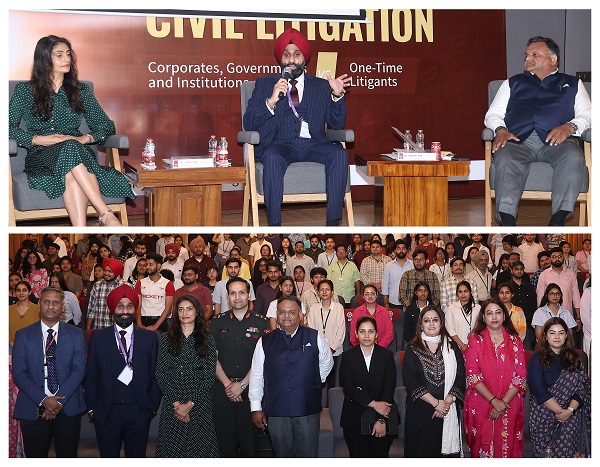
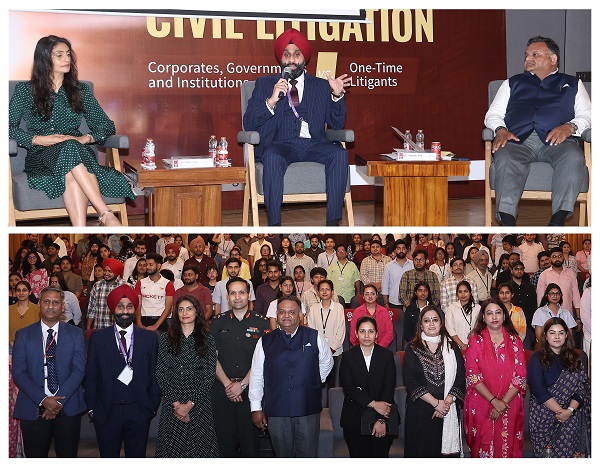
A distinguished panel of international lawyers, solicitors, arbitrators and prominent legal luminaries and scholars participated in a high-level panel discussion on ‘Rise of the Powerful Repeat Player in Civil Litigation: Corporates, Governments and Institutions vs One-Time Litigants’ organized by the Punjab and Haryana High Court in collaboration with Chandigarh University as part of India International Disputes Week 2026. The initiative was aimed at strengthening India’s position as a credible global hub for dispute resolution across litigation, arbitration and mediation to encourage institutional collaboration and cross-border legal engagement.
 

Prominent International lawyers, solicitors, arbitrators & legal luminaries speaking during ‘Rise of the Powerful Repeat Player in Civil Litigation’ Panel discussion at Chandigarh University
 

Chandigarh University hosted the panel discussion that brought together leading legal luminaries, practitioners and scholars who deliberated on emerging trends in civil litigation and dispute resolution. The discussions particularly highlighted the increasing dominance of institutional litigants including governments, corporations and public bodies in contemporary justice systems and examined the implications of this trend for individuals and one-time litigants. The discussion focused on how such ‘repeat players’ often accumulate greater legal expertise, advantages and institutional resources through frequent engagement with courts and tribunals while individual or one-time litigants find themselves at a systemic disadvantage.
 

The prominent among those who were present during the panel discussion were Lakhvir Singh, Solicitor at Alexander & Co Solicitors LLP, Nottingham (UK), Gurprit Mattu, Commercial Litigation Barrister and Mediator, London, Manish Jain Senior Advocate at the Punjab and Haryana High Court, Aman Pal, Senior Advocate at the Punjab and Haryana High Court and Prof (Dr) Ashutosh Hajela, Executive Director, University Institute Legal Studies (UILS). The panel was moderated by Amanat Kahlon, Assistant Professor, University Institute Legal Studies (UILS).
 

Speaking during the panel discussion, Lakhvir Singh, Solicitor at Alexander & Co Solicitors LLP, Nottingham, UK, said, “In jurisdictions like the UK, repeat or institutional litigants often develop a better understanding of how to manage litigation, particularly when it comes to mitigating risks and controlling the costs associated with legal proceedings. Because they engage with the system frequently, they are generally more aware of when it is sensible to proceed with litigation and when it may be more appropriate to resolve a dispute outside court. However, our system is largely governed by the Civil Procedure Rules and the protocols that operate within them, which are designed to create a structured and predictable process. These rules to a large extent help balance the system because they apply equally to both repeat litigants and one-time litigants, ensuring that while experience may provide some advantage, the procedural framework aims to make the process fairer and more manageable for all parties involved.”
 

“While institutional litigants may have greater financial resources, outcomes in courts are ultimately decided on the merits of the case, the evidence and the strength of legal arguments. Experience mainly matters at the pre-litigation stage, where repeat litigants better understand procedural nuances for example, a landlord with multiple properties is more likely to know the correct legal steps when a tenant defaults on rent, while a first-time litigant may unknowingly waive certain rights. However, once the matter reaches court, the judge decides the case strictly on law and evidence,” added Singh.
 

Gurprit Mattu, Commercial Litigation Barrister and Mediator, London said, “Early mediation can level the playing field because neither party has yet incurred heavy legal costs. In many commercial disputes, particularly shareholder disputes, prolonged litigation can damage the very business the parties are trying to protect. Over the past few years mediation in England has grown significantly mainly due to the potential cost implications that come with litigation. Even if a party wins a case, the court can order the losing party to pay a substantial portion of the winner’s legal expenses sometimes up to 70 to 80 percent along with interest. Because of these potential costs, parties increasingly consider mediation at a very early stage of the dispute often even before a case is formally filed in court.”
 

“Arbitration is closer to a court process where arbitrators eventually deliver a judgment. It can still take years and involves legal costs. Mediation usually happens in a single sitting or within a short period and can resolve disputes much more quickly,” added Mattu.
 

Manish Jain Senior Advocate at the Punjab and Haryana High Court said, “In practice an individual litigant is often at a disadvantage when compared to large corporations or institutional parties. These entities have the resources, legal teams, and networks to pursue prolonged litigation and multiple appeals whereas for an individual the cost, time and effort involved can be overwhelming. Cases can take years to move through the system and even after winning, a litigant may have to initiate separate execution proceedings to enforce it. Imposing meaningful costs on losing parties could help curb frivolous litigation and reduce unnecessary burdens on the judicial system.”
 

Aman Pal, Senior Advocate at the Punjab and Haryana High Court said, “Strategy goes a long way in litigation. Over time, you learn how to mitigate risks involved in litigation and also how to control the costs associated with pursuing a case. Repeat or institutional litigants, because of their continued exposure to the legal system, often develop a clearer understanding of these aspects. They are generally better placed to assess the situation and determine when it is worthwhile to initiate or pursue litigation and when it may be more prudent to avoid it. This experience often shapes a more informed and strategic approach to handling disputes.”
 

Prof (Dr) Ashutosh Hajela, Executive Director, UILS said, “The panel discussion on the rise of the powerful repeat player in civil litigation was highly insightful and fruitful where legal luminaries deliberated on systemic challenges and emphasized the need for strengthening fair and efficient dispute resolution mechanisms. The discussion yielded major takeaways on promoting mediation, reducing litigation and encouraging institutional reforms to enhance access to justice. The deliberations were well appreciated by students, young and budding lawyers, faculty members and all attendees. Such initiatives continue to encourage practical legal understanding and policy-oriented thinking among students. Chandigarh University organizes such events to bridge the gap between academic learning and real-world legal practice, equipping students with practical insights and policy-oriented perspectives.”


Chandigarh University
Chandigarh University is a NAAC A+ Grade University and QS World Ranked University. This autonomous educational institution is approved by UGC and is located near Chandigarh in the state of Punjab. It is the youngest university in India and the only private university in Punjab to be honoured with A+ Grade by NAAC (National Assessment and Accreditation Council). CU offers more than 109 UG and PG programs in the field of engineering, management, pharmacy, law, architecture, journalism, animation, hotel management, commerce, and others. It has been awarded as The University with Best Placements by WCRC.


Website address: www.cuchd.in.