


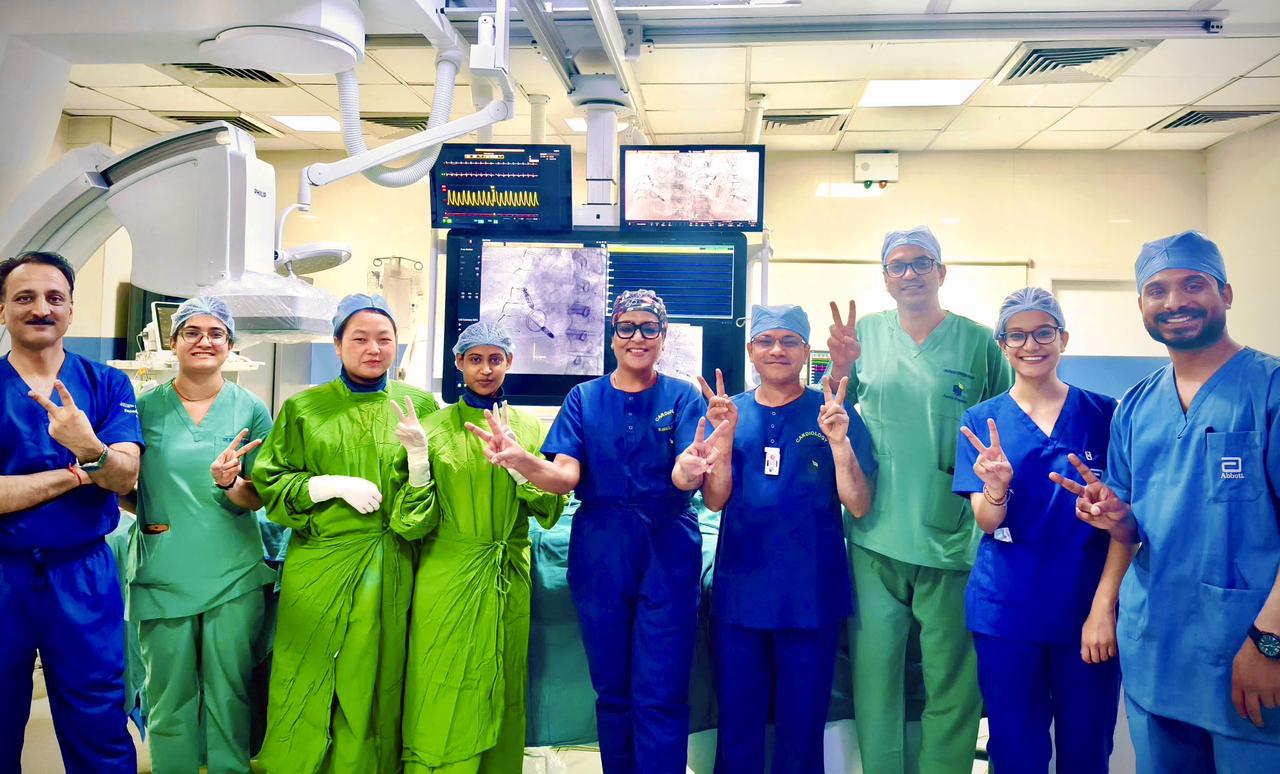
In a significant advancement in cardiac care, specialists at Indraprastha Apollo Hospitals successfully performed a complex leadless pacemaker implantation in a 65-year-old patient with a metallic prosthetic tricuspid valve. The procedure, performed by Dr Vanita Arora, marks the first time in India that a leadless pacemaker has been implanted through a metallic prosthetic valve, offering a safer, non-surgical treatment option for patients with similar complex cardiac histories.
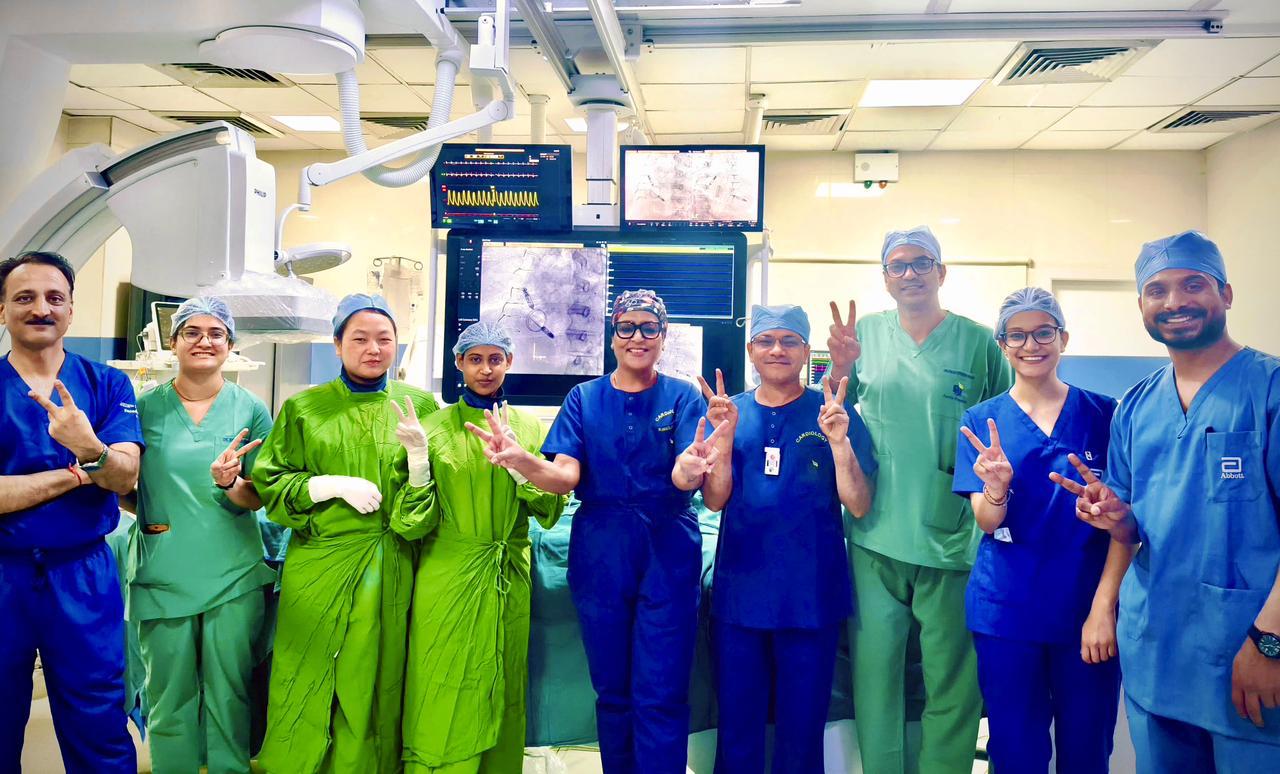 |
Dr Vanita Arora (centre) with the cardiac electrophysiology team after performing India’s first leadless pacemaker implantation through a metallic prosthetic tricuspid valve
The patient had a long and complicated medical journey. He underwent pancreaticojejunostomy (surgical procedure that connects the pancreas to the jejunum (small intestine) to drain pancreatic enzymes), in 1998, after which he developed fungal infective endocarditis affecting the tricuspid valve. In 2000, he required cardiac surgery with debridement of the tricuspid valve. Over time, he developed severe tricuspid regurgitation that led to symptoms of right-sided heart failure. In 2018, his condition required tricuspid valve replacement with a 31 mm metallic bileaflet mechanical prosthesis (Artivion On-X valve).
Recently, the patient developed dizziness and episodes of presyncope. Evaluation revealed symptomatic sinus node dysfunction along with atrioventricular conduction disease, making permanent pacemaker implantation necessary.
However, conventional pacemaker implantation was not feasible because pacing leads cannot safely pass through a mechanical tricuspid valve, as this may damage the prosthesis and increase the risk of valve dysfunction, thrombosis and lead failure. In addition, repeat open-heart surgery to place epicardial leads was considered high risk because the patient had already undergone multiple cardiac procedures.
The cardiac electrophysiology team led by Dr Vanita, therefore opted for a leadless pacing system. Unlike traditional pacemakers that require leads placed through veins into the heart, a leadless pacemaker is a small self-contained device that is delivered directly into the heart through a catheter inserted via a vein in the leg. This approach eliminates the need for leads and avoids interference with the prosthetic valve.
In this case, a dual-chamber Aveir leadless pacemaker capable of maintaining atrioventricular synchrony was implanted. The procedure required careful planning, including detailed mapping of the heart, safe navigation across the mechanical valve and precise fixation of the device within the right ventricle. The successful implantation restored normal heart rhythm while preserving the function of the prosthetic valve.
Dr Vanita Arora, Clinical Lead – Cardiac Electrophysiology, Indraprastha Apollo Hospitals, said, “Patients with mechanical tricuspid valves who require pacing present a unique challenge because conventional pacemaker leads cannot be passed across the valve. Leadless pacing technology allowed us to safely restore heart rhythm without repeat open-heart surgery, offering an important option for patients with complex surgical histories.”
The patient recovered well after the procedure and has been discharged in stable condition. Dr. Vanita Arora’s pioneering work in this case not only demonstrates the potential of innovative electrophysiology techniques but also opens the door for safer and less invasive treatment options for high-risk cardiac patients across India.
This landmark procedure highlights the growing role of leadless pacing technology in managing complex cardiac cases and opens new possibilities for patients with prosthetic tricuspid valves who previously had limited treatment options.
About Indraprastha Apollo Hospitals
Indraprastha Apollo Hospitals, India’s first JCI accredited hospital, is a joint venture between the Government of Delhi and Apollo Hospitals Enterprise Limited. Commissioned in July 1996, it is the third super-specialty tertiary care hospital set up by the Apollo Hospitals Group. Spread over 15 acres, it houses 57 specialties with more than 300 specialists and more than 700 operational beds, 19 operation theatres, 138 ICU beds, round-the-clock pharmacy, NABL accredited laboratories, 24-hour emergency services and an active air ambulance service. Apollo Hospitals Delhi has the leading programme in kidney and liver transplant in the country. The first successful paediatrics and adult liver transplants in India were performed at Indraprastha Apollo Hospitals. The hospital is at the forefront of medical technology and expertise. It provides a complete range of latest diagnostic, medical and surgical facilities for the care of its patients. The Hospital has introduced the most sophisticated imaging technology to India with the introduction of 64 slice CT and 3 Tesla MRI, Novalis Tx and the integrated PET Suite.
In a groundbreaking advancement, Indraprastha Apollo Hospitals has recently introduced the ZAP-X Gyroscopic Radiosurgery Platform, revolutionizing brain tumor treatment across South Asia. This state-of-the-art technology offers a non-invasive alternative to traditional brain surgery, promising improved patient outcomes and comfort. Backed by the experience and expertise of Radiation Oncologists and technical team, Indraprastha Apollo also brings the revolutionary RADIXACT – X9 that combines imaging and treatment delivery to precisely target a wide variety of Cancers.
Indraprastha Apollo has pioneered the concept of preventive health check programmes and has created a satisfied customer base over decades. The Hospital has been consistently ranked amongst the best 10 hospitals in India by The Week survey for the past few years.
Hospital website – www.apollohospdelhi.com
Twitter: @HospitalsApollo

