
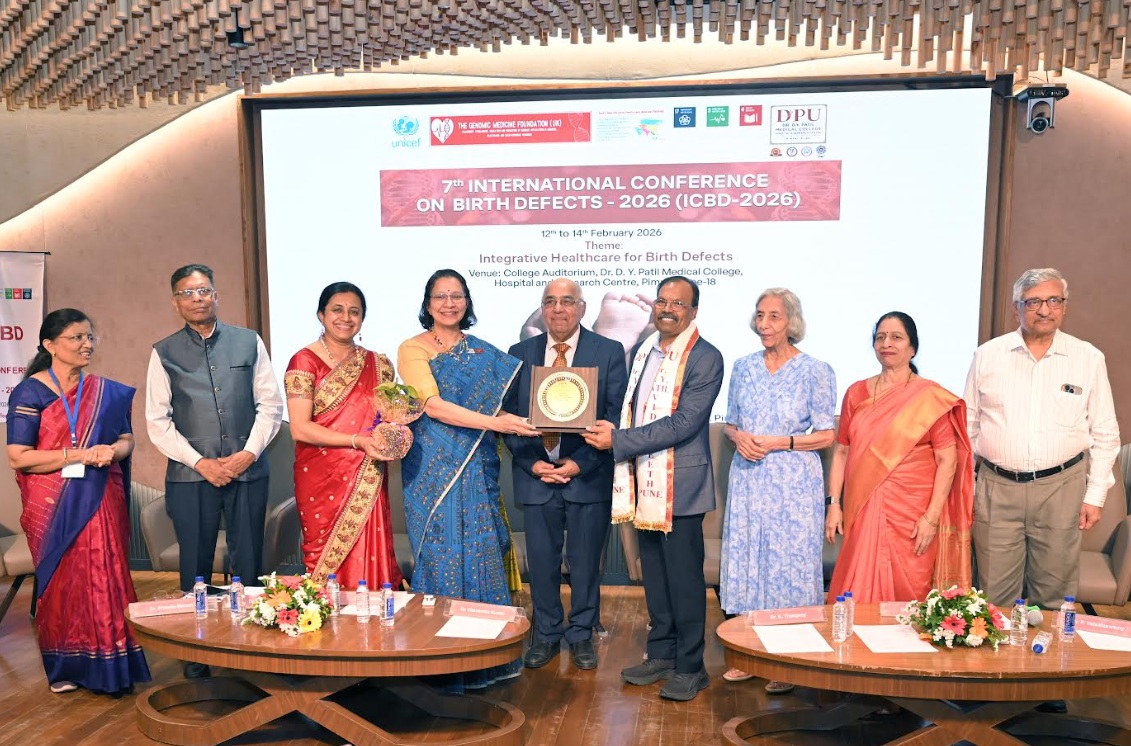
The 7th International Conference on Birth Defects (ICBD 2026), held in Pune served as a monumental gathering of national and level genetics experts dedicated to the theme of integrative healthcare and the prevention of congenital anomalies.
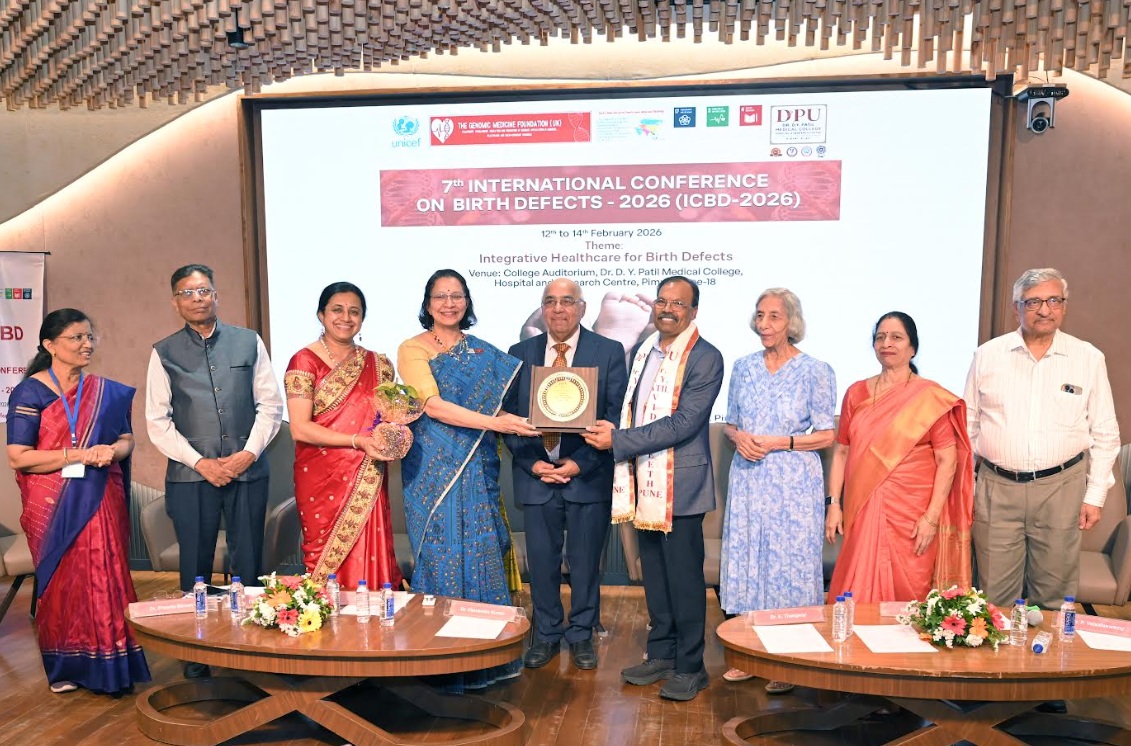 |
Dignitaries and global experts at the 7th International Conference on Birth Defects
Hosted by the Department of Paediatrics at Dr. D. Y. Patil Medical College, Hospital and Research Centre, Pimpri, Pune in association with the South Asia Genomic Healthcare Alliance and the Genomic Medicine Foundation UK, the event was meticulously orchestrated by a visionary organizing team including Organizing Chairperson Dr. Shailaja Mane, Dr. Pramila Menon, Dr. Parag M Tamhankar, Dr. Sneha Sagarkar and Dr. Aradhana Dwivedi. The conference was made possible through the steadfast leadership of Hon’ble Chancellor Dr. P. D. Patil, Hon’ble Pro-Chancellor Dr. Bhagyashree P. Patil, Hon’ble Trustee and Treasurer Dr. Yashraj P. Patil and Dean Dr. Rekha Arcot, who emphasized the necessity of bridging the gap between high-end genomic research and bedside clinical care.
The Workshop on Applied Clinical Genomics: Hands-on Analysis of Exome Sequencing Data and Reporting integrated advanced genomic medicine with public health priorities, closely aligning with UNICEF’s mandate to reduce preventable birth defects, improve early diagnosis and strengthen maternal and child health systems. Dr. Parag Tamhankar (Consultant Geneticist), Prof. Shiji Chalipat (Paediatric Neurology), Dr. Supriya Gupte (Paediatric Endocrinology) and Sarita Varma (Paediatric Haematologist) contributed to case discussions, while Dr. Dipti Deshpande of Semantic Webtech analysed the exomic data.
The workshop trained clinicians, paediatricians and researchers in Human Phenotype Ontology (HPO) usage, variant interpretation and reporting, trio exome analysis and management of uncertain genomic findings, strengthening sustainable genomic expertise within India’s healthcare system and supporting equitable access to advanced diagnostics.
A dedicated UNICEF Public Forum on Birth Defects and panel discussion brought together senior clinical geneticists, public health experts and UNICEF representatives to bridge the gap between genomic science and community-level implementation. Simin Irani UNICEF Consultant explained the importance of maternal nutrition.
Dr. Pramila Menon sensitized the community health workers about detection of birth defects and preventive strategies. Dr. Gopal Kadam shared his experience about management of birth defects in Hingoli district of Maharashtra. The panellists included Dr. H.H. Chavan, Medical Superintendent of Dr. D. Y. Patil Medical College, Hospital and Research Centre, Pimpri, Pune; Dr. Shailaja Mane; Dr. Varsha Dange; Mrs. Manisha Biraris CDPO PCMC Pune and Dr. Dhavendra Kumar, Genomic Medicine Foundation UK. He appreciated the progress of Maharashtra for diagnosing and treatment of birth defects. The session was in alignment with UNICEF Priorities for prevention of birth defects.
Across three days, scientific discourse was enriched by Professor Dr. Dhavendra Kumar from Genomic Foundation, UK, who examined inherited factors in congenital heart disease and Professor Mieke van Haelst, who presented groundbreaking work on genetic obesity and DNA methylation episignatures as diagnostic biomarkers for Fetal Alcohol Syndrome. Professor Diana Baralle from University of Southampton and Professor Emma Baple from University of Exeter highlighted advances in genomic and multi-omic diagnostics aimed at ending the “diagnostic odyssey” for families.
The Gregor Mendel Oration was delivered by Padma Shri Dr. K. Thangaraj, who traced the journey from population genetics to personalized medicine in India, while Dr. Shubha Phadke shared practical clinical insights for settings where whole exome sequencing is not always accessible. Maternal and environmental influences were addressed by Dr. Simin Irani of UNICEF, who emphasized maternal nutrition and Dr. Chittaranjan Yajnik, who discussed nutritional teratogenesis and fetal programming as drivers of later-life chronic disease.
Additional expert perspectives were provided by Dr. Ashwin Dalal on genetic diagnostic services, Dr. Pramila Menon on birth defects and genetic epilepsy and Dr. Aradhana Dwivedi on lysosomal storage diseases. Specialized insights on rare diseases and neonatal care were shared by Dr. Mohnish Suri, Dr. Koumudi Godbole, Dr. Chaitanya Datar, Dr. Gopal Kadam, Dr. Vaibhav Upadhyay, Dr. Vinod Scaria, Dr. Meenal Agarwal and Dr. Anup Rawool.
Dr. Mohnish Suri, Consultant Clinical Geneticist at the Nottingham Clinical Genetics Service, Nottingham University Hospitals NHS Trust, spoke online on “The UK National Paediatric Ataxia-Telangiectasia Clinic: An Exemplar for Multidisciplinary Management of a Rare, Multisystem Genetic Disorder.” Dr. Mrudula Phadke, former Vice Chancellor of MUHS and Senior UNICEF Consultant, addressed the impact of maternal illnesses, adolescent nutrition and the triple burden of malnutrition in contributing to birth defects.
A defining feature of the conference was its strong social impact, reflected in the participation of Anganwadi workers who attended public lectures on early detection and community-level prevention. This bridge between cutting-edge science and grassroots health was supported by global patron UNICEF. The event concluded with participants reaffirming their commitment to decoding the human genome to ensure healthier futures for children.
Hon’ble Dr. P. D. Patil, Chancellor, Dr. D. Y. Patil Vidyapeeth (Deemed to be University), Pimpri, Pune, stated, “Congenital anomalies continue to place a considerable burden on healthcare systems worldwide. Effective management extends beyond treatment to include prevention strategies, early identification, multidisciplinary care and continued research. A collective academic effort is essential to ensure meaningful progress in reducing their overall impact.”
Hon’ble Dr. Bhagyashree P. Patil, Pro-Chancellor, Dr. D. Y. Patil Vidyapeeth (Deemed to be University), Pimpri, Pune remarked, “Advances in medical genetics, prenatal diagnostics and neonatal care have significantly expanded our ability to recognize congenital conditions earlier and manage them more effectively. Academic forums such as this conference are vital in translating these advances into accessible and coordinated care.”
Hon’ble Dr. Yashraj P. Patil, Trustee and Treasurer, Dr. D. Y. Patil Vidyapeeth (Deemed to be University), Pimpri, Pune, said, “Strengthening preventive care, improving access to early screening and promoting evidence-based interventions are critical steps toward addressing the long-term impact of birth defects. Platforms that encourage dialogue on practical solutions and emerging knowledge play a key role in advancing this mission.”
Dr. Rekha Arcot, Dean, Dr. D. Y. Patil Medical College, Hospital & Research Centre, Pimpri, Pune emphasized, “A birth defect may clinically represent a change in a gene or a chromosome, but for a family, it is profoundly life-changing. Families must grapple with the reality of raising a child born with a defect, which completely reshapes their social interactions and lived experiences. It also has significant implications for the economics of healthcare delivery. When we speak of defects that are not surgically correctable or conditions for which clear care guidelines do not yet exist, the burden often becomes lifelong. I am particularly delighted that Anganwadi workers were part of our discussions yesterday, as they are the frontline link with families at the primary healthcare level and play a crucial role in early identification of birth defects. Medical college institutions carry a unique responsibility and privilege to bring together diverse stakeholders and disciplines to deliver truly integrated care for these children. Truly this is where science touches the soul and high technology transforms into high touch.”
Dr. Shailaja Mane, Professor & Head, Department of Paediatrics, Dr. D. Y. Patil Medical College, Hospital & Research Centre, Pimpri, Pune, added, “This conference offered a dynamic platform for meaningful dialogue and knowledge exchange. The insights and practical perspectives shared by eminent experts made it a truly enriching academic endeavour for all participants.”
About Dr. D. Y. Patil Medical College, Hospital and Research Centre, Pimpri, Pune
Dr. D. Y. Patil Medical College, Hospital &Research Centre, Pimpri, Pune follows international benchmarks that are performance-driven as well as patient-centric, strongly backed by evidence-based medical expertise. We are NABH and NABL accredited and have been certified as a Green Hospital by the Association of Healthcare Providers India (AHPI). Additionally, we hold the 12th rank in the National Institutional Ranking Framework (NIRF). The university has been awarded A++ status by the National Assessment and Accreditation Council (NAAC) and is an ISO 2015 certified organization (ISO 9001: 2015).
For more information visit medical.dpu.edu.in
Facebook: Dr D Y Patil Medical College, Hospital and Research Centre
Instagram: dpu.medicalcollege