
Home Blog Page 777

The Role of Humor in Education: A Look at Startalk Radio

Humor has been used as a powerful tool in education for centuries, with many educators recognizing its ability. To engage students, promote creativity, reduce stress and anxiety, enhance learning and memory, and improve relationships between teachers and students. While the use of humor in education can be a highly effective technique. It also comes with its own set of challenges and risks.

In this article, we will explore the role of humor in education, and discuss the benefits and challenges of using humor. And take a closer look at how Startalk Radio has successfully incorporated humor into its program.

Benefits of Using Humor in Education

One of the primary benefits of using humor in education is that it can help engage students. And increase their interest in the subject matter. When students are engaged, they are more likely to participate in class and retain the information they learn. Humor also helps promote creativity and innovation. As it encourages students to think outside the box and approach problems from new perspectives. In addition, humor can help reduce stress and anxiety, which can improve overall academic performance.

Furthermore, humor can enhance learning and memory by providing a context for new information and making it more memorable. Humor triggers the release of dopamine, which is a neurotransmitter associated with motivation, reward, and memory. This means that students are more likely to remember information that is presented in a humorous context. Finally, humor can improve relationships between teachers and students. By creating a positive classroom culture and promoting a sense of community.

Risks and Challenges of Using Humor in Education

Despite its many benefits, the use of humor in education also comes with its own set of risks and challenges. One of the most significant risks is the potential for inappropriate humor, which can be offensive, hurtful, or distracting. Inappropriate humor can also create a negative classroom culture and damage relationships between teachers and students. 

Another challenge of using humor in education is the risk of overusing it. Which can lead to a lack of seriousness in the classroom. This can be especially problematic when dealing with serious topics. Or subjects that require a high level of focus and attention. It’s essential to find the right balance between using humor to engage students and maintaining a serious tone when necessary.

Case Study: Startalk Radio

One excellent example of using humor in education is the Startalk Radio program. Which is hosted by renowned astrophysicist Neil deGrasse Tyson. The program combines humor and science to engage students and make learning fun. The show features a wide range of topics, from the mysteries of the universe to the science of sports. Startalk Radio has been incredibly successful in engaging students. With millions of listeners tuning in to learn about science in a fun and exciting way.

The program uses humor in a variety of ways, such as incorporating jokes, puns, and pop culture references into discussions. For example, in one of the episodes, Neil deGrasse Tyson discussed the science behind the movie “Interstellar,” using humor and references to engage the audience. The show also features celebrity guests. Such as Bill Nye and Stephen Colbert, who bring their own brand of humor to the program.

Real-Life Examples of Humor in Education

There are many other real-life examples of using humor in education. Such as stand-up comedians who use comedy as a tool for teaching, improvisation in the classroom, humorous videos, and podcasts. And then there are memes and social media in education. For example, some schools have incorporated improv classes into their curriculum. Where students can learn valuable skills such as communication, teamwork, and creativity while having fun. Teachers have also used humorous videos and podcasts to engage students in subjects such as history, math, and literature. Memes and social media have also been used as a way to make learning more fun and relatable for students. With teachers creating their own memes to share with their classes.

Conclusion

Humor can be a powerful tool in education, with the ability to engage students. To promote creativity, reduce stress and anxiety, enhance learning and memory, and improve relationships between teachers and students. However, it’s important to find the right balance and use humor in a way that is appropriate and inclusive. The Startalk Radio program is an excellent example of how humor can be successfully incorporated into education. By using strategies such as building a positive classroom culture and incorporating humor into lesson plans. Teachers can create an environment that fosters learning and creativity while having fun. Ultimately, the use of humor in education can make a significant difference in student engagement and academic success.

If you would like to learn more about Star Talk radio here is the link to their website. And here is the link to the Global Growth Forum for more informative articles.
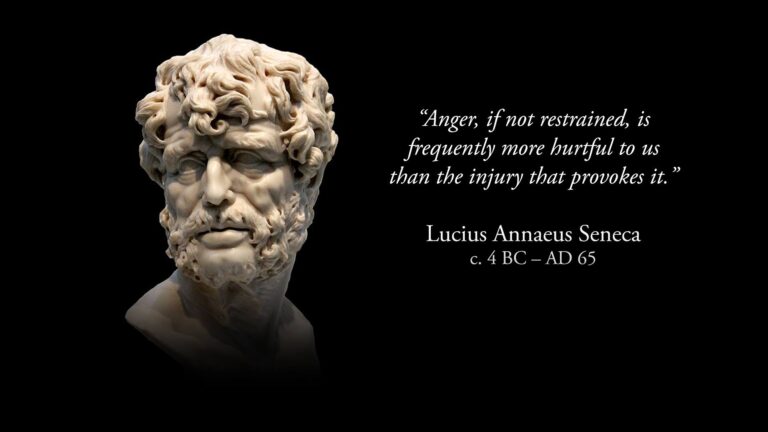
Seneca: The Stoic Philosopher and Playwright Who Endured Tragedy with Stoic Composure

Seneca, also known as Lucius Annaeus Seneca, was a philosopher, statesman, and playwright born in Cordoba, Spain in 4 BC. His works on Stoicism and natural law have greatly influenced the Western philosophical tradition. Seneca’s writing is still popular today, and his ideas remain relevant in contemporary society.

In this article, we will explore the life and legacy of Seneca. We will be focusing on how he endured tragedy with stoic composure.

Seneca’s Life of Tragedy

Seneca was born into a wealthy family and received an excellent education. He studied rhetoric, grammar, and philosophy under the tutelage of famous teachers. Including the Stoic philosopher Attalus and the rhetorician Quintilian. Seneca soon became a successful orator and a prominent figure in Roman politics.

However, Seneca’s life was not without tragedy. His father was exiled by Emperor Augustus when Seneca was just a young boy. And his elder brother Gallio committed suicide after being accused of treason. Seneca himself was exiled twice, first in AD 41 under Emperor Claudius, and again in AD 65 under Emperor Nero. Then Emperor Nero accused him of plotting against him.

Despite the immense suffering caused by his exile, Seneca maintained his stoic composure and continued to write his philosophical works. When Nero ordered him to commit suicide, Seneca calmly followed through, accepting his fate with no complaints. He was stoic and lived true to his own philosophy to the bitter end.

Seneca’s Stoic Philosophy

Seneca was a Stoic philosopher who believed that one should live in accordance with nature and reason. According to Stoicism, one’s emotions should not control their actions, but rather, one should use reason to guide their behavior. Seneca also believed in the concept of natural law. Which holds that there are certain universal moral principles that govern human behavior.

Seneca’s works emphasize the importance of ethics and moral philosophy. He believed that true happiness comes from living a virtuous life and that material possession is irrelevant to one’s happiness. Seneca’s philosophy encourages individuals to cultivate inner strength and self-control, which he believed were necessary for enduring life’s tragedies.

Seneca’s Works

Seneca is best known for his tragedies, essays, and letters. His tragedies, including “Medea” and “Phaedra,” explore themes such as revenge, betrayal, and the human condition. His essays and letters, which were addressed to his friend Lucilius comprise a huge portion of his philosophical work. And offers practical advice on how to live a good life. His dialogues, such as “On the Shortness of Life,” provide insight into his philosophical beliefs.

Seneca’s Influence and Legacy

Seneca’s works had a profound impact on Roman philosophy. His ideas on Stoicism and natural law greatly influenced later thinkers, including the philosopher and emperor Marcus Aurelius. During the Renaissance, Seneca’s works were rediscovered and became a major influence on humanist thought. Seneca’s ideas continue to shape modern philosophy, particularly in the field of ethics. Seneca to this day is considered one of the most if not the most interesting stoics to read. Especially by modern readers and followers of stoic philosophy.

Seneca’s Enduring Legacy

Seneca’s enduring legacy lies in his ability to endure tragedy with stoic composure. Despite the immense suffering he endured throughout his life, he remained committed to his philosophical beliefs. And lived his life with unwavering dignity. Seneca’s example serves as an inspiration to many. Demonstrating that it is possible to endure even the most difficult circumstances with grace and resilience.

Conclusion

Seneca’s life and works have had a profound impact on Western philosophy. His emphasis on Stoicism, natural law, and ethics continues to shape contemporary philosophical thought. Seneca’s enduring legacy as a playwright and philosopher makes him a vital figure in the history of Western thought. And his ability to endure tragedy with stoic composure serves as an inspiration to many. Despite the criticism he has received for his association with the tyrant Nero, it is important to remember that Seneca lived a life of tragedy yet never complained.

Instead, he used his experiences to develop a philosophy that emphasizes the importance of resilience, self-control, and virtue. Seneca’s legacy reminds us that it is possible to endure even the most challenging circumstances with grace and dignity. And as always folks be sure to check out the Global Growth Forum for articles exploring similar interesting topics. And to read more about Seneca visit the following link.

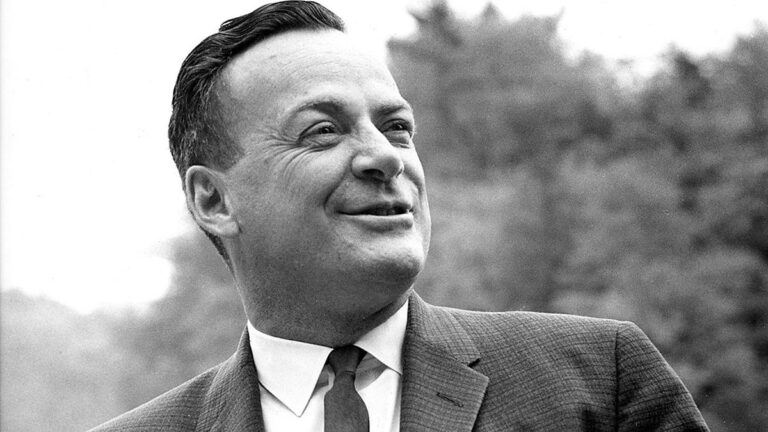
Richard Feynman: The Playful Genius

Richard Feynman was a physicist, mathematician, and educator who made significant contributions to the field of quantum mechanics. Born in 1918 in New York City, he was known for his unconventional approach to learning. And also his sense of humor and his love of practical jokes. Despite his playful nature, Feynman was a serious and respected scientist who won the Nobel Prize in Physics in 1965.

In this article, we will explore Feynman’s life, his personality traits, and his legacy.

Early Life and Education: A Unique Mind at Work

Feynman’s childhood was marked by a strong interest in science and mathematics. He was a curious child who loved to explore the world around him. When he was young, he built a home laboratory and conducted experiments on his own. Feynman’s interest in science led him to attend the Massachusetts Institute of Technology (MIT). Where he earned a bachelor’s degree in physics in 1939. He went on to earn a Ph.D. in physics from Princeton University in 1942.

Feynman’s approach to learning was unconventional. He was known for his ability to solve complex problems using a unique thought process that he developed himself. He often took an entirely different approach to problem-solving than his peers, which helped him come up with innovative solutions.

Personal Life and Interests: A Renaissance Man

Feynman was not just a physicist, but a lover of the arts as well. He was an accomplished bongo player and artist who loved to paint and draw. Feynman was also an adventurer who loved to travel and explore. He was a member of the Manhattan Project, which led to the creation of the first atomic bomb. And he spent time in Los Alamos, New Mexico working on the project.

Feynman’s love life was also unconventional. He was married three times, with his second marriage being to his former student, Gweneth Howarth. They had two children together before divorcing in 1956.

Richard Feynman: The Prankster Physicist

One of the most well-known aspects of Feynman’s personality was his sense of humor. He loved to play practical jokes with his colleagues and friends. One of his most famous pranks involved cracking the combination on a colleague’s safe. And then leaving a note inside that read “Guess who?” Feynman’s sense of humor and love of fun endeared him to many people. And he was known for being a fun-loving and approachable person.

Teaching Philosophy and Legacy: A Unique Approach to Education

Feynman’s approach to teaching was unique. He believed that students should learn by doing. And he developed a technique for learning and problem-solving that became known as the Feynman Technique. This technique involves breaking down complex concepts into simple terms and using examples and analogies to explain them. Feynman’s approach to teaching helped many students understand complex scientific concepts and led to a new way of teaching physics.

Feynman’s legacy is still felt today in the world of physics and beyond. People remember him as a brilliant scientist, a playful and fun-loving person, and a unique thinker who challenged conventional wisdom. Feynman’s contributions to science, education, and society will never be forgotten. And his legacy will continue to inspire future generations of scientists, mathematicians, and thinkers.

Conclusion: A Life Well-Lived

Richard Feynman was a brilliant scientist, educator, and thinker who left an indelible mark on the world. His approach to learning and problem-solving, his love of the arts, and adventure. And his playful nature made him a unique and unforgettable person. Feynman’s legacy continues to inspire and impact the world of science and education today. He showed us that being playful and having a sense of humor do not diminish one’s intellectual capacity. But rather it enhances it as it makes you easy to approach and have conversations with. Feynman’s legacy reminds us that we can approach learning and problem-solving in new and innovative ways and that we can have fun while doing it.

In the end, Feynman’s life serves as a reminder that we can be both serious and playful, and that our unique personalities and approaches can lead to groundbreaking discoveries and achievements. He was a true renaissance man, and his legacy will continue to inspire us for generations to come. If you would like to learn more about his adventures read Surely You’re Joking, Mr. Feynman! And Check out the Global Growth Forum for more interesting articles.

The Mind-Body Connection: How Physical Fitness Improves Academic Performance

It’s no secret that staying physically fit is good for our health. But did you know that it can also have a positive impact on academic performance? The mind-body connection is a powerful thing. And research has shown that regular exercise and proper nutrition can improve cognitive abilities, enhance memory, and boost academic outcomes.

In this article, we’ll explore the link between physical fitness and academic performance. And offer strategies for incorporating exercise and good nutrition into academic life.

Physical Fitness and Academic Performance

Numerous studies have found a strong correlation between physical fitness and academic performance. In fact, When researchers did a meta-analysis of 59 studies published in the journal Health Education Research. They found that physical activity positively impacted academic achievement in children and adolescents. Exercise has been shown to improve cognitive function, attention span, and working memory. These are all crucial skills for academic success at all levels of education.

But why does exercise have such a powerful impact on the brain? One theory is that it increases blood flow to the brain, delivering more oxygen and nutrients to brain cells. Exercise also triggers the release of neurotransmitters like dopamine and serotonin. Both of which are responsible for regulating mood, motivation, and attention. In addition, regular exercise can lead to structural changes in the brain. Such as the growth of new brain cells and increased connectivity between different brain regions.

The benefits of physical fitness aren’t limited to children and adolescents, either. According to a study published in the Journal of Aging and Physical Activity. Adults who engaged in aerobic exercise regularly had a much better cognitive function. And a lower risk of dementia compared to sedentary adults.

The Role of Nutrition in Physical Fitness and Academic Performance

Of course, physical fitness isn’t just about exercise – it also involves proper nutrition. The foods we eat provide the fuel our bodies need to function properly. And a balanced and healthy diet can have a significant impact on academic performance. For example, studies have found that a diet rich in omega-3 fatty acids can improve cognitive function and memory. Fish, nuts, and seeds are some of the foods rich in Omega-3 fatty acids. Other nutrients that have been linked to better academic outcomes include iron found in red meat, beans, and leafy greens. Vitamin B12 is found in meat, dairy, and fortified cereals, and vitamin D is found in fatty fish, fortified dairy products, and sunlight.

Strategies for Incorporating Physical Fitness into Academic Life

So how can individuals and institutions incorporate physical fitness into academic life? For children and adolescents, physical education programs in schools can be a great way to promote regular exercise. However, many schools have cut back on PE programs due to budget constraints or a focus on academic achievement. To combat this, some schools have implemented programs that incorporate movement and physical activity into classroom lessons. With things like standing desks or yoga breaks.

In higher education, many colleges and universities offer on-campus fitness facilities, sports teams, and intramural leagues. Some schools also offer classes or workshops on nutrition and healthy eating habits. Additionally, some workplaces have begun to prioritize employee health and wellness by offering gym memberships or on-site fitness classes.

For those who struggle to find time for regular exercise. There are a variety of alternative forms of physical activity that can be incorporated into daily life. Yoga and mindfulness practices, for example, have been shown to improve cognitive function and reduce stress. Even taking a short walk during a study break can help improve focus and concentration.

Conclusion

In conclusion, the mind-body connection is a powerful thing, and physical fitness and academic performance are closely linked. Regular exercise and good nutrition can lead to improved cognitive abilities, enhanced memory, and better academic outcomes. However, it can be challenging to prioritize exercise and healthy eating habits in the midst of a busy academic schedule. By incorporating physical activity into daily life and making healthy food choices, individuals and institutions can reap the benefits of the mind-body connection and promote academic success. 

And as always folks be sure to check out the Global Growth Forum and read some articles on a range of interesting ideas and technologies. And also make sure you visit the Mojo Patrakar if you are interested in the latest articles in Hindi.

Teaching Philosophy in Schools: The Benefits of Introducing Philosophy to Students at an Early Age

Education is the cornerstone of any society, and it is crucial to equip students with skills. Necessary to thrive in the ever-changing world. One of the essential skills that students should learn is critical thinking, which is an essential component of philosophy. Philosophy encourages students to question the world around them, think independently, and develop their own beliefs and values.

In this article, we will explore the benefits of introducing philosophy to students at an early age. And why it is essential to teach philosophy in schools.

What is Philosophy?

Philosophy is an academic discipline that involves questioning fundamental assumptions and concepts about existence, knowledge, values, reason, and reality. It explores questions such as, “What is the meaning of life?” “What is the nature of reality?” and “What is the difference between right and wrong?” Philosophy is a vast field, and it includes branches such as metaphysics, epistemology, ethics, logic, and aesthetics.

Why Teach Philosophy in Schools?

There are several reasons why it is essential to teach philosophy in schools, especially at an early age. Here are some of the benefits of introducing philosophy to students:

The importance of critical thinking skills

Philosophy encourages students to think critically and ask questions. By learning how to analyze complex arguments and ideas, students develop their reasoning and logical skills. Which are essential in their academic and personal lives.

Encouraging creativity and independent thought

Philosophy promotes creativity by encouraging students to develop their own ideas and opinions. Students learn to think outside the box and explore alternative perspectives by challenging existing beliefs and ideas.

Enhancing moral reasoning and ethical decision-making

Philosophy teaches students to examine and evaluate different ethical theories and apply them to real-world situations. By studying ethical dilemmas, students learn to make informed decisions and develop their moral reasoning skills.

Promoting empathy and understanding of different perspectives

Philosophy encourages students to consider different viewpoints and develop empathy for others. By examining different cultural and social perspectives, students learn to appreciate and understand different values and beliefs.

Developing communication and collaboration skills

Philosophy teaches students to express their ideas and opinions clearly and concisely. By participating in philosophical discussions and debates, students learn to collaborate and communicate effectively with their peers.

Examples of Philosophy Programs in Schools

Several schools have integrated philosophy into their curriculum, with encouraging results. The Montclair Public Schools in New Jersey, for example, have a philosophy program that includes critical thinking, ethics, and reasoning. The Philosophy for Children Program at the University of Washington is another successful initiative that introduces philosophy to elementary school students. The Squire Family Foundation Initiative in New York City is a philanthropic organization that funds philosophy programs in public schools.

Challenges in Teaching Philosophy to Students

Despite the many benefits of teaching philosophy, there are still challenges in implementing philosophy programs in schools. Some of the challenges include:

Common misconceptions about philosophy

Many people view philosophy as a complicated and abstract discipline that has little practical value. It is essential to debunk these misconceptions and highlight the practical benefits of philosophy.

Limited resources and funding

Many schools lack the necessary resources and funding to implement philosophy programs. It is crucial to invest in education and prioritize philosophy as a fundamental discipline.

Resistance from educators and administrators

Some educators and administrators are resistant to change and may not see the value in introducing philosophy to students. It is essential to educate and advocate for the benefits of philosophy education.

Lack of teacher training in philosophy

Many teachers may need more training or background in philosophy to teach it effectively. It is essential to provide professional development opportunities for teachers to learn how to teach philosophy effectively.

Conclusion

In conclusion, teaching philosophy in schools is essential for equipping students with critical thinking, problem-solving, and decision-making skills. By introducing philosophy at an early age, students develop their reasoning, logical, and analytical skills, which are essential in their academic and personal lives. Philosophy also encourages creativity, independent thought, and empathy for others. Schools that have successfully implemented philosophy programs have seen encouraging results in their student’s academic performance and personal development.

And as always folks be sure to check out the Global Growth Forum for similar articles exploring interesting ideas and technologies. And also check out the Mojo Patrakar for the latest articles in Hindi.

The Benefits of Bilingual Education: How Learning a Second Language Can Enhance Cognitive Development

Bilingual education has become an increasingly popular topic in the education world. It refers to the practice of teaching students in two languages, typically their native language and a second language. The goal of bilingual education is to promote academic achievement, cultural understanding, and cognitive development.

In this article, we will explore the various benefits of bilingual education. And how learning a second language can enhance cognitive development.

Cognitive Development

Cognitive development refers to the process by which individuals develop. And acquire the ability to think, reason, and understand the world around them. Language plays a crucial role in cognitive development, and research shows that bilingualism can have significant cognitive benefits. Studies have shown that bilingual individuals have increased executive function.

Executive function refers to the ability to plan, organize, and problem-solve. Bilingualism has also been linked to enhanced creativity. As well as a delay in the onset of cognitive decline in older adults. Some other cogonitive benefits of being bilingual are better memory, Better visual-spacial skills. 

Language Development

Bilingual education plays a crucial role in language development. Especially when it comes to learning a second language at a young age. Children who learn a second language at a young age have been shown to have better pronunciation, grammar, and vocabulary. And not in just one language but in both languages than those who learn a second language later in life.

Additionally, bilingual individuals have been shown to have a better understanding of the structure of language. And an increased ability to communicate with people from different cultural backgrounds. That might simply be because bilingual induviduals at times parallel process both language. And their brains just learn tobe more efficient at processing language.

Academic Achievement

Bilingual education has been shown to have a positive impact on academic achievement. Studies have shown that bilingual students outperform monolingual students on measures of cognitive flexibility, creative thinking, and problem-solving. It has also been linked to increased graduation rates and higher scores on standardized tests. This is because learning a second language requires the use of cognitive processes that are essential for academic success. The processes Such as critical thinking, analysis, and synthesis.

Cultural Understanding

Bilingual education plays an essential role in promoting cultural understanding. By learning a second language, students gain a greater appreciation for other cultures. And are better equipped to communicate with people from diverse backgrounds. This is particularly important in today’s globalized world, where cooperation of people with different cultural background is all but expected. Bilingual education also helps to break down cultural barriers and promote acceptance and understanding.

Economic Benefits 

Bilingualism has numerous economic benefits. In today’s globalized world, businesses are increasingly looking for employees who can speak multiple languages. Bilingual individuals are more marketable and have a competitive edge in the job market. Bilingual education can help prepare students for the global workforce by providing them with the language skills.

And cultural understanding necessary for success in international business. Additionally, bilingual individuals have been shown to have higher earning potential than their monolingual counterparts. And especially if english is one of the languages you speak, you can work almost anywhere around the globe.

Challenges and Solutions

Despite the numerous benefits of bilingual education, there are also significant challenges to implementing it. One of the most significant challenges is finding qualified bilingual teachers. Bilingual education programs also require additional resources and funding, which can be a challenge for many schools. To overcome these challenges, schools can partner with local colleges and universities to recruit bilingual teachers. Or provide professional development opportunities for current teachers. Additionally, schools can apply for grants and funding to support their bilingual education programs.

Conclusion

In conclusion, bilingual education has numerous benefits, including enhanced cognitive development, language development, academic achievement, cultural understanding, and economic benefits. While there are significant challenges to implementing bilingual education, the benefits far outweigh the costs. By investing in bilingual education, we can prepare students for success in a globalized world and promote acceptance, understanding, and cultural sensitivity. It’s time to prioritize bilingual education and provide all students with the opportunity to learn a second language.

And as always folks be sure to check out the Global Growth Forum for articles that are both informative and interesting. And also check out the Mojo Patrakar for the latest articles in Hindi.

The Rise of Voice-Activated Assistants and Their Impact on Our Daily Lives

In recent years, voice-activated assistants have become increasingly prevalent in our daily lives. Whether it’s Siri on our iPhones or Alexa on our smart speakers. These virtual assistants have become a ubiquitous presence in our homes and workplaces. But how did they come to be, and what impact are they having on our lives?

The History of Voice-Activated Assistants

The idea of voice-activated technology has been around for decades. In the 1950s and 1960s, researchers began experimenting with “speech recognition” technology. Which aimed to enable computers to understand human speech. However, the technology was not advanced enough at the time to be practical.

Fast forward to the 1990s, and speech recognition had advanced to the point where it was used in practical applications. In 1992, IBM released a speech recognition system called “IBM VoiceType” which was capable of recognizing around 20,000 words. The technology continued to improve throughout the 1990s, and in 1997. Dragon Systems released “Dragon NaturallySpeaking,” which was capable of recognizing up to 100,000 words.

However, it was the development of virtual assistants that really brought voice-activated technology into the mainstream. In 2011, Apple introduced Siri, a virtual assistant for its iPhones. Google followed suit in 2012 with Google Now, and Amazon introduced Alexa in 2014.

The Impact of Voice-Activated Assistants on Our Daily Lives

The convenience of voice-activated assistants cannot be overstated. With voice command, we can ask for directions, set reminders, play music, and even control the lights in our homes. This convenience has had a significant impact on our productivity, allowing us to accomplish tasks more quickly and efficiently.

Voice-activated assistants also have the potential to reduce human error. For example, doctors can use voice-activated technology to enter patient information into electronic medical records, reducing the likelihood of errors. Especially the ones caused by illegible handwriting or transcription mistakes.

However, the rise of voice-activated assistants has also raised concerns about privacy and security. Voice-activated devices are always listening, which means they could potentially record sensitive information without our knowledge. Additionally, there have been reports of hackers being able to access voice-activated devices. And then use them to carry out malicious actions.

The Future of Voice-Activated Assistants

As voice-activated technology continues to improve, it is likely that we will see even more integration into our daily lives. Virtual assistants will become even more intelligent, able to understand and respond to complex commands and queries. There is also potential for voice-activated technology to be used in new areas, such as healthcare and education.

However, there are also concerns about the ethical implications of this technology. For example, there are concerns about the potential for bias in the algorithms used by virtual assistants. Additionally, there are questions about how voice-activated technology will impact the job market..

The Limitations of Voice-Activated Assistants

While voice-activated technology has come a long way, there are still limitations to what it can do. For example, it can be difficult for virtual assistants to understand regional accents or non-native speakers. Additionally, there are certain tasks that still require human interaction, such as complex problem-solving or creative work.

There are also concerns about how voice-activated technology will impact those with disabilities or language barriers. While virtual assistants have the potential to make life easier for those with disabilities. There is a risk that they could create new barriers for those who do not speak the language in which the virtual assistant is programmed.

Conclusion

The rise of voice-activated assistants has had a significant impact on our daily lives. Offering a new level of convenience and productivity. However, as with any new technology, there are also potential drawbacks to consider.

As voice-activated technology continues to improve and become more integrated into our lives. It is important that we are mindful of these potential drawbacks and work to address them. This includes ensuring that the technology is designed in a way that is accessible to all. And that we are taking steps to protect our privacy and security.

Overall, voice-activated assistants have the potential to transform the way we live and work. With continued advancements in the technology, we can expect to see even more integration and new applications for this technology. However, we must also be mindful of the potential impacts, and work to ensure that the benefits of voice-activated assistants are accessible to all.

And as always folks for more insightful articles about a wide range of topics check out the Global Growth Forum. And also check out the Mojo Patrakar for latest articles in Hindi.

The Intersection of Art and Food: From Culinary Art to Food Styling

Food has always been more than just sustenance; it is an art form that has been celebrated for centuries. From the ancient Greeks’ symposia to the Renaissance’s lavish feasts, food has been used as a means of creative expression. Today, the intersection of art and food is more prevalent than ever. With culinary art and food styling taking center stage.

Culinary Art

Culinary art is the practice of preparing and presenting food in a visually appealing and aesthetically pleasing manner. It involves the use of various techniques, including knife skills, plating, and food presentation, to create visually stunning dishes. The goal of culinary art is not only to create delicious food but also to elevate it to an art.

One example of culinary art is molecular gastronomy. Which involves the use of science and technology to create unique and innovative dishes. Another example is the Japanese culinary art of kaiseki. Which is a multi-course meal that is not only delicious but also a work of art.

Culinary art requires a great deal of creativity and imagination. As chefs often need to think outside the box to create something truly unique. Including use unconventional ingredients, experimental techniques, or unusual presentation methods to create dishes that are both visually stunning and delicious.

Food Styling

Food styling is the practice of arranging food in a visually appealing way for photography or film. It involves the use of various techniques, including the placement of food, and the use of props. And even the manipulation of lighting, to create images that are both beautiful and enticing.

Food styling is an essential part of the culinary industry. As it is often used in advertising, cookbooks, and food magazines. It is not just about making food look good. But also about conveying a particular mood or emotion through the images. For example, a plate of warm soup may be styled to look comforting and cozy. While a salad may be styled to look fresh and vibrant.

The Intersection of Art and Food

While culinary art and food styling are different practices, they share many similarities. Both involve the use of creativity and imagination to create visually stunning and aesthetically pleasing dishes. They also require a great deal of skill and expertise. As chefs and stylists need to have a deep understanding of food, ingredients, and presentation techniques.

The intersection of art and food has become increasingly important in the culinary industry. As consumers are looking for unique and visually appealing dining experiences. Chefs and stylists are constantly pushing the boundaries of what is possible. And creating dishes that are not only delicious but also beautiful and artistic.

Examples of the intersection of art and food can be seen in various culinary trends. Such as the use of edible flowers, colorful sauces, and intricate plating techniques. Chefs and stylists are also exploring the use of technology, such as 3D printing, to create new and innovative dishes.

The Impact of the Intersection of Art and Food

The intersection of art and food has had a significant impact on both the culinary industry and the art world. Chefs and stylists have become the new rock stars, with their creations being celebrated and shared on social media platforms. They have also influenced food culture, as consumers are becoming more interested in the visual presentation of food. And also the creative processes behind it.

On the other hand, the culinary industry has also influenced the art world, with artists incorporating food into their works. For example, artist Jennifer Rubell created an installation. In which visitors were invited to take a bite out of a giant cookie sculpture. Another example is artist Maurizio Cattelan’s 18-karat gold toilet. Which was installed at the Guggenheim Museum and offered as a functional toilet for visitors to use.

Conclusion

The intersection of art and food is a fascinating and important development in the culinary industry. Culinary art and food styling have created a new form of creative expression that goes beyond just taste and nourishment. This intersection has influenced food culture, inspired new culinary trends, and pushed the boundaries of what is possible in the culinary industry. As we continue to explore the possibilities of this intersection, it is clear that the art of food will continue to captivate and inspire us.

And as always folks be sure to check out the Global Growth Forum for more informative articles that give you insight into different industries. And folks also check out the Mojo Patrakar for some amazing articles in Hindi.

The Importance of Addressing Medical Waste and Environmental Sustainability in Healthcare

The healthcare industry plays a critical role in promoting and maintaining public health. However, with the increasing demand for healthcare services, there is also an increase in medical waste. Medical waste can have significant impacts on the environment, posing serious health risks to humans and wildlife. Addressing medical waste is essential for promoting environmental sustainability in healthcare.

In this article, We will explore the impact of Medical Waste on the environment. And also some strategies for addressing Medical Waste, and some case studies.

The Impact of Medical Waste on the Environment

Medical waste is any waste that is generated during the diagnosis, treatment, or immunization of humans or animals. Medical waste can include sharps, such as needles and syringes, pharmaceutical waste, infectious waste, and non-infectious waste. Improper disposal of medical waste can lead to environmental pollution, including air, water, and soil pollution. It can also pose a serious threat to wildlife, especially when they come into contact with contaminated materials.

The Importance of Addressing Medical Waste in Healthcare

Addressing medical waste is crucial for promoting environmental sustainability in healthcare. Healthcare facilities generate large amounts of waste, which can have significant environmental impacts. Proper disposal and treatment of medical waste can prevent environmental degradation, protect human health, and promote sustainable healthcare practices. There have been times when medical waste is dumped in open dumping grounds and catches on fire. The smoke from the fire causes serious health issues and could even be fatal to children and older folks.

Strategies for Addressing Medical Waste in Healthcare

There are several strategies for addressing medical waste in healthcare. One of the most effective strategies is the proper disposal and treatment of medical waste. Healthcare facilities should have systems in place to ensure that medical waste is safely collected, transported, treated, and disposed of. This includes using appropriate containers and equipment, following local regulations and guidelines, and working with licensed waste management companies.

Another strategy is the implementation of waste reduction and recycling programs. Healthcare facilities can reduce the amount of waste they generate by implementing recycling programs. And encouraging the use of reusable materials. This not only reduces the environmental impact of medical waste but can also save healthcare facilities money. So like with any other waste best way to deal with medical waste is to recycle, reduce, and reuse.

Education and training of healthcare workers on sustainable practices are also crucial. Healthcare workers should be aware of the importance of addressing medical wastage. And the proper procedures for handling and disposing of medical waste. This can help to prevent contamination and promote sustainable healthcare practices.

Case Studies

There are several examples of healthcare facilities that have implemented sustainable practices to address medical waste. One such example is the University of Vermont Medical Center. The medical center has implemented a waste reduction and recycling program. And that has led to a significant reduction in waste and a decrease in costs. The medical center also uses reusable containers and has implemented a composting program.

Another example is the Kaiser Permanente healthcare system. The healthcare system has implemented several sustainability initiatives. Some of them include the use of reusable materials, waste reduction programs, and the installation of solar panels. The healthcare system has also committed to becoming carbon neutral by 2020.

Impacts of Sustainable Healthcare Practices on the Environment

Sustainable healthcare practices can have significant impacts on the environment. By reducing waste and implementing sustainable practices, healthcare facilities can reduce their carbon footprint. And thus decrease their impact on the environment. This can lead to cleaner air and water, healthier ecosystems, and a reduction in greenhouse gas emissions.

Conclusion

Addressing medical waste is essential for promoting environmental sustainability in healthcare. Healthcare facilities play a critical role in promoting public health. But they must also be mindful of their impact on the environment. Proper disposal and treatment of medical waste, waste reduction and recycling programs, and education and training of healthcare workers are all critical strategies for addressing medical waste in healthcare. By implementing sustainable practices, healthcare facilities can reduce their environmental impact and promote a healthier planet for future generations.

And as always folks be sure to check out the Global Growth Forum for similar informative articles on a wide range of topics. And also be sure to check out Mojo Patrakar for articles in Hindi.

The Art of Nature Photography: Capturing the Beauty and Fragility of the Natural World

Nature photography is a beautiful and powerful way to capture the beauty and fragility of the natural world. Through stunning images, nature photographers can inspire others to care about environmental issues and promote conservation efforts.

In this article, we will explore the art of nature photography. And provide tips on how to capture stunning images of the natural world.

Equipment and Techniques for Nature Photography

To capture stunning images of the natural world, nature photographers need to have the right equipment and use effective techniques. The essential equipment for nature photography includes a high-quality camera, lenses, tripods, and filters. A camera with a high resolution and a wide dynamic range is necessary. As it will enable photographers to capture the beauty of nature in its full glory. Lenses are also essential as they help to capture the intricate details of the natural world. And finally, tripods provide stability, especially when taking long exposure shots.

Effective techniques for nature photography include composition, lighting, and exposure. To capture stunning images, photographers need to use proper composition techniques. Auch as the rule of thirds, leading lines, and framing. Lighting is also crucial, and photographers need to understand how to use natural light. And how to adjust exposure to achieve the desired effect as artificial lights can mess with animals around. Exposure is critical as it determines how much light enters the camera. And affects the brightness, contrast, and color of the image.

Finding Inspiration and Subjects for Nature Photography

Nature photography requires inspiration, and photographers need to have a deep appreciation for the natural world to capture its beauty. To find inspiration, nature photographers should explore new locations, and study other photographers’ work. And also pay attention to details in the natural world. Every season brings new opportunities to capture the beauty of nature. And photographers need to be aware of the changes in their surroundings.

There are many different types of subjects that nature photographers can capture, including landscapes, wildlife, and macro photography. Landscapes are popular among nature photographers as they capture the vast beauty of nature. Wildlife photography requires patience and a deep understanding of the animal’s behavior, while macro photography captures the intricate details of small subjects such as flowers, insects, and other tiny creatures.

Environmental Considerations in Nature Photography

Nature photography comes with ethical considerations. And photographers need to be aware of the impact their activities have on the environment. Respecting wildlife and their habitats is critical, and photographers should never disturb natural environments or interfere with animal behavior. Photographers should also avoid leaving any traces and should always follow Leave No Trace principles.

Editing and Sharing Nature Photography

Editing is an essential part of nature photography, and photographers need to understand how to edit their images to achieve the desired effect. Adjusting colors, exposure, and composition can make a significant difference in the final image. However, photographers should be careful not to overdo it and maintain the natural look of the image.

Sharing nature photography is a great way to inspire others and promote conservation efforts. Creating an online portfolio, and submitting work to photography contests are some common ways to get exposure as a professional photographer. And also using social media to reach a wider audience is also pretty common these days among professional photographers. Social media platforms such as Instagram, Facebook, and Twitter are excellent for showcasing photography. And they can help photographers gain recognition and connect with other nature photography enthusiasts.

Conclusion

Nature photography is a powerful way to capture the beauty and fragility of the natural world. Through stunning images, nature photographers can inspire others to care about environmental issues and promote conservation efforts. To capture stunning images, nature photographers need to have the right equipment and use effective techniques. They also need to find inspiration and subjects, respect the environment and know how to edit and share their images. Nature photography is a rewarding and fulfilling hobby, and a possible career. And it offers photographers an opportunity to connect with the natural world and promote environmental conservation.

Adoring the beauty of nature is uniquely human and one of the best things about being human. Everyone can enjoy it from me just a freelance writer who is often in awe of the beautiful diversity of nature. Marcus Aurelius was the most powerful man in the world and king of the Roman empire at that time. He writes in his journal about how ripe figs begin to burst. And olives on the point of falling: the shadow of decay gives them a peculiar beauty. All this to say you should try to enjoy the beauty of nature yourself.

And as always folks be sure to check out the Global Growth Forum for similar interesting articles. And also check out the Mojo Patrakar for the latest articles in Hindi.