Home Blog Page 57

EcoLink Joins Sunrisers Hyderabad as the Official Partner for Upcoming T20 Season

Ahead of the much-awaited T20 season, Signify (Euronext: LIGHT), the world leader in lighting, has announced the partnership of its emerging electrical brand EcoLink with Sunrisers Hyderabad. EcoLink comes on board as an official partner, marking a key step in expanding the brand’s reach and visibility across India.
 

EcoLink joins Sunrisers Hyderabad as the official partner for upcoming T20 season
 

Built on a strong consumer connect, EcoLink continues to grow as a brand focused on delivering reliable, value-driven solutions for Indian homes. The association leverages the scale of cricket to bring the brand closer to millions of fans nationwide, supported by on-ground visibility, headgear branding, and integrated campaign activations.


Sumit Joshi, CEO and MD, Signify, Greater India said, “At Signify, we are focused on driving innovation that creates meaningful value for our consumers. EcoLink plays an important role in this journey by offering reliable and accessible solutions for Indian homes. As we continue to expand the brand’s presence, the T20 season provides a powerful platform to connect with consumers at scale. Our partnership with Sunrisers Hyderabad allows us to engage with passionate fans while strengthening EcoLink’s connect across households in India.”


Nikhil Gupta, Head of Strategy and Marketing, Signify, Greater India added, “EcoLink has seen strong consumer traction, and this partnership is a strategic step towards amplifying that momentum at scale. With a growing footprint and a sharp focus on delivering reliable, high-performance solutions, EcoLink aligns closely with the spirit of Sunrisers Hyderabad backing potential, driving consistency, and building trust. Through high-impact visibility, integrated campaigns, and fan-first engagement, we aim to deepen consumer connect and further strengthen EcoLink’s position as a trusted and accessible brand for Indian households.”


Mr. K Shanmugam, CEO of Sunrisers Hyderabad stated, “We are pleased to associate with EcoLink for the upcoming T20 series. At Sunrisers Hyderabad, we are driven by a culture of innovation and deep engagement with our passionate fan base. We’re confident that this partnership will enhance the fan experience and keep the energy high as we battle for the trophy.”


Sunrise Hyderabad enters the season with strong squads, led by Interim captain Ishan Kishan and Head Coach Daniel Vettori. The team features a host of players, including Abhishek Sharma, Ishan Kishan, Pat Cummins, Travis Head, Heinrich Klaasen, Nitish Kumar Reddy, Harshal Patel, Jaidev Unadkat and Liam Livingstone delivering high performances and keep fans engaged throughout the season.


About Signify
Signify (Euronext: LIGHT) is the world leader in lighting for professionals and consumers. We proudly bring to market the world’s best lighting brands, from Signify, Philips, Philips Hue, Signify Interact, Philips Dynalite, Color Kinetics and many more. Our advanced products connected systems and services unlock the extraordinary potential of light for brighter lives and a better world. In 2025, we had sales of EUR 5.8 billion, approximately 27,000 employees, and a presence in over 70 markets. We are in the Dow Jones Sustainability World Index and hold the EcoVadis Platinum rating. News and updates from Signify can be found in the Newsroom, on LinkedIn and Instagram. Information for investors is located on the Investor Relations page.

World Public Summit. India 2026 Concludes in New Delhi Advancing India's Role in the Architecture of a Shared Future

World Public Summit. India 2026 concluded in New Delhi today after four days of discussions on international cooperation, public diplomacy, and emerging global frameworks. Held from 23 to 26 March, the Summit brought together representatives from civil society, academia, business, and international organisations.


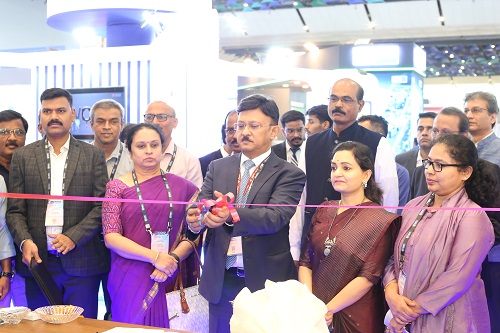
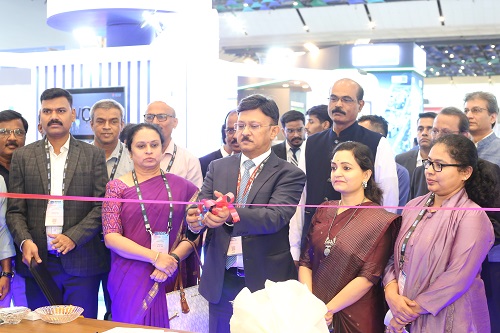
Lamp Lighting Ceremony – World Public Summit. India 2026


The Summit resulted in the adoption of the Delhi Declaration, outlining recommendations and areas of collaboration across regions, expected to contribute to the agenda for the global summit in Moscow. The Delhi Principle emphasises that human unity unfolds through respect for civilizational diversity, human dignity, and shared responsibility for the future.


Organised by the World Peoples Assembly in cooperation with the BRICS Chamber of Commerce and Industry, the Summit marked the beginning of a series of regional engagements scheduled across multiple geographies ahead of the World Public Summit in Moscow later this year. Held under the theme “New World: India in the Architecture of a Shared Future,” the programme included a plenary session and discussions on culture, leadership, media, and economic cooperation, along with roundtables on youth engagement, women’s participation and emerging sectors including space.


The Summit saw participation from key dignitaries including Mr Sameep Shastri, Vice Chairman, BRICS Chamber of Commerce and Industry, Ms Meenakshi Lekhi, Former Minister of State for External Affairs of India, Ms Svetlana Konstantinovna Smirnova, Chairperson of the General Council of the World Peoples Assembly, and Oleg Skripochka, a Russian cosmonaut and Hero of the Russian Federation.


Addressing the gathering, Mr Sameep Shastri, Vice Chairman, BRICS Chamber of Commerce and Industry, said, “As the world stands at a defining moment, with new alliances emerging and the Global South gaining prominence, the idea of conscious unity becomes a necessity. This platform must move beyond dialogue towards meaningful collaboration. The future will be shaped by collective resilience and a shared commitment to cooperation over conflict, guided by purpose and a sense of unity.”


Speaking on the importance of meaningful dialogue in today’s scenario, Ms Meenakshi Lekhi, Former Minister of State for External Affairs of India, said, “In today’s world, meaningful dialogue is more important than ever. Harmony cannot be imposed, and it has to come from within the human conscious. Platforms like the World Public Summit enable us to sit across the table, engage in honest conversations and truly listen to each other. When we understand different perspectives and step into each other’s shoes, empathy takes over and solutions begin to emerge.”


Discussions at the Summit focused on key global issues including geopolitics and security, sustainable development, technology and the future of humanity, humanitarian values, and the evolving global economy. The Public Summit in India also marked the beginning of a series of regional summits to be held in the Arab World, Latin America, Africa and Europe in 2026.


Svetlana Konstantinovna Smirnova, Chairperson of the General Council of the World Peoples Assembly, said, “The idea of a new world of conscious unity is about peace, harmony, friendship and shared purpose. It is not utopia, but a future we can build together. Through the World Peoples Assembly, we bring together civil society, business and communities across countries to strengthen public diplomacy and create meaningful dialogue that shapes a more connected and cooperative world.”


As a part of the event, Cosmonaut Oleg Skripochka, Hero of the Russian Federation, will also host a series of educational events in India to mark the 65th anniversary of the first human spaceflight, including a round table at the Russian House in New Delhi and student interactions. During his address, he said, “From space, you see how small and fragile our planet is, our only common home. We have no alternative but to live and work together. In space programmes, people from different countries, cultures and traditions come together, find common ground and achieve shared goals. This gives us hope that on Earth too, we can solve problems and move forward in peace and harmony.”


Highlighting the growing momentum in international partnerships, Alexey Bondaruk, CEO of the Moscow Center for International Cooperation, said, “India remains one of our key strategic partners, and cooperation continues to expand across trade, investment and innovation. This partnership reflects strong momentum and shared intent. As a major economic and innovation hub, Moscow is open to new joint initiatives and looks forward to deeper collaboration based on shared knowledge, technology and mutual trust.”


The Summit featured panel discussions, including the Opening Plenary “India: Unity in Diversity — the Architecture of a Common Future. Values that Unite,” with speakers such as Svetlana Smirnova, Hélène Perroud and Himadrish Suwan, focusing on unity and value-based leadership. It also included sessions on “Peace through Culture: Shared Values as the Basis for a Common Future,” featuring Shri Manoj Kumar Tiwari, Member of the Lok Sabha, Anand Raaj Anand and Sandeep Marwah.


“The World Public Summit India has demonstrated the power of dialogue rooted in mutual respect. It is through inclusive platforms like this that we build bridges across nations, cultures, and communities for a more balanced global”, said State-Secretary of World Peoples Assembly, Alena Dolgopolova.


Dalbir Singh, Member of the Supreme Advisory Council of the World Peoples Assembly, President of the Foundation for Policy and Governance and Chairman of One Globe Forum India, said, “India offers a powerful model through the philosophy of Vasudhaiva Kutumbakam, the world is one family. It is not merely an idea but a framework for global cooperation rooted in mutual respect and peaceful coexistence. We must move from dialogue to action and build a future where humanity is united not by necessity, but by shared purpose. This must become our collective vision and responsibility.”


The World Peoples Assembly is an international union of non-governmental organizations that serves as a humanitarian platform for cooperation between peoples based on trust, mutual respect and shared values. The Summit brought together participants from 153 countries.

India's Used Car Market Shifts Gears as Tier-2 Cities Drive 62 percent Demand: Cars24 Report

For most of the past decade, the story of India’s used car market was essentially a story about its largest cities. Delhi, Mumbai, Bengaluru, and Hyderabad drove volumes. National trends were, in many ways, just metropolitan trends dressed up in aggregate numbers.
 

That is no longer true. According to the Cars24 Gears of Growth Report 2025, Tier-2 cities now account for 62% of all used car sales in India, with metro cities contributing the remaining 38%. The centre of gravity has shifted, and it has brought with it a fundamentally different kind of buyer with different priorities, different budgets, and different ideas about what a car should do.


Delhi loses ground, Karnataka and Gujarat post some of the largest gains on record
The numbers from the Cars24 Gears of Growth Report tell a clear story about where momentum now lives in the Indian used car market. Delhi’s share of national sales dropped from 13.8% in 2024 to 5.8% in 2025. Haryana fell from 10.7% to 5.6%. These are not marginal corrections. They represent a structural rebalancing of where demand is being generated.


Meanwhile, states that were once considered secondary markets have posted some of the largest gains. Karnataka grew from 10% to 16% in a single year. Gujarat surged from 8.7% to 13.1%. Maharashtra consolidated its position as the single largest market, growing from 16.4% to 20.1%. Tamil Nadu and Telangana both roughly doubled their shares.


State-wise market share: 2024 vs 2025

Source: Cars24 Gears of Growth Report 2025


The practical implication is significant. A market once dependent on the consumption patterns of northern metros is now drawing from a far wider and more diverse base of buyers across western, southern, and central India.


Metro and non-metro buyers are not buying the same car for the same reason
What makes this shift analytically interesting is that metro and non-metro buyers are not simply buying the same cars in different locations. They represent genuinely distinct demand profiles, shaped by different economic circumstances, road conditions, income levels, and expectations of car ownership.


Share of used car sales by geography (2025)

Geography

Share (%)

Tier-2 cities

62%

Metro cities

38%

Source: Cars24 Gears of Growth Report 2025


Metro vs Tier-2: How buyer profiles differ 

Dimension

Metro cities (38%)

Tier-2 cities (62%)

Primary buyer type

Upgraders

First-time buyers

Top body type

SUVs and premium hatchbacks

Hatchbacks and compact sedans

Ownership cycle

Shorter, faster replacement

Longer, value-oriented

Key purchase driver

Aspiration and lifestyle

Affordability and reliability

Financing adoption

Around 50%

Close to 58%

Source: Cars24 Gears of Growth Report 2025


Metro buyers tend to treat used cars as a stepping stone to a better vehicle. They upgrade more frequently, are more willing to pay for convenience features like automatic transmissions, and lean toward SUVs and premium hatchbacks. For this segment, the used car market functions as an aspirational ladder.


Non-metro buyers approach the market differently. For many, this is their first car purchase. The decision is driven by functional need: reliable daily transportation, low maintenance costs, fuel efficiency, and strong parts availability at local service centres. Longer ownership cycles mean resale value and durability matter more than style.


According to the Cars24 Gears of Growth Report, non-metro markets also show notably higher financing adoption, close to 58%, compared to around 50% in metro cities. This reflects both the income profile of first-time buyers and the growing reach of digital lending platforms into smaller cities.


Model preferences reveal two distinct sets of priorities, not just two price points
The difference in buyer profiles translates directly into model preferences. The Cars24 Gears of Growth Report data on top-selling models by geography makes the contrast visible.


Top 10 models by geography: Metro vs Non-Metro
 

Rank

Metro model

Share

Non-metro model

Share

1

Nexon

3.99%

Nexon

3.95%

2

Baleno

3.78%

Grand i10

3.65%

3

Grand i10

3.19%

Baleno

3.13%

4

Tiago

2.26%

Kwid

2.91%

5

Swift

2.17%

Elite i20

2.42%

6

Elite i20

2.15%

Tiago

2.20%

7

Venue

2.08%

Venue

2.15%

8

City

2.07%

Altroz

2.14%

9

Baleno (higher trim)

2.07%

Grand Nios

1.87%

10

Kwid

2.07%

Kwid

1.84%

Source: Cars24 Gears of Growth Report 2025


The Nexon is the top-selling model in both geographies, which speaks to its broad appeal across price points and use cases. But the divergence begins immediately after. Metros rank the Baleno second, a premium hatchback with feature-rich trims and strong automatic penetration. Non-metro markets place the Grand i10 second, a model valued for its simplicity, low running costs, and widespread service network.


The Honda City appears in the metro top 10, reflecting urban appetite for sedans despite the segment’s overall decline. It does not appear in the non-metro list at all. The Kwid, on the other hand, ranks fourth in non-metro markets, driven by its entry-level price point and low cost of ownership.


The Nexon is the top-selling model in both geographies, which speaks to its broad appeal across price points and use cases. But the divergence begins immediately after. Metros rank the Baleno second, a premium hatchback with feature-rich trims and strong automatic penetration. Non-metro markets place the Grand i10 second, a model valued for its simplicity, low running costs, and widespread service network.


The Honda City appears in the metro top 10, reflecting urban appetite for sedans despite the segment’s overall decline. It does not appear in the non-metro list at all. The Kwid, on the other hand, ranks fourth in non-metro markets, driven by its entry-level price point and low cost of ownership.


Tamil Nadu leads on spending, Uttar Pradesh reflects a value-first buyer base
Average selling prices across the top five states in the Cars24 Gears of Growth Report reveal how vehicle mix and buyer profiles translate into spending patterns.


Average selling price by state: top 5 markets (2025)

Source: Cars24 Gears of Growth Report 2025. Values in Rs lakh


Tamil Nadu leads on average selling price at Rs 5.49 lakh, supported by strong mid-to-premium demand and a higher concentration of newer vehicles. Uttar Pradesh sits lowest at Rs 4.90 lakh, reflecting its value-oriented buyer base and a higher share of older, entry-level vehicles.


The Cars24 Gears of Growth Report notes that ASP variation reflects vehicle mix and age more than transaction volume alone. A state can be growing rapidly in volume while still trading at lower average prices if its buyers are primarily first-time purchasers entering at the entry end of the market.


Three forces turning smaller cities into the engine of national used car demand


Rising incomes and first-time buyers
Expanding Tier-2 cities and rising incomes among salaried and self-employed households have created a new class of first-time car buyers. For these buyers, a used car is not a compromise. It is a considered financial decision that maximises value while managing risk on an unfamiliar purchase.


Digital platforms reducing the trust gap
Historically, used car buying in smaller cities relied heavily on local dealer relationships and word of mouth. Digital platforms with certified inspections and transparent pricing have changed this, giving non-metro buyers access to the same quality assurance that metro buyers have had for longer.


SME activity and trade-driven demand
Gujarat’s sharp rise from 8.7% to 13.1% market share is not purely a consumer story. The Cars24 Gears of Growth Report points to strong SME activity, expanding trade hubs, and rising digital adoption across industrial clusters as key drivers. In many non-metro markets, vehicles serve dual purposes, moving families and moving goods, which creates a more consistently motivated demand base than pure urban consumption.


Conclusion: Tier-2 India is not catching up to metros; it is building its own market
The used car market’s geographic diversification is not a temporary phenomenon. It reflects structural changes in India’s economy: the growth of Tier-2 cities, the expansion of digital financial infrastructure into smaller markets, and the rising aspirations of a middle class that is no longer concentrated in a handful of metros.

For the industry, this means the national market is becoming more resilient. No single state or city can now determine whether it has a good year. For buyers in smaller cities, it means access to a more organised, transparent, and well-stocked market than was available even three years ago.
The Cars24 Gears of Growth Report 2025, based on data from over 33 million users, captures this transition at a meaningful scale. Tier-2 India is not catching up to the metros. It is building its own version of the used car market, on its own terms.

About the Data
All data in this article is sourced exclusively from the Cars24 Gears of Growth Report 2025, based on Cars24 internal transaction data comprising over 33 million users as of December 2025. This article does not use any external data sources.

AI-Native Lending Platform Uncia Raises INR 25 Crores from Pavestone VC to Scale Globally

Uncia Technologies Private Limited today announced the close of an INR 25 crores funding round, its first, from Pavestone VC – a Hyderabad-based venture capital firm. The investment marks a deliberate inflection point for a company that over the last 5 years, chose to build its product, prove its market, and earn institutional trust before seeking external capital.


The funding will accelerate Uncia’s growth in India while simultaneously funding the company’s entry into the Middle East, North Africa (MENA), and North American markets. Uncia has also announced its intent to pursue a public listing in the next few years, positioning this round as the first chapter of what the company’s leadership describes as a multi-year journey toward becoming a globally scaled, publicly accountable lending technology institution.


Hari Padmanabhan


“We made a deliberate choice to build before we raised. Every rupee we invested came from the conviction that if we solved the right problem well enough, the market would validate it. Today, we manage over 2 lakh crore rupees cumulatively for some of India’s top NBFCs, and we believe we’ve proven our thesis. This funding is not a beginning but a gear shift. We have the product. We have validation at scale and diversity. Now we have the capital to take this to the world. We’re pleased to partner with Pavestone. Their investment values align closely with our mission, and we look forward to drawing on the strategic insight of their leadership team.” – Hari Padmanabhan, Chairman, Uncia.


In an era defined by heavily funded fintechs and venture-backed growth stories, Uncia represents something increasingly rare: a technology company that chose to let its product do the talking before its pitch deck did. Without external capital, the company had no choice but to be relentlessly precise about what it built, for whom, and why. The result is an AI-native platform suite that today powers loan origination, loan management, and supply chain finance operations for some of India’s most respected financial institutions.


Uncia’s AI-native platforms are designed around a philosophy the company calls ‘self-serve lending infrastructure’: the ability for a financial institution to configure, launch, and manage complex lending products independently, without change requests, IT dependencies, or implementation delays measured in quarters. Over 2 years of dedicated AI research, conducted in collaboration with IIT Madras from Uncia’s base at the IITM Technology Research Park, is now beginning to deliver measurable results. Early adopters among Uncia’s clients are already seeing direct cost efficiencies and smarter underwriting outcomes powered by these models.


“At Pavestone, we focus on backing businesses that are solving structural problems in large enterprises, with a clear path to scale and profitability. The lending ecosystem is expanding rapidly, yet much of the underlying technology remains constrained by legacy systems that cannot support the speed, flexibility, and intelligence lenders now require. Uncia has built a unified, cloud-first platform with embedded AI capabilities that addresses these challenges while enabling rapid deployment and ‘pay-as-you-grow’ scalability. We believe the company is well-positioned to deliver durable value.” – Srikanth Tanikella, Managing Partner, Pavestone Capital.


About Uncia Technologies Private Limited

Uncia Technologies is a Chennai-based AI-Native lending technology company that builds the digital infrastructure powering India’s banks and NBFCs. Founded on the belief that financial institutions deserve technology as sophisticated as the problems they solve, Uncia offers three integrated platforms: UnciaPrime (Loan Origination System), UnciaLeap (Loan Management System), and UnciaFlow (Supply Chain Finance and Digital Lending). The company’s platforms today process over INR 2 Lakh Crore AUM across leading financial institutions, including some of India’s largest and most respected lenders.


About Pavestone VC

Pavestone, a Hyderabad-headquartered VC firm, brings timeless investing principles to modern Venture Capital with a philosophy of supporting committed innovators with smart capital to build real-world value. Pavestone Technology Fund, with an INR 816 Cr corpus, fosters early growth-stage B2B technology companies that solve critical challenges for large public and private enterprises. The fund’s focus is on companies with validated market traction, established product-market fit, and partnerships with anchor clients. They also selectively invest in early-stage ventures pioneering high-impact technologies, targeting significant breakthroughs in enterprise solutions.

Garnier Color Naturals Celebrates Mother–daughter Trust with Raveena Tandon and Rasha Thadani in New Campaign

Garnier Color Naturals strengthens its association with actor Raveena Tandon and introduces Rasha Thadani in its latest campaign, bringing together a real-life mother-daughter duo to celebrate the brand’s core pillar of trust while celebrating effortless at-home hair color. The campaign marks a natural progression for the brand, blending Garnier Color Naturals’ legacy of trusted, natural-looking hair color with Raveena’s enduring appeal resonating across generations and Rasha’s fresh, new-age relatability.


https://www.newsvoir.com/images/article/image1/35095_GCN-image.jpeg

Garnier Color Naturals Celebrates Mother–Daughter Trust With Raveena Tandon And Rasha Thadani In New Campaign


An iconic star, Raveena, along with her daughter Rasha, brings an effortless warmth and authenticity to the campaign through their real-life bond. The film captures a tender, everyday moment between the two, as Rasha turns to her mother after coloring her hair, seeking her vote of confidence. What follows is a simple yet meaningful exchange that reflects just how reassuring a mother’s validation is for confidence-building. Their natural chemistry and effortless interaction make the moment deeply relatable, reinforcing how beauty choices are often guided by trust, shared experiences, and the comfort of validation.


Sharing her thoughts on the campaign, Raveena Tandon said, “As a mother, there is nothing more meaningful than your child placing their trust in your choices, and nothing more reassuring than seeing them embrace their own with confidence. This campaign beautifully captures that heartfelt, powerful bond. It feels authentic and deeply relatable, mirroring the relationship I share with Rasha. I’ve always believed in choosing what I trust, and Garnier Color Naturals has consistently been that choice for me.”


Sharing her perspective, Rasha Thadani added, “I think we all, in some way, look to our mothers for validation, especially when trying something new. When it comes to beauty, my mom has always been my biggest inspiration and my most honest critic. This campaign felt very close to home because it captures a real moment between us. Seeing how fabulous my mom looked made me want to try Garnier Color Naturals myself.


Ajay Simha, General Manager, Garnier, said, “Garnier Color Naturals has long been an icon in at-home hair colour, trusted by generations of women for its rich, natural-looking color and ease of use. It is a brand that has been equally loved by mothers and daughters, making Raveena Tandon and Rasha Thadani a natural choice to bring this story to life. At a time when the at-home hair color category is evolving, this campaign builds on our legacy by placing trust at the centre of the conversation. By tapping into the universally relatable mother-daughter dynamic, we aim to make hair color feel more intuitive, reassuring, and relevant for today’s consumers.”


With the new Trust Campaign, Garnier Color Naturals reinforces its leadership in at-home hair color by anchoring the category in trust – the most powerful driver — and bringing together a product loved across generations with a story featuring Raveena Tandon and Rasha Thadani that reflects how women discover, choose, and stand by what works for them.


Instagram link: www.instagram.com/reel/DWJgrnUjLW2/?igsh=Zjhoejc4aG02bGc%3D.

Red Hat and Google Cloud Expand Collaboration to Accelerate Application Modernization and Cloud Migration with Red Hat OpenShift

  • Red Hat OpenShift is now available on the Google Cloud console

  • Red Hat OpenShift Virtualization is generally available on Red Hat OpenShift Dedicated on Google Cloud 


Red Hat, the world’s leading provider of open source solutions, today announced an expanded collaboration with Google Cloud to help organizations accelerate application modernization and cloud migrations. This expansion introduces Red Hat OpenShift in the Google Cloud console, deeper integrations with Google Cloud services and marks the general availability of Red Hat OpenShift Virtualization on Red Hat OpenShift Dedicated on Google Cloud.


Today’s announcement reinforces both companies’ shared commitment to provide a comprehensive application platform where enterprises can confidently build, deploy, manage and scale containerized, virtualized and AI applications on Google Cloud. Customers can operate with the assurance that both Red Hat and Google are committed to the performance, security and continued success of applications running on Red Hat OpenShift on Google Cloud.


Enhanced flexibility for workloads on Google Cloud

Red Hat OpenShift is now available within the Google Cloud console. This makes it easier for customers to find the right solution for running their workloads on Google Cloud and guiding users through a more seamless onboarding experience. Key benefits include:

  • Streamlined onboarding: Red Hat OpenShift Dedicated users can natively validate Google Cloud prerequisites before transitioning to a guided cluster provisioning flow within the Red Hat Hybrid Cloud Console.

  • Unified billing and procurement: Organizations can use flexible, pay-as-you-go pricing through Google Cloud Marketplace that counts their Red Hat OpenShift subscription costs against their Google Cloud committed spend.

  • Native service integrations: Red Hat OpenShift users can unlock the power of Google-native integrations through jointly engineered and supported integrations with key services such as Google Cloud Secret Manager, Certificate Authority Service and Workload Identity Federation among others.


Modernizing infrastructure with Red Hat OpenShift Virtualization

Faced with rising costs and increased complexity, organizations need solutions that let them migrate workloads today and modernize at their own pace. Red Hat OpenShift Virtualization, a built-in capability of Red Hat OpenShift, bridges the gap between legacy infrastructure and modern innovation by unifying traditional virtual machines (VMs) with containers and serverless workloads on a consistent Kubernetes platform. Users benefit from one interface, one toolset and one set of operational practices across all workloads.


Available on Google Cloud C3 bare metal instances, Red Hat OpenShift Virtualization enables organizations with direct access to CPU and memory resources for performance-sensitive or licensing-constrained workloads, helping support modernization while maintaining predictable performance in the cloud to achieve:

  • Accelerated modernization: Red Hat OpenShift Dedicated on Google Cloud brings modern application development processes and tools to VMs, allowing organizations to accelerate the modernization of VM-based applications at their own pace.

  • Consistent management across hybrid environments: With a unified operational model, IT teams can consistently manage VMs and containers across on-premises, cloud, and edge environments, improving efficiency and gaining flexibility.

  • Simplified migration: Organizations get flexibility to migrate from traditional virtualization with minimal downtime using tools like the migration toolkit for virtualization and Red Hat Ansible Automation Platform to ease the transition to a modern offering with flexibility to bring these workloads to a consistent hybrid approach with OpenShift and Google Cloud. 

  • Enhanced scalability and reliability: Red Hat OpenShift Dedicated on Google Cloud enables organizations to gain more predictable performance, elastic scaling, and stronger SLAs, backed by a comprehensive application platform and highly scalable infrastructure.


Red Hat OpenShift Dedicated on Google Cloud is a fully managed application platform that allows customers to focus on building and scaling applications that drive their core business. Global Site Reliability Engineers and built-in automation reduce operational overhead and improve efficiencies.


To experience these new capabilities and accelerate the modernization journey, organizations can explore Red Hat OpenShift directly within the Google Cloud console. Additionally, organizations can begin their modernization journey at their own pace with Red Hat OpenShift Virtualization on Red Hat OpenShift Dedicated on Google Cloud.


Supporting Quotes

Mike Barrett, vice president and general manager, Hybrid Cloud Platforms, Red Hat,Red Hat’s hybrid cloud vision is built on consistency – the ability to run any workload, anywhere, with the same operational model. This extended collaboration with Google Cloud further empowers organizations with comprehensive cloud-native capabilities of Red Hat OpenShift, whether they need to accelerate application development or streamline migration to the cloud. Together, Red Hat and Google provide a clear, unified path for organizations to modernize their entire application portfolio, helping them manage both their traditional VMs and containerized applications on a single platform.


Nirav Mehta, vice president, Product Management – Google Cloud Compute Platform, Google Cloud, Our customers are constantly looking for ways to simplify their infrastructure and accelerate innovation without sacrificing performance. We are pleased to deepen our collaboration with Red Hat for OpenShift on Google Cloud. Customers now have a smoother path, enabling them to run both virtualized and containerized workloads consistently on Google Cloud’s global, secure, and performant infrastructure.”


Additional Resources


Connect with Red Hat


About Red Hat, Inc.

Red Hat is the open hybrid cloud technology leader, delivering a trusted, consistent and comprehensive foundation for transformative IT innovation and AI applications. Its portfolio of cloud, developer, AI, Linux, automation and application platform technologies enables any application, anywhere—from the datacenter to the edge. As the world’s leading provider of enterprise open source software solutions, Red Hat invests in open ecosystems and communities to solve tomorrow’s IT challenges. Collaborating with partners and customers, Red Hat helps them build, connect, automate, secure and manage their IT environments, supported by consulting services and award-winning training and certification offerings.


Forward-Looking Statements

Except for the historical information and discussions contained herein, statements contained in this press release may constitute forward-looking statements within the meaning of the Private Securities Litigation Reform Act of 1995. Forward-looking statements are based on the company’s current assumptions regarding future business and financial performance.  These statements involve a number of risks, uncertainties and other factors that could cause actual results to differ materially. Any forward-looking statement in this press release speaks only as of the date on which it is made. Except as required by law, the company assumes no obligation to update or revise any forward-looking statements.

Red Hat and Google Cloud Expand Collaboration to Accelerate Application Modernization and Cloud Migration with Red Hat OpenShift

  • Red Hat OpenShift is now available on the Google Cloud console

  • Red Hat OpenShift Virtualization is generally available on Red Hat OpenShift Dedicated on Google Cloud 


Red Hat, the world’s leading provider of open source solutions, today announced an expanded collaboration with Google Cloud to help organizations accelerate application modernization and cloud migrations. This expansion introduces Red Hat OpenShift in the Google Cloud console, deeper integrations with Google Cloud services and marks the general availability of Red Hat OpenShift Virtualization on Red Hat OpenShift Dedicated on Google Cloud.


Today’s announcement reinforces both companies’ shared commitment to provide a comprehensive application platform where enterprises can confidently build, deploy, manage and scale containerized, virtualized and AI applications on Google Cloud. Customers can operate with the assurance that both Red Hat and Google are committed to the performance, security and continued success of applications running on Red Hat OpenShift on Google Cloud.


Enhanced flexibility for workloads on Google Cloud

Red Hat OpenShift is now available within the Google Cloud console. This makes it easier for customers to find the right solution for running their workloads on Google Cloud and guiding users through a more seamless onboarding experience. Key benefits include:

  • Streamlined onboarding: Red Hat OpenShift Dedicated users can natively validate Google Cloud prerequisites before transitioning to a guided cluster provisioning flow within the Red Hat Hybrid Cloud Console.

  • Unified billing and procurement: Organizations can use flexible, pay-as-you-go pricing through Google Cloud Marketplace that counts their Red Hat OpenShift subscription costs against their Google Cloud committed spend.

  • Native service integrations: Red Hat OpenShift users can unlock the power of Google-native integrations through jointly engineered and supported integrations with key services such as Google Cloud Secret Manager, Certificate Authority Service and Workload Identity Federation among others.


Modernizing infrastructure with Red Hat OpenShift Virtualization

Faced with rising costs and increased complexity, organizations need solutions that let them migrate workloads today and modernize at their own pace. Red Hat OpenShift Virtualization, a built-in capability of Red Hat OpenShift, bridges the gap between legacy infrastructure and modern innovation by unifying traditional virtual machines (VMs) with containers and serverless workloads on a consistent Kubernetes platform. Users benefit from one interface, one toolset and one set of operational practices across all workloads.


Available on Google Cloud C3 bare metal instances, Red Hat OpenShift Virtualization enables organizations with direct access to CPU and memory resources for performance-sensitive or licensing-constrained workloads, helping support modernization while maintaining predictable performance in the cloud to achieve:

  • Accelerated modernization: Red Hat OpenShift Dedicated on Google Cloud brings modern application development processes and tools to VMs, allowing organizations to accelerate the modernization of VM-based applications at their own pace.

  • Consistent management across hybrid environments: With a unified operational model, IT teams can consistently manage VMs and containers across on-premises, cloud, and edge environments, improving efficiency and gaining flexibility.

  • Simplified migration: Organizations get flexibility to migrate from traditional virtualization with minimal downtime using tools like the migration toolkit for virtualization and Red Hat Ansible Automation Platform to ease the transition to a modern offering with flexibility to bring these workloads to a consistent hybrid approach with OpenShift and Google Cloud. 

  • Enhanced scalability and reliability: Red Hat OpenShift Dedicated on Google Cloud enables organizations to gain more predictable performance, elastic scaling, and stronger SLAs, backed by a comprehensive application platform and highly scalable infrastructure.


Red Hat OpenShift Dedicated on Google Cloud is a fully managed application platform that allows customers to focus on building and scaling applications that drive their core business. Global Site Reliability Engineers and built-in automation reduce operational overhead and improve efficiencies.


To experience these new capabilities and accelerate the modernization journey, organizations can explore Red Hat OpenShift directly within the Google Cloud console. Additionally, organizations can begin their modernization journey at their own pace with Red Hat OpenShift Virtualization on Red Hat OpenShift Dedicated on Google Cloud.


Supporting Quotes

Mike Barrett, vice president and general manager, Hybrid Cloud Platforms, Red Hat,Red Hat’s hybrid cloud vision is built on consistency – the ability to run any workload, anywhere, with the same operational model. This extended collaboration with Google Cloud further empowers organizations with comprehensive cloud-native capabilities of Red Hat OpenShift, whether they need to accelerate application development or streamline migration to the cloud. Together, Red Hat and Google provide a clear, unified path for organizations to modernize their entire application portfolio, helping them manage both their traditional VMs and containerized applications on a single platform.


Nirav Mehta, vice president, Product Management – Google Cloud Compute Platform, Google Cloud, Our customers are constantly looking for ways to simplify their infrastructure and accelerate innovation without sacrificing performance. We are pleased to deepen our collaboration with Red Hat for OpenShift on Google Cloud. Customers now have a smoother path, enabling them to run both virtualized and containerized workloads consistently on Google Cloud’s global, secure, and performant infrastructure.”


Additional Resources


Connect with Red Hat


About Red Hat, Inc.

Red Hat is the open hybrid cloud technology leader, delivering a trusted, consistent and comprehensive foundation for transformative IT innovation and AI applications. Its portfolio of cloud, developer, AI, Linux, automation and application platform technologies enables any application, anywhere—from the datacenter to the edge. As the world’s leading provider of enterprise open source software solutions, Red Hat invests in open ecosystems and communities to solve tomorrow’s IT challenges. Collaborating with partners and customers, Red Hat helps them build, connect, automate, secure and manage their IT environments, supported by consulting services and award-winning training and certification offerings.


Forward-Looking Statements

Except for the historical information and discussions contained herein, statements contained in this press release may constitute forward-looking statements within the meaning of the Private Securities Litigation Reform Act of 1995. Forward-looking statements are based on the company’s current assumptions regarding future business and financial performance.  These statements involve a number of risks, uncertainties and other factors that could cause actual results to differ materially. Any forward-looking statement in this press release speaks only as of the date on which it is made. Except as required by law, the company assumes no obligation to update or revise any forward-looking statements.

Red Hat and Google Cloud Expand Collaboration to Accelerate Application Modernization and Cloud Migration with Red Hat OpenShift

  • Red Hat OpenShift is now available on the Google Cloud console

  • Red Hat OpenShift Virtualization is generally available on Red Hat OpenShift Dedicated on Google Cloud 


Red Hat, the world’s leading provider of open source solutions, today announced an expanded collaboration with Google Cloud to help organizations accelerate application modernization and cloud migrations. This expansion introduces Red Hat OpenShift in the Google Cloud console, deeper integrations with Google Cloud services and marks the general availability of Red Hat OpenShift Virtualization on Red Hat OpenShift Dedicated on Google Cloud.


Today’s announcement reinforces both companies’ shared commitment to provide a comprehensive application platform where enterprises can confidently build, deploy, manage and scale containerized, virtualized and AI applications on Google Cloud. Customers can operate with the assurance that both Red Hat and Google are committed to the performance, security and continued success of applications running on Red Hat OpenShift on Google Cloud.


Enhanced flexibility for workloads on Google Cloud

Red Hat OpenShift is now available within the Google Cloud console. This makes it easier for customers to find the right solution for running their workloads on Google Cloud and guiding users through a more seamless onboarding experience. Key benefits include:

  • Streamlined onboarding: Red Hat OpenShift Dedicated users can natively validate Google Cloud prerequisites before transitioning to a guided cluster provisioning flow within the Red Hat Hybrid Cloud Console.

  • Unified billing and procurement: Organizations can use flexible, pay-as-you-go pricing through Google Cloud Marketplace that counts their Red Hat OpenShift subscription costs against their Google Cloud committed spend.

  • Native service integrations: Red Hat OpenShift users can unlock the power of Google-native integrations through jointly engineered and supported integrations with key services such as Google Cloud Secret Manager, Certificate Authority Service and Workload Identity Federation among others.


Modernizing infrastructure with Red Hat OpenShift Virtualization

Faced with rising costs and increased complexity, organizations need solutions that let them migrate workloads today and modernize at their own pace. Red Hat OpenShift Virtualization, a built-in capability of Red Hat OpenShift, bridges the gap between legacy infrastructure and modern innovation by unifying traditional virtual machines (VMs) with containers and serverless workloads on a consistent Kubernetes platform. Users benefit from one interface, one toolset and one set of operational practices across all workloads.


Available on Google Cloud C3 bare metal instances, Red Hat OpenShift Virtualization enables organizations with direct access to CPU and memory resources for performance-sensitive or licensing-constrained workloads, helping support modernization while maintaining predictable performance in the cloud to achieve:

  • Accelerated modernization: Red Hat OpenShift Dedicated on Google Cloud brings modern application development processes and tools to VMs, allowing organizations to accelerate the modernization of VM-based applications at their own pace.

  • Consistent management across hybrid environments: With a unified operational model, IT teams can consistently manage VMs and containers across on-premises, cloud, and edge environments, improving efficiency and gaining flexibility.

  • Simplified migration: Organizations get flexibility to migrate from traditional virtualization with minimal downtime using tools like the migration toolkit for virtualization and Red Hat Ansible Automation Platform to ease the transition to a modern offering with flexibility to bring these workloads to a consistent hybrid approach with OpenShift and Google Cloud. 

  • Enhanced scalability and reliability: Red Hat OpenShift Dedicated on Google Cloud enables organizations to gain more predictable performance, elastic scaling, and stronger SLAs, backed by a comprehensive application platform and highly scalable infrastructure.


Red Hat OpenShift Dedicated on Google Cloud is a fully managed application platform that allows customers to focus on building and scaling applications that drive their core business. Global Site Reliability Engineers and built-in automation reduce operational overhead and improve efficiencies.


To experience these new capabilities and accelerate the modernization journey, organizations can explore Red Hat OpenShift directly within the Google Cloud console. Additionally, organizations can begin their modernization journey at their own pace with Red Hat OpenShift Virtualization on Red Hat OpenShift Dedicated on Google Cloud.


Supporting Quotes

Mike Barrett, vice president and general manager, Hybrid Cloud Platforms, Red Hat,Red Hat’s hybrid cloud vision is built on consistency – the ability to run any workload, anywhere, with the same operational model. This extended collaboration with Google Cloud further empowers organizations with comprehensive cloud-native capabilities of Red Hat OpenShift, whether they need to accelerate application development or streamline migration to the cloud. Together, Red Hat and Google provide a clear, unified path for organizations to modernize their entire application portfolio, helping them manage both their traditional VMs and containerized applications on a single platform.


Nirav Mehta, vice president, Product Management – Google Cloud Compute Platform, Google Cloud, Our customers are constantly looking for ways to simplify their infrastructure and accelerate innovation without sacrificing performance. We are pleased to deepen our collaboration with Red Hat for OpenShift on Google Cloud. Customers now have a smoother path, enabling them to run both virtualized and containerized workloads consistently on Google Cloud’s global, secure, and performant infrastructure.”


Additional Resources


Connect with Red Hat


About Red Hat, Inc.

Red Hat is the open hybrid cloud technology leader, delivering a trusted, consistent and comprehensive foundation for transformative IT innovation and AI applications. Its portfolio of cloud, developer, AI, Linux, automation and application platform technologies enables any application, anywhere—from the datacenter to the edge. As the world’s leading provider of enterprise open source software solutions, Red Hat invests in open ecosystems and communities to solve tomorrow’s IT challenges. Collaborating with partners and customers, Red Hat helps them build, connect, automate, secure and manage their IT environments, supported by consulting services and award-winning training and certification offerings.


Forward-Looking Statements

Except for the historical information and discussions contained herein, statements contained in this press release may constitute forward-looking statements within the meaning of the Private Securities Litigation Reform Act of 1995. Forward-looking statements are based on the company’s current assumptions regarding future business and financial performance.  These statements involve a number of risks, uncertainties and other factors that could cause actual results to differ materially. Any forward-looking statement in this press release speaks only as of the date on which it is made. Except as required by law, the company assumes no obligation to update or revise any forward-looking statements.
"The All Hearts Tour – Live": Shreya Ghoshal Becomes India's First Female Artist in Three Decades to Launch a Live Album

One of Indian music’s most loved and celebrated voices, Shreya Ghoshal has etched her name in history by becoming the first Indian female artist in three decades to release a live tour album, featuring exclusive recordings from her most recent All Hearts Tour. Known for her soulful voice and unmatched versatility, this live album is a heartfelt gift to her fans and captures the raw energy, emotional depth, and musical brilliance that defined the All Hearts Tour, offering listeners an immersive concert-like experience.


“The All Hearts Tour – Live”: Shreya Ghoshal Becomes India’s First Female Artist in Three Decades to Launch a Live Album


These live versions capture the scale, emotion and energy experienced across sold-out arenas & venues worldwide. Drawing from some of Bollywood’s biggest blockbusters, the album showcases the remarkable versatility & longevity of Shreya Ghoshal’s catalogue – from the intensity of “O Saathi Re” from Omkara (2006) to the grandeur of “Deewani Mastani” from Bajirao Mastani (2015), from era-defining dance anthems like “Chikni Chameli” from Agneepath (2012) to the beautiful intimacy of “Samjhawan” from Humpty Sharma Ki Dulhania (2014) – the album spans three decades of moments that have shaped the sound and sentiment of modern Indian pop culture.


Speaking about the Album, Shreya Ghoshal says, “The All Hearts Tour – Live” album is incredibly special to me. For the first time, I’m releasing concert recordings so my audience can relive the same emotion and energy. This is my gift to everyone who’s been part of my journey over the years- my listeners, my fans, those who attended the tour, and even those who couldn’t. I wanted to give them something in return, because as the name suggests, my fans truly are All Heart.


This 44-city global tour covered India, North America, the United Kingdom, the Middle East, Australia and Europe. Shreya Ghoshal performed at major international venues including the OVO Arena Wembley (London), Oakland Arena (California) & Wolf Trap (Washington DC). She’s the second Indian Artist (after Lata Mangeshkar) to perform at the Fox Theatre (Detroit) and the First Indian Artist to perform at the Dolby Theatre (Los Angeles) Currently ranked among the world’s most-streamed artists across platforms, her international footprint continues to expand through collaborations with artists including Tayc, Saad Lamjarred, Pentatonix and Afroto. Two such collaborations were part of Grammy-nominated albums.


With a career spanning generation of listeners, Shreya Ghoshal’s musical journey began with classical music training at the age of four before her breakthrough win on Sa Re Ga Ma followed by a remarkable playback singing debut in the iconic “Devdas” (2002) and has since, recorded over 3500 songs in 20+ languages.


As the first Indian artist to be named Spotify’s EQUAL Global Ambassador, she continues to champion female representation in the global music industry, with her presence lighting up billboards from Mumbai to Times Square.


Her global impact has been widely recognized, especially in the United States – where June 26 is celebrated as “Shreya Ghoshal Day” in Ohio, July 24 as “Shreya Ghoshal Day of Entertainment and Inspiration” in Cincinnati and June 15, 2024, was proclaimed “Shreya Ghoshal Day” in Austin during her All Hearts Tour.


In April 2013, she was felicitated at the UK Parliament (House of Commons) by Members of Parliament for her contribution to music. In March 2017, she became the first Indian singer to have a wax figure at Madame Tussauds Delhi, displayed in the museum’s Indian wing.


Her continued prominence is reflected in a consistent multi-year presence in YouTube’s Global Weekly Top Artist charts, while on Spotify she currently ranks 53rd in the World and is among the most streamed Indian Artists on the platform.


Her phenomenal musical success is exceeded only by her humility, deeply personal connect with audiences and an insatiable pursuit of perfection in everything she does.

With 60 Academic Leaders from 20 Countries Participating; Chandigarh University Global Partnership Conclave 2.0

More than 60 delegates representing 40 prestigious international universities from across 20 countries converged at Chandigarh University to participate in the four-day long 2nd edition of Global Partnership Conclave – 2026 with central themes: Strengthening Global Partnerships, Advancing Collaboration, Mobility and Innovation for a Smarter Future’ that kicked-off here at the varsity campus on Thursday.


https://www.newsvoir.com/images/article/image1/35099_CU_logo.JPG

Chandigarh University Higher Management along with distinguished academic leaders from across the world inaugurating four-day long 2nd edition of Global Partnership Conclave 2026


While Denis Alipov, Ambassador Extraordinary and Plenipotentiary of the Russian Federation to the Republic of India and Juan Antonio March Pujol Ambassador of Spain to India were the Chief Guests, Manoj Gupta, Provost Chair Professor, National University of Singapore was guest of honour on the occasion.


The global conclave witnessed participation from high-level delegations representing prestigious universities from across the world including Australia, Canada, France, United Kingdom, United States, Singapore, Czech Republic, Hungary, Russia, Kazakhstan, Malaysia, South Africa, Colombia, North Macedonia, Philippines, Uzbekistan, Kyrgyzstan, Bangladesh, Nepal, Ethiopia among others.


The prominent academicians from prestigious global universities who attended the conclave included Mihaela Gjorcheva, Vice President of Management Board International Slavic University, North Macedonia, Prof (Dr) SaifulIslam, Vice Chancellor American International University, Bangladesh, Dr Julie Ciancio, Vice President and Dean of Global Engagement Westcliff University, United States, Dolly Bhatia, Regional Manager-South Asia, University of Newcastle, Australia, Liyana Binti Bhaludin, International Partnerships Manager, Royal Holloway, University of London, UK, Dr Kimberly Reeve, Dean Saint Peter’s University, USA, Radhia Gaddouri, Director of IPSA Expertise Institut Polytechnique des Sciences Avancées Gaddouri Radhia, France and Dr Gebeyehu Ashagrie, Academic vice President, Bule Hora University, Ethiopia.


Speaking during the occasion, Denis Alipov, Ambassador Extraordinary and Plenipotentiary of the Russian Federation to the Republic of India said, “The foundations of mutual trust and understanding between Russia and India were laid long before the establishment of formal diplomatic relations in 1947, our documented connections date back to the 15th century which were strengthened over time through the contributions of great thinkers and visionaries such as Leo Tolstoy and Mahatma Gandhi. These deep civilizational and cultural bonds, built on strong people-to-people connections, continue to define our relationship even today. This enduring strong foundation explains why our comprehensive partnership has remained resilient in the face of global challenges and continues to serve as a pillar of stability in international affairs.”


On strong bilateral ties between India and Russia, Denis said, “The trusted and forward-looking engagement between President Vladimir Putin and Prime Minister Narendra Modi reflects continuity and confidence amid global uncertainty. Russia and India are working closely to advance reforms in global governance, reflecting the growing voice of the Global South, and Russia firmly supports India’s candidacy for permanent membership in the UN Security Council.


Among the various areas of engagement, education has emerged as one of the most dynamic pillars of our partnership. Today, over 30,000 Indian students are pursuing higher education in Russia, with numbers increasing. Academic exchanges, joint degree programs and research collaborations are expanding rapidly, while new initiatives, including the establishment of Russian university branches in India under the National Education Policy 2020 are opening new avenues for collaboration. The bilateral education summits launched in 2024 have further strengthened institutional partnerships, paving the way for a more vibrant and future-oriented engagement between the two nations.”


Juan Antonio March Pujol Ambassador of Spain to India said, “In today’s world, we must remember that those who decide wars and those who fight them are often very different, decisions are taken by the old while the young bear their consequences. This is why we must resist the growing normalization of rearmament which is not only a waste of resources but also a dangerous path that divert vital investments away from healthcare, education, culture and human development.”


The humanity today stands at the threshold of transformative change driven by artificial intelligence and technological progress. AI will democratize creativity, enabling more individuals to express themselves while also reshaping sectors such as media, employment, healthcare and mobility. The aerial mobility holds the potential to become a major revolution for countries like India. Over the past decades, the world has rightly prioritized environmental protection, recognizing its direct impact on our shared future.


As we move forward, we must ensure that technological and economic progress does not come at the cost of peace, sustainability and human well-being.


The education sector will undergo one of the most profound transformations in the years to come. Having largely overcome illiteracy over the past century, the focus will now shift from mass, uniform systems of learning to identifying and nurturing the unique talent of every individual. Just as no two fingerprints are the same, every human being possesses distinct potential and the future of education lies in personalized, talent-driven learning models. The educators will play a crucial role not only as teachers but also as mentors and coaches, guiding individuals to realize their fullest capabilities in a rapidly changing world.”


Manoj Gupta, Provost Chair Professor, National University of Singapore said, “A strong focus on image-building reflects the importance of perception in shaping global institutions. Drawing from my journey at the National University of Singapore, I have seen how a clear national vision combining a knowledge-based economy with fundamental civic priorities such as construction of toilets can transform a country into a global benchmark. Progress whether for a nation or a university is driven by visionary leadership, strong policies and an incentive-based system that recognizes and nurtures talent. Talent exists everywhere but the real challenge lies in identifying it supporting it, and giving it the right environment to grow. Chandigarh University has immense potential and I see no reason why it cannot rise from its current position to the top 100 and eventually the top 25 globally. It all comes down to attitude, hard work and the collective determination to excel. Every individual here is capable the key is to channel that intelligence with the right mindset and ambition to achieve greatness.”


Deep Inder Singh Sandhu, Senior Managing Director Chandigarh University said, “The Global Partnership Conclave is a unique initiative by Chandigarh University is aimed at strengthening global partnership network to enhance the academic experience of our students by providing them international exposure. The primary objective of the conclave is to promote international student mobility, faculty exchange and collaborative research, thereby fostering knowledge exchange and encouraging innovation. Providing quality education to students is an integral part of the academic ethos nurtured here at Chandigarh University. CU has established international collaborations with over 530 top-ranked global universities in more than 100 countries spanning over six continents. More than 2,300 CU students have gained opportunities to study at prestigious global universities in countries such as the United States, Australia, Canada, the United Kingdom and other European nations through semester exchange programs, international academic initiatives and internships. CU has hosted over 2100 visiting international faculty members including 560 international research network scholars and has more than 3,000 international students from 68 countries studying on campus.”


About Chandigarh University

Chandigarh University is a NAAC A+ Grade University and QS World Ranked University. This autonomous educational institution is approved by UGC and is located near Chandigarh in the state of Punjab. It is the youngest university in India and the only private university in Punjab to be honoured with A+ Grade by NAAC (National Assessment and Accreditation Council). CU offers more than 109 UG and PG programs in the field of engineering, management, pharmacy, law, architecture, journalism, animation, hotel management, commerce, and others. It has been awarded as The University with Best Placements by WCRC.


Website address: www.cuchd.in.