Home Blog Page 4

Parimatch Sports Joins the India Tour of Sri Lanka 2026 as Official Co-Sponsor

Parimatch Sports, a high-quality sportswear brand inspired by the world’s top athletes, has become an official co-sponsor of the India Tour of Sri Lanka 2026, one of the most anticipated Test series of the year. Taking place from 15 to 27 August, the two-match series will see India and Sri Lanka renew one of the sport’s most compelling rivalries as both sides compete for valuable ICC World Test Championship points.


https://www.newsvoir.com/images/article/image1/36328_PM_Sports.png

Parimatch Sports Joins India Tour of Sri Lanka 2026 as Official Co-Sponsor


More than just another bilateral series, the India Tour of Sri Lanka is a contest shaped by history, home advantage and the unique demands of Test cricket. India have won 22 of the 46 Test matches between the teams, while Sri Lanka’s seven victories have all come on home soil, making every visit to the island a formidable challenge for India.


Cricket has always been at the heart of Parimatch Sports, and this partnership reflects the brand’s long-standing connection with the game. From the opening ball to the final session, Parimatch Sports will be part of the India Tour of Sri Lanka 2026 through the official Sony Sports Network broadcast and the Behind-the-Wicket Mat, bringing fans closer to the moments that make Test cricket unforgettable.


The India Tour of Sri Lanka is one of the most exciting contests on the international calendar, and we’re proud to be part of it. Through this partnership, we hope to make every day of the series even more engaging for cricket fans and add to the excitement of a series that means so much to millions of supporters,” said the Parimatch Sports Press Office.


The India Tour of Sri Lanka 2026 will be broadcast live on Sony Sports Network across television and digital platforms, giving fans the opportunity to follow every session, every spell and every turning point of the series.


Stay tuned to the India Tour of Sri Lanka 2026 and follow Parimatch Sports for exclusive cricket content and the latest highlights throughout the tour.

OnePlus 15s vs OnePlus 15R: Finding the Flagship That Fits Your Lifestyle

OnePlus continues to strengthen its premium smartphone portfolio with devices designed for different buyer preferences. The OnePlus 15R, available from Rs. 59,999, delivers flagship-grade performance, a large AMOLED display, and a massive 7,400mAh battery. Meanwhile, the OnePlus 15s is expected to arrive in 2027 with a compact design, AI-powered features, and premium hardware. Customers can purchase the OnePlus 15R through Bajaj Finance with Easy EMI options starting from Rs. 4,000 per month, making flagship technology more accessible.


A first look at the OnePlus 15s reveals a premium design, sleek profile, and eye-catching camera module, hinting at a flagship smartphone experience


Compact convenience or immersive entertainment
The OnePlus 15s and OnePlus 15R are designed for different lifestyles. Based on early reports, the OnePlus 15s is expected to feature a compact 6.3-inch ProXDR LTPO display with a 165Hz refresh rate, making it comfortable for one-handed use and frequent travel. The OnePlus 15R, on the other hand, offers a larger 6.83-inch AMOLED display with the same 165Hz refresh rate, making it better suited for streaming, gaming, and multitasking.


Highlights include:

  • OnePlus 15s (expected): 6.3-inch ProXDR LTPO display

  • OnePlus 15R: 6.83-inch AMOLED display

  • 165Hz refresh rate on both smartphones

  • Punch-hole displays with vibrant colours and smooth visuals


Performance tailored to different users
Performance is one of the biggest differentiators between the two devices. The OnePlus 15R is powered by the Qualcomm Snapdragon 8 Gen 5 processor, delivering flagship-level speed for demanding applications, gaming, and multitasking.


The expected OnePlus 15s is likely to feature a premium Snapdragon platform with 12GB LPDDR5X RAM and UFS 4 storage, offering responsive performance for everyday productivity and AI-powered experiences.


Performance highlights:

  • OnePlus 15R: Snapdragon 8 Gen 5 processor

  • OnePlus 15s (expected): Premium Snapdragon platform with 12GB RAM

  • Android 16 on both devices

  • OxygenOS experience designed for smooth navigation

  • Fast app loading and efficient multitasking


Cameras built for different photography styles

Both smartphones focus on high-quality photography, although they take slightly different approaches.


The OnePlus 15R combines a 50MP primary camera with an 8MP ultra-wide sensor and supports 4K recording at up to 120fps. It also includes a 32MP front camera for selfies and video calls.


According to early reports, the OnePlus 15s is expected to feature a dual 50MP rear camera setup, including a telephoto lens, along with a 50MP front camera. These specifications could appeal to buyers looking for higher-resolution selfies and more versatile portrait photography.


Camera highlights:


  • OnePlus 15R: 50MP + 8MP rear cameras and 32MP front camera

  • OnePlus 15s (expected): Dual 50MP rear cameras and 50MP front camera

  • Optical Image Stabilisation on the primary camera

  • 4K video recording support


Battery life and charging for busy schedules

Battery performance is another area where the two smartphones differ.


The OnePlus 15R packs a large 7,400mAh battery with 80W Super Charging, making it well suited for users who spend long hours away from a charger.


The expected OnePlus 15s is likely to feature a 6,500mAh battery with 80W SUPERVOOC charging. While the battery capacity is smaller, it is expected to complement the phone’s compact design without compromising everyday usage.


Battery highlights:

  • OnePlus 15R: 7,400mAh battery with 80W Super Charging

  • OnePlus 15s (expected): 6,500mAh battery with 80W SUPERVOOC charging

  • Fast charging support on both smartphones


Smart features for modern lifestyles

Both smartphones are expected to offer premium connectivity and security features. The OnePlus 15R includes Wi-Fi 7, Bluetooth 6.0, NFC, and an ultrasonic in-display fingerprint sensor.


The OnePlus 15s is also expected to support Wi-Fi 7, Bluetooth 6.0, NFC, IP69 protection, and several AI-powered features such as AI Translation, AI Call Assistant, AI VoiceScribe, AI Detail Boost, AI Unblur, and Google Gemini integration.


These capabilities are designed to improve productivity, communication, and content creation while supporting everyday convenience.


Pricing and variants

The OnePlus 15R is available in multiple storage configurations to suit different usage requirements.


  • 12GB RAM + 256GB storage: Rs. 59,999 | Easy EMI from Rs. 4,000/month 

  • 12GB RAM + 512GB storage: Rs. 64,999 | Easy EMI from Rs. 4,333/month 


The OnePlus 15s is expected to launch with 12GB RAM and 256GB storage, although official pricing has not yet been announced.


Buying OnePlus smartphones with Bajaj Finance

Customers planning to purchase eligible OnePlus smartphones can benefit from flexible payment options through Bajaj Finance.


  • Visit the nearest Bajaj Finance partner store.

  • Select the OnePlus smartphone variant you prefer.

  • Check eligibility for Easy EMIs at checkout using a mobile number and OTP.

  • Choose a flexible tenure between 3 and 60 months.

  • Complete the purchase and take the new smartphone home the same day.

Renacon Launches RENAFLEX Fibre Cement Boards, Advancing Sustainable Construction in India

Renacon, the flagship building materials brand of the Renaatus Group, Erode recently announced the launch of RENAFLEX Fibre Cement Boards (FCB) in Renaatus Product Private Limited, marking a significant milestone in the company’s evolution from a manufacturer of green building materials to a comprehensive building solutions provider.


https://www.newsvoir.com/images/article/image1/36322_Renacon.jpeg

Venkatesh Pakala (Dy CEO, RENAATUS Procon); Manoj Poosapoan (JMD, Renaatus Group); P. Selvasundaram (CMD, Renaatus Group); Basto Collins (Sr VP, Renaatus Product)


Backed by an investment of INR 350 crore, Renacon has established a world-class integrated manufacturing facility at Naidupeta, Andhra Pradesh, dedicated to the production of AAC Blocks, Rapid Wall Panels and Fibre Cement Boards. Built in a record 12 months, the facility introduces globally benchmarked Laminar Flow Technology to India, delivering precision-engineered, sustainable building materials designed to meet the growing demands of modern construction.


Speaking at the launch, Mr. P Selva Sundaram, Chairman and Managing Director, Renaatus Group, said, “The launch of RENAFLEX represents a defining milestone in Renacon’s journey towards becoming a complete building solutions provider. Our INR 350 crore investment reflects our long-term vision of combining advanced manufacturing, innovation and sustainability to create world-class products for India’s construction industry. By bringing globally proven Laminar Flow Technology to India, we are delivering Fibre Cement Boards that offer superior strength, precision, durability and consistency while supporting faster, safer and greener construction. As India accelerates infrastructure development under Vision 2047 and the ‘Make in India’ initiative, RENAFLEX will empower architects, developers, contractors and homeowners with high-performance building materials that are built for the future.”


The launch further strengthens Renacon’s expanding portfolio, which already includes Renacon AAC Blocks—South India’s largest and one of the most preferred AAC block brands—manufactured across three facilities in Tamil Nadu with a combined annual production capacity of one million cubic metres, along with Rapid Wall AAC Sandwich Panels and Renafix Drymix Products. With India’s construction sector increasingly embracing sustainable and high-performance building materials, Renacon expects RENAFLEX to play a significant role in enabling modern dry wall solution considering labour shortage by adding to the faster construction, safer and environmentally responsible construction across residential, commercial and industrial projects. This can assist in building government housing schemes like Pradhan Mantri Awas Yojana 2.0 scheme targeting 1 crore additional houses and Affordable Rental Housing Complexes scheme for quicker completion.


With India’s AAC market growing at a CAGR of 10–12% since 2010 and projected to expand by nearly 15% annually over the next five years, Renacon expects RENAFLEX to play a key role in accelerating the adoption of advanced Fibre Cement Board systems and driving the transition towards faster, greener and more sustainable construction across India. We are looking at 100% utilization of the existing plant in Naidupeta by March 2027 which will help Renaflex gaining a good share in Fibre cement board market in a year and half time.


Asia’s Largest Integrated AAC and Fibre Cement Board Manufacturing Facility
The new Naidupeta facility has an annual production capacity of 60,000 metric tonnes of Fibre Cement Boards, making it Asia’s largest integrated AAC and Fibre Cement Board manufacturing facility. The project is expected to generate employment direct and indirectly for more than 1000 people, while strengthening domestic manufacturing under the Government of India’s “Make in India” initiative.


At the heart of the manufacturing process is Laminar Flow Technology, an advanced production system that ensures:

  • Superior flexural strength 

  • Excellent impact resistance 

  • Zero undulation for exceptionally smooth surfaces 

  • High dimensional accuracy and consistency 

  • Enhanced durability for long-term performance 


The facility manufactures both Type A (High Density) and Type B Fibre Cement Boards, along with RENAFLEX Elegante Designer Fibre Cement Boards, specially developed for architects and designers seeking premium aesthetics for wall cladding, façades and interior décor. The high-density boards are engineered for demanding exterior applications requiring exceptional strength and weather resistance.


Engineered for Green, Fire-Rated and Sustainable Construction
RENAFLEX Fibre Cement Boards are precision-engineered for modern interior and exterior construction systems, combining durability, safety and sustainability.


Key features include:

  • Fire resistance 

  • Moisture resistance 

  • Termite resistance 

  • High dimensional stability 

  • Smooth and consistent finishes 

  • Long service life 

  • Faster installation with reduced maintenance 


The boards are suitable for a wide range of applications, including:

  • Interior partitions 

  • False ceilings 

  • Façades 

  • Mezzanine flooring 

  • Roof underlay 

  • Wet area installations 

  • Duct covering 

  • Prefabricated structures 

  • Furniture 

  • Modular interiors 


Manufactured using environmentally responsible processes, RENAFLEX supports sustainable construction by reducing environmental impact while improving durability, operational efficiency and lifecycle performance. The product aligns with green building certification frameworks such as IGBC and GRIHA, helping developers deliver environmentally responsible and energy-efficient buildings.


With increasing emphasis on fire-rated construction across commercial, industrial and public infrastructure projects, RENAFLEX is well positioned for applications in commercial buildings, hospitals, educational institutions, industrial facilities, site offices, security cabins and residential developments.


Fibre Cement Boards have already gained widespread acceptance across Europe, the United Kingdom, the United States, China and Australia for their strength, durability and sustainability. Through RENAFLEX, Renacon aims to bring these globally benchmarked standards to the Indian construction industry.


Expanding Across India and Global Markets
Renacon will initially focus on the southern markets of Tamil Nadu, Andhra Pradesh, Telangana, Karnataka and Kerala, before expanding into international markets across Europe, the Middle East and Africa and 50% of the business to come from exports for Renaatus Products Private Limited. The company expects growing demand for prefabricated construction, sustainable building materials and fire-rated building systems to drive strong growth in both domestic and overseas markets.


About Renacon
Renacon is the flagship building materials brand of Renaatus Procon Private Limited, headquartered in Erode, Tamil Nadu. The company manufactures AAC Blocks, Rapid Wall AAC Sandwich Panels, Renafix Drymix Products and RENAFLEX Fibre Cement Boards, delivering innovative, sustainable and high-performance building solutions for modern construction.


The Renaatus Group has executed several landmark infrastructure projects across India and overseas, including Rajahmundry Airport, Chennai Central Tower—one of Chennai’s tallest commercial developments—and the Gan International Airport Project in the Maldives. The Group has also launched its flagship residential development, VARAM in Coimbatore, further strengthening its commitment to creating world-class infrastructure and sustainable communities.


Participants in the Press meet:

  • Mr. P Selva Sundaram, Chairman and Managing Director, Renaatus Group

  • Mr. Manoj Poosappan, Joint Managing Director, Renaatus Group

  • Mr. Venkatesh Pakala, Dy, CEO, Renaatus Procon Private Limited

  • Mr. Basto Collins, Senior Vice President, Renaatus Products Private Limited

Salesforce Products, Including Agentforce, Now Available in AWS Marketplace in India

Salesforce, the #1 Agentic CRM, today announced the availability of its products in AWS Marketplace in India, a curated digital catalog that customers can use to find, buy, deploy, and manage third-party software, data, and services to build solutions and run their businesses. This expansion enables businesses in India to more easily access key tools to accelerate their digital and agentic transformations.


This expansion featured the availability of Agentforce, Salesforce’s platform for building, deploying and scaling AI agents, and Data 360, the engine that unifies data and insights, giving AI the context it requires. Core applications like Agentforce Sales, Agentforce Service, Slack, and Tableau Next are also included, providing a complete foundation for customers.


By purchasing Salesforce products in AWS Marketplace, businesses in India can simplify procurement and IT management processes while benefiting from features such as consolidated billing, customized pricing, and a centralized view of their technology investments. This collaboration between Salesforce and AWS, first established in 2016, underscores both companies’ commitment to delivering innovative solutions powered by data and agentic artificial intelligence. These technologies empower businesses to integrate advanced capabilities into their daily operations securely and responsibly.


Comments on the news
Mankiran Chowhan, Managing director at Salesforce India, said, “Indian enterprises are no longer asking if AI will transform their business, they know it will. The challenge is turning that ambition into action. Complex procurement processes, siloed data, and disconnected systems often slow down AI adoption. By bringing Salesforce to AWS Marketplace in India, we are making it easier for businesses to access and deploy our solutions through an infrastructure they already trust and use. This will help customers move faster, maximize their existing cloud investments, and accelerate time-to-value from their AI and digital transformation initiatives.”


Customers in India can now purchase Salesforce products directly through AWS Marketplace today. For more information about product availability and details, visit www.salesforce.com/partners/aws.


About Salesforce
Salesforce helps organizations of any size become agentic enterprises – integrating humans, agents, apps, and data on a trusted, unified platform to unlock unprecedented growth and innovation. Visit www.salesforce.com/in/ for more information.


Pricing and packaging are subject to change. Availability may vary by region and is governed by customer agreements. Customers should base purchasing decisions on products and services currently available.


About Amazon Web Services India Services Private Limited 
Amazon Web Services India Private Limited undertakes the resale and marketing of AWS Cloud services in India.


*Salesforce, the #1 CRM, powered by AI technology and capabilities.

New GTDC Research Illuminates Distribution's Expanding Role in Modern Technology Ecosystems

The Global Technology Distribution Council (GTDC), the world’s largest consortium of technology distributors, today released a new research report, The Evolving Role of Distribution in Technology Go-To-Market Models, developed in partnership with Channelnomics. The study examines the shift in distribution from a traditional channel intermediary into a strategic operating platform that helps vendors and partners scale, increase support and overcome the complexities associated with innovation (i.e., AI and cybersecurity) and integration.
 

According to the research, customer expectations are rising rapidly as organizations seek integrated outcomes across AI, cybersecurity, hybrid cloud, automation, analytics and managed services. Vendors and partners increasingly struggle to meet those market demands independently with solutions requiring cross-platform integration, multi-vendor coordination, lifecycle support and operational consistency.


The GTDC and Channelnomics report validates distribution’s position as the connective layer that closes these execution gaps. Through partner enablement, technical resources, financing, marketplace operations, compliance support, lifecycle management and ecosystem orchestration, distributors empower vendors and solution providers, allowing channel partners to deliver outcomes that no single organization can efficiently provide alone.

Technology innovation is creating tremendous opportunities, but it is also making go-to-market execution more complex,” said Frank Vitagliano, CEO of GTDC. “Distributors have continued to invest in the platforms, programs, services and expertise needed to help vendors and partners bring AI, cloud, cybersecurity and other advanced solutions to market more efficiently. This research reinforces what we see every day across the IT ecosystem: distribution is becoming more valuable because it helps turn innovation into scalable execution.”

According to the report, distribution can raise execution capability to more than 80% across key go-to-market functions and motions. Vendors leveraging distribution strategically also improve operational efficiency, partner readiness, sales velocity, market reach, forecasting discipline and customer retention. The research further identifies meaningful economic benefits, including 15%-52% cost savings and 4x-8.5x ROI.


Customers are no longer buying isolated products or stand-alone services; they expect integrated outcomes delivered across increasingly complex ecosystems,” said Larry Walsh, CEO and Chief Analyst at Channelnomics. “That creates a gap between what clients need and what vendors or partners can consistently deliver on their own. Distribution overcomes those obstacles by aggregating the resources, capabilities and operational infrastructure required to execute at scale.”


The study highlights several key findings, including:

  • Execution is a true constraint. The market challenge is less about innovation and more about delivering integrated outcomes consistently at scale.

  • Customer expectations exceed channel capability. For example, 76% of customers see multi-vendor systems support as a critical need, but only 22% believe IT partners have that capability. While 70% value AI integration, only 38% see sufficient expertise in this area.

  • Vendors need strategic distribution support. Top vendor priorities include demonstrable ROI and value visibility (88%), strategic GTM alignment (85%), and partner recruitment and enablement (83%).

  • Partners need distribution to manage complexity. The top priority is ecosystem access, multi-vendor integration and solution bundling (91%), followed by AI-driven technical support (89%).

  • Distribution is becoming a force multiplier. In addition to helping vendors scale ecosystem selling, distributors reduce operational friction, support recurring revenue, expand reach and improve customer outcomes.


The report also outlines a vendor playbook for scaling ecosystem execution, recommending that vendors align distributors to their go-to-market strategies, build ecosystem-led sales models, accelerate AI readiness, expand marketplace and lifecycle operations, improve API and workflow integration, and modernize performance measurement.


The full report, The Evolving Role of Distribution in Technology Go-To-Market Models, as well as other industry research and resources, is available at no cost on the GTDC Knowledge Hub.
 

About the GTDC
The Global Technology Distribution Council is the industry consortium representing the world’s leading tech distributors. GTDC members drive more than $200 billion in annual worldwide sales of products, services and solutions through diverse business channels. GTDC conferences support the development and expansion of strategic supply-chain partnerships that continually address the fast-changing marketplace needs of vendors, end customers and distributors. GTDC members include AB S.A, Arrow Electronics, CMS Distribution, Computer Gross Italia S.p.A., D&H Distributing, ELKO Group, Esprinet S.p.A., Exclusive Networks, Infinigate, Ingram Micro, Intcomex, Logicom Public Limited, Mindware, ​Nexora, Redington Limited, SiS Technologies, Tarsus Distribution, TD SYNNEX, TIM AG, VSTECS Holdings Limited and Westcon-Comstor.

India's Statutory Pharmacy Regulator PCI Joins Galgotias University for Workshop on NEP 2020-Aligned Pharmacy Education

The Department of Pharmacy, Galgotias University, in collaboration with the Pharmacy Council of India (PCI), New Delhi, organised a Faculty Development Workshop on “PCI Regulations, Competency-Based Curriculum and Best Practices in Pharmacy Education.”
 

The workshop brought together pharmacy educators, academicians and professionals from institutions across the country to examine the future of pharmacy education. The programme focused on the revised B. Pharm Curriculum (2026), competency-based learning, Outcome-Based Education, emerging technologies and alignment with the National Education Policy 2020.
 

PCI & Galgotias University host a Faculty Development Workshop on the revised B. Pharm Curriculum 2026 – advancing competency based pharmacy education in India
 

The discussions underscored the growing need for pharmacy education to move beyond conventional knowledge-based instruction and equip graduates with professional competence, ethical judgment, adaptability and the ability to respond to the evolving needs of healthcare, research and the pharmaceutical industry.
 

Dr. Montu M. Patel, Hon’ble President, Pharmacy Council of India said, “The revised B. Pharm Curriculum marks a significant step in making the pharmacy education much more impactful and practice oriented. Our focus must be on developing graduates who can apply their knowledge with competence, integrity and confidence. By embracing learner-centric education, emerging technologies and industry-academia engagement, institutions can prepare pharmacy professionals who are ready to contribute at national and global levels.”
 

Shri Suneel Galgotia, Hon’ble Chancellor, Galgotias University said, “The transformation of pharmacy education is fundamental to the future of healthcare in India. The revised B. Pharm Curriculum provides an important opportunity to move beyond knowledge-based instruction towards education that develops professional competence, ethical judgment, innovation and a strong sense of responsibility to society. This forward-looking approach will help nurture pharmacists who can contribute meaningfully to healthcare, research and the pharmaceutical industry at national and global levels.”
 

The workshop also explored the growing influence of artificial intelligence and digital technologies, innovative teaching and assessment practices, and the importance of connecting academic learning with professional practice. It provided a platform for educators to engage with the broader changes shaping pharmacy education and consider how institutions can prepare graduates for an increasingly complex healthcare environment.
 

The workshop highlighted the focus of the Pharmacy Council of India and Galgotias University on improving the quality and relevance of pharmacy education. It emphasised preparing graduates with the knowledge, practical competencies and professional values required in healthcare and pharmacy practice.
 

About Galgotias University

Galgotias University is one of India’s leading multidisciplinary universities recognised for academic excellence, research, innovation, global collaborations, and industry aligned education. With a vibrant student community of over 50,000 learners and a global alumni network of more than 100,000 graduates, the University has built a rapidly growing ecosystem focused on technology, entrepreneurship, interdisciplinary learning, and real-world impact.
 

In the QS World University Rankings 2027 by Quacquarelli Symonds, Galgotias University was placed in the 1201-1400 global band and ranked 16th among private universities and 46th among all universities in India. In the Times Higher Education World University Rankings 2026, the University was placed in the 1201-1500 global band and ranked 27th among private universities and 65th among all universities in India. The University is also accredited with NAAC A+, one of India’s highest institutional quality ratings.
 

Galgotias University offers programmes across engineering, artificial intelligence, computer science, semiconductors, business, law, media, design, health sciences, hospitality, liberal education, and emerging interdisciplinary domains. In 2026, students secured more than 5,500 job offers from over 1,250 recruiters. The University has built strong industry and innovation partnerships with organisations including Apple, Infosys, IBM, Intel, Cisco, Tata Technologies, L&T EduTech, Capgemini, and Salesforce, while continuing to strengthen its global academic engagement and startup ecosystem.

Pre-Delivery Inspection Goes Mainstream: 1.7 Lakh Indians Researched PDI in 2025

For a long time, the riskiest part of buying a used car was that you were mostly buying on gut feel. You trusted the seller, or the dealer, or a relative who knew engines. The Gears of Growth 2025 report shows that trust is now being outsourced to a process. Over 1.7 lakh Indians looked up pre-delivery inspection in 2025, enough for the report to call PDI mainstream.
 

The report puts it inside a larger change it describes plainly: search behaviour has moved beyond features and price, toward inspections and trust signals. Buyers are no longer only asking what a car costs or what features it has. They want to know how they get the quality checked professionally.
 

What is a pre-delivery inspection (PDI) for a used car?

For a used-car buyer, a pre-delivery inspection (PDI) is a structured assessment of the vehicle before completing the purchase or taking delivery. A trained evaluator goes over the car against a fixed checklist, covering the body, engine, transmission, electricals, tyres, brakes and paperwork, and produces a documented assessment of the car’s condition at the time of inspection. . On a platform like Cars24, the inspection is done before the car is even listed. Separately, if you are buying from a dealer or a private seller, you can book a PDI on that specific car and have an expert inspect it for you. The point is simple – a PDI replaces a stranger’s word with a documented assessment.
 

This is why the search interest is telling. A used car buyer looking up PDI is a buyer who has decided that personal assurance is not enough on a purchase of this size. That is a real change in behaviour, and the report ties it to the same forces reshaping the rest of the market: certified inspections, transparent pricing and digital discovery giving people confidence they did not have a few years ago.
 

Why did buyers stop trusting the parking-lot check?

Two things pushed inspection into the mainstream. The first is money. As new car prices climb, more first-time buyers are spending a serious share of their savings on a used car, and a bigger cheque makes people careful. The second is that the internet gave them somewhere to take that caution. The report finds that family and peer recommendations still matter, but buyers now verify them through reviews, videos and experts rather than taking them at face value.
 

Video does much of that verification. The report singles out YouTube as the platform playing the credibility role, shaping decisions through detailed reviews and ownership content. Someone can now watch an expert tear down the exact model they are considering, learn what tends to go wrong with it, and then go looking for an inspection that checks those specific things. Research and inspection have become one continuous habit.
 

What can a PDI catch, and what can it not?

This is where honesty matters, because an inspection is a powerful tool but not a magic one. A thorough PDI can identify many of the common mechanical, cosmetic and documentation issues that buyers may otherwise miss. It will not promise you a car that never breaks down.
 

Pre-delivery inspection (PDI)


The 1.7 lakh research figure is from the Cars24 x Team BHP Gears of Growth 2025 Report. The inspection scope above is general guidance for buyers.
 

A PDI sharply lowers the odds of an unpleasant surprise, and it gives you a documented condition report you can hold the seller to. It does not remove risk entirely, which is why a written warranty or return window still matters alongside it. A buyer who understands both halves of that is far harder to mislead than one who treats the inspection stamp as the end of the conversation.
 

How much does a PDI cost, and can you book one on any car?

If you are one of those 1.7 lakh buyers, the practical question is where to get a PDI done. Cars24 runs a pre-delivery inspection service for exactly this: an expert comes to the car you are considering, whether it is with a dealer or a private seller, runs a 300 point mechanical, electrical and legal check, and gives you a digital condition report before you pay.
 

Because no inspection can promise a car will never fail, CarTruth backs its report with a Rs. 50,000 Moneyback Promise, so the risk of a missed fault does not sit entirely on the buyer. That is the difference between an inspection you read as advice and one you can actually rely on: the report, plus something standing behind it.
 

What this means for how India buys used cars

The 1.7 lakh figure is small next to the size of the market, and that is the point. It is early. Inspection research is where colour preference or fuel choice was a few years ago, a habit forming in the more informed corner of the market and spreading outward. The direction is not in doubt. Every year more buyers arrive expecting to verify a car before they trust it, and the sellers and platforms that make verification easy are the ones those buyers will choose.
 

The parking-lot uncle is not out of a job. He has just been joined by a checklist, a condition report and a YouTube playlist, and between them they have made the Indian used car buyer a good deal harder to fool.

Signify Introduces Philips FocusGlow Range: Lighting Engineered for Eye Comfort, Without Compromising on True Colour

  • ​Delivers CRI >90 for accurate, true-to-life colour rendering

  • Backed by EyeComfort Technology, engineered to reduce flicker for enhanced visual comfort

  • Available in 12W LED Lamp, 25 & 30W batten, & two desk lamps (Skyy & Orbit) designed for everyday home and study lighting needs


Signify (Euronext: LIGHT), the world leader in lighting, today announced the launch of the Philips FocusGlow range – a lighting solution built for the hours people spend reading, studying and working under artificial light. FocusGlow pairs high colour accuracy with reduced-flicker performance, giving everyday spaces a more comfortable, dependable source of light.


Introducing the Philips FocusGlow range, engineered with EyeComfort Technology and CRI >90 for true-to-life colour accuracy, reduced flicker, and everyday visual comfort


As more consumers spend longer hours at home reading, studying or working under artificial light, the demand for lighting that reduces eye strain without sacrificing brightness or colour quality continues to grow. The Philips FocusGlow range is designed to meet this need, offering a dependable lighting solution for households seeking comfort-led, everyday illumination.


Commenting on the launch, C Arun Kumar, Head of Consumer Business, Signify Greater India said, “At Signify, we design every product around how people actually experience light in their daily lives. With Philips FocusGlow, we’re bringing together accurate colour rendering and meaningful eye comfort, so that whether someone is reading, studying or working at their desk, the light around them supports their eyes instead of straining them.”


True colour, where it matters most

FocusGlow’s CRI >90 (Colour Rendering Index) keeps colours looking natural with less strain on the eyes a real advantage for reading, studying and any close-up work where getting eye comfort actually matters.


Comfort built for long hours

The lamp runs on Signify’s EyeComfort Technology, engineered to reduce flicker during extended use. That makes it a practical pick for students, professionals and households looking to cut down on visual fatigue over long stretches of near work.


The Philips FocusGlow range is available in a 12W LED Lamp, 25 & 30W Batten & two desk lamps (Skyy & Orbit), sized for general home and study lighting. With the launch of the Philips FocusGlow 12W LED Lamp, Signify reinforces its commitment to designing lighting solutions that prioritise everyday wellness, supporting consumers in creating healthier, more comfortable spaces for reading, studying and work at home.


About Signify  

Signify (Euronext: LIGHT) is the world leader in lighting for professionals and consumers. We proudly bring to market the world’s best lighting brands, from Signify, Philips, Philips Hue, Signify Interact, Philips Dynalite, Color Kinetics and many more. Our advanced products, connected systems and services unlock the extraordinary potential of light for brighter lives and a better world. In 2025, we had sales of EUR 5.8 billion, approximately 27,000 employees, and a presence in over 70 markets. We are in the Dow Jones Sustainability World Index and hold the EcoVadis Platinum rating.  News and updates from Signify can be found in the Newsroom, on LinkedIn and Instagram. Information for investors is located on the Investor Relations page.

Manipal University Jaipur Brings Global Experts Together for ACIFFS-2026

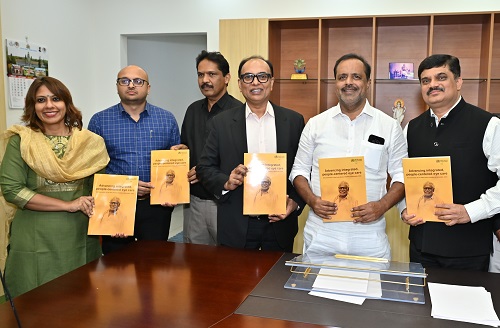
Manipal University Jaipur (MUJ) commenced the three-day International Conference on Advances in Computational Intelligence for Fluid and Fuzzy Systems (ACIFFS-2026) on Wednesday at the Smt. Sharda Pai Auditorium. Organised by the Department of Mathematics and Statistics, the conference is being held in association with IIT Guwahati, the Nelson Mandela African Institution of Science and Technology (NM-AIST), Tanzania, and the African Mathematical Union (AMU), with financial support from the Anusandhan National Research Foundation (ANRF).


Prof. Verdiana Grace Masanja of NM-AIST, Tanzania is felicitated by Cdr. (Dr.) Anil Rana, Pro President, Manipal University Jaipur


The inaugural ceremony featured eminent academicians from across the globe. Renowned researcher Prof. Ali J. Chamkha of Kuwait College of Science and Technology joined virtually as the Chief Guest, while Prof. Verdiana Grace Masanja of NM-AIST, Tanzania, attended as the Guest of Honour. The event was also graced by Prof. Swaroop Nandan Bora of IIT Guwahati and Cdr. (Dr.) Anil Rana, Pro President, Manipal University Jaipur, along with distinguished researchers, faculty members and students.


Addressing the gathering, the speakers highlighted the transformative role of computational intelligence, artificial intelligence and mathematical sciences in solving complex scientific and engineering challenges. They emphasised the need for interdisciplinary research and stronger international collaborations to advance innovation and sustainable development.


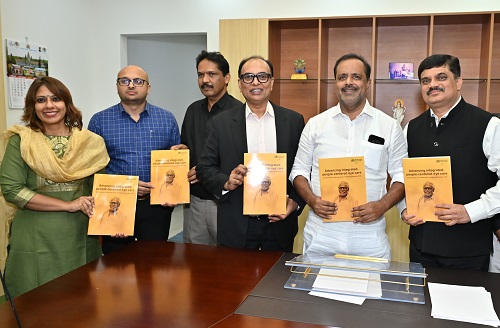
A highlight of the inaugural ceremony was the release of the ACIFFS-2026 Conference Souvenir, which features the conference theme, scientific programme, messages from dignitaries and details of participating researchers and invited speakers.


Presenting the conference overview, Prof. Reema Jain, Program Chair of ACIFFS-2026, said the conference received an overwhelming response from the global research community, with 645 abstracts submitted from across the world. Following a rigorous peer-review process, 300 high-quality research papers were selected for oral presentation during the three-day conference.


The inaugural session witnessed enthusiastic participation from researchers, academicians, industry professionals and students from India and abroad, reaffirming the growing global interest in computational intelligence and fuzzy systems.


The conference underscores Manipal University Jaipur’s commitment to fostering world-class research, encouraging interdisciplinary innovation and strengthening international academic partnerships. The inaugural session concluded with a vote of thanks proposed by Dr. Abdul Haseeb Ganie, Convener of ACIFFS-2026.


To know more about Manipal University Jaipur please visit jaipur.manipal.edu

SwiftPAL from ConveGenius.AI in India Named in Top 25 Shortlists for Second Annual Global EdTech Prize

SwiftPAL from ConveGenius.AI in India has today been named in the Top 25 shortlist for the second annual Global EdTech Prize in the Majors category. Founded in 2025 by T4 Education, with the support of Owl Ventures and Digital Promise, the Global EdTech Prize recognises those trailblazing solutions that are driving change and grappling with the most crucial challenges in today’s classrooms.


SwiftPAL earns a place in the Global EdTech Prize 2026 top 25 shortlist, spotlighting its mission to close learning gaps at scale across India


Judged by educators themselves, the prize provides a vital platform to help companies and organisations scale their products, tools, or services and their impact worldwide. It celebrates EdTechs that are making a real difference to the next generation and champions innovative tech solutions that actually work for the people who matter most – educators, their students, and their communities.


The prize is awarded in three categories: Majors, Start-ups, and Non-profits, with winners announced live at the World Schools Summit in London on January 17, 2027.


Vikas Pota, Founder of T4 Education and the Global EdTech Prize, said, “I want to congratulate SwiftPAL from ConveGenius.AI in India on being named in the Top 25 shortlists for this, the second Global EdTech Prize.


Technology in the classroom holds the enormous potential to close learning gaps and fully equip today’s young people for the rapidly emerging workplace of tomorrow. But we can only harness technology effectively when it is made to work for educators to tackle the challenges they face every day.


Judged by educators themselves, the Global EdTech Prize exists to bridge the gap between technology and teachers and give a global platform to the solutions that are making a real impact in classrooms so that impact can be scaled worldwide.”


Shashank Pandey, Co-Founder, ConveGenius.AI  said, Over the last decade, we have learned that learning outcomes at scale improve when policy, budgets, programmes, technology, and people work in harmony. Technology and AI can be powerful accelerators when aligned with national priorities and implemented well.


Independent third-party research shows that students using ConveGenius’ PAL platform learn 2.3 times faster, helping bridge years of accumulated learning gaps.


Being named a global finalist for the Global EdTech Prize 2026 is a tremendous honour. It validates a decade of conviction, execution, and partnership with state governments to create a level playing field for every child.


About SwiftPAL by ConveGenius

SwiftPAL is ConveGenius’s personalised adaptive learning platform, built for learners of Bharat to support them with their journey towards their grade-level outcomes. SwiftPAL starts the journey with each learner at their present-day level, moving with them at their pace.


We are all aware that ASER 2024 found that only 23.4% of Std III children in government schools can read a Std II-level text, even though 98% of children that age are enrolled in school. Globally, the World Bank and UNESCO describe this as “learning poverty”, estimating that 70% of 10-year-olds in low- and middle-income countries cannot read and understand a simple text. This is the specific gap SwiftPAL has been built to close: the gap between being enrolled in school and actually learning at grade level.


SwiftPAL works by first diagnosing what a learner actually knows, rather than what their textbook assumes they should know by now, using adaptive assessments that identify missed concepts and gaps from previous grades. Based on this diagnosis, it builds an individual learning path unique to each learner instead of assigning the same grade-level content to everyone. A learner who is lacking in understanding and application of a particular concept is given ample guided practice followed by opportunities to demonstrate their gained mastery. Students work through videos, practice questions, hints and retries on the devices inside school ICT labs, dedicating two class periods a week to catching up with their grade-level concepts via SwiftPal. This is how SwiftPAL supports learners demonstrating measurable learning gains and catching up with their grade-level concepts.


An independent randomised controlled trial by the University of Chicago’s Development Innovation Lab, led by Nobel laureate Dr Michael Kremer, tracked SwiftPAL across 120 schools in all 26 districts of Andhra Pradesh over 17 months. The study validated that students using SwiftPAL learned 2.3 times faster than expected, clocking in close to two additional years of learning.


In Uttar Pradesh, under India’s first outcomes-based financing model in public education, students using SwiftPAL outperformed peers by 16 to 54 percentage points across subjects, evaluated independently across 280 schools, covering 72,000 students.


In Rajasthan, the programme has scaled from a 60-school pilot to more than 3,700 schools on government mandate.


SwiftPAL now reaches over 4 million students across 15,000+ schools, in 22 Indian states and 145 districts, at a cost of USD 10–35 per student per year. The programme has been recognised with the CIPS Innovation Award 2025, named a Government of India GeM Top Seller in the Startup Category, and awarded Best Personalised and Adaptive Learning Solution at the 16th World Education Summit.
 

About T4 Education

We believe every child, everywhere, deserves a good education. We are building the world’s largest community of teachers and schools to achieve this. Together. Our digital media platform provides opportunities for educators to network, collaborate, share good practices, and support each other’s efforts to improve learning and school culture. We work to amplify teachers’ voices because the world we want to see will only be built by listening to those at the heart of education.


What’s Next?

The Global EdTech Prize is awarded annually in three categories: Majors, Start-ups, and Non-Profits, recognising outstanding EdTech products, tools, or services based on rigorous criteria.


The top 10 finalists for each of the three categories will be announced in September, with finalists invited to the World Schools Summit, where they will showcase their work before an expert panel comprising leading figures in the technology and education sectors, including investors and policymakers from around the world.


The expert panel will narrow down the final 3 per category who will present their products and tools before educators at the World Schools Summit. Educators will vote by secret ballot to determine the winner of each category, and they will be announced live on stage at the culmination of the summit.