Home Blog Page 35

PMI Industry Roundtable Highlights Construction Talent Gap in South Asia to Nearly Double by 2035

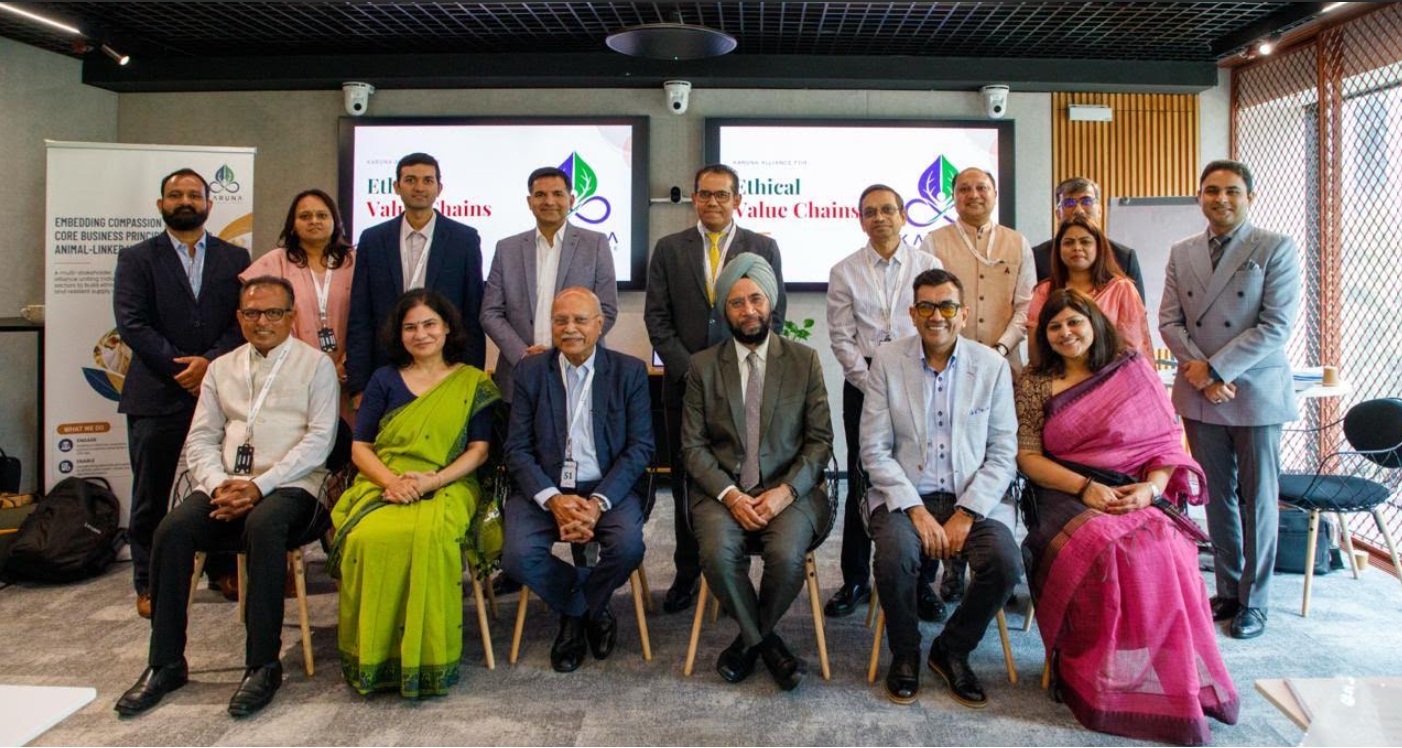
Project Management Institute (PMI), the leading authority in project management, convened a high-level construction and infrastructure roundtable bringing together more than 25 senior executives from leading organisations. The roundtable brought together leaders from across infrastructure, construction, energy, renewables, transportation, technology, manufacturing, and advisory sectors, representing both public and private enterprises. Held under the theme ‘Closing the delivery capability gap in Indian infrastructure: From national ambition to predictable on-ground execution’, the roundtable explored how India’s infrastructure ecosystem can strengthen execution capability, build future-ready project talent, and improve delivery outcomes as project complexity and investment scale continue to rise.


PMI leaders drive dialogue at the Construction Roundtable


Speaking about the growing importance of project management in infrastructure delivery, Amit Goyal, Managing Director, PMI South Asia, said, “India’s infrastructure growth story will increasingly be defined by how effectively projects are executed on the ground. As infrastructure projects become larger, more interconnected, and time-sensitive, organisations will need skilled professionals who can manage complexity, align multiple stakeholders, and optimise resources to deliver consistent, precise outcomes. Building future-ready project talent and strengthening delivery capability will be critical to the ‘Viksit Bharat’ vision, ensuring that infrastructure investments translate into long-term economic and social impact.”


The Construction Project Management Talent Gap Report by PMI, 2026, indicates that demand for construction project professionals across South Asia is expected to accelerate significantly by 2035, driven by sustained infrastructure and industrial investment across the region. Under high-growth scenarios, South Asia’s construction talent gap could increase from 291,000 professionals today to 558,000 by 2035, with India alone projected to require nearly 395,000 construction project professionals by then.


During the session, Yash Singh, Partner, Business Consulting, KPMG India, highlighted, “India’s infrastructure and construction sector is entering a high-growth phase, making substantial investment in skilled project talent critical for delivering projects efficiently and sustainably. We are delighted to partner with PMI in such knowledge initiatives and advancing the dialogue around strengthening project and execution excellence.”


The discussion highlighted the operational and financial consequences of weak project execution across the industry. A 2020 global PMI survey also found that industry estimates indicate that 72% of projects exceed budgets, 73% face delays, and 70% experience scope creep. At the same time, nearly USD 127 million is lost for every USD 1 billion invested due to inefficiencies in project performance. Average project overruns affect profitability, stakeholder confidence, and long-term competitiveness.


As part of PMI South Asia’s broader Construction Roundtable series, this roundtable aimed to create a collaborative platform for industry leaders to identify capability gaps, exchange best practices, and explore diverse interventions that can strengthen infrastructure delivery outcomes across the region. The series builds on the first Construction Roundtable held during PMSAC24 in September 2024 which convened C-suite leaders and representatives from leading organisations across the infrastructure ecosystem.


About Project Management Institute (PMI)

PMI is the leading authority in project management, dedicated to guiding the way to project success. Since 1969, PMI has shone a light on the power of project management and the people behind the projects. With a global community, gold-standard professional certifications, and career-long learning opportunities, PMI empowers current and aspiring project professionals, as well as organizations, with knowledge and resources to lead effectively and create an impact in the communities they serve. Join PMI in elevating our world – one project at a time. Connect with us at www.pmi.org, Linkedin, on Instagram, and on TikTok .


PMI Trademarks

Project Management Institute and PMI are trademarks and/or registered trademarks of Project Management Institute, Inc., in the U.S., in India, and/or in other countries.


Agile Alliance Trademarks

Agile Alliance is a registered trademark of Agile Alliance.


Third Party Trademarks

All other trademarks are the property of their respective owners. 

Superdry Launches its FIFA Official Licensed Products Collection

Ahead of the upcoming FIFA World Cup 2026, Superdry has launched its FIFA Official Licensed Products Collection in India, a limited-edition range timed to the world’s biggest football tournament.


Superdry Launches its FIFA Official Licensed Products Collection


The collection features a tribute line of seven country jerseys, each re-imagined through Superdry’s distinctive design lens and signature detailing. Complementing the jersey offering is a luxe athleisure capsule inspired by the world of football. Designed for match days, celebrations and everything in between, the collection is built for football fans and fashion enthusiasts alike, offering a stylish way to showcase their zeal for the game both on and off the field.


To mark the launch, Superdry has unveiled #WearYourGame, a high-energy campaign film that captures the passion and emotions that universally define the love for football. The action-packed campaign film follows a series of fan moments that bring the spirit of the game to life. 


Through dynamic storytelling and energetic visuals, the campaign highlights how football pride extends far beyond the ninety minutes on the pitch and becomes part of everyday identity.


With their FIFA campaign, Superdry brings together football fandom, fashion and chic street style through a collection designed for the moments that matter most, from kick-off to the final whistle and beyond.
 
The FIFA Official Licensed Products Collection is manufactured under license by Q-LIVE in partnership with Superdry, and is available for a limited time in India across all Superdry stores, select partner retailers, Superdry.in and on Ajio. 


About Superdry
Superdry is a global contemporary fashion brand celebrated for its distinctive fusion of British craftsmanship, Japanese-inspired graphic energy, and American varsity heritage. Loved by Gen Z and young millennials, the brand is recognised for its iconic streetwear, premium fabrications, and elevated style codes that blend cultural relevance with modern design.


In India, Reliance Brands Limited (RBL) operates the country’s largest Superdry network and holds a 76% stake in the brand’s IP for India, Sri Lanka, and Bangladesh. Since introducing Superdry to India in 2012, RBL has expanded the brand to over 200 points of sale across more than 50 cities, with its e-commerce footprint extending reach to over 2,300 cities nationwide.

Global EDVentures 2026 Winners Felicitated at Galgotias University; Three Student Startups Receive Funding from INR 10 Crore Innovation Fund

Galgotias University felicitated student innovators who represented India at EDVentures 2026 in Hong Kong, where Project TACTO emerged as the winning project among teams from 10 countries.


From global recognition to venture creation, EDVentures 2026 winners felicitated at Galgotias University as three startups secure funding support


During the felicitation ceremony, the University announced funding support under its INR 10 crore Galgotias Innovation Fund for three student-led startups working across sustainability, agritech, robotics, and inclusive learning technologies. The selected ventures include CarbonSync, founded by Pushkar Singh; Agri Rover, founded by Satyam Kumar; and Project TACTO, founded by Gaurang Pant.


Project TACTO received the AWS Championship Prize at EDVentures 2026 for developing tactile learning systems that improve accessibility and coding education for visually impaired learners. The project emerged as the overall winner of the international competition.


Dr Dhruv Galgotia, CEO, Galgotias University, said, “Our students have made India proud at EDVentures 2026 by demonstrating that young innovators from Indian campuses can compete and succeed on global platforms. Competing against teams from across the world and earning international recognition is a significant accomplishment.


Today’s funding announcement ensures that promising ideas do not stop at recognition. The Galgotias Innovation Fund provides student founders with the support needed to test, refine, and build ventures around solutions that address real-world challenges.”


Hosted by The Education University of Hong Kong, EDVentures 2026 brought together 19 student teams from 10 countries to develop solutions aligned with the United Nations Sustainable Development Goals. Project TACTO emerged as the winning project, while Tekurious Pvt. Ltd. was recognised among the finalists.


Rachit Mathur, Advisor to Galgotias Incubation Centre, said, “What makes the Galgotias University innovation ecosystem unique is the availability of end-to-end support for student founders within a single institution. Students can access world-class infrastructure, industry-linked laboratories, maker spaces, Centres of Excellence, advanced computing capabilities, incubation support, mentorship, international exposure, institutional funding, and increasingly, direct access to investor networks through initiatives such as the University’s partnership with 247VC.


The funding announced for CarbonSync, Agri Rover, and Project TACTO demonstrates how this ecosystem is helping students move from ideas and prototypes to ventures with the potential for real-world impact.”


The University’s innovation ecosystem includes Centres of Excellence and collaborations with Cisco, Salesforce, Tata Technologies, Capgemini, IBM, and L&T EduTech, alongside an iOS Developer Center powered by Apple and Infosys and a High Performance Computing infrastructure anchored by the NVIDIA DGX H200. Students have access to specialised facilities focused on artificial intelligence, semiconductors, robotics, immersive technologies, electric mobility, advanced manufacturing, 3D printing, and applied innovation.


Through the Galgotias Incubation Centre for Research Innovation Startup & Entrepreneurs (GIC RISE), the University has supported more than 135 startups across sectors. Earlier this year, CyberGenix Security Pvt. Ltd., founded by student entrepreneurs from the University, attracted INR 3 crore in funding, highlighting the growing strength of startup-led innovation emerging from the campus ecosystem.


The funding support announced for CarbonSync, Agri Rover, and Project TACTO marks the next step in helping student innovators transform promising ideas into scalable ventures.


About Galgotias University

Galgotias University is one of India’s leading multidisciplinary universities recognised for academic excellence, research, innovation, global collaborations, and industry aligned education. With a vibrant student community of over 50,000 learners and a global alumni network of more than 100,000 graduates, the University has built a rapidly growing ecosystem focused on technology, entrepreneurship, interdisciplinary learning, and real-world impact.


In the QS World University Rankings 2026 by Quacquarelli Symonds, Galgotias University was placed in the 1201-1400 global band and ranked 15th among private universities and 43rd among all universities in India. In the Times Higher Education World University Rankings 2026, the University was placed in the 1201-1500 global band and ranked 27th among private universities and 65th among all universities in India. The University is also accredited with NAAC A+, one of India’s highest institutional quality ratings.


Galgotias University offers programmes across engineering, artificial intelligence, semiconductors, business, law, media, design, health sciences, hospitality, liberal education, and emerging interdisciplinary domains. In 2026, students secured more than 5,100 job offers from over 1,250 recruiters. The University has built strong industry and innovation partnerships with organisations including Apple, Infosys, Intel, Cisco, Tata Technologies, L&T EduTech, Capgemini, and Salesforce, while continuing to strengthen its global academic engagement and startup ecosystem.

India 2030: The Infrastructure Revolution That Begins with People and the Power of Mathematics

India’s electricity demand already exceeds 250 gigawatts and is projected to reach 400 gigawatts by 2032. AI data centre growth alone could add 13 gigawatts by 2031. Every gigawatt dedicated to AI infrastructure competes with industrial growth, urban development, and household demand. Yet hundreds of millions of Indians experience daily outages, voltage instability, or dependence on diesel backup despite nominal grid connection.


India 2030: The Infrastructure Revolution That Begins with People and the Power of Mathematics


The distinction matters: being connected to a grid and having continuous reliable power are two different things. Closing that gap through centralised infrastructure expansion alone would require hundreds of billions of dollars in generation, transmission, and storage investment. India’s energy challenge is not only one of scale. It is one of architecture.


The Neutrino® Energy Group, working from a mathematical and engineering framework developed by mathematician Holger Thorsten Schubart, proposes a complementary answer: millions of intelligent decentralised infrastructure nodes, each generating continuous power at the point of consumption, collectively producing what centralised systems cannot: reliable, distributed baseload without the infrastructure chains that make expansion slow and expensive.


The Negawatt Arithmetic
The economic argument is numerical. One million Life Cube units operating at one kilowatt of continuous output produce one gigawatt of decentralised baseload. Ten million produce ten gigawatts. Fifty million produce fifty gigawatts. But the true value is not in the watts generated. It is in the gigawatts of centralised infrastructure that never need to be built: transmission capacity, storage systems, reserve generation, distribution reinforcement.


Every unit deployed at the point of consumption eliminates the infrastructure chain that would otherwise serve that point. Decentralised continuous-generation platforms can help reduce this conflict by bringing new generation capacity directly to the point of consumption. In India’s fiscal context, where grid expansion carries costs measured in hundreds of billions of dollars, this systemic negawatt effect is not philosophical. It is the difference between affordable energy access and another generation of deferred development.


The Technology
The Neutrino® Energy Group’s conversion systems harvest multi-channel ambient flux, including thermal gradients, electromagnetic background fields, and cosmic particle interactions, through graphene-silicon nanostructures operating as open non-equilibrium systems. The governing framework is the Schubart Master Formula:

The equation describes continuous electrical output from multi-channel ambient flux integrated across active material volume, bounded by thermodynamic efficiency constraints.


The output is continuous, location-independent, and requires no fuel, no moving parts, and no grid connection. Internal Monte Carlo simulations and multi-parameter evaluations indicate statistical consistency reaching 5.9 to 6.0 sigma, above the five-sigma discovery threshold conventional in modern physics.


This does not assert commercial performance at industrial scale. It quantifies the internal consistency of the physical framework against established experimental physics, at a confidence level where the probability of accidental consistency is approximately one in five hundred million.


The Life Cube
The Life Cube is an autonomous infrastructure platform designed for target continuous output in the 1-to-1.5-kilowatt range, with integrated climate control and air-to-water purification producing 12 to 25 litres of clean drinking water per day, depending on climatic conditions. It operates without external power supply, without fuel logistics, and without grid dependency.


For a remote clinic in Rajasthan, it means light, refrigerated medicines, and clean water from a single unit that arrived by road and requires no resupply. For a rural school in Bihar, it means continuous connectivity and cooling. For a village health post in Odisha, it means the gap between a nominal grid connection and actual reliable power is closed without waiting for infrastructure that may take decades to arrive.


Particularly significant in India’s climate is the compounding effect Schubart describes: energy produces cooling, cooling produces condensation, condensation becomes clean water. From one platform, a cycle of human development begins.


India’s AI Ambition and Its Energy Constraint
India’s stated ambition is to become a global AI power. AI infrastructure requires continuous, stable power that intermittent renewables cannot structurally guarantee. The same decentralised architecture that addresses rural energy poverty also addresses the continuous baseload requirement of AI edge computing. The Life Cube and Power Cube platforms are not alternatives to India’s renewable buildout. They are the continuous-generation layer that makes that buildout complete.


A Partnership, not a Sale
Schubart is direct about the nature of the engagement: “I come to India not as a seller. I come as a partner. Not to take something. But to build something together.”


The vision is for Indian engineers, Indian manufacturers, Indian battery specialists, Indian software developers, and Indian entrepreneurs to build this infrastructure in India. International partners contribute knowledge, co-develop platforms, and create industrial capacity that is long-term rooted in Indian industry. This is not import dependency. It is the transfer of a technology paradigm into Indian hands.


If we solve the challenges of energy, water, cooling, and connectivity together, we create far more than new infrastructure. We create new possibilities. For families. For students. For doctors. For villages. For cities. And ultimately for an entire nation.”


India once gave the world the concept of zero. Perhaps India will show the world in the 21st century how billions of people can gain access to energy, water, education, and prosperity through intelligent decentralised infrastructure.


The next infrastructure revolution does not begin in power plants. It begins with people and the power of mathematics.


For more information, please visit: neutrino-energy.com

Kauvery Hospital Conducts Basic Life Support and Defibrillator Training Program for Railway Staff

Kauvery Hospital, Salem conducted a comprehensive Basic Life Support (BLS) and Automated External Defibrillator (AED) awareness and training program for the staff of Salem Railway Station. Organised in collaboration with the railway administration, the program witnessed the participation of more than 100 railway personnel and members of the public.


https://www.newsvoir.com/images/article/image1/35877_KH_image.JPG

Basic Life Support and Automated External Defibrillator (AED) awareness and training program


AED is a life-saving device used during sudden cardiac arrest. It can quickly assess the heart’s rhythm and deliver a controlled electrical shock when required, helping restore normal heart function and significantly improving survival chances. As part of its ongoing commitment to community health and public safety, Kauvery Hospital had earlier donated four AED devices to Salem Railway Station to improve emergency medical response infrastructure at the station. 


The training program was attended by Dr. Sivakumar, Chief Medical Officer, Southern Railway, along with the Railway Station Master and Railway Station Manager. The training was designed to ensure that railway staff are equipped with the knowledge and practical skills required to respond effectively during sudden cardiac arrests and other medical emergencies until advanced medical care becomes available.


The session was led by senior emergency medicine specialists from Kauvery Hospital, who provided hands-on training on BLS techniques, cardiopulmonary resuscitation (CPR), and the proper use of an AED. Through live demonstrations and interactive learning sessions, participants gained valuable insights into recognising medical emergencies and delivering timely first-response care that can significantly improve survival outcomes.


Speaking on the occasion, Dr. Mubeena Anjum, Consultant – Emergency Medicine, Kauvery Hospital, Salem, highlighted the critical importance of immediate intervention during cardiac emergencies. She emphasised that timely CPR and early defibrillation can substantially increase the chances of survival and that empowering frontline personnel in high-footfall public locations such as railway stations can save precious lives.

Narayana Health Becomes First Hospital in India to Achieve HIMSS AMAM Stage 6

Narayana Health has achieved HIMSS Analytics Maturity Assessment Model (AMAM) Stage 6 validation, becoming the first hospital in the Indian Subcontinent, and the second in APAC under the new AMAM framework, to reach this advanced level of analytics maturity. India-first milestone underscores the growing role of data-led decision-making in advancing patient care.


https://www.newsvoir.com/images/article/image1/35876_Narayana_Health_image.jpg

Dr. Devi Shetty – Narayana Health


The HIMSS AMAM framework is among the world’s leading benchmarks for assessing how healthcare organisations use data, analytics and AI to strengthen clinical outcomes and patient experience. Spread across seven stages, the model evaluates how deeply these capabilities are embedded into day-to-day decision-making. Stages 6 and 7 represent a highly advanced level of maturity, where predictive and near real-time intelligence are integrated into clinical and operational workflows at scale.


The recognition reflects Narayana Health’s sustained focus over the last decade on building a strong analytics foundation that supports decision-making across the organisation. What makes the milestone particularly noteworthy is that these capabilities have been developed and scaled within the cost-sensitive realities of the Indian healthcare ecosystem.


Reflecting on what shaped this journey, Dr. Devi Shetty, Founder and Chairman of Narayana Health, noted that the predominantly self-pay nature of Indian healthcare influenced the organisation’s analytics strategy from the very beginning. Without the cushion of insurance, gaps in bed utilisation, avoidable readmissions and prolonged hospital stays translate directly into out-of-pocket costs for patients and families. He said, “That reality pushed us to build operational and financial precision into every decision. We gave senior doctors visibility into metrics such as length of stay, procedure material costs, blood transfusions, re-exploration after surgery, mortality, morbidity and infection rates. Over time, this discipline has helped us steadily reduce mortality and morbidity, while improving productivity and keeping care within reach of our patients.”


Over the years, Narayana Health has evolved from conventional reporting structures into an integrated enterprise-wide analytics ecosystem supporting hundreds of use cases across clinical care, hospital operations and resource planning. The organisation has consistently invested in innovation and digital capability development to remain ahead of the curve as healthcare systems globally move towards data-driven models of care.


Commenting on the milestone, Dr. Emmanuel Rupert, Managing Director and Group CEO, Narayana Health, said, “Healthcare systems globally are being reshaped by the ability to use data meaningfully and responsibly. At Narayana Health, we recognised early on that analytics would be central to delivering better outcomes for patients at scale, while remaining grounded in the realities of Indian healthcare delivery. Achieving this level of validation reflects years of focused effort across teams, and reinforces our belief that world-class innovation can be built within India, for India.”


Today, analytics capabilities, powered by Medha AI, support a wide range of functions across the network, from improving patient flow and reducing waiting times to optimising workforce and bed utilisation. The organisation has also developed and deployed several in-house technology solutions designed around high-volume clinical workflows. One such example is Medha Scribe, an ambient documentation platform implemented in echocardiography workflows at Narayana Institute of Cardiac Sciences. By capturing findings during procedures and automatically populating reporting fields, the solution has significantly reduced report turnaround times while enabling clinicians to continue working within familiar workflows. Similar capabilities are now being extended across radiology, outpatient consultations and operation theatre documentation. In parallel, structured clinical data systems have supported the development of India-specific research and predictive models, including the NH Pre-Operative Risk Score for CABG surgeries and AI-assisted ECG models aimed at enabling earlier detection of cardiac abnormalities, particularly in resource-constrained settings.


Mr. Vivek Rajagopal, Group Chief Analytics & AI Officer, added, “Our focus has been to make analytics practical, accessible and deeply embedded into everyday healthcare delivery rather than treating it as a standalone technology layer. We have built a unified ecosystem where clinical, operational and financial insights come together to help teams make faster and more consistent decisions. The HIMSS Stage 6 validation reflects not just technology maturity, but also the culture, governance and cross-functional collaboration required to operationalise analytics meaningfully at scale.”


Beyond the validation itself, the HIMSS AMAM assessment process also helped strengthen governance frameworks around analytics implementation, monitoring and accountability across the organisation. The external review examined both technical capability and measurable real-world impact across areas such as patient safety, quality of care and resource management. With this recognition, Narayana Health joins a select group of healthcare organisations globally to achieve this level of analytics maturity, marking another step forward in its continuing effort to build scalable, technology-enabled and patient-centric healthcare systems.


About Narayana Health
Narayana Health, founded by Dr. Devi Shetty and headquartered in Bengaluru, is a leading presence in the global healthcare landscape. As one of the largest healthcare providers in India, Narayana Health operates a comprehensive range of primary, secondary and super-speciality tertiary care facilities across India and the Caribbean. The group’s Centres of Excellence in various medical domains, a team of 18,822 dedicated professionals, including 3,868 skilled doctors and specialists, and a relentless focus on patient well-being and clinical excellence underscore its position as a beacon of hope and healing in the healthcare industry. Narayana One Health (NH Integrated Care) and Narayana Health Insurance are subsidiaries of Narayana Health.


For more information, visit https://www.narayanahealth.org.

Chitkara University Launches Digital Campus on Google Cloud 4.0, Emerges as One of India's Early Agentic AI Universities

Chitkara University has announced a strategic collaboration with Google Cloud to launch Digital Campus on Google Cloud 4.0 – Agentic AI Campus, positioning itself among India’s early institutions to embrace an AI-first academic model powered by Agentic AI, cloud technologies and intelligent automation.


Vaibhav Srivastava, India Head–EdTechs & Education, Google Cloud, presents a plaque to Dr. Madhu Chitkara at the launch of Digital Campus on Google Cloud 4.0


The initiative marks a significant step in the University’s vision to integrate Artificial Intelligence across teaching, learning, research, innovation and campus operations, creating a future-ready ecosystem that prepares students to thrive in an increasingly AI-driven world.


As part of the collaboration, more than 10,000 students and faculty members will gain access to Google for Education Plus and Gemini Enterprise, enabling AI-powered learning, productivity, collaboration and research capabilities across disciplines including Engineering, Computer Science, Business, Law, Design, Health Sciences, Media Studies and Liberal Arts.


The Digital Campus on Google Cloud 4.0 initiative will provide learners and educators with access to advanced Agentic AI training, hands-on cloud laboratories, self-paced learning pathways, faculty-led development programmes, global certification opportunities, industry-recognised credentials, hackathons and collaborative learning experiences designed to align with emerging workforce requirements.


The collaboration also opens pathways for specialised certification programmes and industry-integrated learning experiences, ensuring students graduate with both academic knowledge and practical expertise in next-generation technologies.


The milestone was commemorated with Dr. Madhu Chitkara, President and Co-Founder of Chitkara University, receiving a plaque from Vaibhav Srivastava, India Head – EdTechs & Education, Google Cloud, recognising the University’s commitment to advancing AI-powered education and digital transformation.


The launch comes at a time when India is witnessing one of the most significant educational transformations globally. With more than 250 million students, over 1,100 universities and a rapidly expanding digital economy, the country is redefining how education prepares learners for the future. As Artificial Intelligence reshapes industries and workplaces, universities are increasingly expected to move beyond traditional models and equip students with the skills needed to navigate a technology-enabled world.


Speaking on the occasion, Dr. Madhu Chitkara, President and Co-Founder, Chitkara University, said, Artificial Intelligence is transforming every sector of the global economy and higher education must evolve at the same pace. At Chitkara University, we believe the future belongs to learners who can effectively collaborate with intelligent technologies to solve complex challenges and create meaningful impact. Our partnership with Google Cloud enables us to embed AI deeply into the academic experience, empowering students and faculty with access to world-class tools, industry-aligned learning opportunities and globally recognised certifications. This is not simply a technology deployment; it is a step towards reimagining how universities prepare future leaders, innovators and entrepreneurs.”


With Digital Campus on Google Cloud 4.0, Chitkara University aims to create an environment where human creativity is amplified by intelligent systems, learning becomes increasingly personalised and experiential and innovation is driven by the seamless integration of technology and education.


As the next generation of digital talent emerges, Chitkara University continues to strengthen its position at the forefront of educational innovation—building an AI-first campus designed for the opportunities and challenges of the future.


About Chitkara University

Chitkara University is a UGC-recognised and NAAC-accredited private university in North India, with campuses in Punjab and Himachal Pradesh, offering career-oriented undergraduate and postgraduate programs in Engineering, Business, Healthcare, Pharmacy, Design, Architecture, Hospitality and emerging technology fields. For Class 11 and 12 students planning higher education, the University provides industry-aligned programs designed to combine academic excellence with practical exposure.


The curriculum emphasises experiential learning through internships, industry projects, research opportunities and global collaborations, supported by modern infrastructure, advanced laboratories, industry mentorship and skill-based training that strengthens student employability. Backed by 2,000+ campus recruiters and 300+ international academic and industry collaborations, students gain strong placement support, international exposure, academic exchange and collaborative research opportunities.


Consistently ranked among leading institutions by national and global frameworks such as NIRF, QS World University Rankings and Times Higher Education, the University maintains high academic rigour and industry relevance. With strong corporate partnerships and a focus on innovation, entrepreneurship and interdisciplinary learning, it prepares students for emerging career opportunities in India and abroad.


For more information, please visit: www.chitkara.edu.in.

How EVs Like VinFast's are Designed to Take on Rainy Season Driving

As India’s monsoon season begins, concerns about EV safety often resurface. Here’s why electric vehicles like VinFast’s are designed to handle rain, flooding risks, and wet-weather charging more confidently than many drivers expect.
 

Every year, as the monsoon arrives across India, social media fills with images of flooded streets, waterlogged underpasses, and traffic inching through heavy rain. At the same time, many people considering an electric vehicle wonder whether EVs are safe and practical during the wettest months of the year.
 

Electric vehicles like VinFast’s are designed to handle rain, flooding risks, and wet-weather charging more confidently than many drivers expect
 

Part of this concern comes from something most of us learned growing up: electricity and water do not mix. Whether it was warnings about household appliances near water or stories about electrical accidents during storms, the message was clear. Yet modern electric vehicles are engineered very differently from household electronics.
 

With models such as the VF 6, VF 7, and VF 7 MPV now available in India, many prospective EV buyers are asking whether electric vehicles can handle the country’s challenging monsoon conditions. The good news is that many of the common concerns surrounding EVs and rain are based more on myth than reality.
 

Is There Danger in Driving an EV in the Rain?

Driving in the rain is always more challenging because of slippery roads, reduced visibility, and longer stopping distances. However, EVs do not introduce any additional risks simply because they are electric.
 

Modern EV battery packs, high-voltage cables, and electrical systems are carefully sealed and insulated from the outside environment. These vehicles also undergo extensive testing under demanding weather conditions, including exposure to heavy water spray from multiple directions.
 

Electric vehicles are no more likely to be struck by lightning than conventional vehicles. Like any modern car, the vehicle’s structure is designed to direct electrical current around the passenger compartment, helping protect occupants in the unlikely event of a lightning strike.
 

Are EVs More Likely to Hydroplane?

Hydroplaning occurs when a layer of water forms between a vehicle’s tires and the road surface, reducing traction and making steering or braking more difficult. Factors such as tire condition, road quality, speed, and water depth all play important roles.
 

In fact, EVs may have certain advantages in these conditions. Because the battery pack is mounted low within the vehicle structure, EVs typically have a lower center of gravity and greater overall weight than comparable internal combustion vehicles. This can contribute to improved stability and stronger tire contact with the road surface.
 

That does not mean drivers can ignore monsoon safety precautions. The same rules apply regardless of what powers the vehicle. Reduce speed, leave extra space between vehicles, brake gently, and avoid areas where standing water has accumulated.
 

Can You Drive an EV Through Flooded Streets?

It is never a good idea to drive any vehicle through deep floodwater. During India’s monsoon season, flooded roads can hide potholes, open drains, debris, or damaged road surfaces that pose risks to both drivers and vehicles.
 

However, EVs are generally less susceptible to stalling from water ingress because their drivetrains are fully sealed. Unlike conventional vehicles, electric powertrains do not rely on air intakes, exhaust systems, or fuel delivery systems that can be affected by water entering the vehicle.
 

VinFast’s battery systems and high-voltage components are designed with multiple layers of protection and safety monitoring. The company also backs its vehicles with long-term warranty coverage. For example, the VF 7 MPV comes with a 10-year battery warranty, a 7-year vehicle warranty, a 5-year suspension warranty, and a 7-year paint warranty, helping provide added confidence for Indian families navigating a wide range of road and weather conditions.
 

That said, no vehicle should be driven through deep floodwater unless specifically designed for such conditions. If roads are significantly flooded, the safest option is always to wait or choose an alternative route.
 

Can You Charge an EV in the Rain?

Yes.

Unlike household electrical plugs, EV charging systems are specifically engineered for outdoor use. Charging ports and connectors are designed with weather-resistant protection and undergo rigorous testing to ensure safe operation in rain and wet conditions.
 

Before charging begins, the vehicle and charger communicate electronically to verify that a secure connection has been established. If any fault or irregularity is detected, power flow is automatically interrupted.
 

For Indian EV owners, this means charging during the monsoon is generally no different from charging on a dry day, provided approved charging equipment is used according to manufacturer guidelines.
 

While home charging remains a convenient option, public charging infrastructure is also designed to operate safely in varying weather conditions, including the heavy rainfall that accompanies India’s monsoon season.
 

The Bottom Line

The arrival of the monsoon often raises questions about EV ownership, but modern electric vehicles like VinFast’s are engineered with wet-weather operation in mind. After all, VinFast vehicles are developed in Vietnam, a Southeast Asian country where heavy rainfall and distinct wet seasons are part of the driving environment. Their batteries and electrical systems are extensively protected, charging equipment is designed for outdoor use, and they are tested to handle challenging environmental conditions.
 

For Indian drivers, the same principles apply regardless of the type of vehicle being driven: slow down in heavy rain, avoid flooded roads whenever possible, and prioritize safety. The technology inside today’s EVs is already designed to handle the weather outside.

Finance Minister Nirmala Sitharaman, RSS Sarsanghchalak Shri Mohan Bhagwat to Address Mindmine Summit 2026

Hero Enterprise’s flagship thought leadership event, The Mindmine Summit, returns with its 16th edition on June 15, 2026, at Taj Palace, New Delhi. Centred around the theme ‘Uncertain Times, Confident Choices: India Recalibrates’, the Summit will bring together some of India’s leading policymakers, thought leaders, business leaders, economists, diplomats, investors, healthcare experts and public intellectuals to discuss India’s evolution at a time of churn.


Smt. Nirmala Sitharaman, Hon’ble Union Minister of Finance and Corporate Affairs, will feature in an opening conversation with Sunil Kant Munjal, Chairman of Hero Enterprise, and Raamdeo Agarwal, Chairman of Motilal Oswal Securities. In the evening, Shri Mohan Bhagwat, Sarsanghchalak (Chief) of the Rashtriya Swayamsevak Sangh (RSS), will headline the proceedings as Chief Guest.


The Summit will conclude with the 18th BML Munjal Awards Ceremony, celebrating organisations that achieve business excellence through innovation-led learning and development initiatives. Shri Mohan Bhagwat will present the awards and deliver a keynote address titled ‘Bharat ka Nirmaan: Roots, Values, Future’, reflecting on the foundational values and aspirations shaping India’s journey towards the future.


Speaking ahead of the Summit, Sunil Kant Munjal, Chairman, The Hero Enterprise said, “India stands at a defining moment in its development journey, amid great upheaval and disruption around the world. This year’s Summit captures the resolve and spirit with which the nation is capitalizing on opportunities, embracing change, and shaping its destiny. By encouraging dialogue and holding relevant conversations, the Mindmine Summit aims to contribute meaningfully to the narrative that will define the next chapter of India’s story.”


Distinguished panellists who will be engaged in the conversations include: Dr. Shamika Ravi, Member, Economic Advisory Council to the Prime Minister; Bansuri Swaraj, Member of Parliament; H.E. Antonio Bartoli, Ambassador of Italy to India; Suresh Prabhu, former Union Minister of Civil Aviation; Sanjeev Krishan, Chairperson, PwC India; Mansi Madan Tripathy, Chairperson, Shell Group of Companies in India and Senior Vice President, Shell Lubricants Asia Pacific; Dr. Praveer Sinha, CEO and Managing Director, Tata Power; Nilesh Shah, Managing Director, Kotak Mahindra Asset Management; Sanjay Kulshrestha, Chairman and Managing Director, HUDCO; Meenakshi Nevatia, Country President and Managing Director, Pfizer; Jasleen Kohli, Managing Director and CEO, Go Digit General Insurance; Sanjeev Mantri, MD and CEO, ICICI Lombard General Insurance, among others.


This year’s Summit will explore a wide spectrum of issues that are shaping India’s growth trajectory. Discussions will examine the evolving geopolitical landscape and its implications for sovereign nations, the opportunities emerging from India’s development journey, changing investment priorities, the future of insurance penetration, strengthening institutions and access to justice, energy pathways for a growing economy, and the balance between technology, trust, and accessibility in healthcare.


Over the years, the Mindmine Summit has established itself as one of India’s premier forums for dialogue and ideas, bringing together leaders from government, business, academia and civil society to deliberate on issues of national and global significance. The 2026 edition aims to continue that tradition by fostering conversations that inspire action, innovation and collective progress.

ICEYE Leads a New Era of Sovereign Intelligence from Space with EUR 1B Funding Round

ICEYE, the world leader in sovereign intelligence from space, has raised EUR 450 million (USD 520 million) in a primary Series F funding round led by General Atlantic, at a valuation of over EUR 10 billion (USD 12 billion).


ICEYE Factory


Additional investors include Solidium, Tesi, Varma, Ilmarinen, Lifeline Ventures, as well as Nokia, from Finland, Qatar Investment Authority (QIA) and TCV. Together with a secondary placement, the total Series F funding round exceeds EUR 1 billion.


The breadth of the investor group signals recognition that sovereign and commercial access to space-based intelligence is essential to national security and resilience worldwide.


Seven governments to date across Europe have procured sovereign satellite systems from ICEYE, making it the leading provider of space-based intelligence. Proceeds from the funding round will drive the expansion of ICEYE’s global footprint and deepen its intelligence capabilities, positioning the company to meet growing demand and deliver sovereign intelligence systems and data to governments and customers at a new scale.


Rafal Modrzewski, Co-Founder & CEO of ICEYE, said, “The quality of investors who have chosen to back us at this scale reflects a shared belief. Sovereign intelligence from space is entering a new era and the window to build it is now. ICEYE has built the world’s most advanced, proven capability to meet that demand. This funding enables us to accelerate the delivery of new capabilities to governments and customers faster than ever before.


Sascha Günther, Managing Director, Head of DACH, and Co-Head of EMEA Technology at General Atlantic, said, “ICEYE has fundamentally redefined Earth observation. The company pioneered the shift to next-generation, agile satellite fleets that deliver greater strategic capability with far greater cost efficiency – and today operates the world’s largest and most advanced SAR constellation on a vertically integrated platform. Rafal and the team are taking breakthrough technology from innovation to commercial and operational success at scale, and we believe global structural demand for ICEYE’s intelligence will continue to accelerate. We are proud to back remarkable builders like ICEYE as they push the boundaries of what’s possible.”


Nokia joins the funding round as a new strategic investor. Justin Hotard, President and CEO of Nokia, said, “Modern defense increasingly depends on combining trusted connectivity with real-time visibility. Nokia and ICEYE bring complementary strengths that can help advance Europe’s defense, resilience and technological sovereignty. This combination will become increasingly important as governments and industries look to build more secure, aware and adaptable critical systems.


This Series F follows a period of significant momentum for ICEYE. In 2025, ICEYE scaled growth, profitability, and cash generation simultaneously – crossing over EUR 250 million in revenue, and over EUR 100 million in EBITDA, while building a contracted backlog of over EUR 1.5 billion(1). Production is now doubling, from 50 satellites per year today to a target of 100 annually by 2028 and beyond, supported by a matching launch cadence.


Every sovereign system ICEYE deploys strengthens not only the nation that operates it but a broader network of intelligence. ICEYE recently delivered a fully operational sovereign space system to the Polish Armed Forces, from contract signing to operational capability in 12 months, among the fastest sovereign space deployments in history. The model is now being replicated across Europe, the Middle East and Asia, and the pace is accelerating.


The transaction is subject to customary closing conditions and regulatory approvals.


About ICEYE

ICEYE is the world leader in sovereign intelligence from space. We deliver continuous monitoring capabilities to detect and respond to changes in any location on Earth.


ICEYE owns the world’s largest and most advanced SAR (synthetic aperture radar) satellite constellation. To our customers we provide intelligence with unmatched quality, latency and revisit times, in any weather, day or night. To governments who choose to operate their own constellation we provide this proven capability as a sovereign system.


ICEYE-built constellations serve customers in defence and intelligence, environmental monitoring, insurance and emergency management. We enable fast decisions that contribute to a safer future.


Natively European, founded in Finland. ICEYE operates globally with over 1,000 employees.


We’re a growing international team of builders. iceye.com/joinus


About General Atlantic

General Atlantic is a leading global investor with more than four and a half decades of experience providing capital and strategic support for over 885 companies throughout its history. Established in 1980, General Atlantic continues to be a dedicated partner to visionary founders and investors seeking to build dynamic businesses and create long-term value. Guided by the conviction that entrepreneurs can be incredible agents of transformational change, the firm combines a collaborative global approach, sector specific expertise, a long-term investment horizon, and a deep understanding of growth drivers to partner with and scale innovative businesses around the world. The firm leverages its patient capital, operational expertise, and global platform to support a diversified investment platform spanning Growth Equity, Credit, Energy Transition, and Sustainable Infrastructure strategies. General Atlantic manages approximately USD 126 billion in assets under management, inclusive of all strategies, as of March 31, 2026, with more than 900 professionals in 20 countries across five regions.


For more information on General Atlantic, please visit: www.generalatlantic.com.


(1) Based on unaudited 2025 financial results.