Home Blog Page 13

ad:tech New Delhi 2026 Opens at "The Bold Front," Exploring Marketing's AI-Powered Future

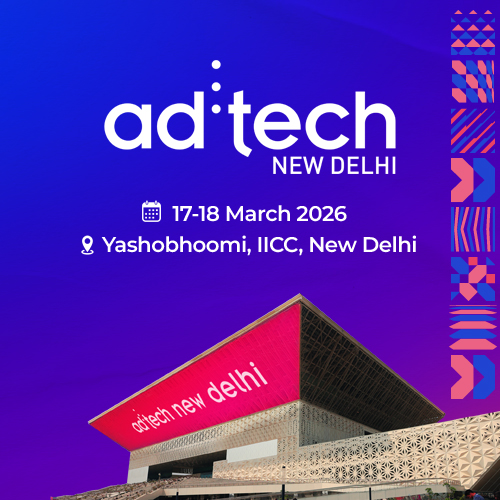
The 15th edition of ad:tech New Delhi opened today at Yashobhoomi, bringing together leaders from across marketing, media, advertising, and technology to examine how artificial intelligence, evolving data ecosystems, and changing consumer behaviour are reshaping the future of marketing.
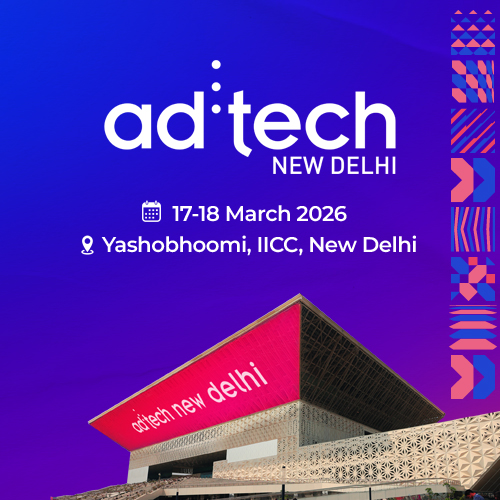
 

ad:tech New Delhi 2026 opens at “The Bold Front,” spotlighting AI’s growing role in shaping the future of marketing


Held under the theme “The Bold Front,” the conference set the stage for conversations around a rapidly transforming industry where human creativity and intelligent technology are converging to redefine how brands connect with audiences.


Reflecting on the broader momentum at “The Bold Front,” Jaswant Singh, Country Managing Director, ad:tech India, noted how the conference captures the strategic pivot taking place across marketing today: “Consumer expectations are changing faster than ever, and brands must respond with intelligence and agility. At ad:tech New Delhi 2026, we are discussing how AI, data, and programmatic media can help organisations understand audiences more deeply and deliver relevant experiences. Success is now defined not only by reach but by the trust and value a brand creates at every touchpoint. Companies are exploring how to combine creativity with insight to foster stronger engagement. Creativity and human judgement remain essential, but technology is amplifying their reach. This is how the industry can build both growth and resilience for the future.”


Over the past 15 years, ad:tech New Delhi has emerged as one of India’s most influential platforms for marketing innovation, enabling industry leaders to exchange ideas, explore new technologies, and navigate the evolving digital ecosystem.


At the 2026 edition, the expo hall was buzzing with energy. Over 70 companies, along with their experts and brand teams, demonstrated the latest innovation in AI, programmatic advertising, martech, data intelligence, and digital media solutions. Attendees also engaged in partner sessions by Google, Amazon, Magnite, and Click2Commission, gaining practical insights on platform strategies, publisher success, and emerging trends. Playful activations like Jenga, Tetris, and table tennis brought a fun, engaging dimension to the experience.


With participation from global tech companies, agencies, publishers, and marketing leaders, the scale and diversity of the event highlight the rapid growth and dynamism of India’s marketing technology ecosystem.


Exploring “The Bold Front” of Marketing
Across three stages- VISION, LIVE, and DEEP DIVE- Day 1 explored how marketing leadership is evolving as the industry moves from experimentation with AI toward deeper integration across the marketing stack.


The opening keynote, delivered by Jamie Jouning, Global Head of Advertising, The Economist, highlighted the importance of smarter systems in an AI-driven environment:


We’re operating in a world of constant uncertainty, where AI is accelerating, but adoption remains uneven. Success won’t come from moving fastest, but from designing the smartest systems and making sharper choices about what truly matters.”


Sessions throughout the day examined AI-powered programmatic advertising, media buying, connected TV, search, generative AI in marketing workflows, and the evolving role of creators and youth culture. Speakers highlighted how AI is not replacing creative thinking, but expanding possibilities for experimentation and innovation. Panels also addressed ethical AI, transparency, and building consumer trust in automated systems.


Practical Insights and Emerging Trends
Creativity in the age of intelligent technology was another central theme, with speakers highlighting how AI is not replacing creative thinking but expanding the possibilities for experimentation and innovation in storytelling. David Shing, aka Digital Prophet, emphasized this evolving dynamic:


Design has continually evolved with technology. From the shift from paper-led creativity to desktop publishing, each disruption has redefined the role of the creator. Today, AI marks the next inflection point, where it almost feels as though technology can anticipate our intent. As we express ideas, systems are increasingly able to translate them into outputs in real time, blurring the line between imagination and execution.”


Discussions explored hybrid operating models where human expertise works alongside AI-driven systems, as well as the growth of connected TV and quick commerce. Speakers emphasized that effective marketing in 2026 requires balancing speed and scale with intelligence, simplification, and data-driven decision-making.


Television is far from stagnant; it is evolving through a hybrid model that blends the strengths of linear with the precision of digital. This synergy between scale and performance is redefining how marketers approach media investments today,” said Prasad Sanagavarapu, Invidi, summarising insights from the day’s media sessions.


The afternoon sessions further examined AI-native operating models, content as a core currency, commerce acceleration, and the rise of intelligent search, showcasing how marketing leaders are translating technological transformation into business growth.


Consumer behaviour in the age of AI was highlighted by Paul D’Arcy, Moloco:
Technology is moving faster than ever, and the 2026 AI Disruption Index makes one thing clear: if your value proposition is purely transactional, you are vulnerable. The only true defense against AI disintermediation is the strength of your customer relationship. When disruption is high, trust is the only currency that doesn’t devalue.”


The Conversation Continues
By the close of Day 1, a clear theme had emerged across discussions: artificial intelligence is no longer simply enhancing marketing tools. In fact, it is reshaping the entire operating system of the industry.


From programmatic infrastructure and AI-powered creativity to connected TV, quick commerce, and intelligent search, marketers at ad:tech New Delhi 2026 are exploring how to navigate this new frontier where human insight and machine intelligence work together.


The day concluded with the ad:tech Honours Awards, celebrating the organisations and innovators pushing the boundaries of marketing technology.


With one more day of discussions, showcases, and networking ahead, ad:tech New Delhi 2026 continues to bring the industry together to explore what lies beyond today’s digital frontier.


About ad:tech

ad:tech New Delhi is part of the Comexposium Group, one of the world’s leading event organisers, hosting 150+ B2C and B2B events across industries including IT, security, digital, high-tech, and more. Comexposium operates in 23+ global economic growth zones, bringing together over 3.5 million visitors and 48,000 exhibitors worldwide.
ad:tech Honours Returns Bigger in 2026, Spotlighting the Technologies Transforming Modern Marketing

Following a successful inaugural edition, the ad:tech Honours Awards returned in 2026 to once again spotlight the innovators shaping the future of advertising and marketing through technology. Held at Yashobhoomi, New Delhi, on March 17, the awards recognised organisations and leaders leveraging cutting-edge technologies to transform brand engagement, enhance customer experience, and unlock new levels of marketing performance.
 

ad:tech Honours 2026 spotlights AI, data, and creativity driving the next wave of marketing transformation
 

Presented in continued association with the International Advertising Association (IAA) India Chapter, the 2026 edition of the ad:tech Honours also welcomed Huella as a new partner, marking its first year of participation. Huella’s involvement further strengthens the platform’s commitment to celebrating marketing innovation, with selected winners receiving NEXad advertising credits to amplify their stories on Connected TV through interactive, high-impact formats.
 

The ad:tech Honours were introduced last year at ad:tech New Delhi, with the inaugural ceremony held on March 6 at Yashobhoomi. The initiative marked one of the industry’s first large-scale recognitions dedicated specifically to the use of technology in marketing and its growing influence on the way brands connect with audiences.
 

Industry leaders, technology pioneers, and marketing innovators gathered once again this year for the second edition on March 17, reaffirming the awards’ growing significance as a platform that celebrates the engines powering modern marketing.
 

For more than 15 years, ad:tech New Delhi has been at the forefront of conversations around digital transformation in marketing. With the introduction of the Honours, the platform expanded its mission beyond dialogue, creating a stage to recognise leaders who are applying technology to elevate brand storytelling, optimise customer journeys, and deliver measurable business impact.
 

Building on the success of its debut year, ad:tech Honours 2026 expanded from 8 to 22 categories, reflecting the rapid evolution of the marketing technology ecosystem and the growing convergence of creativity, data, and artificial intelligence.
 

The newly introduced categories include:

  • Affiliate & Partner Marketing

  • AI & Creative Automation – AI-Driven Dynamic Creative Optimisation

  • AI & Creative Automation – Creative AI Collaboration

  • AI Conversation Agents

  • AI in Marketing – Predictive AI

  • Commerce & Retail Tech – Immersive Retail Tech

  • GenAI in Marketing – GenAI-Led Creative

  • Influencer Management

  • Influencer Marketing – Influencer Measurement & Analytics

  • Marketing Automation – Omnichannel Marketing Automation

  • OTT Innovation

  • Performance Marketing – Search, SEO, and Performance Marketing

  • Programmatic & Emerging Media – Connected TV Advertising

  • Programmatic & Emerging Media – Interactive DOOH

  • Social Media – Community & UGC Engagement

  • Innovation
     

These categories recognise the growing spectrum of technological innovation shaping marketing today, from AI-driven creativity and predictive intelligence to immersive retail technologies, next-generation programmatic media, and data-led influencer ecosystems.
 

Jaswant Singh, Country Managing Director of ad:tech India, highlighted that collaborations with IAA and Huella have played a key role in elevating industry standards, reflecting the remarkable momentum within the ecosystem. “Technology from Generative AI driving unprecedented innovation to data powering smarter decision-making is central to the impact we’re seeing across the industry,” he noted.
 

As advertising continues to evolve at a rapid pace, the ad:tech Honours provide a platform to recognise the visionaries and innovators who are not just adapting to change but actively shaping the industry’s next frontier.
 

Neena Dasgupta, IAA Mancom Member and CEO & Founder of The Salt Inc. Consulting, opened the awards night with powerful words: “Awards are not just about the technology itself, they celebrate the people, the creativity, and the relentless effort behind it. Bringing IAA and ad:tech together allows us to honor both innovation and the brilliant minds making it possible.”
 

By celebrating the technologies and leaders powering this transformation, ad:tech Honours 2026 reinforces the industry’s commitment to innovation, measurable impact, and the future of marketing.
 

About ad:tech
ad:tech New Delhi is part of the Comexposium Group, one of the world’s leading event organisers, hosting 150+ B2C and B2B events across industries including IT, security, digital, high-tech, and more. Comexposium operates in 23+ global economic growth zones, bringing together over 3.5 million visitors and 48,000 exhibitors worldwide.
 

About the International Advertising Association (IAA) India Chapter

The International Advertising Association is the world’s only globally-focused integrated advertising trade association with membership representing Advertising agencies and the Media. The IAA comprises Corporate Members, Organisational Members, Educational Affiliates, as well as 56 Chapters with individual members and young professionals from 76 countries including the top 10 economies in the world. lAA is over 80 years’ old and is headquartered in New York.


Membership to the Indian Chapter of IAA is by invitation only and IAA has very senior marketing, advertising and media professionals as it members. IAA in India is seen as the most active chapter by IAA Global. IAA India is well-recognised for some of its marquee events like the IAA Leadership Awards, IAA Olive Crown Awards, IndIAA Awards, IAA Voice of Change, IAA TechPulse, IAA Debates, IAA Conversations, IAA Young Turks Forum and an array of IAA Knowledge Seminars, Webinars, Workshops, Conclaves etc.
 

For more information, visit newdelhi.ad-tech.com.

Download List of Winners I Honours Awards 2026
docs.google.com/spreadsheets/u/0/d/1-BZmt3ytJUfVjkm6mmzR3P5EN9U8xxvEfFYNuW8Uq6E/htmlview

Why Frost-Free Inverter Refrigerators Are Worth the Upgrade This Gudi Padwa

Gudi Padwa marks the start of a new year – a time to welcome fresh beginnings, good fortune, and smarter choices into the home. And if there’s one upgrade worth making this festive season, it’s switching to a frost-free inverter refrigerator. Unlike traditional direct-cool models that ice up, run loudly, and rack up high electricity bills, frost-free inverter refrigerators cool more evenly, run more efficiently, and keep food fresher for longer.


Bajaj Finserv Easy EMI Loan


The good news is that upgrading does not have to mean paying for it all at once. Customers can visit the Easy EMI Loan page on the Bajaj Finserv website, browse refrigerators that suit their home, and get a loan approved online — all before they even step into a store. They can then head to the nearest partner store to complete the purchase and split the total cost into Easy EMIs that fit their monthly budget. Select models come with zero down payment — meaning the new refrigerator comes home today, with payments starting only next month.


Why Frost-Free Inverter Tech is a must-have

Frost-free technology uses fans to circulate cool air evenly, preventing ice buildup in the freezer. Paired with an inverter compressor that runs at variable speeds based on cooling demand, this results in:

  • Lower electricity bills: Up to 30–50% energy savings compared to non-inverter models.

  • Reduced noise: Quiet operation that does not disturb the home environment.

  • Longer freshness: Precise temperature control keeps perishable items fresh for days.


Best Frost-Free Inverter refrigerators to buy this Gudi Padwa

From compact double-door models to AI-powered options, here are five of the best frost-free inverter refrigerators available right now — with EMI prices to match every budget.

1. Godrej 272L 2-Star Inverter Double Door Refrigerator 

  • Price: Rs. 26,490 | EMI from: Rs. 1,247/month

  • Why it works: Nano Shield Technology provides over 95% disinfection on food surfaces, while Cool Balance Technology keeps vegetables farm fresh for up to 30 days. 


2. LG 308L 2-Star Frost Free Double Door Refrigerator

  • Price: Rs. 31,039 | EMI from: Rs. 2,378/month

  • Why it works: DoorCooling+™ cools food 35% faster than conventional systems, and Auto Smart Connect lets it run on a home inverter during power cuts.


3. Whirlpool 308L 3-Star Convertible Refrigerator

  • Price: Rs. 33,490 | EMI from: Rs. 1,020/month

  • Why it works: Features the industry’s fastest freezer-to-fridge conversion in just 10 minutes, and 6th Sense Nutrilock technology preserves vitamins in fruits and vegetables up to 2x longer.


4. Samsung 350L Bespoke AI Double Door Refrigerator

  • Price: Rs. 41,490 | EMI from: Rs. 1,290/month

  • Why it works: Bespoke AI Energy Mode optimises compressor speed to save up to 10% more energy, with a 5-in-1 convertible setup for maximum storage flexibility.


5. Haier 358L 3-Star Frost Free Double Door Refrigerator

  • Price: Rs. 42,600 | EMI from: Rs. 2,169/month

  • Why it works: Triple Inverter and Dual Fan Technology offer superior temperature control, and 1-hour icing technology ensures you never run out of ice.


*Disclaimer: Prices and EMIs may vary by location, partner store, and applicable offers. Please verify the latest pricing before purchase.


Limited-time offers on electronics and appliances

  • Flat Rs. 1,500 cashback on select purchases.


With EMIs starting as low as Rs. 1,020 per month, bringing home the preferred frost-free inverter refrigerator this Gudi Padwa has never been easier or more affordable.


*Terms and conditions apply. Check with your store for details.


How to buy a new refrigerator with Bajaj Finserv Easy EMI Loan

Upgrading a refrigerator this Gudi Padwa does not have to mean a large one-time payment. The Bajaj Finserv Easy EMI Loan lets customers split the cost into pocket-friendly monthly instalments, while the Maha Bachat Savings Calculator helps add brand discounts and dealer offers on top — ensuring they always get the best deal.


Here is how it works:

  1. Select the refrigerator online: Customers can browse models by capacity, star rating, and brand to pick the one that suits their kitchen and budget.

  2. Check eligibility: Then head to the Easy EMI Loan page and complete a quick KYC process using a mobile number and PAN card.

  3. View the limit instantly: The approved loan amount is displayed immediately once verified.

  4. Visit a partner store: Customers can walk into the nearest Bajaj Finserv partner store and get guidance from an in-store representative.

  5. Finalise the EMI plan: Pick a repayment tenure, complete minimal paperwork, and the purchase is confirmed on the spot.

This Gudi Padwa, the right refrigerator for a home is just a few easy steps away. With the Bajaj Finserv Easy EMI Loan, buying a refrigerator on EMI has never been simpler — the cost is one thing customers do not have to worry about.


Bajaj Finance Limited

Bajaj Finance Ltd. (‘BFL’, ‘Bajaj Finance’, or ‘the Company’), a subsidiary of Bajaj Finserv Ltd., is a deposit taking Non-Banking Financial Company (NBFC-D) registered with the Reserve Bank of India (RBI) and is classified as an NBFC-Investment and Credit Company (NBFC-ICC). BFL is engaged in the business of lending and acceptance of deposits. It has a diversified lending portfolio across retail, SMEs, and commercial customers with significant presence in both urban and rural India. It accepts public and corporate deposits and offers a variety of financial services products to its customers. BFL, a thirty-five-year-old enterprise, has now become a leading player in the NBFC sector in India and on a consolidated basis, it has a franchise of 69.14 million customers. BFL has the highest domestic credit rating of AAA/Stable for long-term borrowing, A1+ for short-term borrowing, and CRISIL AAA/Stable & [ICRA]AAA(Stable) for its FD program. It has a long-term issuer credit rating of BB+/Positive and a short-term rating of B by S&P Global ratings. 


To know more, visit www.bajajfinserv.in

ad:tech Honours Returns Bigger in 2026, Spotlighting the Technologies Transforming Modern Marketing

Following a successful inaugural edition, the ad:tech Honours Awards returned in 2026 to once again spotlight the innovators shaping the future of advertising and marketing through technology. Held at Yashobhoomi, New Delhi, on March 17, the awards recognised organisations and leaders leveraging cutting-edge technologies to transform brand engagement, enhance customer experience, and unlock new levels of marketing performance.
 

ad:tech Honours 2026 spotlights AI, data, and creativity driving the next wave of marketing transformation
 

Presented in continued association with the International Advertising Association (IAA) India Chapter, the 2026 edition of the ad:tech Honours also welcomed Huella as a new partner, marking its first year of participation. Huella’s involvement further strengthens the platform’s commitment to celebrating marketing innovation, with selected winners receiving NEXad advertising credits to amplify their stories on Connected TV through interactive, high-impact formats.
 

The ad:tech Honours were introduced last year at ad:tech New Delhi, with the inaugural ceremony held on March 6 at Yashobhoomi. The initiative marked one of the industry’s first large-scale recognitions dedicated specifically to the use of technology in marketing and its growing influence on the way brands connect with audiences.
 

Industry leaders, technology pioneers, and marketing innovators gathered once again this year for the second edition on March 17, reaffirming the awards’ growing significance as a platform that celebrates the engines powering modern marketing.
 

For more than 15 years, ad:tech New Delhi has been at the forefront of conversations around digital transformation in marketing. With the introduction of the Honours, the platform expanded its mission beyond dialogue, creating a stage to recognise leaders who are applying technology to elevate brand storytelling, optimise customer journeys, and deliver measurable business impact.
 

Building on the success of its debut year, ad:tech Honours 2026 expanded from 8 to 22 categories, reflecting the rapid evolution of the marketing technology ecosystem and the growing convergence of creativity, data, and artificial intelligence.
 

The newly introduced categories include:

  • Affiliate & Partner Marketing

  • AI & Creative Automation – AI-Driven Dynamic Creative Optimisation

  • AI & Creative Automation – Creative AI Collaboration

  • AI Conversation Agents

  • AI in Marketing – Predictive AI

  • Commerce & Retail Tech – Immersive Retail Tech

  • GenAI in Marketing – GenAI-Led Creative

  • Influencer Management

  • Influencer Marketing – Influencer Measurement & Analytics

  • Marketing Automation – Omnichannel Marketing Automation

  • OTT Innovation

  • Performance Marketing – Search, SEO, and Performance Marketing

  • Programmatic & Emerging Media – Connected TV Advertising

  • Programmatic & Emerging Media – Interactive DOOH

  • Social Media – Community & UGC Engagement

  • Innovation
     

These categories recognise the growing spectrum of technological innovation shaping marketing today, from AI-driven creativity and predictive intelligence to immersive retail technologies, next-generation programmatic media, and data-led influencer ecosystems.
 

Jaswant Singh, Country Managing Director of ad:tech India, highlighted that collaborations with IAA and Huella have played a key role in elevating industry standards, reflecting the remarkable momentum within the ecosystem. “Technology from Generative AI driving unprecedented innovation to data powering smarter decision-making is central to the impact we’re seeing across the industry,” he noted.
 

As advertising continues to evolve at a rapid pace, the ad:tech Honours provide a platform to recognise the visionaries and innovators who are not just adapting to change but actively shaping the industry’s next frontier.
 

Neena Dasgupta, IAA Mancom Member and CEO & Founder of The Salt Inc. Consulting, opened the awards night with powerful words: “Awards are not just about the technology itself, they celebrate the people, the creativity, and the relentless effort behind it. Bringing IAA and ad:tech together allows us to honor both innovation and the brilliant minds making it possible.”
 

By celebrating the technologies and leaders powering this transformation, ad:tech Honours 2026 reinforces the industry’s commitment to innovation, measurable impact, and the future of marketing.
 

About ad:tech
ad:tech New Delhi is part of the Comexposium Group, one of the world’s leading event organisers, hosting 150+ B2C and B2B events across industries including IT, security, digital, high-tech, and more. Comexposium operates in 23+ global economic growth zones, bringing together over 3.5 million visitors and 48,000 exhibitors worldwide.
 

About the International Advertising Association (IAA) India Chapter

The International Advertising Association is the world’s only globally-focused integrated advertising trade association with membership representing Advertising agencies and the Media. The IAA comprises Corporate Members, Organisational Members, Educational Affiliates, as well as 56 Chapters with individual members and young professionals from 76 countries including the top 10 economies in the world. lAA is over 80 years’ old and is headquartered in New York.


Membership to the Indian Chapter of IAA is by invitation only and IAA has very senior marketing, advertising and media professionals as it members. IAA in India is seen as the most active chapter by IAA Global. IAA India is well-recognised for some of its marquee events like the IAA Leadership Awards, IAA Olive Crown Awards, IndIAA Awards, IAA Voice of Change, IAA TechPulse, IAA Debates, IAA Conversations, IAA Young Turks Forum and an array of IAA Knowledge Seminars, Webinars, Workshops, Conclaves etc.
 

For more information, visit newdelhi.ad-tech.com.

Download List of Winners I Honours Awards 2026
docs.google.com/spreadsheets/u/0/d/1-BZmt3ytJUfVjkm6mmzR3P5EN9U8xxvEfFYNuW8Uq6E/htmlview

Emergence Launches India's First Frontier AI Lab for Autonomous Agents to Power the Nation's Shift from IT Services to Advanced Manufacturing

Emergence, the New York-based frontier agentic AI company founded by three Indian-American scientists from IBM Research, today announced the launch of Emergence India Labs (EIL) – India’s first dedicated AI research and development lab focused on autonomous AI agents. The lab will accelerate the development of homegrown next-generation autonomous systems capable of operating mission-critical digital and physical infrastructure, positioning India to move beyond its traditional IT services model toward advanced manufacturing, logistics, and industrial automation.


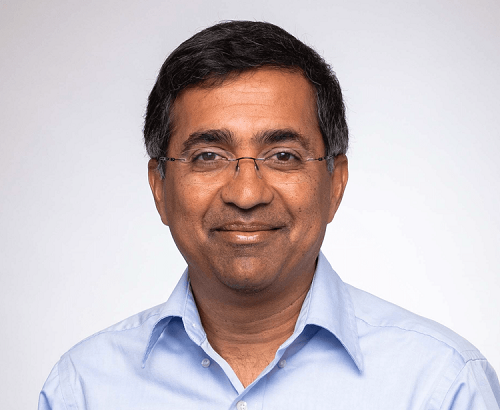
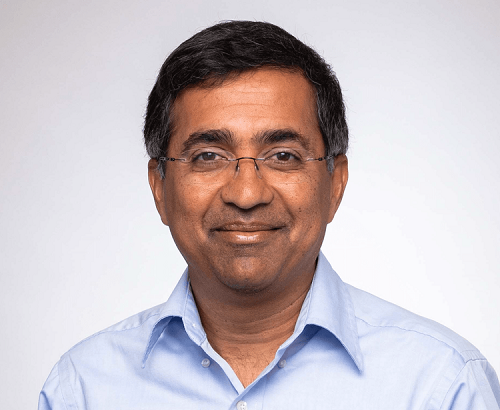
Dr. Satya Nitta, Co-founder and CEO of Emergence


Backed by tens of millions of dollars in initial inward R&D investment, with significant long-term expansion planned, EIL is expected to scale to 500 world-class research scientists and engineers over the next three to four years – marking one of the most ambitious expansions of frontier AI research capacity in India.


Strategically located near the Indian Institute of Science (IISc) in Bengaluru, EIL will collaborate closely with the IISc ecosystem through joint research, exchanges, hackathons, and summer schools to build a next-generation talent pipeline in autonomous systems. Professor Siddhartha Gadgil of IISc joins as Chief Scientist while maintaining his academic affiliation.


Emergence India Labs is envisioned not only as a research center, but as the nucleus of a broader public-private partnership to ensure that India builds foundational AI technologies domestically rather than importing them. While the initiative begins within Emergence, the long-term ambition is to convene government, industry, academia, and global technology leaders around a shared mission: building the foundational systems that will power the next generation of digital and physical infrastructure. Emergence issued a call to action for partners to join this endeavor, with success over the next five years measured by how effectively Emergence India Labs catalyzes frontier R&D programs to be headquartered in India.


Central to that ambition is the lab’s structural design. Unlike multinational R&D outposts that operate as satellite extensions of overseas global headquarters, Emergence India Labs is conceived as a core, AI-native R&D epicenter in India, designed to anchor sovereign AI capability. For more than two decades, India’s technology sector has been centered on IT services; the next chapter will be defined by building frontier autonomous systems that transform enterprise software, AI capable of operating digital infrastructure, with the same foundational technologies powering advances in physical AI domains such as manufacturing, logistics, ports, factories, and essential infrastructure. AI adoption in Indian manufacturing has already surged – with 65% of manufacturers integrating AI by 2024, up from 45% in 2022 – and the domestic AI-in-manufacturing market projected to grow at roughly 40% annually, surpassing $8 billion by 2030.


Recent global research indicators underscore the urgency of this moment. The Nature Index 2025 Research Leaders report shows that Chinese universities now occupy nine of the top ten global research positions in natural sciences, a dramatic shift east in global scientific leadership over the past decade. In parallel, in 2024, China accounted for more than half of all industrial robot installations worldwide – roughly 54% of the global total – with hundreds of thousands of new robots deployed in factories each year. As technological power rebalances globally, India has a strategic opportunity to position itself at the frontier of autonomous systems research.


The launch reflects a broader global shift in AI. The debate is no longer only about training the largest language models, but about developing the autonomous systems layer that enables AI to operate safely and reliably in real-world environments.


We believe the most immediate opportunity lies in building autonomous AI systems capable of operating the world’s most mission-critical digital infrastructure – from financial networks and telecom platforms to cloud and digital public systems,” said Satya Nitta, Co-founder and CEO of Emergence. “By mastering autonomy in the digital realm, we establish the foundation to extend into robotics, advanced manufacturing, and next-generation industrial infrastructure.”


For more than two decades, India’s technology sector has been anchored in IT services,” Nitta added. “The next chapter must be defined by building frontier autonomous systems that power critical infrastructure. The hardest problem in robotics isn’t movement – it’s thinking. By focusing on agentic systems, we are solving reasoning under uncertainty. Around the world, leading economies are embedding AI into physical systems at scale. India must participate fully in shaping that transformation.


Ultimately, our success will be defined by whether Emergence India Labs helps anchor more frontier R&D in India – making the country a primary home for breakthrough innovation and enabling world-class talent to build and lead from here.”


EIL will place particular emphasis on building a talent pipeline around LEAN as a grounding layer for AI agents, demonstrating how formal verification can be embedded at every level of autonomous decision-making.


The convergence of formal proof systems and the explosive growth of artificial intelligence creates an unprecedented opportunity – and necessity – to build reliable, mathematically grounded autonomous systems,” said Professor Siddhartha Gadgil of the Indian Institute of Science and Chief Scientist at Emergence India Labs. “Driven by a rich scientific tradition and a dynamic generation of engineers and entrepreneurs, India has the potential to drive this new frontier. By anchoring the entire spectrum of innovation here in Bangalore, from foundational research to real-world application, we will catalyze an ecosystem of sustained, world-class breakthroughs, ensuring India helps architect the future of intelligent systems.”


Anchoring Frontier Research in India

Emergence is widely recognized as a leading agentic AI company, distinguished by its patent-to-research ratio and a team of resident scientists drawn from the world’s foremost R&D institutions, including Google DeepMind, IBM T.J. Watson Research Labs, and the Allen Institute for AI. The company has pioneered several benchmark-leading advances in autonomous agents, including its breakthrough in recursive intelligence, enabling AI systems to autonomously generate new AI capabilities. Central to its approach is a formally verified control architecture for large-scale autonomous AI systems, separating stochastic reasoning from deterministic execution and enforcing mathematical guarantees at runtime.


Thousands of Indian researchers, engineers, and technology leaders are at the heart of many of the world’s most significant AI breakthroughs, contributing across leading Silicon Valley labs and global technology companies,” added Nitta. “The talent is not in question. The strategic opportunity now is to anchor more of that leadership at home – and to channel it towards areas such as autonomous systems that operate critical infrastructure. India has also long demonstrated disciplined, resource-efficient innovation. Its successful Chandrayaan-3 lunar landing – delivered at a significantly lower cost to comparable international missions – stands as another powerful example of strategic engineering excellence.”


Inward Investment and Ecosystem Impact

Led by internationally recognized scientists, including Dr. Prasenjit Dey (PhD, EPFL; IIT Delhi), who will lead the lab on the ground in India, Dr. Ravi Kokku (PhD, UT Austin; IIT Kharagpur), and Professor Siddhartha Gadgil of IISc (PhD, CalTech, Indian Statistical Institute), Emergence India Labs, aims to strengthen India’s AI ecosystem by:


  • Supporting the local start-up ecosystem with access to frontier autonomous systems technologies

  • Developing top-tier AI research talent in collaboration with academia, industry, and government

  • Anchoring breakthroughs in autonomous systems within India

  • Contributing to the development of next-generation autonomous systems capable of operating mission-critical digital and physical infrastructure built in India

  • Publishing frontier research in leading global venues (e.g., NeurIPS, ICML, ICLR)


This is a national-scale scientific moonshot,” added Nitta. “For researchers, it is a chance to do career-defining work at the frontier of autonomous intelligence. For investors, it is an opportunity to back a platform with generational impact. And for India, it signals the next step in an ongoing journey – strengthening its position as one of the defining centers of gravity in the global AI landscape.” 


Today, we urge public and private investors, national labs, R&D centers, universities, and technology leaders to join us in this endeavor to scale the next generation of frontier AI innovation from India.”

VinFast Continues Award Momentum in India with Wins at Jagran Hi-Tech and Car&Bike Awards 2026

VinFast Auto India, a subsidiary of global electric vehicle manufacturer VinFast, has been recognised at two prominent automotive platforms in India, including the Jagran Hi-Tech Awards 2026 and Car&Bike Awards 2026. These honors spotlight VinFast’s rising momentum in India’s EV ecosystem and its dedication to innovative, accessible, high-quality electric mobility.


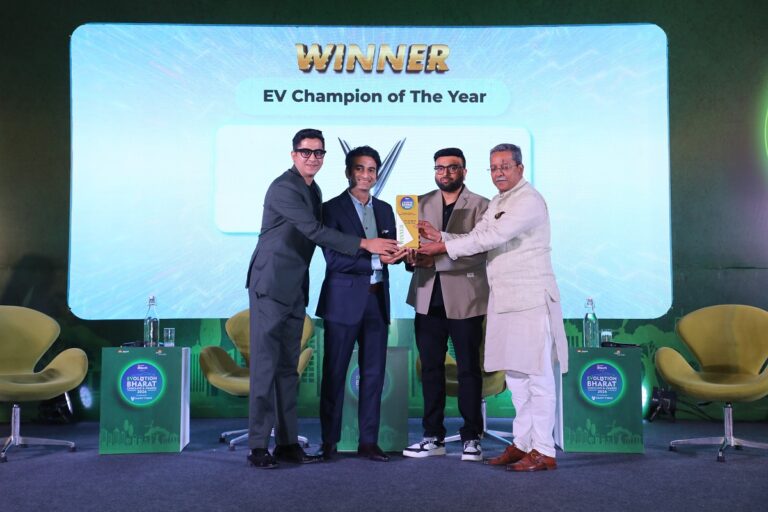
Rituraj Singh (second from the left), Deputy CEO of Sales and Network Development at VinFast India, received the award from Jagran Hi-tech organizing committee


At the Jagran Hi-Tech Awards 2026, VinFast was honoured with the “EV Champion of the Year” award, recognising the company’s strong entry into the Indian electric mobility landscape and its long-term vision for building a comprehensive EV ecosystem in the country. The award acknowledges VinFast’s investments in manufacturing, product development and local partnerships aimed at accelerating the adoption of electric mobility in India.


Arunodoy Das (center), Deputy CEO of Sales at VinFast India, receives the award from the organizers of the Car&Bike Awards 2026


Meanwhile, VinFast was named “Breakthrough Brand of the Year” at the Car&Bike Awards 2026, recognising the company’s rapid global expansion and bold commitment to an all-electric future. The jury highlighted VinFast’s fast-growing international footprint and its strategy of building a global brand around electric mobility.


The newest accolades bring VinFast’s total number of awards in the Indian market to more than 20 in just over a year, reflecting strong recognition from industry experts for both brand stature and product quality. Previously, VinFast was named “Investor of the Year” by Nanayam Vikatan magazine and “New Entrant of the Year” at the FASTER Awards 2026, while its communications team also received the “Communications Team of the Year 2026” title. The VF 7 was honored as “Electric SUV of the Year” at the BBC TopGear India Awards 2026, while the VF 6 won “Value for Money Car of the Year” at the Autocar India Awards 2026.


Mr. Tapan Ghosh, CEO of VinFast India, said, “We are honoured to receive these recognitions from the Jagran Hi-Tech Awards and Car&Bike Awards. Being named EV Champion of the Year and Breakthrough Brand of the Year reflect the growing confidence of industry experts and consumers in VinFast’s vision for electric mobility in India. As we continue to strengthen our presence in India, we remain focused on delivering innovative, high-quality electric vehicles while contributing to the development of a robust ecosystem that supports the country’s transition to sustainable mobility.”


Mr. Arjit Garg, Editor, Jagran Hi-tech, said, “At Jagran EVolution Bharat EV Conclave & Awards, we celebrate and recognise the rapidly growing EV ecosystem in India. This year was particularly special, with multiple innovations, new products, and strong global participation in the sector. One notable example is VinFast, which has not only chosen to enter the Indian market but has also committed to setting up local manufacturing, aligning strongly with the Make in India vision. For this reason, we honoured VinFast with the ‘EV Champion of the Year’ award, a well-deserved recognition for a brand that is bringing world-class electric vehicles to India while also contributing to job creation and strengthening the country’s EV manufacturing ecosystem.


Mr. Girish Karkera, Editor in Chief, Car&Bike, said, “It is always tough for a new automotive brand to find a firm footing in a new country with established rivals. VinFast has been able to not only launch relevant products for India but did it in record time by industry standards. The brand has managed to reach out to its focus audiences in a remarkably simple but effective way.”


VinFast continues to strengthen its comprehensive EV ecosystem in the Indian market, spanning manufacturing, retail, charging infrastructure, and after-sales services. Following the launch of the VF 6 and VF 7 electric SUVs, both of which secured 5-star Bharat NCAP safety ratings, the company has introduced a range of ownership-focused programmes, including assured resale, structured buyback options, and an industry-first vehicle exchange programme that allows customers to trade in existing internal combustion engine vehicles for a new VinFast electric SUV.


To further improve accessibility to electric mobility, VinFast is expanding initiatives that enhance both affordability and convenience. The company recently announced the extension of its free EV charging programme at charging stations developed and operated by V-Green until March 31, 2029. VinFast has also rolled out the “Trade Gas for Electric” programme across Vietnam, India, Indonesia, and the Philippines from March 11 to March 31, 2026, offering an additional 3% incentive on VinFast electric cars and 5% on VinFast electric motorcycles for customers switching from gasoline vehicles.


About VinFast

VinFast (NASDAQ: VFS), a subsidiary of Vingroup JSC, one of Vietnam’s largest conglomerates, is a pure-play electric vehicle manufacturer with the mission of making electric mobility more accessible to everyone. VinFast’s current product portfolio includes a wide range of electric SUVs, electric motorcycles, electric bicycles, and electric buses.


VinFast is entering its next phase of growth by rapidly expanding its global distribution and dealer network while strengthening manufacturing capabilities, with a focus on key markets in North America, Europe, the Middle East, and Asia.


Learn more at: vinfastauto.in

Sauce Labs CEO, Prince Kohli, Says $1 Trillion Software Quality Industry Has Been "Building Wrong" for 20 Years

Sauce Labs Inc., the world’s largest full-lifecycle, test automation platform, today announced the general availability of Sauce AI for Test Authoring, an AI Agent that translates business intent into framework-agnostic executable test suites that can be run instantly on Sauce Labs’ virtual and real-device clouds.


This launch introduces a new paradigm for DevOps: Intent-Driven Testing, designed to bridge the “Velocity and Quality Gap”, the widening distance between how fast AI generates code and how slowly teams can validate it for enterprise-grade quality.


High-quality test creation is one of software development’s most persistent bottlenecks. Developers spend 30%+ of their time writing and maintaining test suites, while non-technical team members, business analysts, product managers, and manual QA testers with deep domain knowledge remain locked out of automation entirely due to the coding expertise required.


Disrupting the $1 Trillion Quality Assurance & Engineering Spend
Today, Fortune 2000 companies dedicate 22% to 25% of their total IT budgets to Quality Assurance & Engineering, representing over $1 trillion in aggregate annual spend across global enterprise IT. As these enterprises adopt GenAI to ship code at up to 10x their historical velocity, they face several key challenges:


  • Test Authoring Speed and Ensuring Quality: 89% of CIOs report that “Test Authoring Speed” is now the primary hurdle to AI-driven delivery

  • The Coverage Deficit: Automated test coverage for complex journeys typically plateaus at under 35%

  • The Maintenance Trap: Teams spend 40% of their working hours fixing “flaky” tests or maintaining legacy scripts


AI can generate millions of lines of code in minutes,” said Dr. Prince Kohli, CEO of Sauce Labs. “The question for enterprises is: Can you verify it and trust it with your business? We are solving this problem, permanently.


Reinventing for the AI Era: Intent-Driven Testing
Today, Sauce Labs is reinventing the future of test automation with Intent-Driven Testing that replaces brittle, hand-coded test scripts with autonomous, self-improving test suites and validation.


Sauce AI for Test Authoring automatically understands intended application behavior by scanning the application workflow or interpreting specifications written by product managers or designs from tools such as Figma. In addition, it allows engineers, application developers and product managers to describe application behavior in natural language. The platform then autonomously generates complete, executable test suites for web, Android, and iOS, with the option to execute them in the Sauce Labs Test Cloud, and automatically reports the results, including insights on where to look and what to fix. Key capabilities include:


  • 90%+ Faster Automated Test Case Generation: Achieving real-time test creation from product specifications.

  • Resilient, Stable Test Scripts: Framework-agnostic tests built to adapt to application changes, with significantly fewer flaky failures and less maintenance overhead.

  • 99%+ Automatic Coverage: Eliminating “blind spots” in the user journey.

  • Built-in Review and Editing: Ensuring human oversight and control over AI-generated tests, allowing teams to validate, refine, and maintain reliability.

  • Autonomous Learning Loop: Continuous feedback that improves test accuracy.


The Data Moat: Deep Domain-Specific Testing Expertise
Sauce AI for Test Authoring surpasses general-purpose AI with a superior understanding of application workflow and user intent, generating stable OS-agnostic and device-agnostic tests. Fueled by the industry’s most robust proprietary dataset, 8.7 billion real-world test runs, this “Data Moat” enables 41% faster root-cause analysis than general-purpose LLMs. Trusted by 80% of the world’s top ten financial institutions, Sauce Labs offers enterprise-grade platform capabilities for complex software environments.


Setting up mobile testing is traditionally painful and can take days and weeks. Sauce AI for Test Authoring’s no-code capability gives our team something they simply weren’t able to do before. It turns a major bottleneck into an automated process that anyone can navigate,” said a Director of Engineering at a Fortune 500 pharmaceutical company participating in the Sauce AI for Test Authoring early access program.


Availability
Sauce AI for Test Authoring is available now for enterprise customers. To learn how to reclaim your IT budget and join the Intent-Driven Test era, visit saucelabs.com/solutions/ai


About Sauce Labs
Sauce Labs is the world’s largest full-lifecycle, test automation platform, and the company behind Selenium. Trusted by 80% of the world’s top ten largest financial institutions and over 300,000 enterprise users, Sauce Labs provides the only AI platform capable of turning business intent into autonomous testing and quality assurance. With a proprietary dataset of 8.7 billion test runs, Sauce Labs empowers the Fortune 2000 to bridge the gap between AI-driven code generation and enterprise-grade software quality.


Learn more at saucelabs.com.

VinFast Continues Award Momentum in India with Wins at Jagran Hi-Tech and Car&Bike Awards 2026

VinFast Auto India, a subsidiary of global electric vehicle manufacturer VinFast, has been recognised at two prominent automotive platforms in India, including the Jagran Hi-Tech Awards 2026 and Car&Bike Awards 2026. These honors spotlight VinFast’s rising momentum in India’s EV ecosystem and its dedication to innovative, accessible, high-quality electric mobility.


Rituraj Singh (second from the left), Deputy CEO of Sales and Network Development at VinFast India, received the award from Jagran Hi-tech organizing committee


At the Jagran Hi-Tech Awards 2026, VinFast was honoured with the “EV Champion of the Year” award, recognising the company’s strong entry into the Indian electric mobility landscape and its long-term vision for building a comprehensive EV ecosystem in the country. The award acknowledges VinFast’s investments in manufacturing, product development and local partnerships aimed at accelerating the adoption of electric mobility in India.


Arunodoy Das (center), Deputy CEO of Sales at VinFast India, receives the award from the organizers of the Car&Bike Awards 2026


Meanwhile, VinFast was named “Breakthrough Brand of the Year” at the Car&Bike Awards 2026, recognising the company’s rapid global expansion and bold commitment to an all-electric future. The jury highlighted VinFast’s fast-growing international footprint and its strategy of building a global brand around electric mobility.


The newest accolades bring VinFast’s total number of awards in the Indian market to more than 20 in just over a year, reflecting strong recognition from industry experts for both brand stature and product quality. Previously, VinFast was named “Investor of the Year” by Nanayam Vikatan magazine and “New Entrant of the Year” at the FASTER Awards 2026, while its communications team also received the “Communications Team of the Year 2026” title. The VF 7 was honored as “Electric SUV of the Year” at the BBC TopGear India Awards 2026, while the VF 6 won “Value for Money Car of the Year” at the Autocar India Awards 2026.


Mr. Tapan Ghosh, CEO of VinFast India, said, “We are honoured to receive these recognitions from the Jagran Hi-Tech Awards and Car&Bike Awards. Being named EV Champion of the Year and Breakthrough Brand of the Year reflect the growing confidence of industry experts and consumers in VinFast’s vision for electric mobility in India. As we continue to strengthen our presence in India, we remain focused on delivering innovative, high-quality electric vehicles while contributing to the development of a robust ecosystem that supports the country’s transition to sustainable mobility.”


Mr. Arjit Garg, Editor, Jagran Hi-tech, said, “At Jagran EVolution Bharat EV Conclave & Awards, we celebrate and recognise the rapidly growing EV ecosystem in India. This year was particularly special, with multiple innovations, new products, and strong global participation in the sector. One notable example is VinFast, which has not only chosen to enter the Indian market but has also committed to setting up local manufacturing, aligning strongly with the Make in India vision. For this reason, we honoured VinFast with the ‘EV Champion of the Year’ award, a well-deserved recognition for a brand that is bringing world-class electric vehicles to India while also contributing to job creation and strengthening the country’s EV manufacturing ecosystem.


Mr. Girish Karkera, Editor in Chief, Car&Bike, said, “It is always tough for a new automotive brand to find a firm footing in a new country with established rivals. VinFast has been able to not only launch relevant products for India but did it in record time by industry standards. The brand has managed to reach out to its focus audiences in a remarkably simple but effective way.”


VinFast continues to strengthen its comprehensive EV ecosystem in the Indian market, spanning manufacturing, retail, charging infrastructure, and after-sales services. Following the launch of the VF 6 and VF 7 electric SUVs, both of which secured 5-star Bharat NCAP safety ratings, the company has introduced a range of ownership-focused programmes, including assured resale, structured buyback options, and an industry-first vehicle exchange programme that allows customers to trade in existing internal combustion engine vehicles for a new VinFast electric SUV.


To further improve accessibility to electric mobility, VinFast is expanding initiatives that enhance both affordability and convenience. The company recently announced the extension of its free EV charging programme at charging stations developed and operated by V-Green until March 31, 2029. VinFast has also rolled out the “Trade Gas for Electric” programme across Vietnam, India, Indonesia, and the Philippines from March 11 to March 31, 2026, offering an additional 3% incentive on VinFast electric cars and 5% on VinFast electric motorcycles for customers switching from gasoline vehicles.


About VinFast

VinFast (NASDAQ: VFS), a subsidiary of Vingroup JSC, one of Vietnam’s largest conglomerates, is a pure-play electric vehicle manufacturer with the mission of making electric mobility more accessible to everyone. VinFast’s current product portfolio includes a wide range of electric SUVs, electric motorcycles, electric bicycles, and electric buses.


VinFast is entering its next phase of growth by rapidly expanding its global distribution and dealer network while strengthening manufacturing capabilities, with a focus on key markets in North America, Europe, the Middle East, and Asia.


Learn more at: vinfastauto.in

State of Working India 2026: India's Young Workforce is Growing and Getting More Educated

India has made substantial progress in expanding access to higher education for its young (15- to 29-year-olds) population, ensuring a movement out of agriculture into industry and services, and reduced gender and caste-based disparities, according to the ‘State of Working India 2026’ report. However, challenges remain and the extent to which the large, increasingly educated, and aspirational cohort is absorbed into the labour market will determine whether India’s demographic dividend translates into an economic dividend.
 

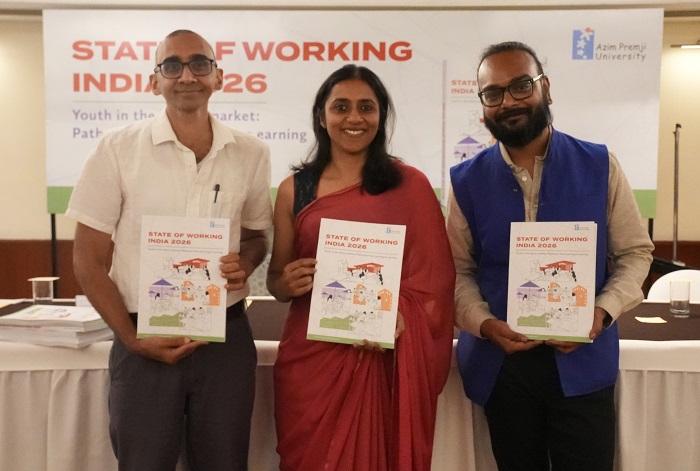
L-R: Amit Basole, Rosa Abraham & Tamoghna Halder from Azim Premji University
 

“More young people today are educated, informed, and ambitious than ever before. These are real achievements of which we can be proud,” noted Indu Prasad, President, Azim Premji Universities.
 

The report draws on official databases going back four decades to see how youth participation in education and employment has changed, how well we have been able to use this demographic dividend, and the challenges and opportunities that arise in integrating them into the workforce.


Rosa Abraham, lead author of the report and Associate Professor of Economics at Azim Premji University said, “The report traces the journey of a young worker – from education to job search and employment, and how this transition has evolved over the last forty years. We hope the report will lay out some of the foundational work that will contribute to a better understanding of the challenges in this transition and enable coordinated policymaking.”


Key Findings

  • Demographic dividend nearing peak: India’s working-age population share will begin declining after 2030. The pace of job creation in the coming decades is critical to ensure that the demographic dividend translates into an economic one.

  • Rising educational attainment: Youth education levels have increased significantly over four decades, especially among women. India’s tertiary enrolment rate (28%) is comparable to countries with similar per capita incomes.

  • Drop in male tertiary enrolment: The share of young men in education fell from 38% in 2017 to 34% in late 2024, with a large share citing the need to support household incomes as reason for their withdrawal.

  • Expansion of higher education institutions: College availability increased from 29 per lakh youth (2010) to 45 (2021), mainly driven by private institutions. However, regional disparities remain large.

  • Teacher shortages: Faculty growth has not matched rising student numbers. Against AICTE norms of 15–20 students per teacher, private colleges average 28 and public colleges 47. Hiring and filling up vacancies remain crucial to ensure that learning outcomes are not compromised due to resource constraints.

  • Rapid expansion of vocational institutes: The number of Industrial Training Institutes (ITIs) has grown by nearly 300% since the 2010s, largely due to private providers. But, institutional quality, especially among private ITIs, has fallen.

  • Higher education has become increasingly democratised but financial barriers remain: Between 2007 and 2017, the share of students in tertiary education who belong to the poorest households increased from 8 percent to 15 percent.

  • Financial barriers in accessing professional courses: Students from richer households are far more likely to pursue engineering and medicine, as the cost of these degrees often exceeds the annual per capita expenditure of poorer households.

  • Difficult education-to-employment transition: Graduate unemployment among the 15- to 29-year-olds remains high – nearly 40% among the 15- to 25-year-olds, and 20% among the 25- to 29-year-olds; and, only a small share secure stable salaried jobs within a year of graduation.

  • Strong graduate wage premium: Graduates earn roughly twice as much as non-graduates at entry, and the earnings gap widens over their careers.

  • Stagnating male graduate earnings: Entry-level salaries for young male graduates have slowed in growth since 2011, while gender gaps in graduate earnings have narrowed.

  • Shift away from agriculture: Young workers are leaving agriculture faster than older cohorts and moving into manufacturing and services. Young women are increasingly employed in IT, automobile manufacturing, and business services.

  • Declining caste and gender occupational segregation: Younger cohorts are less concentrated in occupations traditionally linked to their caste or gender.

  • Migration as a labour market response: Youth migration helps balance regional disparities – poorer states and those with a younger population remain major labour sources, while richer states with a predominantly older population rely increasingly on migrant youth.
     

For media queries contact:

Rosa Abraham

Email: rosa.abraham@apu.edu.in

Ph: +91-9901957009
 

Sony Shetty

Email: sony.shetty@azimpremjifoundation.org

Ph: +919820900036
 

Sumit Jain

Email: sumit.jain@k2communications.in

Ph: +91 9886021715
 

About Azim Premji University

Azim Premji University, Bengaluru, was established under the Azim Premji University Act 2010 of the Government of Karnataka. Azim Premji University, Bhopal, was established under the provisions of Madhya Pradesh Niji Vishwa Vidyalaya (Sthapana Avam Sanchalan) Dwitiya Sanshodhan Adhiniyam, 2022. Azim Premji University in Ranchi is being established under the Azim Premji University Act, 2022, enacted by the Government of Jharkhand.
 

Azim Premji Foundation, the sponsoring body, set up all three Universities as fully philanthropic entities, with a clear social purpose of contributing to the realisation of a just, equitable, humane, and sustainable society.

State of Working India 2026: India's Young Workforce is Growing and Getting More Educated

India has made substantial progress in expanding access to higher education for its young (15- to 29-year-olds) population, ensuring a movement out of agriculture into industry and services, and reduced gender and caste-based disparities, according to the ‘State of Working India 2026’ report. However, challenges remain and the extent to which the large, increasingly educated, and aspirational cohort is absorbed into the labour market will determine whether India’s demographic dividend translates into an economic dividend.
 

L-R: Amit Basole, Rosa Abraham & Tamoghna Halder from Azim Premji University
 

“More young people today are educated, informed, and ambitious than ever before. These are real achievements of which we can be proud,” noted Indu Prasad, President, Azim Premji Universities.
 

The report draws on official databases going back four decades to see how youth participation in education and employment has changed, how well we have been able to use this demographic dividend, and the challenges and opportunities that arise in integrating them into the workforce.


Rosa Abraham, lead author of the report and Associate Professor of Economics at Azim Premji University said, “The report traces the journey of a young worker – from education to job search and employment, and how this transition has evolved over the last forty years. We hope the report will lay out some of the foundational work that will contribute to a better understanding of the challenges in this transition and enable coordinated policymaking.”


Key Findings

  • Demographic dividend nearing peak: India’s working-age population share will begin declining after 2030. The pace of job creation in the coming decades is critical to ensure that the demographic dividend translates into an economic one.

  • Rising educational attainment: Youth education levels have increased significantly over four decades, especially among women. India’s tertiary enrolment rate (28%) is comparable to countries with similar per capita incomes.

  • Drop in male tertiary enrolment: The share of young men in education fell from 38% in 2017 to 34% in late 2024, with a large share citing the need to support household incomes as reason for their withdrawal.

  • Expansion of higher education institutions: College availability increased from 29 per lakh youth (2010) to 45 (2021), mainly driven by private institutions. However, regional disparities remain large.

  • Teacher shortages: Faculty growth has not matched rising student numbers. Against AICTE norms of 15–20 students per teacher, private colleges average 28 and public colleges 47. Hiring and filling up vacancies remain crucial to ensure that learning outcomes are not compromised due to resource constraints.

  • Rapid expansion of vocational institutes: The number of Industrial Training Institutes (ITIs) has grown by nearly 300% since the 2010s, largely due to private providers. But, institutional quality, especially among private ITIs, has fallen.

  • Higher education has become increasingly democratised but financial barriers remain: Between 2007 and 2017, the share of students in tertiary education who belong to the poorest households increased from 8 percent to 15 percent.

  • Financial barriers in accessing professional courses: Students from richer households are far more likely to pursue engineering and medicine, as the cost of these degrees often exceeds the annual per capita expenditure of poorer households.

  • Difficult education-to-employment transition: Graduate unemployment among the 15- to 29-year-olds remains high – nearly 40% among the 15- to 25-year-olds, and 20% among the 25- to 29-year-olds; and, only a small share secure stable salaried jobs within a year of graduation.

  • Strong graduate wage premium: Graduates earn roughly twice as much as non-graduates at entry, and the earnings gap widens over their careers.

  • Stagnating male graduate earnings: Entry-level salaries for young male graduates have slowed in growth since 2011, while gender gaps in graduate earnings have narrowed.

  • Shift away from agriculture: Young workers are leaving agriculture faster than older cohorts and moving into manufacturing and services. Young women are increasingly employed in IT, automobile manufacturing, and business services.

  • Declining caste and gender occupational segregation: Younger cohorts are less concentrated in occupations traditionally linked to their caste or gender.

  • Migration as a labour market response: Youth migration helps balance regional disparities – poorer states and those with a younger population remain major labour sources, while richer states with a predominantly older population rely increasingly on migrant youth.
     

For media queries contact:

Rosa Abraham

Email: rosa.abraham@apu.edu.in

Ph: +91-9901957009
 

Sony Shetty

Email: sony.shetty@azimpremjifoundation.org

Ph: +919820900036
 

Sumit Jain

Email: sumit.jain@k2communications.in

Ph: +91 9886021715
 

About Azim Premji University

Azim Premji University, Bengaluru, was established under the Azim Premji University Act 2010 of the Government of Karnataka. Azim Premji University, Bhopal, was established under the provisions of Madhya Pradesh Niji Vishwa Vidyalaya (Sthapana Avam Sanchalan) Dwitiya Sanshodhan Adhiniyam, 2022. Azim Premji University in Ranchi is being established under the Azim Premji University Act, 2022, enacted by the Government of Jharkhand.
 

Azim Premji Foundation, the sponsoring body, set up all three Universities as fully philanthropic entities, with a clear social purpose of contributing to the realisation of a just, equitable, humane, and sustainable society.