
Urban development in India is often framed through large-scale initiatives such as smart cities, infrastructure corridors, and multi-crore investments. However, for everyday citizens, the real measure of progress lies in tangible improvements, better roads, cleaner surroundings, accessible healthcare, and reliable public services. In this context, Ambattur is emerging as a compelling example of how consistent, localized, and people-focused governance can transform an urban ecosystem.
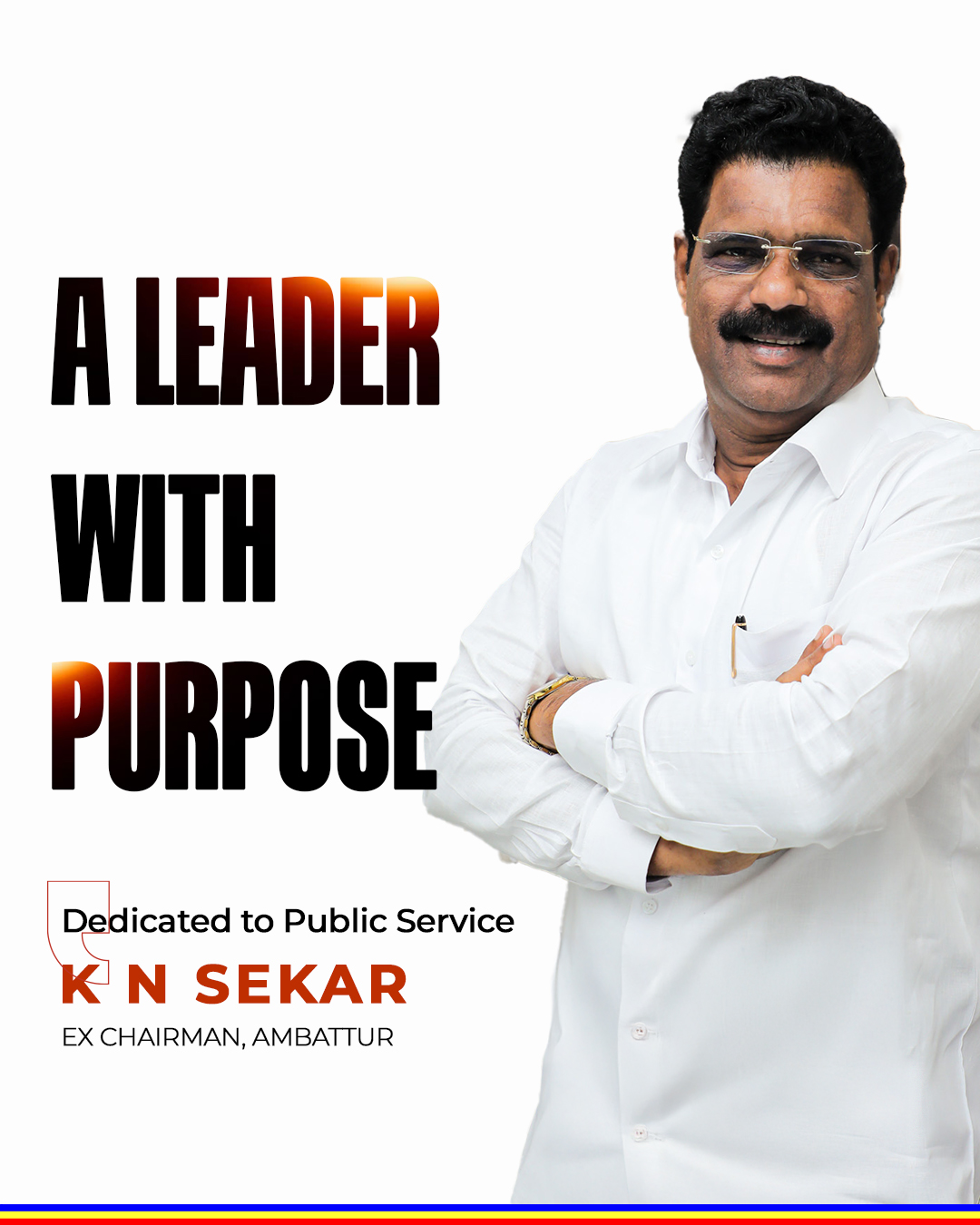 |
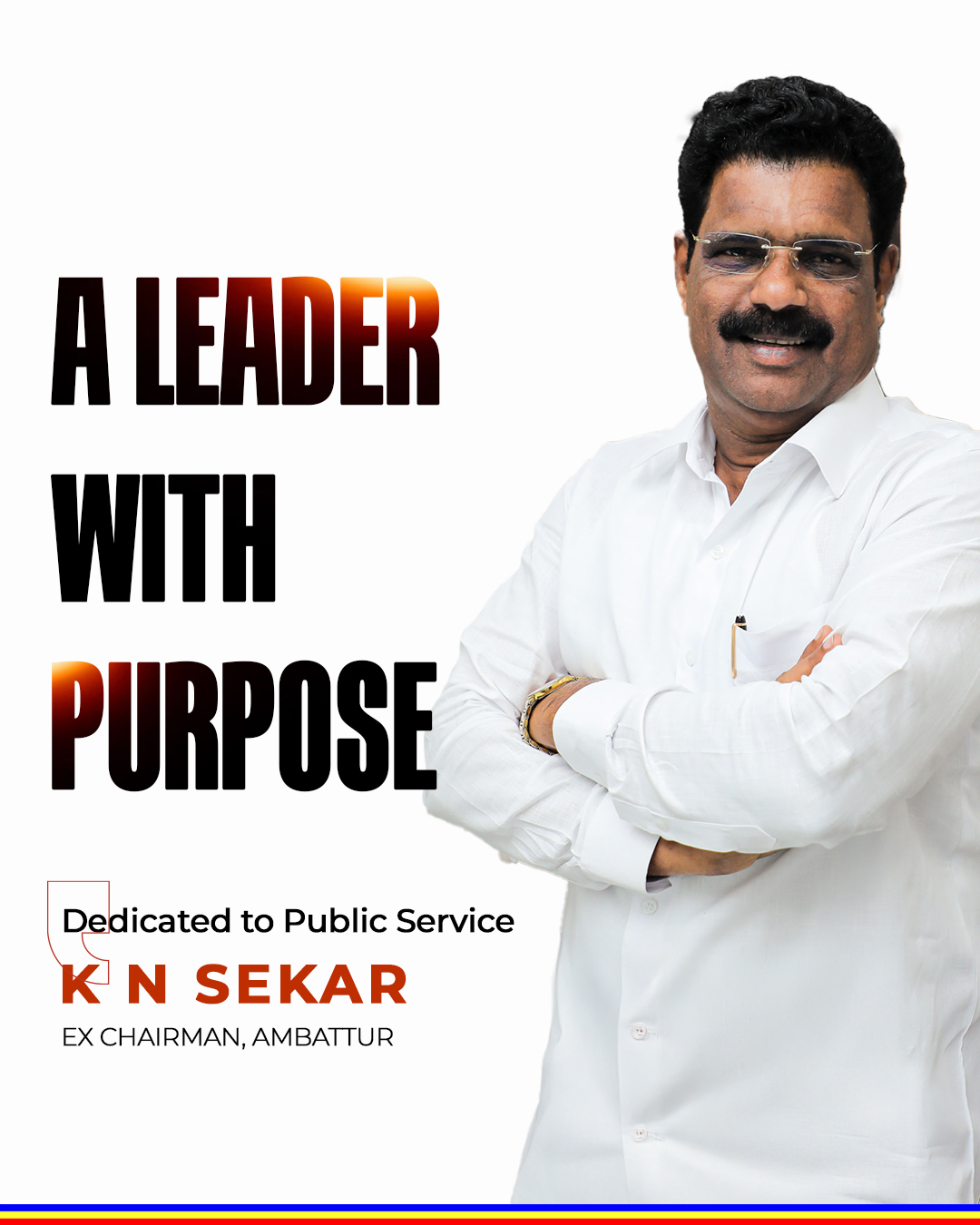
KN Sekar | Ambattur | For Ambattur | A Leader With Purpose
Over the past few years, Ambattur has witnessed a series of coordinated developments spanning infrastructure, environmental sustainability, social welfare, and long-term planning. What sets this transformation apart is not merely the scale of projects executed but the way these initiatives collectively enhance the quality of life for residents.
One of the most visible aspects of this transformation is the revival of public spaces. Parks such as MMM Park, Asif Colony Park, Mangal Lake Park, and Mugappair Park have been upgraded to provide cleaner, safer, and more accessible environments for recreation. In rapidly urbanizing regions, such spaces are often neglected or encroached upon. Their restoration reflects a governance approach that prioritizes community well-being alongside infrastructure growth.
Environmental sustainability has also been a key focus area. A notable initiative includes the conversion of a garbage dumping yard in Kallikuppam into a functional public park, signaling a shift from reactive waste management to proactive urban renewal. Additionally, the implementation of a rainwater management system linking Ambattur Lake with Korattur Lake demonstrates a forward-thinking approach to water conservation, an essential need for a city like Chennai, which frequently faces water scarcity.
At the core of Ambattur’s development lies systematic infrastructure improvement. Road networks have been enhanced through planned execution rather than temporary fixes. The construction of the SIDCO to Aavin Road stretch following proper soil testing highlights a focus on durability and long-term usability. Key roads, including Kachinapakkam Road, Karukku Road, and the Industrial Estate Bus Stand to Mugappair West stretch, have been widened to ease congestion and improve connectivity.
Critical junctions, such as the Ambattur Estate Road intersection, have been expanded to address traffic bottlenecks, while the relocation of electric poles along Chozhapuram Road has facilitated efficient road widening. These seemingly small but crucial interventions reflect the level of detail involved in effective urban planning.
Encroachment removal has been another significant milestone in Ambattur’s transformation. While often considered a sensitive issue, addressing encroachments is essential for improving mobility and public access. Key areas, including Korattur Signal, Padi Market, and major connecting roads, have undergone systematic clearance. The redevelopment of the Ambattur Uzhavar Sandhai has improved accessibility for both vendors and consumers, while the restructuring of the Ambattur O.T. Bus Stand into an organized depot has strengthened public transportation infrastructure.
Importantly, socially conscious policies have complemented these enforcement measures. The decision to abolish tax collection from roadside vendors along the Ambattur, Padi stretch reflects a balanced approach that supports livelihoods while enhancing public infrastructure. This alignment between economic inclusion and urban order is critical in sustaining long-term development.
Strategic bridge upgrades and construction have further improved connectivity across regions. The enhancement of the Padikuppam Road bridge and the development of a new bridge on Water Canal Road have strengthened links between key localities such as Villivakkam and Anna Nagar. Meanwhile, larger infrastructure efforts, including the Karukku flyover developed with the Union Railway Ministry, highlight how important intergovernmental collaboration is for achieving impactful outcomes.
Future-focused planning continues to drive Ambattur’s growth trajectory. Proposed initiatives such as the Ambattur subway, underground drainage systems, Metro Water supply expansion, and the Korattur Agaram subway support infrastructure indicate a long-term vision aligned with evolving urban needs.
Beyond physical infrastructure, Ambattur has also made notable progress in strengthening social infrastructure. The establishment of a primary health center in Padi has improved access to essential healthcare services, particularly for underserved communities. The upgradation of the maternity hospital in Venkadapuram further enhances maternal and child healthcare, contributing to broader social development goals.
Education has also seen meaningful improvements, with several schools upgraded to include higher secondary levels. This enables students to continue their education within their locality, reducing dropout rates and supporting long-term community growth.
Additional initiatives, including the expansion of Ambattur Market, the development of parks and play areas in the ICF Colony, and improved road connectivity within residential zones, contribute to a more integrated and accessible urban environment.
What emerges from these combined efforts is a comprehensive model of governance that addresses multiple dimensions of urban life simultaneously. Ambattur’s development demonstrates that impactful transformation does not always rely on large, high-visibility projects. Instead, it is driven by sustained, coordinated actions grounded in local needs and priorities.
Equally important is the visibility of these improvements. When citizens experience smoother roads, cleaner public spaces, improved healthcare access, and better connectivity, it strengthens trust in governance systems. This trust becomes a foundation for continued progress and civic engagement.
While challenges associated with rapid urbanization remain, including pressure on infrastructure and resources, Ambattur’s trajectory reflects a clear and positive direction. Its transformation highlights the importance of proactive, inclusive, and consistent governance in shaping sustainable urban growth.
As Indian cities continue to expand, Ambattur stands out as a practical example of how localized interventions, when executed effectively, can create meaningful and lasting impact. It reinforces a critical insight: true development is not defined by scale alone but by how deeply it improves everyday life.
To mitigate the prevailing severe heat and ensure public welfare, tree-planting initiatives are currently underway in key areas such as Ambattur, Mogappair, and Avadi. Furthermore, the planting of over 5,000 saplings across all areas within the Ambattur Assembly constituency is set to commence shortly.
Published by Birth Marque, the Creative Advertising agency in Chennai and also branding and strategy agency, serves as the tech force behind this grand inauguration. The agency not only excels in ideation but also innovates and executes decisions that surpasses the standards of other branding companies in Coimbatore.